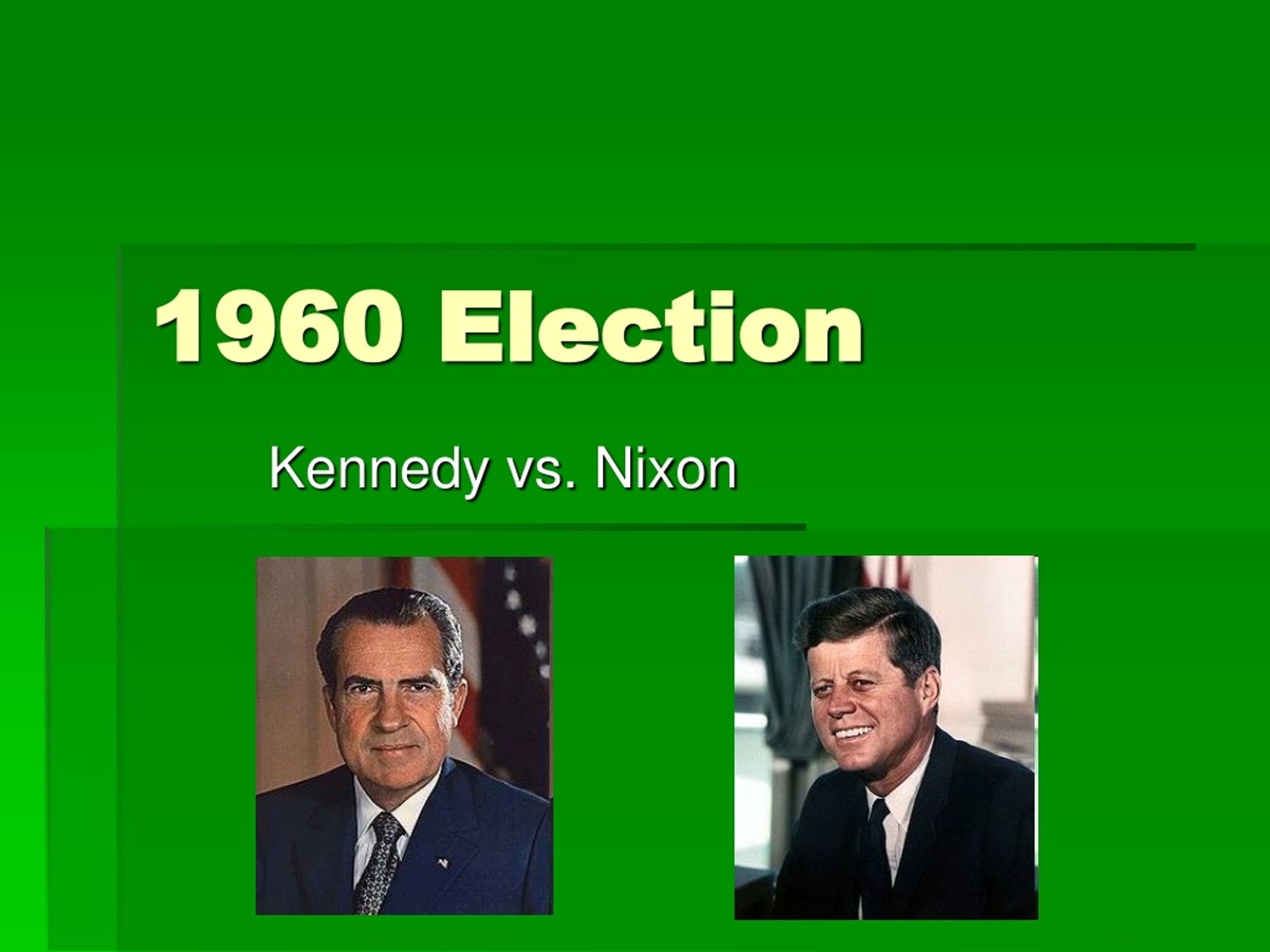
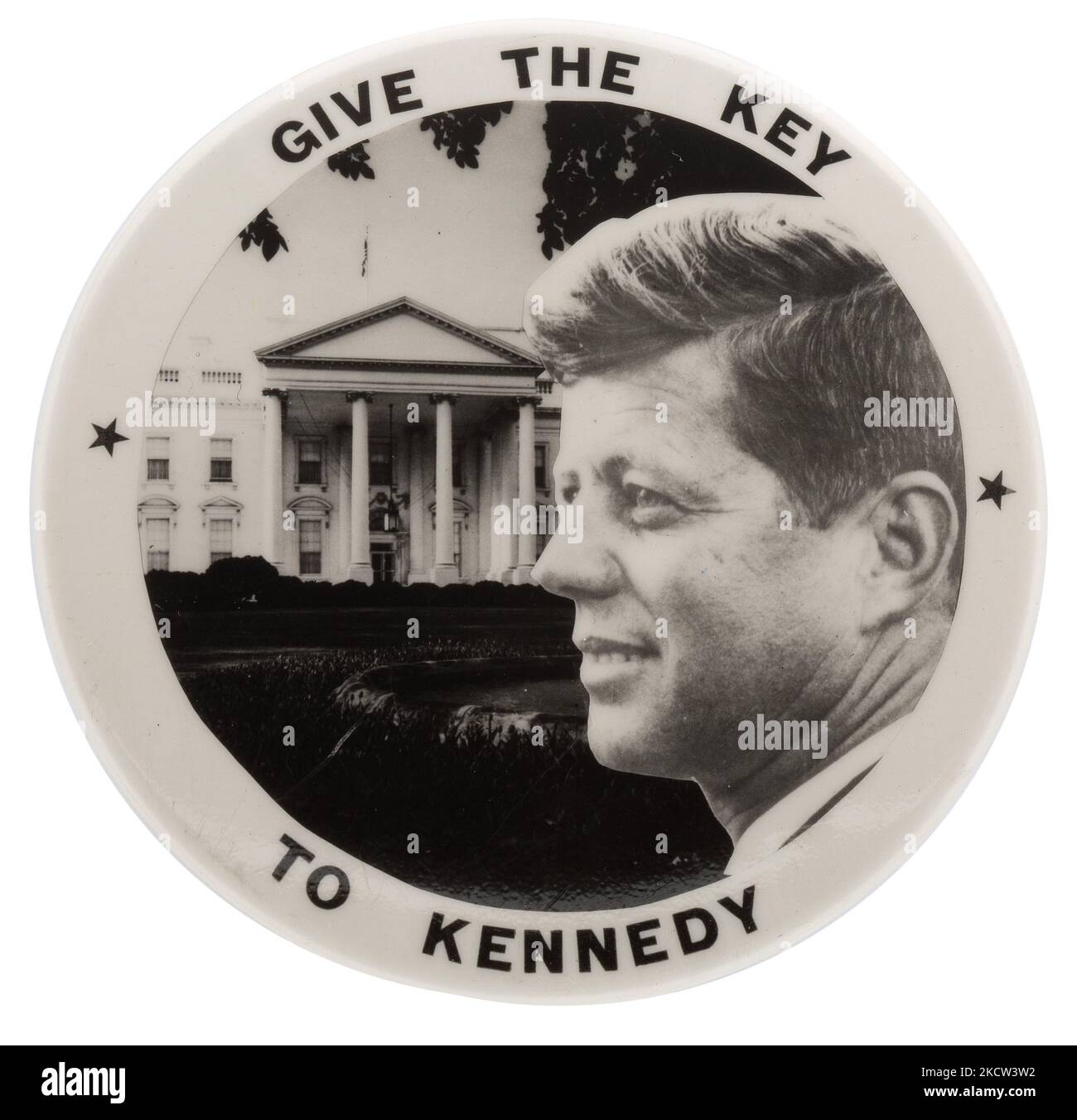
The 1960 United States presidential election was a pivotal contest between Democratic Senator John F. Kennedy and Republican Vice President Richard Nixon. Defined by the emergence of television as the primary medium for political communication and razor-thin margins in the popular vote, the election fundamentally altered campaign strategy, redefined the role of televised debates, and set the stage for the turbulent politics of the 1960s.
The Candidates and the Political Landscape of 1960
The 1960 election occurred at a time of significant Cold War anxiety and domestic transition. Dwight D. Eisenhower, the incumbent president, was completing his second term, and the Republican party looked to his Vice President, Richard Nixon, to maintain the status quo. Nixon, a seasoned politician with extensive foreign policy experience, initially entered the race as the frontrunner, bolstered by his reputation as an anticommunist warrior.
On the Democratic side, the party underwent a rigorous primary process. John F. Kennedy, the junior Senator from Massachusetts, faced stiff competition from more experienced figures, including Senate Majority Leader Lyndon B. Johnson, Senator Hubert Humphrey, and Adlai Stevenson. Kennedy’s campaign was meticulously organized, utilizing his family’s wealth and a new generation of political strategists to build a youth-oriented, energetic movement. By securing the nomination on the first ballot at the Democratic National Convention, Kennedy chose his rival, Lyndon B. Johnson, as his running mate, effectively balancing the ticket by combining his Northeast appeal with Johnson’s southern political mastery.
The Role of Televised Debates
The 1960 campaign is perhaps best remembered for hosting the first-ever televised presidential debates. Four debates were held, marking a paradigm shift in how voters perceived candidates. Before 1960, the primary methods of gauging a candidate's personality were through radio broadcasts or newspaper coverage. The shift to television prioritized visual aesthetics, poise, and non-verbal communication.
The first debate, held on September 26, 1960, in Chicago, proved to be the most consequential. Kennedy, who had spent days preparing and resting, appeared tanned, confident, and articulate. In contrast, Nixon was recovering from a knee injury, appeared gaunt, and refused makeup, leading him to look pale and uncomfortable under the harsh studio lights.
Historical analysis suggests that radio listeners often believed Nixon had won or held his own, while television viewers overwhelmingly perceived Kennedy as the victor. This discrepancy underscored a new reality in American politics: visual presence and perceived vitality were now as important as policy substance. The debates effectively leveled the playing field, allowing Kennedy to shed the label of being "inexperienced" while damaging Nixon’s image as the seasoned statesman.
Campaign Strategy and Key Issues
The campaign centered on several core issues, including the state of the economy, the progress of the space race, and the containment of Communism. Kennedy’s platform, the "New Frontier," emphasized social progress, civil rights, and a renewed commitment to national security. He specifically criticized the Eisenhower-Nixon administration for the "missile gap," a perceived lack of parity between the U.S. and the Soviet Union in nuclear weapon capabilities.
Nixon, meanwhile, campaigned on the administration’s record of stability and prosperity. He focused on his extensive travels as Vice President, particularly his "Kitchen Debate" with Nikita Khrushchev in Moscow. However, Nixon struggled to differentiate his policy positions from those of President Eisenhower without alienating the incumbent.
The demographic and regional strategies were also distinct. Kennedy campaigned heavily in the industrial North and Midwest, seeking to solidify the Democratic coalition of Catholics, union workers, and African Americans. Nixon focused on maintaining the traditional Republican base while making inroads in the suburban West and rural areas.
The Election Results: A Statistical Breakdown
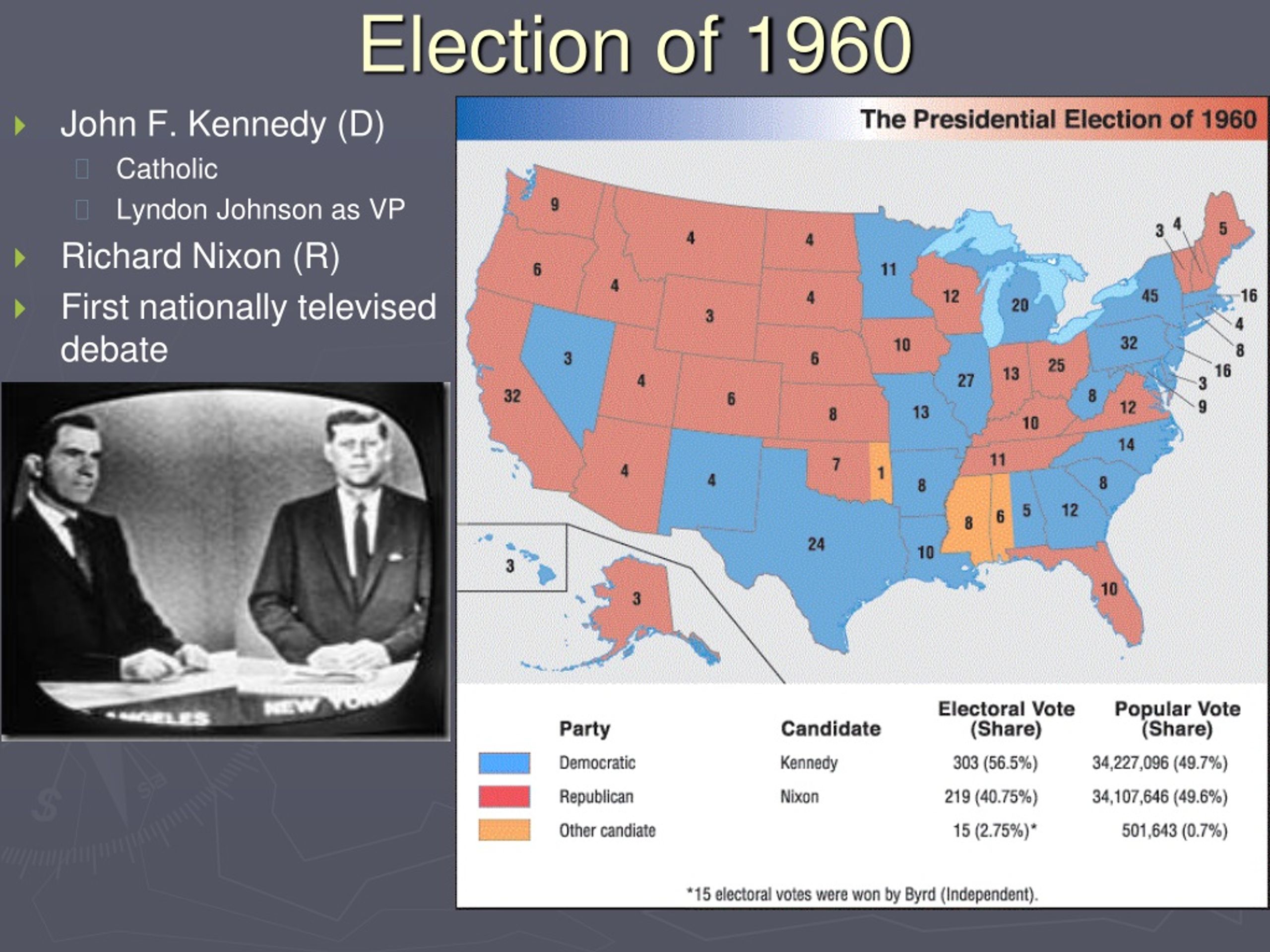
The election held on November 8, 1960, resulted in one of the closest finishes in American history. The popular vote margin was razor-thin, with Kennedy defeating Nixon by a difference of only 112,827 votes—a margin of approximately 0.17 percent.
The Electoral College results were more decisive, with Kennedy securing 303 votes to Nixon’s 219. Senator Harry F. Byrd of Virginia, a Southern Democrat who was not a candidate, received 15 electoral votes from unpledged electors, highlighting the fracturing of the Democratic Party in the South over the issue of civil rights.
| Candidate | Party | Popular Vote | Electoral Vote |
|---|---|---|---|
| John F. Kennedy | Democratic | 34,226,731 | 303 |
| Richard Nixon | Republican | 34,108,157 | 219 |
| Harry F. Byrd | Independent | 286,432 | 15 |
The reliance on the Electoral College meant that the outcome hinged on a few key states. Kennedy’s victories in states like Illinois and Texas—both of which were contested by Republicans due to allegations of voter fraud—proved crucial to his success.
Controversies and Allegations of Irregularities
The closeness of the 1960 election sparked immediate debate regarding its integrity. In Illinois, particularly in Cook County, and in Texas, Republican leaders alleged that irregularities—such as "ghost voting" in Chicago and ballot stuffing in South Texas—had skewed the results. Nixon, however, chose not to challenge the results formally. His decision was rooted in a desire to avoid a constitutional crisis and protect the perceived stability of the American government during the height of the Cold War.
Modern historical research has largely concluded that while some degree of corruption likely existed in both Illinois and Texas—as was common in many machine-politics-dominated areas at the time—it is unlikely that these irregularities were sufficient to flip the outcome of the national election, as Nixon would have needed to win both states to change the final result.
Long-term Impact on American Politics
The 1960 election left a legacy that remains visible in 2026. It established the primacy of media optics, a trend that only intensified with the advent of digital media and the 24-hour news cycle. The successful use of "image-making" techniques in 1960 taught subsequent generations of candidates that a campaign must be a coordinated media event rather than merely a series of policy speeches.
Furthermore, the election signaled a shift in party identity. The Kennedy administration’s focus on liberal social policy and civil rights, though tentative in the early months, initiated a realignment of the Democratic and Republican parties that would dominate the remainder of the 20th century. The South, once a Democratic stronghold, began the slow transition toward becoming a reliable Republican base, a process catalyzed by the national party’s increasingly progressive stance on social issues.
Frequently Asked Questions
Why was the 1960 election considered a "televised" election? It was the first time that presidential candidates participated in a series of live, televised debates. These broadcasts reached millions of homes, making the visual appearance and composure of the candidates a major factor in voter decision-making for the first time.
Did Richard Nixon ever contest the results? Nixon did not mount a formal legal challenge. Although there were calls from some supporters to contest the results in Illinois and Texas, Nixon prioritized national stability and the peaceful transition of power over a potentially divisive and prolonged recount effort.
What was the "missile gap" issue? The "missile gap" was a campaign claim by Kennedy that the Soviet Union had surpassed the United States in the production of intercontinental ballistic missiles (ICBMs). It served as a powerful critique of the Eisenhower administration’s defense policies, though it was later found to be largely exaggerated based on intelligence reports of the time.
How did religion play a role in the 1960 election? John F. Kennedy was the first Catholic to be elected President. During the campaign, he faced significant scrutiny and prejudice from voters who feared his allegiance might lie with the Pope rather than the U.S. Constitution. Kennedy addressed this directly in a speech to the Greater Houston Ministerial Association, emphasizing his commitment to the separation of church and state.
What was the impact of the 1960 election on the Civil Rights Movement? While Kennedy was initially cautious regarding civil rights legislation to avoid alienating Southern Democrats, his election brought a new generation of activists and supporters into the political fold. His narrow victory and the subsequent pressure from the evolving movement eventually forced the Democratic Party to take a more definitive stance on civil rights, leading to the landmark legislation of the mid-1960s.
Next Steps for Researching Historical Elections
For those interested in further study, the primary records of the 1960 election are housed in the John F. Kennedy Presidential Library and Museum and the Richard Nixon Presidential Library and Museum. Accessing these archives provides primary source documents, including internal campaign memos, poll data, and transcripts of the televised debates. Analyzing the evolution of campaign finance laws since 1960 also offers significant context for understanding how the modern American electoral process has been shaped by the lessons learned during this contest.