The cinema of 1970 represents a pivotal bridge between the fading grandeur of Old Hollywood and the gritty, auteur-driven rebellion of the New Hollywood era. This transformative year produced a diverse array of masterworks, ranging from the anti-war satire of MASH* to the blockbuster romanticism of Love Story, fundamentally redefining how stories were told on the silver screen.
The Cultural and Industrial Landscape of 1970
As we look back from the perspective of 2026, the year 1970 stands as a threshold. The global social upheavals of the late 1960s—marked by the Vietnam War, the civil rights movement, and the counterculture revolution—finally began to permeate the structural foundations of the film industry. In the United States, the traditional studio system was in a state of financial and creative flux. The era of the "roadshow" musical, which had seen massive successes like The Sound of Music, was coming to an abrupt and expensive end with the failure of several high-budget spectacles.
The industry was forced to adapt to a younger, more cynical audience that demanded authenticity over artifice. This shift led to the relaxation of censorship and the refinement of the MPAA rating system, which had been introduced only two years prior. By 1970, filmmakers were exploring themes of sexuality, violence, and political disillusionment with a boldness that would have been unthinkable just a decade earlier. This was the year that the "X" rating (before it became synonymous solely with pornography) was used for mainstream artistic statements, and the "R" rating became a badge of maturity for serious drama.
Furthermore, the technological landscape was shifting. While 35mm remained the standard, the use of handheld cameras and faster film stock—often pioneered in documentary filmmaking—began to influence the visual language of narrative features. This resulted in a "cinema verité" style that made movies feel more immediate and less like staged plays.
New Hollywood and the Auteur Revolution
The most significant development in 1970 was the firm establishment of the "New Hollywood" movement. This was an era where the director, rather than the studio head, became the primary creative force behind a film. These directors, often influenced by European art-house cinema, brought a new level of psychological depth and narrative experimentation to American screens.
The Rise of the Anti-Hero
A hallmark of 1970 cinema was the rise of the anti-hero. In Robert Rafelson’s Five Easy Pieces, Jack Nicholson portrayed Robert Eroica Dupea, a classically trained pianist who rejects his cultured background to work in oil fields and wander through a life of existential dissatisfaction. This film epitomized the decade's obsession with the search for identity and the failure of the American Dream. It wasn't about a hero winning; it was about a man struggling to exist.
War and Satire
The Vietnam War was the unspoken backdrop of many 1970 films, but none addressed the absurdity of conflict more effectively than Robert Altman’s MASH*. While technically set during the Korean War, audiences immediately recognized it as a scathing critique of the contemporary military-industrial complex. Altman’s use of overlapping dialogue and an ensemble cast broke traditional narrative rules, creating a chaotic, lifelike atmosphere that resonated with a disillusioned public.
The Epic and the Individual
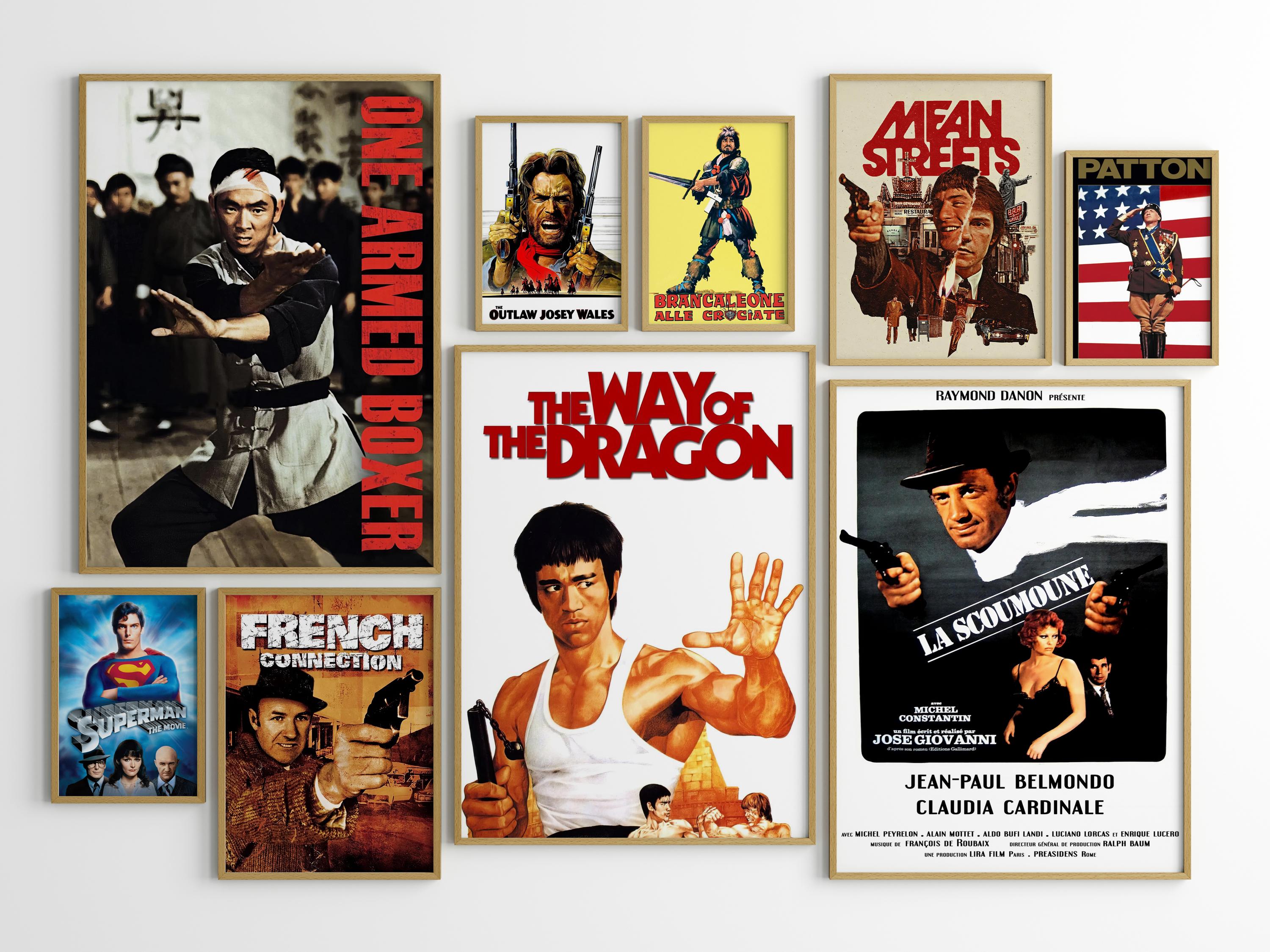
Even traditional genres like the biopic were reimagined. Franklin J. Schaffner’s Patton was a massive box office success and won the Academy Award for Best Picture. While it functioned as a grand historical epic, it was primarily a deeply complex character study of General George S. Patton. George C. Scott’s performance was so commanding that it challenged audiences to decide whether the protagonist was a brilliant patriot or a dangerous megalomaniac.
The Box Office Titans of 1970
While critics were swooning over artistic breakthroughs, the general public in 1970 also flocked to films that provided emotional catharsis and spectacle. The box office of 1970 was a fascinating mix of the old and the new, showing that while the industry was changing, the desire for a "big" movie experience remained.
- Love Story: Directed by Arthur Hiller, this film was a cultural phenomenon. Its tagline, "Love means never having to say you're sorry," became one of the most famous quotes in cinematic history. It was a massive financial success, saving Paramount Pictures from the brink of bankruptcy and proving that a simple, well-told melodrama could still dominate the market.
- Airport: This film essentially birthed the "disaster movie" genre that would become a staple of the 1970s. With its large ensemble cast and high-stakes tension, it appealed to traditional moviegoers who wanted suspense and star power.
- The Aristocats: Disney's contribution to 1970 showed that the studio was navigating its own transition after the death of Walt Disney. While perhaps not as groundbreaking as earlier classics, it remained a significant commercial success and a staple for family audiences.
- Woodstock: This documentary was more than a film; it was a historical record of the 1969 festival. Its innovative use of split-screen editing and its massive box office returns proved that non-fiction films could be major commercial players.
International Cinema and Global Perspectives
While Hollywood was reinventing itself, international filmmakers in 1970 were producing some of the most influential works in the history of the medium. Cinema in Europe, Asia, and South America continued to push boundaries, often influencing their American counterparts.
Japan’s Masterpieces
1970 saw the release of Akira Kurosawa’s Dodes'ka-den, his first color film. Though it was a commercial failure in Japan at the time, its stylized use of color to depict the lives of people living in a slum was a technical marvel. Simultaneously, the Japanese New Wave continued to challenge social norms with gritty, often transgressive storytelling.
European Art House
In France, François Truffaut released The Wild Child (L'Enfant sauvage), a stark, beautiful exploration of education and humanity. In Italy, Bernardo Bertolucci’s The Conformist offered a visually stunning analysis of fascism and psychology. The cinematography by Vittorio Storaro in The Conformist is still studied in film schools today for its use of light and shadow to represent political and internal states.
The Soviet Influence
Sergei Bondarchuk’s Waterloo, a co-production between the Soviet Union and Italy, featured some of the most expansive and realistic battle scenes ever filmed, using thousands of actual soldiers as extras. This film marked the peak of the large-scale historical epic before the industry shifted toward smaller, more personal stories.
Technical Comparisons of Key 1970 Films
To understand the diversity of the year's output, it is helpful to compare the different approaches taken by the year's most significant films across genres and technical styles.
| Film Title | Director | Genre | Primary Technical/Artistic Innovation | Notable Award/Legacy |
|---|---|---|---|---|
| Patton | Franklin J. Schaffner | War/Biopic | Character-driven epic photography (70mm) | Best Picture (1970) |
| MASH* | Robert Altman | Satire/Comedy | Overlapping dialogue; non-linear ensemble | Palme d'Or at Cannes |
| Five Easy Pieces | Bob Rafelson | Drama | Naturalistic acting; anti-hero narrative | AFI's 100 Years...100 Movies |
| The Conformist | Bernardo Bertolucci | Political Drama | Expressionistic use of color and lighting | Influenced The Godfather visuals |
| Airport | George Seaton | Disaster | Multi-strand narrative with ensemble cast | Set the "Disaster Movie" template |
| Woodstock | Michael Wadleigh | Documentary | Extensive use of split-screen editing | Best Documentary Feature |
| Let It Be | Michael Lindsay-Hogg | Music | Observational "Fly on the Wall" style | Documented the end of The Beatles |
The 43rd Academy Awards: A Changing of the Guard
The Academy Awards ceremony held in April 1971 (honoring 1970 films) was a landmark event that mirrored the tensions within the industry. The ceremony famously saw George C. Scott refuse his Best Actor Oscar for Patton, calling the ceremony a "two-hour meat parade." This act of defiance signaled a shift in how the new generation of talent viewed the industry's traditional accolades.
Despite the controversy, the awards recognized a wide spectrum of talent. Patton walked away with seven Oscars, while MASH* and Five Easy Pieces were also heavily nominated, signaling that the Academy was beginning to embrace the New Hollywood aesthetic. However, the nomination of Airport for ten awards showed that the old guard still had a strong foothold in the voting body.
Technical Shifts and the Evolution of Film Language
The year 1970 was a turning point for how films were actually made. Beyond the narratives, the "feel" of cinema was changing.
- Lenses and Depth: There was a move toward using longer lenses, which compressed the image and created a different sense of space compared to the wide-angle deep focus popularized in the 1940s and 50s.
- Film Grain and Texture: Directors began to experiment with pushing the film stock (developing it longer to increase sensitivity), which resulted in a grainier, "grittier" look. This was particularly evident in urban dramas and thrillers, adding a layer of realism that complemented the darker subject matter.
- The Sound Revolution: Sound design became more sophisticated. No longer just a medium for dialogue and music, sound was used to create atmospheric tension. The overlapping dialogue in MASH* was a technical nightmare for sound engineers at the time but resulted in a revolutionary sense of immersion.
Viewing 1970 Films in 2026: A Modern Perspective
In 2026, many of the films from 1970 are more accessible than ever through high-definition restorations and global streaming platforms. For a modern viewer, these films offer a glimpse into a world in transition. They capture the raw anxiety of the late 20th century while laying the groundwork for the modern blockbuster and independent film movements.
When approaching the cinema of 1970 today, it is important to view these works within their historical context. Some elements, particularly the pacing of dramas or the social attitudes depicted in comedies, may feel dated. However, the emotional honesty and the willingness to take creative risks remain profoundly influential.
Recommended Next Steps for Cinephiles
- Watch the "Big Three": Start with Patton, MASH*, and Five Easy Pieces to see the breadth of the American transition.
- Explore the Documentary: View Woodstock to understand the cultural movement of the era.
- Go Global: Watch The Conformist to see how visual storytelling was being perfected in Europe.
- Compare Eras: Watch a "roadshow" musical from 1965 (like The Sound of Music) and compare it to a 1970 drama to see how much the industry changed in just five years.
Frequently Asked Questions
What was the highest-grossing film of 1970?
The highest-grossing film of 1970 was Love Story. It earned over $100 million at the domestic box office, an extraordinary sum for the time, and became a cultural touchstone. Its success demonstrated that there was still a massive market for emotionally resonant, character-driven dramas amidst the rise of more cynical or experimental films.
Why is 1970 considered a turning point in film history?
1970 marks the definitive end of the "Golden Age" studio system's dominance and the firm establishment of "New Hollywood." It was a year where experimental techniques, anti-establishment themes, and the "auteur" theory (the director as the main artist) moved from the fringes of cinema into the mainstream. This year set the stage for the legendary decade of the 1970s, which many historians consider the greatest era of American filmmaking.
Did any famous actors debut in 1970?
While many actors had appeared in smaller roles before, 1970 was a breakout year for several legends. Jack Nicholson solidified his stardom with Five Easy Pieces. It was also a significant year for actors like Donald Sutherland and Elliott Gould, who became faces of the counterculture cinema through their roles in MASH*.
What was the impact of the rating system on 1970 films?
The MPAA rating system allowed filmmakers to produce more mature content without the threat of legal censorship that had existed under the old Hays Code. In 1970, this meant that films could realistically depict the violence of war or the complexities of human relationships. This freedom led to a "maturation" of cinema, though it also led to ongoing debates about what was appropriate for public consumption.
Is the 1970 film "Let It Be" still relevant?
Yes, Let It Be remains a crucial piece of music and film history. It provides a raw, often uncomfortable look at the Beatles as they were breaking up. For decades, it was difficult to find, but recent interest in the band (including Peter Jackson's 2021 reimagining of the footage) has brought the original 1970 film back into the spotlight as a vital historical document.
How did 1970 cinema influence modern directors?
Many of today's leading directors, such as Martin Scorsese, Steven Spielberg, and Quentin Tarantino, were coming of age or starting their careers during this era. The "New Hollywood" style of the 1970s—with its focus on character, realism, and visual experimentation—is the direct ancestor of modern independent cinema and the sophisticated "prestige" dramas seen on streaming services today.