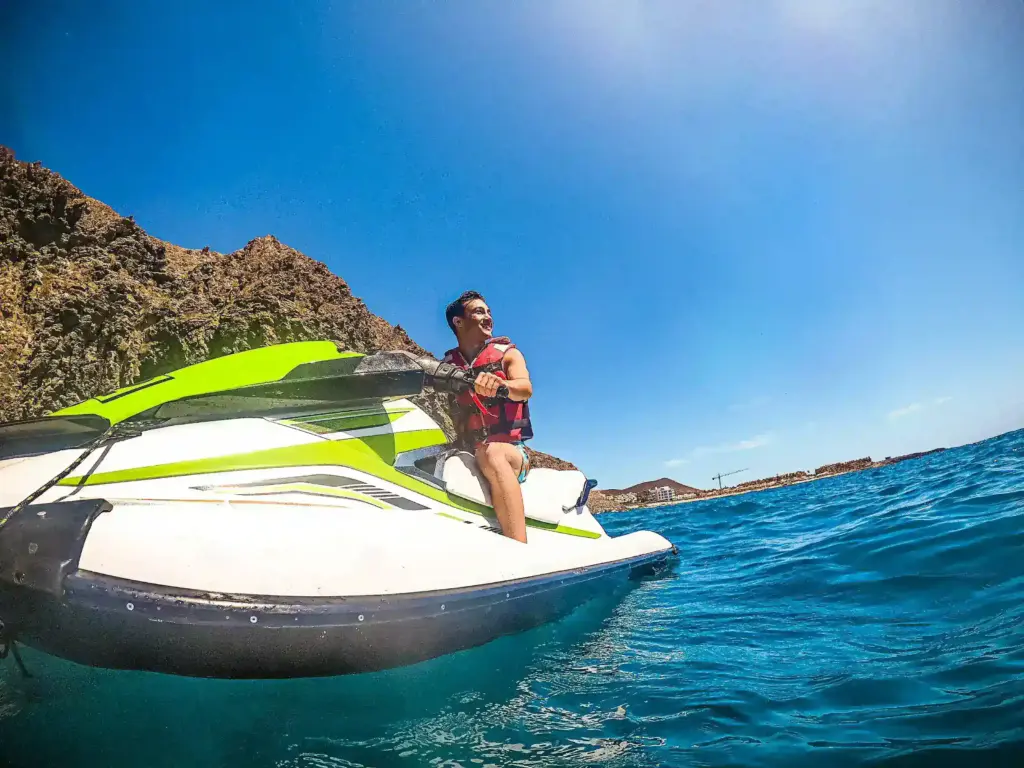
The 2019 personal watercraft (PWC) market represented a peak era for high-performance supercharged machines, with manufacturers reaching a "gentleman’s agreement" speed limit of approximately 67 mph. The 2019 Sea-Doo RXP-X 300 and the Yamaha FX SVHO led this segment, delivering blistering acceleration and industry-leading top speeds that set the benchmark for factory-stock performance.
Defining the Performance Era of 2019
The year 2019 was a pivotal moment in the evolution of personal watercraft. Manufacturers like Sea-Doo, Yamaha, and Kawasaki had moved away from simple recreational models toward sophisticated, high-horsepower machines designed for enthusiasts demanding race-level performance. This was the era of the "300-horsepower class," where forced induction—superchargers and turbochargers—became the standard for achieving the 65-70 mph threshold.
For buyers and collectors looking at these machines today, understanding the 2019 lineup requires acknowledging the electronic speed governors that were standard across the industry. While engines were capable of significantly higher velocities, the legal and safety-based "gentleman's agreement" meant that most flagship models were electronically capped at 67-68 mph on GPS, barring aftermarket modifications.
Top Contenders in the 2019 Speed Arena
To analyze the fastest PWC, we must look at the flagship models from the "Big Three" manufacturers. These machines were engineered to dominate both closed-course racing and long-distance offshore riding.
1. Sea-Doo RXP-X 300
The RXP-X 300 was arguably the most aggressive performer of the 2019 model year. Utilizing the Rotax 1630 ACE engine—a 1,630cc supercharged, intercooled powerhouse—the RXP-X prioritized power-to-weight ratio. Its T3-R hull design allowed the craft to lean aggressively into turns, making it the preferred choice for closed-course racers. In stock condition, it consistently hit the 67-68 mph electronic ceiling with remarkable acceleration.
2. Yamaha FX SVHO (Super Vortex High Output)
Yamaha’s 2019 approach focused on a balance between raw speed and luxury features. The FX SVHO featured the 1,812cc supercharged engine, which was known for its legendary reliability and massive torque. While slightly heavier than the dedicated racing hulls of Sea-Doo, the FX SVHO offered a more stable ride in choppy water, often reaching similar top-speed figures to its competitors while providing a smoother experience for the rider.
3. Kawasaki Jet Ski Ultra 310R
The Kawasaki Ultra 310R was the muscle car of the 2019 season. With a 1,498cc engine featuring a massive Eaton Twin Vortices Series (TVS) supercharger, it was undeniably the most physically imposing machine. It was built for speed in rough, open-ocean conditions, utilizing a deep-V hull that cut through waves where lighter skis would struggle. Like its rivals, it was governed to the mid-60s, but it was frequently cited by enthusiasts as having the most "felt" power during top-end pulls.
Technical Comparison of Flagship Models
The following table outlines the technical specifications that defined the top-speed capabilities of the 2019 flagship class.
| Model | Engine Displacement | Forced Induction | Est. HP | Stock Top Speed |
|---|---|---|---|---|
| Sea-Doo RXP-X 300 | 1,630cc | Supercharged | 300 hp | 67-68 mph |
| Yamaha FX SVHO | 1,812cc | Supercharged | 250+ hp | 67-68 mph |
| Kawasaki Ultra 310R | 1,498cc | Supercharged | 310 hp | 67-68 mph |
Note: Stock top speeds are approximations influenced by rider weight, fuel load, water conditions, and altitude. Official speeds are governed by factory electronic limiters.
The Science of PWC Acceleration and Drag
Achieving top speed in a personal watercraft is not merely a matter of engine displacement. Two critical factors in the 2019 showdown were hull design and pump efficiency. The jet pump is essentially a propeller enclosed in a duct; it requires precise tolerances between the impeller and the wear ring to maintain pressure.
In 2019, Sea-Doo’s pump design was highly optimized for rapid hole-shot acceleration, which is the time it takes to go from zero to top speed. Yamaha focused on the "Super Vortex" impeller design to maximize cavitation resistance. When comparing these machines, riders often noted that while the top speeds were similar due to the electronic limiters, the delivery of that speed varied significantly. The Sea-Doo felt "snappier" off the line, while the Kawasaki felt more "planted" at sustained high speeds in rough water.
Aftermarket Limitations and Legal Realities
It is common for owners to seek modifications—such as re-flashing the Electronic Control Unit (ECU), upgrading the supercharger impeller, or installing aftermarket intake grates—to bypass the factory speed limiters. While these modifications can push machines well into the 80-mph range, they come with substantial risks.
- Warranty Voiding: Any modification to the ECU or intake system immediately voids the factory warranty provided by the manufacturer.
- Component Longevity: Engines built for 300 horsepower are tuned for specific heat cycles. Pushing them to 350+ horsepower increases internal temperatures, which can lead to catastrophic failure of the supercharger clutch or piston ring lands.
- Safety Risks: PWC hulls are designed for stability at specific speed parameters. At speeds exceeding 75 mph, the aerodynamic lift generated by the hull can cause the craft to become unstable, leading to dangerous "blow-overs" if the rider hits a wave incorrectly.
Maintenance Requirements for High-Speed Craft
Owning a high-performance 2019 PWC requires a rigorous maintenance schedule. Unlike naturally aspirated engines, the supercharged engines of 2019 require specific attention to the supercharger rebuild intervals.
- Supercharger Rebuilds: Manufacturers typically recommend a supercharger rebuild or inspection every 100 to 200 hours. This involves replacing the ceramic or metal washers and inspecting the impeller for fatigue. Neglecting this can result in the supercharger disintegrating, which sends metal fragments into the engine intake, causing total engine failure.
- Cooling Systems: High-performance engines rely on closed-loop cooling systems. Ensuring the heat exchanger and intercooler are free of debris is essential. If the intercooler is clogged with silt or salt, the engine will experience heat soak, leading the onboard computer to pull timing and reduce power, effectively killing your top-speed performance.
- Impeller Care: Small nicks in the stainless steel impeller can cause cavitation, where the pump pulls air instead of water. Even a slight decrease in pump efficiency can cost you 2-3 mph at the top end.
Selecting the Right Machine for Your Needs
Choosing between the 2019 models depends largely on your intended use case. If your primary goal is racing or aggressive maneuvers on a lake, the Sea-Doo RXP-X 300 remains the benchmark for handling. If you are doing long-distance touring or riding in open, choppy water, the stability of the Kawasaki Ultra 310R or the refinement of the Yamaha FX SVHO are superior choices.
When shopping for these units in 2026, prioritize machines with documented service histories. A 2019 model that has been regularly serviced, especially regarding the supercharger and cooling systems, is infinitely more valuable than one with fewer hours that has sat unmaintained.
Frequently Asked Questions
Did the 2019 models truly reach 70 mph? Most stock 2019 models were limited to roughly 67-68 mph due to a manufacturer "gentleman's agreement" on safety. While they were physically capable of exceeding this with minor modifications, they were speed-governed from the factory.
Which 2019 PWC had the best acceleration? The Sea-Doo RXP-X 300 is widely considered the leader in off-the-line acceleration for the 2019 model year due to its advanced hull design and power-to-weight ratio.
Is it safe to remove the speed limiter on a 2019 PWC? Removing the speed limiter is not recommended for most riders. It voids the warranty and places significant stress on the supercharger and internal engine components, increasing the likelihood of mechanical failure.
How often do I need to service the supercharger on these models? It is generally recommended to rebuild or inspect the supercharger every 100 to 200 hours of operation. Consult your specific owner's manual for the exact maintenance interval based on your engine hours.
Are parts still available for 2019 models in 2026? Yes, parts for 2019 Sea-Doo, Yamaha, and Kawasaki models are widely available through authorized dealers and reputable online OEM parts suppliers, as these models shared many components with succeeding years.
Next Steps for Enthusiasts
If you are currently evaluating a purchase of a 2019 performance PWC, your first step should be to request a printout of the electronic diagnostic report. Any authorized dealer can connect to the craft’s computer to verify the engine hours and ensure there are no active fault codes regarding the supercharger or cooling system. Once confirmed, conduct a test ride in conditions similar to where you intend to ride, focusing on the craft’s stability at speed and the responsiveness of the throttle. Prioritize mechanical integrity over cosmetic appearance, as internal wear on these high-output machines is expensive to rectify.