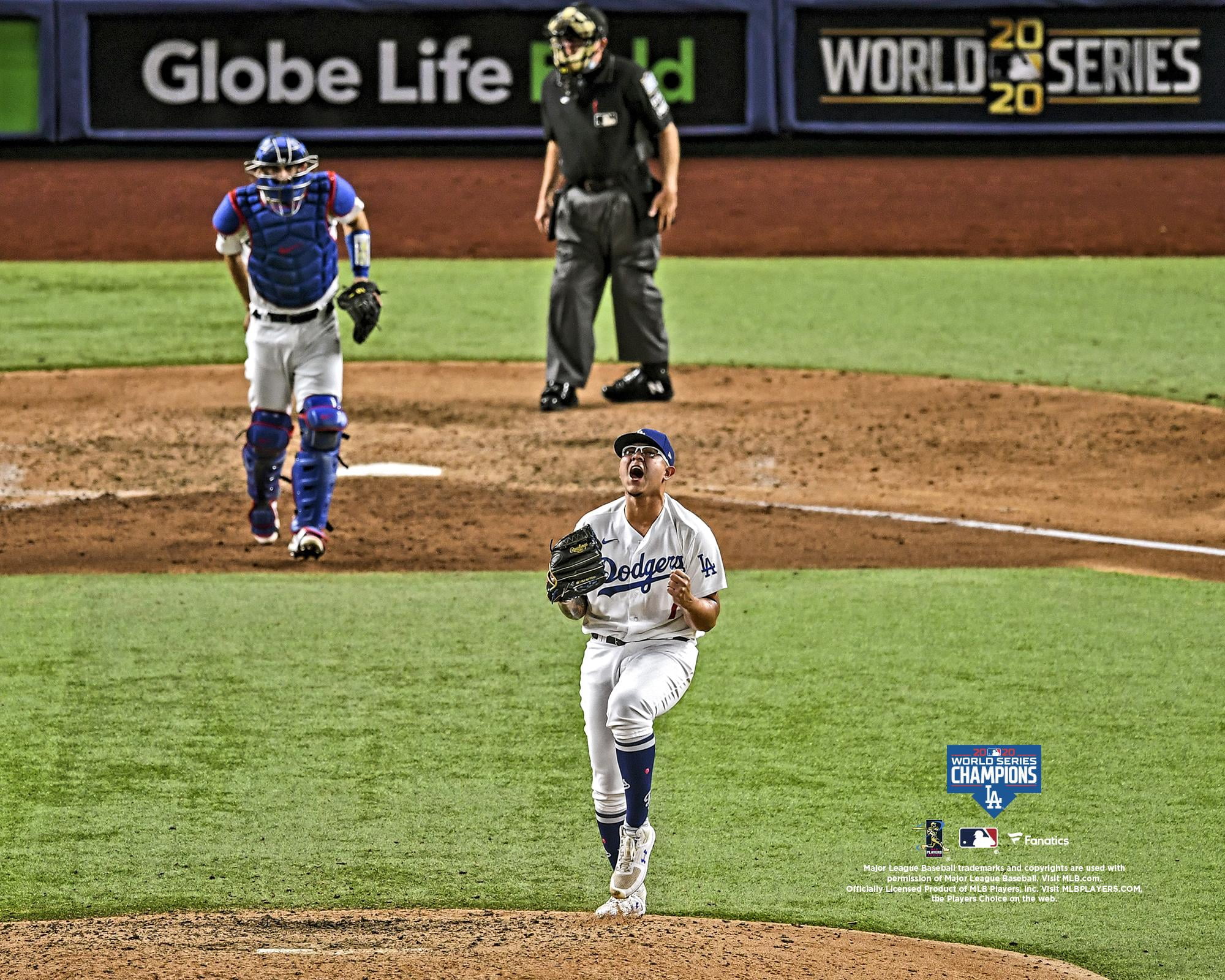
The 2020 MLB World Series featured the Los Angeles Dodgers and the Tampa Bay Rays, concluding a season heavily altered by the COVID-19 pandemic. The Dodgers won the series four games to two, securing their first championship since 1988. Played entirely at the neutral Globe Life Field in Arlington, Texas, the series remains a unique milestone in baseball history.
The 2020 Fall Classic stands as one of the most statistically significant and operationally unique events in the history of Major League Baseball. While the year 2026 provides us with a six-year perspective on the event, the facts of the series remain tethered to a period of unprecedented global upheaval. To understand the 2020 World Series, one must first understand the environment in which it was played: a 60-game "sprint" of a regular season, an expanded 16-team playoff bracket, and a "bubble" environment designed to mitigate health risks.
The Path to Arlington: A Season Like No Other
The 2020 season did not begin until July 23, following months of negotiations between the league and the MLB Players Association regarding health protocols and prorated salaries. When play finally commenced, it was without fans in the stands and featured several rule changes, such as the universal designated hitter (DH) and the "ghost runner" in extra innings.
The Los Angeles Dodgers entered the season as the favorites, having bolstered their already formidable roster by acquiring Mookie Betts from the Boston Red Sox. They finished the 60-game slate with a 43-17 record, the best in baseball. Their path to the World Series required navigating a Wild Card Series sweep of the Brewers, a Division Series sweep of the Padres, and a grueling seven-game National League Championship Series (NLCS) where they rallied from a 3-1 deficit against the Atlanta Braves.
Conversely, the Tampa Bay Rays represented the pinnacle of "small-market" efficiency. With one of the lowest payrolls in the league, the Rays utilized an analytically driven approach, focusing on pitching depth and defensive versatility. They finished 40-20, earning the top seed in the American League. They defeated the Blue Jays, outlasted the Yankees in five games, and beat the Houston Astros in a seven-game ALCS to reach their second World Series in franchise history.
The Neutral Site Strategy
For the first time in the modern era, the World Series was played at a neutral site: Globe Life Field in Arlington, Texas. This decision was made to create a controlled environment (a "bubble") to prevent COVID-19 outbreaks from disrupting the schedule.
Globe Life Field, the then-new home of the Texas Rangers, featured a retractable roof and artificial turf. Because the venue was neutral, the "home" team was designated based on regular-season record. The Dodgers, having the superior record, were the home team for Games 1, 2, 6, and 7. Despite the neutral setting, a limited number of fans—approximately 11,000 per game—were allowed to attend, marking the first time fans were present for MLB games in the 2020 season.
Game-by-Game Breakdown of the 116th World Series
Game 1: Kershaw Sets the Tone
The series opened on October 20, 2020, with a legacy-defining performance by Clayton Kershaw. Long criticized for his postseason struggles, Kershaw dismantled the Rays' lineup over six innings, allowing only one run and striking out eight. The Dodgers' offense backed him with a four-run fifth inning, highlighted by a Cody Bellinger home run. The Dodgers took Game 1 with an 8-3 victory, asserting their dominance early.
Game 2: The Rays Strike Back
Tampa Bay responded in Game 2, showcasing the "stable" of arms that had defined their season. Brandon Lowe, who had struggled throughout the postseason, broke out with two opposite-field home runs. The Rays' bullpen, led by Nick Anderson and Pete Fairbanks, held off a late Dodgers rally. The 6-4 win for the Rays evened the series and proved that the Dodgers' star-studded lineup could be neutralized by high-velocity pitching and strategic matchups.
Game 3: Walker Buehler’s Dominance
The Dodgers regained the lead in Game 3 behind a masterful performance from Walker Buehler. Buehler struck out 10 batters across six innings, allowing only three hits. Justin Turner and Austin Barnes contributed home runs, leading to a 6-2 victory. This game underscored the depth of the Los Angeles rotation; while Kershaw provided the veteran stability, Buehler provided the elite, high-ceiling dominance necessary to win in October.
Game 4: One of the Wildest Finishes in History
Game 4 is etched in baseball lore as one of the most chaotic endings to a World Series game. Entering the bottom of the ninth, the Dodgers led 7-6. With two outs and two runners on, the Rays’ unheralded Brett Phillips—who was not even on the ALCS roster—hit a single to center field.
What followed was a comedy of errors. Dodgers center fielder Chris Taylor bobbled the ball, allowing the tying run to score. As Randy Arozarena rounded third to score the winning run, he tripped and fell. However, Dodgers catcher Will Smith failed to field the relay throw cleanly, allowing Arozarena to scramble back to the plate and dive in safely. The Rays won 8-7, evening the series at 2-2 in a game that shifted the momentum entirely.
Game 5: Kershaw’s Redemption, Part II
The Dodgers did not let the heartbreak of Game 4 linger. In Game 5, Clayton Kershaw returned to the mound and delivered another solid performance, going 5.2 innings and allowing two runs. The Dodgers' bullpen, which had been a question mark in Game 4, remained perfect. Home runs from Joc Pederson and Max Muncy provided the necessary cushion for a 4-2 win, putting the Dodgers one game away from the title.
Game 6: The "Snell Decision" and the Clinch
Game 6, played on October 27, 2020, remains one of the most debated tactical games in MLB history. Rays starter Blake Snell was dominant, surrendering only one hit and striking out nine through 5.1 innings. However, after Snell gave up a one-out single to Austin Barnes in the sixth inning, Rays manager Kevin Cash pulled him from the game to avoid Snell facing the top of the Dodgers' order for a third time.
The decision backfired immediately. Nick Anderson, the Rays' top reliever, entered and promptly gave up a double to Mookie Betts. A wild pitch and a fielder's choice allowed the Dodgers to take a 2-1 lead. Mookie Betts later added a solo home run in the eighth inning to make it 3-1. Julio Urías closed out the game with 2.1 perfect innings, striking out Willy Adames to secure the championship.
| Game | Date | Winner | Score | Key Performer | Series Lead |
|---|---|---|---|---|---|
| Game 1 | Oct 20 | Dodgers | 8-3 | Clayton Kershaw (6.0 IP, 8 K) | LAD 1-0 |
| Game 2 | Oct 21 | Rays | 6-4 | Brandon Lowe (2 HR) | Tied 1-1 |
| Game 3 | Oct 23 | Dodgers | 6-2 | Walker Buehler (10 K) | LAD 2-1 |
| Game 4 | Oct 24 | Rays | 8-7 | Brett Phillips (Walk-off RBI) | Tied 2-2 |
| Game 5 | Oct 25 | Dodgers | 4-2 | Clayton Kershaw (W) | LAD 3-2 |
| Game 6 | Oct 27 | Dodgers | 3-1 | Corey Seager (MVP) | LAD 4-2 |
Corey Seager: The World Series MVP
Shortstop Corey Seager was named the World Series MVP, following his NLCS MVP honors. Seager hit .400 with two home runs and five RBIs during the six games. Beyond the raw statistics, Seager's presence in the middle of the lineup provided a consistent threat that forced the Rays' pitching staff into difficult decisions. His performance capped off one of the greatest individual postseason runs in the history of the sport, as he finished the entire 2020 playoffs with eight home runs and 20 RBIs.
Statistical Anomalies and Historical Records
The 2020 World Series was a showcase for modern baseball trends: high strikeout rates, heavy reliance on bullpens, and the importance of the home run.
- Randy Arozarena’s Record: The Rays’ rookie sensation set the all-time MLB record for most home runs in a single postseason (10) and most hits in a single postseason (29). His performance remains the gold standard for rookie success in the playoffs.
- Clayton Kershaw’s Milestone: During Game 5, Kershaw surpassed Justin Verlander for the most career postseason strikeouts in MLB history (a record that has continued to be a point of discussion in the years since).
- The Strikeout Trend: Both teams combined for a record number of strikeouts, reflecting the "swing and miss" era of the early 2020s.
The Justin Turner COVID-19 Controversy
The celebration following Game 6 was marred by a significant controversy. During the eighth inning, Dodgers third baseman Justin Turner was abruptly pulled from the game. It was later revealed that his COVID-19 test results had returned positive. Despite being told to isolate, Turner returned to the field during the trophy presentation to take photos with his teammates, often without a mask.
This incident sparked a league-wide investigation and significant public debate regarding the balance between health protocols and the emotional significance of a championship win. While the league eventually declined to punish Turner formally, citing a breakdown in communication and the unique circumstances, the event remains a stark reminder of the era in which this series was played.
Analyzing the "Snell Decision"
The decision by Kevin Cash to remove Blake Snell in Game 6 is frequently cited as a turning point in the adoption of "Third Time Through the Order" (TTTO) analytics. Statistical data suggests that pitchers generally become significantly less effective when facing hitters for a third time in a single game. Cash, adhering to the Rays' season-long philosophy, opted for a fresh arm in Nick Anderson.
However, critics argued that Snell’s "eye test" dominance—having thrown only 73 pitches—should have overridden the analytical model. The Dodgers’ immediate surge following the pitching change serves as a cautionary tale for many traditionalists, while analysts maintain that the process was sound even if the outcome was poor. This debate continues to influence how managers handle their rotations in 2026.
Long-term Impact on the Dodgers and Rays
For the Los Angeles Dodgers, the 2020 title validated a decade of dominance. After multiple World Series appearances (including the controversial 2017 series loss to the Astros), the 2020 victory cemented their status as a modern dynasty. It also significantly altered the narrative surrounding Clayton Kershaw, shifting him from a "postseason liability" to a first-ballot Hall of Famer with a championship ring.
For the Tampa Bay Rays, the series loss solidified their reputation as a powerhouse of efficiency that struggled to clear the final hurdle. Their ability to reach the World Series on a fraction of the Dodgers' budget proved that their developmental model was sustainable, though it reignited conversations about the need for veteran star power to win in the biggest moments.
Frequently Asked Questions
Who won the 2020 World Series MVP?
Corey Seager, the Dodgers' shortstop, won the World Series MVP. He hit .400 with a 1.256 OPS, two home runs, and five RBIs. This followed his MVP performance in the National League Championship Series, making him one of the few players to win both awards in the same season.
Why was the 2020 World Series played in Texas?
Due to the COVID-19 pandemic, MLB implemented a "bubble" system for the later rounds of the playoffs to minimize travel and potential exposure to the virus. Globe Life Field in Arlington, Texas, was selected as the neutral site for the World Series because it was a new, state-of-the-art facility with a retractable roof, ensuring games would not be delayed by weather.
Did fans attend the 2020 World Series?
Yes, a limited number of fans were permitted to attend. Approximately 11,500 tickets were sold for each game, which was roughly 28% of Globe Life Field's capacity. These were the first MLB games of the 2020 season to have live spectators in the seats.
How many games were in the 2020 regular season?
The 2020 regular season was shortened from the standard 162 games to just 60 games. This was a direct result of the pandemic-related shutdown that lasted from March until July 2020.
What happened with Justin Turner in Game 6?
Justin Turner was removed from Game 6 in the 8th inning after the league received a positive COVID-19 test result for him. Although he initially went into isolation, he later returned to the field to celebrate with his teammates and participate in the team photo, which led to significant media scrutiny and a subsequent MLB investigation.
Practical Recommendation for Historians and Fans
For those looking to relive the 2020 World Series, the most comprehensive resource remains the official MLB Film Room, which hosts every pitch and defensive play from the series. Additionally, Baseball-Reference provides the definitive statistical ledger, including advanced metrics that explain the tactical nuances of the "Snell Decision" in Game 6. When researching this series in 2026, it is vital to view the statistics through the lens of the 60-game season, as the "small sample size" of 2020 often produces outliers that differ from traditional 162-game averages.