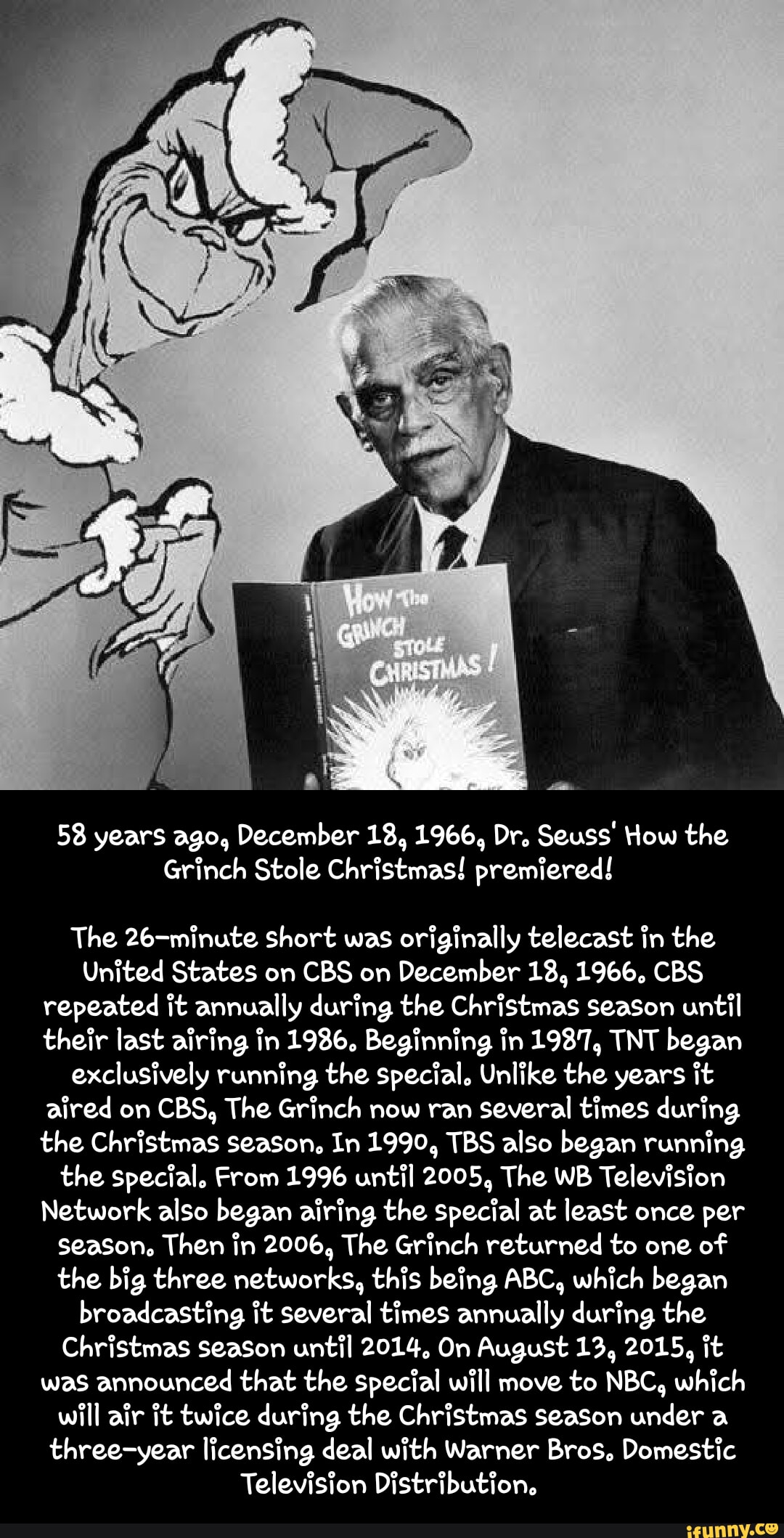
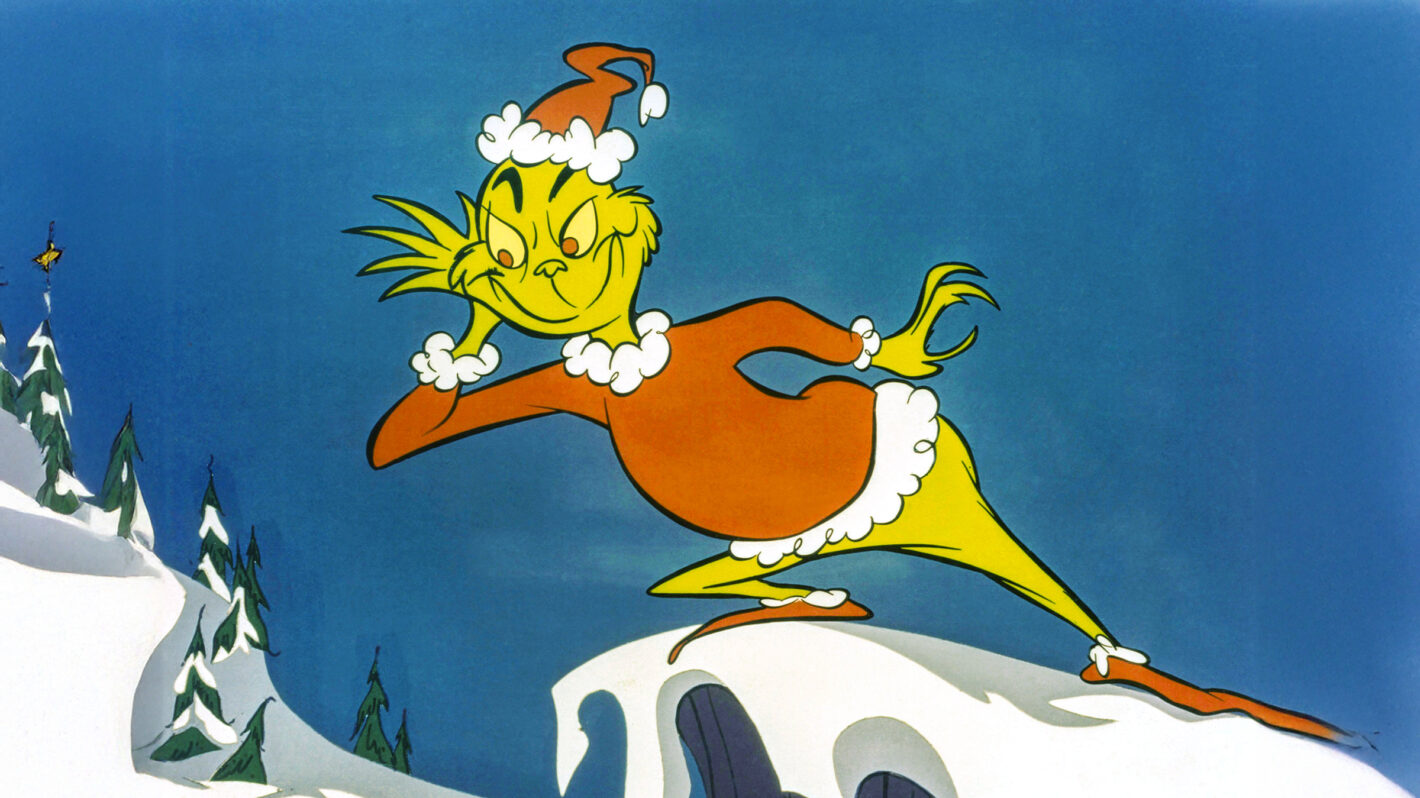
The 1966 Grinch special, officially titled How the Grinch Stole Christmas!, is a landmark animated television film based on the 1957 children’s book by Dr. Seuss. Directed by Chuck Jones and narrated by Boris Karloff, it follows a cynical creature’s attempt to end Christmas in the town of Whoville, only to find that the holiday’s spirit transcends material possessions.
The 1966 production remains the definitive adaptation of Dr. Seuss’s work, distinguished by its hand-drawn animation, iconic musical score, and the legendary vocal performance of Boris Karloff. Despite numerous modern remakes, the original special is viewed by millions annually and holds a permanent place in the United States National Film Registry for being "culturally, historically, or aesthetically significant."
The Genesis of a Holiday Masterpiece
The journey of the 1966 Grinch special began with a unique partnership between two creative giants: Theodor Geisel (Dr. Seuss) and Chuck Jones. By the mid-1960s, Jones was a celebrated animator known for his work on the Looney Tunes and Merry Melodies shorts at Warner Bros. Geisel, who was notoriously protective of his intellectual property, was initially hesitant to adapt his book for television. He feared that the medium would dilute the message or ruin the aesthetic of his illustrations.
However, Geisel’s history with Jones dated back to their time working on the Private Snafu training films during World War II. This existing trust allowed for a collaboration that favored artistic integrity over commercial speed. The project was eventually greenlit with a budget of approximately $315,000, an astronomical sum for a 26-minute animated special in 1966 (equivalent to over $3 million in 2026 dollars).
Visual Development and the "Grinch Green"
One of the most significant contributions Chuck Jones made to the story was the Grinch’s color. In the original 1957 book, the Grinch was depicted in black and white with some red and pink accents. It was Jones who decided the Grinch should be green. Legend has it that the specific shade of "Grinch Green" was inspired by the color of several ugly rental cars Jones had driven during that period.
The character’s physical movements also reflect Jones’s signature style. If one looks closely at the Grinch’s facial expressions—particularly the iconic, slowly spreading "evil" smile—they see the same fluidity and timing found in Wile E. Coyote or Bugs Bunny. This animation required over 25,000 individual drawings, a density of labor that gave the special a cinematic quality rarely seen on television at the time.
Vocal Legends: Karloff and Ravenscroft
The auditory experience of the 1966 Grinch special is as vital as its visuals. The production features two of the most recognizable voices in entertainment history, though one of them remained uncredited for decades.
Boris Karloff’s Dual Role
Boris Karloff, best known for his portrayal of Frankenstein’s monster, was cast as both the narrator and the voice of the Grinch. Karloff’s delivery is often cited as the soul of the special. He managed to imbue the narration with a rhythmic, storybook quality while making the Grinch sound genuinely menacing yet ultimately vulnerable. Interestingly, Karloff did not voice the "Grinch" when the character spoke with a high-pitched snarl; the audio was often manipulated or carefully scripted to maintain the character's unique cadence.
The Mystery of the Singer
A common misconception that persisted for years was that Boris Karloff sang the famous song "You're a Mean One, Mr. Grinch." In reality, the song was performed by Thurl Ravenscroft, the deep-voiced actor famous for being the voice of Tony the Tiger ("They’re Grrr-eat!").
Due to a clerical oversight, Ravenscroft was not credited in the closing titles of the special. Dr. Seuss felt so terrible about this omission that he personally wrote to newspaper columnists across the United States to inform them that it was Ravenscroft, not Karloff, who provided the singing voice. This credit was eventually corrected in later home media releases, but the confusion remains a piece of television trivia to this day.
Musical Composition and Lyrical Genius
The music of the 1966 special was composed by Albert Hague, with lyrics written by Dr. Seuss himself. The collaboration resulted in three main musical sequences that define the special’s atmosphere:
- "Welcome Christmas": A fictional "Who-ly" carol that uses nonsense words like "Fah Who Doraze" to create a sense of ancient, communal tradition.
- "Trim Up the Tree": A frantic, upbeat number that highlights the Whos' excitement and the "noise, noise, noise" that the Grinch despises.
- "You're a Mean One, Mr. Grinch": A masterclass in lyrical insult comedy. Dr. Seuss used increasingly absurd metaphors—"Your heart's an empty hole," "You're a foul one, Mr. Grinch," and "You have termites in your smile"—to establish the character's villainy.
The score is technically complex, utilizing deep brass to represent the Grinch and light, airy woodwinds for the Whos. This sonic contrast reinforces the theme of the Grinch’s isolation versus the Whos’ community.
Technical Specifications and Production Facts
To understand why the 1966 Grinch special looks better than many of its contemporaries, one must look at the technical rigor applied by the team at MGM Animation/Visual Arts.
| Feature | Specification / Detail |
|---|---|
| Director | Chuck Jones |
| Original Air Date | December 18, 1966 |
| Network | CBS (Original), later NBC/TBS |
| Running Time | 26 minutes (approx.) |
| Animation Style | Traditional hand-drawn cel animation |
| Aspect Ratio | 4:3 (Original), 16:9 (Cropped/Remastered versions) |
| Frame Count | Over 25,000 individual drawings |
| Awards | Peabody Award, Grammy for Best Recording for Children |
| Resolution (2026) | 4K Ultra HD Restoration available |
Themes: Beyond the Holiday Commercialism
While the 1966 Grinch special is often viewed as a simple children’s story, its thematic depth is what has allowed it to endure for sixty years. At its core, the story is a critique of commercialism.
The Grinch believes that by stealing the "ribbons, tags, packages, boxes, and bags," he can stop Christmas from coming. The climax of the film—when the Whos sing despite having no presents—serves as the ultimate rebuttal to the idea that joy is tied to material wealth. This message resonated deeply in the mid-1960s, a period of massive economic growth and increasing consumerism in the West.
Furthermore, the character of Max the Dog provides a moral anchor for the audience. Max is a silent observer who participates in the Grinch's schemes out of loyalty and fear, yet his expressive eyes often communicate the absurdity and cruelty of the Grinch’s actions. Max serves as a bridge for the audience, allowing them to feel the "wrongness" of the Grinch's mission through the eyes of an innocent.
Comparative Analysis: 1966 vs. Modern Adaptations
As of 2026, there have been several major adaptations of the Grinch story, including the 2000 live-action film starring Jim Carrey and the 2018 3D-animated feature by Illumination.
The 2000 Live-Action Version
The Jim Carrey version expanded the lore significantly, adding a backstory for the Grinch and satirizing the Whos as materialistic and exclusionary. While commercially successful, many critics argue it lost the simple, poetic elegance of the 1966 special. The prosthetic makeup and manic energy of the film offer a very different experience than the calm, narrated pace of the original.
The 2018 Animated Version
The 2018 film aimed for a softer, more "family-friendly" Grinch. While visually stunning, it struggled to replicate the "Mean One" energy of the 1966 version. The Grinch in 2018 was more of an eccentric grouch than a truly malicious antagonist.
The 1966 special remains the favorite for many because it adheres most closely to the "Seussian" logic. It does not need to explain why the Grinch’s heart was two sizes too small; it simply accepts it as a fact of his nature, making his eventual transformation more profound.
Viewing Guidelines and Availability in 2026
For those looking to watch the 1966 Grinch special in 2026, there are several verified methods of access.
- Broadcast Television: In the United States, NBC typically holds the broadcast rights and airs the special at least twice during the month of December. These airings often include "Enhanced" versions with behind-the-scenes trivia.
- Streaming Services: Peacock is currently the primary streaming home for the 1966 special due to its licensing agreement with NBCUniversal. It is also frequently available for digital purchase on platforms like Amazon Prime Video and Apple TV.
- Physical Media: For the highest quality experience, the "Ultimate Edition" Blu-ray or 4K Ultra HD disc is recommended. These versions have been meticulously restored to remove grain and color-correct the animation to match Chuck Jones's original cels.
- International Licensing: Outside the US, the special is often found on services like Sky (UK) or Stan (Australia) during the holiday season.
Common Mistakes and Troubleshooting
When searching for or discussing the 1966 special, viewers often encounter a few common issues:
- The "Uncut" Version: Some older television edits removed small scenes (like the Grinch making his dog-disguise or certain verses of the songs) to make room for more commercials. Ensure you are watching the 26-minute version to see the complete animation.
- Sequel Confusion: There are other Seuss specials, such as Halloween is Grinch Night (1977) and The Grinch Grinches the Cat in the Hat (1982). While interesting, these were not directed by Chuck Jones and have a significantly different tone and animation style.
- Aspect Ratio Issues: Many modern broadcasts crop the original 4:3 square image to fit 16:9 widescreen televisions. This often cuts off the top of the characters' heads or the bottom of the frame. Purists should look for the "Original Aspect Ratio" setting on their Blu-ray or streaming player.
FAQ
Is the 1966 Grinch special in the public domain?
No. The 1966 Grinch special is protected by copyright. The rights are currently managed by Dr. Seuss Enterprises and Warner Bros. Entertainment (which acquired the MGM library). Licensing for public screenings or commercial use must be obtained through these entities.
Why does the Grinch look different in the 1966 version compared to the book?
Chuck Jones wanted the Grinch to have more expressive, animalistic movements. He added the green color and modified the facial structure to allow for the "wicked" expressions that have become iconic. The book’s version was more of a "spidery" and pale creature.
How long did it take to make the 1966 special?
The production took approximately 11 months from initial storyboarding to the final air date. This is remarkably fast considering the 25,000 hand-painted cels required for the 26 minutes of footage.
Was Cindy Lou Who's voice a child actor?
Yes. Cindy Lou Who was voiced by June Foray, one of the most prolific voice actresses in history (also known for voicing Rocky the Flying Squirrel). Although Foray was an adult at the time, she was famous for her ability to perfectly mimic the voices of young children.
Are there any hidden messages in the "Who" language?
The words in songs like "Fah Who Doraze" do not have a formal translation in any language. Dr. Seuss intended them to sound like a "classical" or "ancient" language to give the Whos a sense of deep-rooted cultural heritage that was independent of modern English-speaking society.
Final Recommendation
To fully appreciate the 1966 Grinch special, it is best viewed in a dark room on a high-quality screen that can handle the vibrant "Grinch Green" and deep blacks of the hand-drawn animation. Whether you are a first-time viewer or returning for a 60th anniversary viewing in 2026, pay close attention to the synchronization between Thurl Ravenscroft's bass notes and the Grinch’s movements. This synergy is the hallmark of Chuck Jones's genius and remains the gold standard for holiday animation.