The 1970s crisis was a transformative decade defined by "stagflation"—a rare combination of stagnant economic growth and high inflation—compounded by two major energy shocks and the collapse of the post-WWII international monetary system. Triggered by oil embargoes and geopolitical shifts, it forced a radical restructuring of global financial policies and energy consumption.
The 1970s are often remembered as a "lost decade" for economic progress in the West, but they were also a crucible for modern economic theory. To understand the 1970s crisis, one must look beyond single events like the 1973 oil embargo and examine the systemic failures of the Bretton Woods system, the rise of petropolitics, and the social upheaval that followed. This period fundamentally ended the long post-war boom and ushered in the era of neoliberalism and supply-side economics that would dominate the late 20th century.
The Collapse of the Bretton Woods System (1971)
The decade’s instability began before the first oil shock. Since 1944, the global economy had operated under the Bretton Woods Agreement, which pegged international currencies to the U.S. dollar, which was in turn pegged to gold at $35 per ounce. By the early 1970s, this system was under immense strain. The United States was running massive deficits to fund the Vietnam War and the "Great Society" social programs, leading to a surplus of dollars abroad.
In August 1971, President Richard Nixon unilaterally suspended the convertibility of the dollar into gold. This event, known as the "Nixon Shock," effectively ended the fixed exchange rate system and led to the transition toward floating exchange rates. The move was intended to curb inflation and protect the U.S. gold reserve, but its immediate effect was a devalued dollar and increased global market volatility. This set the stage for the massive price increases in commodities, most notably oil, which was priced in dollars.
The 1973 Energy Crisis: The First Oil Shock
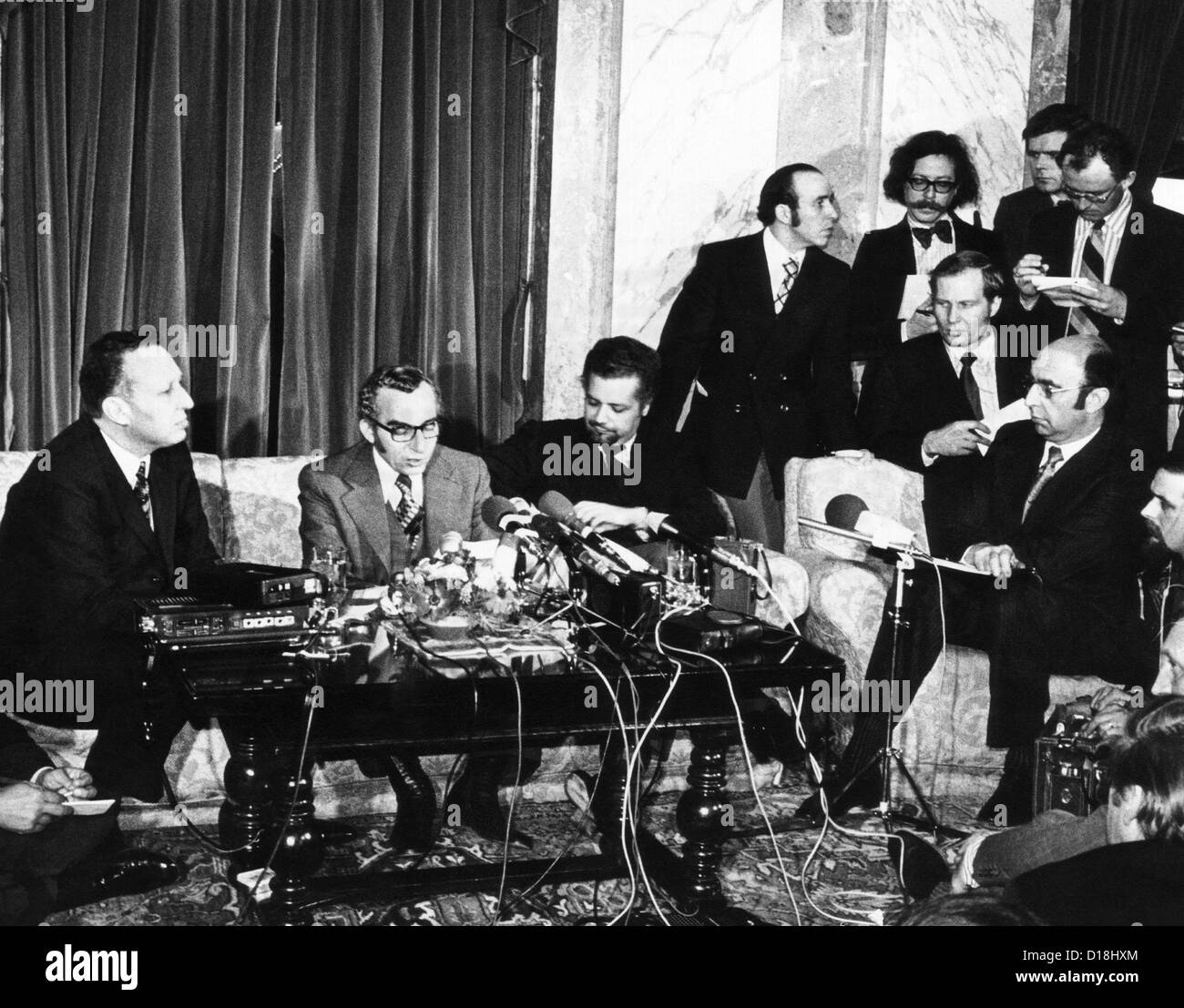
The most visible manifestation of the 1970s crisis occurred in October 1973. Following the outbreak of the Yom Kippur War, the Organization of Arab Petroleum Exporting Countries (OAPEC) proclaimed an oil embargo. This was directed at nations perceived as supporting Israel during the conflict, including the United States, the United Kingdom, Japan, and the Netherlands.
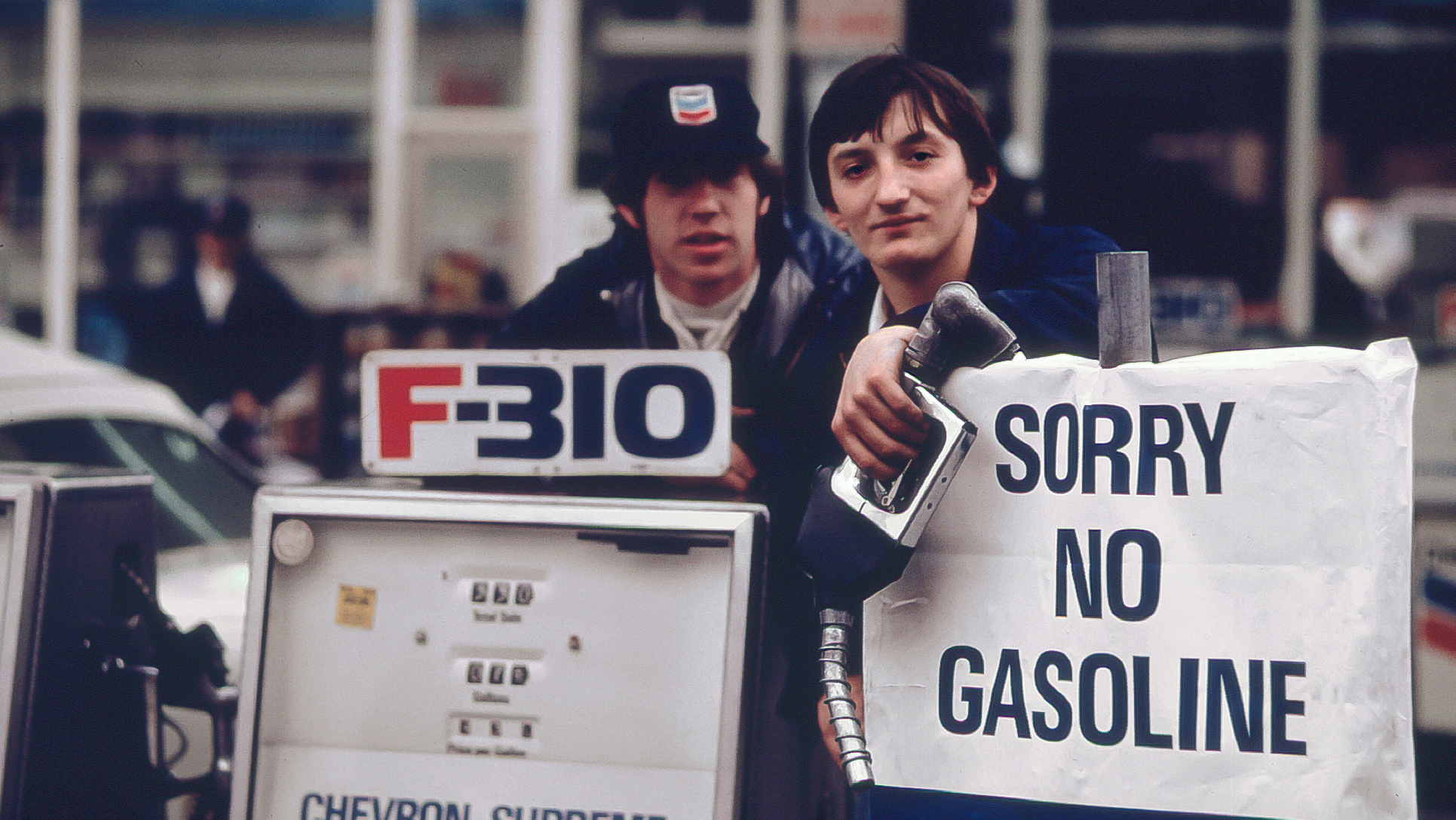
The impact was immediate and devastating. Global oil prices quadrupled from approximately $3 per barrel to nearly $12 by 1974. In the United States and Europe, gas stations ran dry, leading to long queues and government-mandated rationing. This was not merely a logistical headache; it was a fundamental threat to an industrial world that had built its entire infrastructure on the assumption of cheap, infinite energy.
Economic Consequences of the First Shock
The 1973 shock acted as a massive tax on the global economy. Because energy is an input for almost every good and service, the spike in oil prices caused "cost-push" inflation. Transportation costs rose, manufacturing became more expensive, and consumer purchasing power plummeted. This led to a sharp recession in 1974–1975, the worst since the Great Depression at that time.
The Mystery of Stagflation
Before the 1970s, mainstream economists followed the "Phillips Curve," which suggested an inverse relationship between inflation and unemployment. The theory held that if inflation was high, unemployment should be low, and vice-versa. The 1970s crisis shattered this consensus by introducing "stagflation."
Stagflation occurs when an economy experiences slow growth (stagnation) and high unemployment while simultaneously suffering from rising prices (inflation). In 1975, U.S. inflation reached 9.1%, while unemployment climbed to 8.5%. This was a theoretical impossibility under Keynesian models of the time.
Why Stagflation Persisted
Several factors kept the crisis alive throughout the decade:
- Inflationary Expectations: Workers began to expect prices to rise, leading them to demand higher wages. Employers, in turn, raised prices to cover higher wage costs, creating a "wage-price spiral."
- Monetary Policy Failures: Central banks, particularly the U.S. Federal Reserve under Arthur Burns, tried to fight unemployment by keeping interest rates low, which only served to fuel further inflation.
- Regulatory Burden: Increased environmental and safety regulations, while socially beneficial, added costs to industrial production during a time of low productivity growth.
The 1979 Energy Crisis: The Second Oil Shock
Just as the global economy began to stabilize in the late 1970s, a second crisis emerged. The 1979 Iranian Revolution led to a massive disruption in global oil supply. Although the total volume of oil lost was smaller than in 1973, panic buying and market speculation caused prices to more than double, reaching nearly $40 per barrel.
This second shock was even more psychologically damaging than the first. It proved that the vulnerabilities of the 1973 crisis had not been solved. In the United States, President Jimmy Carter delivered his famous "Malaise Speech," identifying a "crisis of confidence" in the American public. This period of high interest rates and high inflation eventually paved the way for the radical economic shifts of the 1980s.
Regional Variations of the Crisis
While the 1970s crisis was global, different nations experienced its effects in unique ways. The structural weaknesses of individual economies often dictated the severity of the decade's turmoil.
The United Kingdom: The "Sick Man of Europe"
The UK suffered perhaps more acutely than any other Western nation. In 1976, the British government was forced to request a $3.9 billion bailout from the International Monetary Fund (IMF) to stabilize the pound—an unprecedented humiliation for a major industrial power. The decade culminated in the "Winter of Discontent" (1978–1979), a series of widespread strikes by public sector trade unions that left trash uncollected in the streets and graves undug, leading directly to the election of Margaret Thatcher.
The United States: Deindustrialization
In the U.S., the crisis accelerated the decline of the "Rust Belt." High energy costs and inflation made old-line manufacturing uncompetitive against rising powers like Japan and West Germany. This period saw the birth of the modern environmental movement (with the creation of the EPA in 1970) but also a painful transition away from a labor-intensive manufacturing economy toward a service-oriented one.
| Feature | 1973 Oil Shock | 1979 Oil Shock |
|---|---|---|
| Primary Trigger | Yom Kippur War / OAPEC Embargo | Iranian Revolution |
| Crude Oil Price Change | ~$3 to ~$12 per barrel | ~$15 to ~$39 per barrel |
| U.S. Inflation Peak | 12.3% (1974) | 14.8% (1980) |
| Major Economic Result | End of post-war boom; first stagflation | Severe 1981-82 recession; Volcker Shock |
| Geopolitical Outcome | Increased OPEC influence | Shift toward energy conservation and deregulation |
Solving the Crisis: The Volcker Shock and Deregulation
The 1970s crisis did not end through gradual recovery but through painful intervention. In 1979, Paul Volcker was appointed Chairman of the Federal Reserve. Recognizing that inflation had become embedded in the public psyche, Volcker took the drastic step of restricting the money supply and allowing interest rates to skyrocket.
By 1981, the federal funds rate reached a peak of 20%. This "Volcker Shock" intentionally triggered a deep recession to "break the back" of inflation. While the human cost was high—unemployment reached 10.8% in 1982—the policy succeeded in stopping the wage-price spiral. By 1983, inflation had dropped to below 4%.
Simultaneously, the "supply-side" revolution began. Governments in the U.S. and UK moved to deregulate industries, lower taxes, and curtail the power of labor unions. These policies aimed to increase productivity and reduce the "cost-push" factors that had fueled the 1970s crisis.
Lessons for 2026: The Legacy of the 1970s
As we look back from 2026, the 1970s crisis remains the primary case study for managing modern inflationary periods. Several key lessons continue to inform policy:
- Energy Diversity is National Security: The 1970s proved that reliance on a single energy source from volatile regions is a structural risk. This spurred the initial push for renewable energy and domestic oil production.
- Central Bank Independence: The failure of Arthur Burns to resist political pressure to keep rates low taught the world that central banks must remain independent to effectively combat inflation.
- The Danger of Expectations: Economists now understand that once the public expects inflation, it becomes a self-fulfilling prophecy. Modern "inflation targeting" is a direct result of the 1970s experience.
Frequently Asked Questions
What was the main cause of the 1970s economic crisis?
The crisis was caused by a "perfect storm" of events: the collapse of the Bretton Woods gold-standard system, two massive spikes in oil prices (1973 and 1979), and overly loose monetary policies that failed to control rising prices, leading to stagflation.
Why was it called "stagflation"?
The term is a portmanteau of "stagnant" and "inflation." It describes a specific economic state where the economy is not growing (high unemployment/low GDP) but prices are still rising rapidly. Historically, these two things were thought to be unable to happen at the same time.
How did the 1970s crisis change the car industry?
Before 1973, large, fuel-inefficient "gas guzzlers" were the standard in the West. The oil shocks forced a shift toward smaller, more fuel-efficient vehicles. This allowed Japanese automakers like Toyota and Honda, who already produced smaller cars, to gain a massive foothold in the U.S. market.
Did the 1970s crisis lead to the end of the Cold War?
While the crisis primarily affected the West, it also impacted the Soviet Union. Initially, high oil prices benefited the USSR as an oil exporter. However, the subsequent Western shift toward energy efficiency and high-tech industries in the 1980s left the Soviet command economy, which remained stuck in a 1970s-style industrial model, unable to compete.
How long did the 1970s crisis actually last?
The period of instability began with the Nixon Shock in 1971 and didn't truly conclude until the inflation rates stabilized in 1983. This twelve-year window is often viewed as a singular era of economic transition.
Practical Next Steps for Researchers and Analysts
For those analyzing the 1970s crisis in a contemporary context, the most effective next action is to compare the "Consumer Price Index (CPI) components" of 1974–1980 against modern inflationary periods. Understanding which sectors (energy, food, or housing) drove the 1970s spike allows for a better assessment of whether current economic volatility is "transitory" or structural.
Furthermore, reviewing the Federal Reserve History on the Great Inflation provides invaluable primary source data on the decision-making processes that both exacerbated and eventually solved the crisis. For a British perspective, the National Archives offers extensive records on the 1976 IMF loan, which remains a cornerstone of UK economic history.