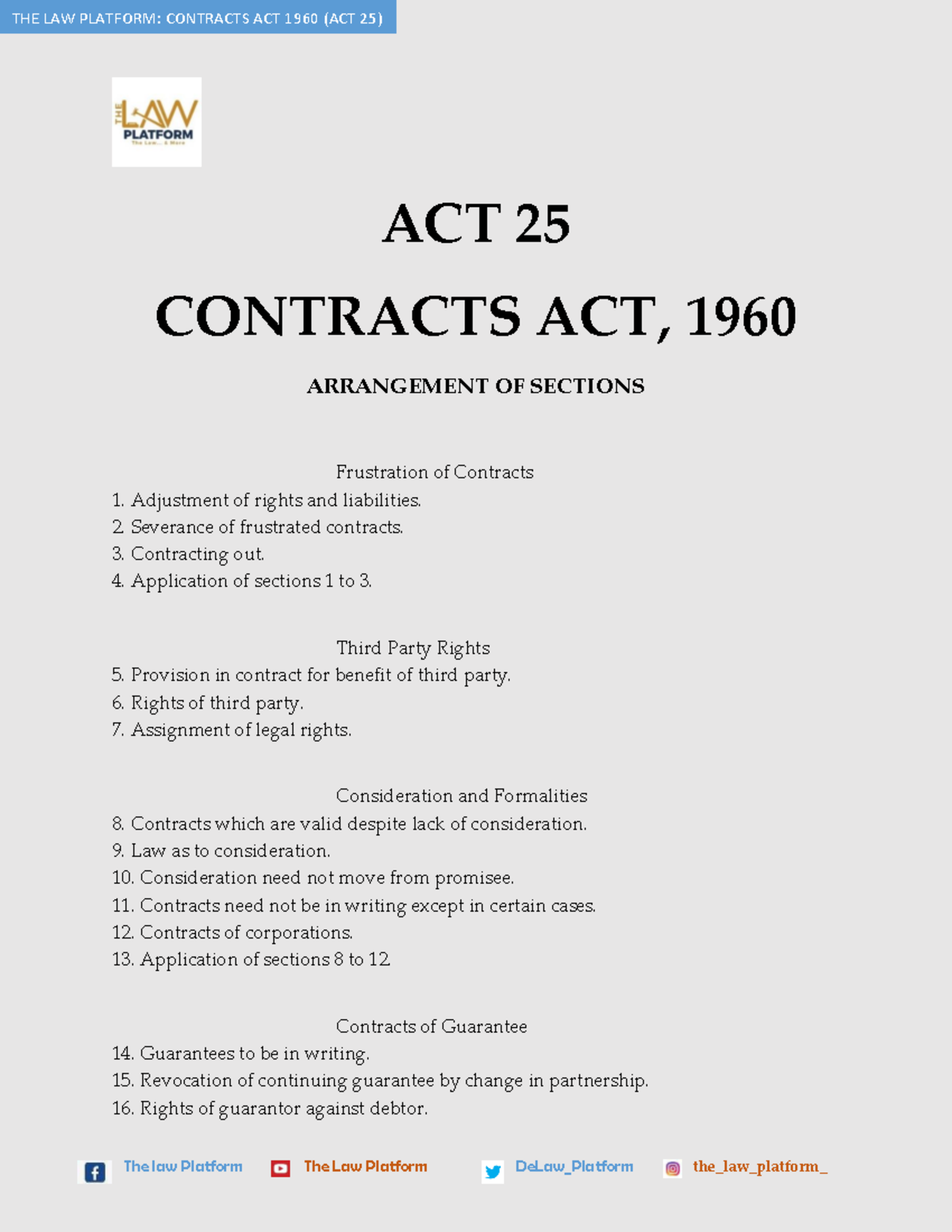
The term "1960s contracts" refers to the specific legal, social, and economic instruments governing agreements during a decade marked by rapid legislative reform and shifting commercial standards. These documents are characterized by traditional common-law drafting styles, the early influence of the Uniform Commercial Code, and the emergence of specialized clauses addressing civil rights, industrial labor, and changing consumer protections.
The Legal Landscape of the 1960s
To understand 1960s contracts, one must first recognize the transitional nature of the legal environment in which they were drafted. During this period, the United States moved from a system heavily reliant on rigid, formalistic common law toward more codified standards. The most significant development was the widespread adoption of the Uniform Commercial Code (UCC). By the end of the decade, almost every state had adopted the UCC, which fundamentally altered how sales and commercial agreements were structured, interpreted, and enforced.
Contracts from this era often bridge the gap between archaic, dense "legalese" and the more modern, consumer-friendly language that would become standard in the 1970s and beyond. For legal professionals and historians, reviewing these documents requires an understanding of both the specific case law of the era and the evolving regulatory requirements that began to restrict freedom of contract in favor of public policy objectives.
Key Drivers of Contractual Change
Several distinct forces converged in the 1960s to influence how parties negotiated and documented their obligations. These drivers included:
- Civil Rights Legislation: The Civil Rights Act of 1964 introduced sweeping changes to employment and public accommodation contracts, rendering many discriminatory clauses unenforceable and forcing a rewrite of standard labor agreements.
- Expansion of Consumer Protection: As mass production reached its zenith, courts began to move away from the doctrine of caveat emptor (let the buyer beware). Early litigation regarding product liability in the 1960s began to influence the warranties and indemnity clauses found in consumer contracts.
- Industrial Labor Relations: The 1960s saw a rise in unionization and collective bargaining. Employment contracts during this time shifted from individual, at-will agreements—common in the early part of the century—to complex collective bargaining agreements that defined hours, wages, and safety conditions with newfound precision.
- Government Contracting: The buildup of the military-industrial complex and the Space Race necessitated massive government procurement contracts. These agreements introduced rigorous quality control requirements and strict reporting standards that spilled over into private sector commercial subcontracts.
Formal Structure and Drafting Conventions
Contracts drafted in the 1960s often exhibit a unique aesthetic and technical structure. Practitioners of the era leaned heavily on "The Bluebook" conventions and traditional drafting styles that favored verbose, multi-clause sentences. This era preceded the "Plain English" movement, meaning that contracts were frequently written in a style intended to exclude the layperson, prioritizing dense legal precision over accessibility.
Key structural components frequently encountered in 1960s agreements include:
- Recitals (The "Whereas" Clauses): These were almost universally present in 1960s contracts, serving as a preamble to define the intent of the parties. While still common today, their use was far more rigid and formulaic in the 1960s.
- Integration Clauses: As the UCC gained traction, integration clauses—statements that the written contract represents the entire agreement—became more common to prevent parties from asserting verbal side-agreements in court.
- Standardized Indemnity: Indemnification language was often broad, reflecting a legal culture that favored risk-shifting to the party perceived to have the most "deep pockets," often leading to litigation over the limits of contractual liability.
Comparing Contractual Standards: 1960s vs. Modern Era
| Feature | 1960s Contracts | Contemporary Contracts |
|---|---|---|
| Language Style | Archaic, Latinate, formalistic | Plain English, concise, accessible |
| Consumer Rights | Limited; Caveat Emptor dominant | Statutory protections, disclosure-heavy |
| Primary Code | Adoption of UCC (early stages) | Fully established UCC & digital protocols |
| Boilerplate | Lengthy, rigid, high redundancy | Modular, automated, risk-adjusted |
| Dispute Resolution | Litigation-focused in courts | Broad use of arbitration/mediation |
Employment and Labor Agreements
Employment law in the 1960s underwent a transformation that is clearly visible in the contracts of the time. The shift toward formalizing the employer-employee relationship meant that companies began issuing written handbooks and formal contracts to a broader base of the workforce. These documents were often the site of intense negotiation regarding fringe benefits, which were increasingly used as a competitive tool for attracting talent in a growing economy.
Furthermore, these contracts were frequently the first to incorporate the evolving standards regarding equal opportunity. Companies were required to adjust their standard employment templates to include non-discrimination language, providing a window into how private contract law was forced to adapt to federal civil rights mandates.
Real Estate and Commercial Leases
The real estate market in the 1960s was characterized by rapid suburban expansion and commercial development. Consequently, residential and commercial lease agreements became more standardized. In the early 1960s, a lease was often a relatively simple document. However, as housing regulations increased, these contracts grew in complexity.
Commercial leases from this era often included "percentage rent" clauses, where a tenant's rent was tied to their gross sales. This reflected a boom-time economy where landlords sought to share in the prosperity of their tenants. Conversely, property management and maintenance responsibilities were often ill-defined by today's standards, leading to significant case law in the late 1960s regarding the "implied warranty of habitability."
Challenges in Document Retrieval and Interpretation
For historians and legal researchers attempting to verify 1960s contracts, the primary hurdle is accessibility. Unlike modern electronic documents, these contracts often exist only in hard-copy archives. When analyzing them, researchers must consider the following:
- Jurisdictional Variability: Because the UCC was adopted at different times by different states, a contract from 1962 in New York may be subject to entirely different rules than one from 1962 in Nevada.
- Document Degradation: Many 1960s contracts were printed on acidic paper, making them prone to crumbling. Microfilm archives are often the only way to view these without damaging the original documents.
- Terminology Shifts: Terms such as "consideration" or "specific performance" carry the same core meaning today, but the thresholds for proving them in court have changed significantly due to precedents set in the late 1960s.
Guidance for Researching 1960s Documentation
If you are tasked with interpreting or researching a contract from the 1960s, follow these steps to ensure accuracy:
- Identify the Jurisdiction: Determine the state or municipality where the contract was signed. The laws of that specific jurisdiction at that specific year are the only ones that apply.
- Verify the UCC Status: Check the date the specific state adopted the Uniform Commercial Code. If the contract pre-dates this adoption, common law contract principles—which were far more restrictive—will apply.
- Consult Period-Appropriate Commentaries: Rather than relying on modern legal textbooks, look for legal journals and bar association records published between 1960 and 1969. These will provide the context of how lawyers of that time understood the risks and obligations they were drafting.
- Consider Public Policy: Remember that the 1960s saw a massive shift in social attitudes. Courts often interpreted "vague" contracts by looking at what was considered "fair" in the eyes of the public at that time, rather than just the strict letter of the law.
Frequently Asked Questions
Are 1960s contracts still legally enforceable? Generally, a contract’s enforceability is determined by the laws in effect when the contract was signed. If a contract was valid in the 1960s and has not been superseded by subsequent agreements or expired, its core obligations may still be legally binding, though litigation would rely on modern procedural rules.
Why are 1960s contracts so difficult to read? Drafting in the 1960s was dominated by a tradition of "legalism," where practitioners used complex, archaic, and repetitive language to ensure that every possible loophole was covered. This was considered a hallmark of professional competence at the time, despite its lack of clarity for the average reader.
How did the UCC affect contracts in the 1960s? The UCC provided a standardized framework for commercial transactions, replacing a fragmented system of state laws. It introduced concepts like "good faith" as a requirement for all commercial dealings, which served as a major turning point for the fairness and predictability of 1960s contracts.
Can I use a 1960s template for a modern agreement? It is strongly advised against. Using a 1960s template would likely leave you vulnerable to modern regulatory requirements, such as digital privacy laws, updated consumer disclosure mandates, and current tax codes, none of which were contemplated in 1960s drafting styles.
Where can I find official 1960s contract templates? Authentic templates from that era are found in legal archives, law school libraries, and historical society databases. They serve as valuable historical records but should be viewed as academic resources rather than practical tools for modern business.
Next Steps for Practitioners
If you are holding an original contract from the 1960s, begin by creating a digital scan for preservation purposes. If you need to determine its current standing, consult a legal professional who specializes in contract litigation or property law within the relevant jurisdiction. Do not attempt to apply contemporary interpretations to 1960s language without verifying the legal landscape of the exact year in question. Engaging with historical law reviews from the 1960s will provide the most accurate context for understanding the intent behind the signatures on the page.