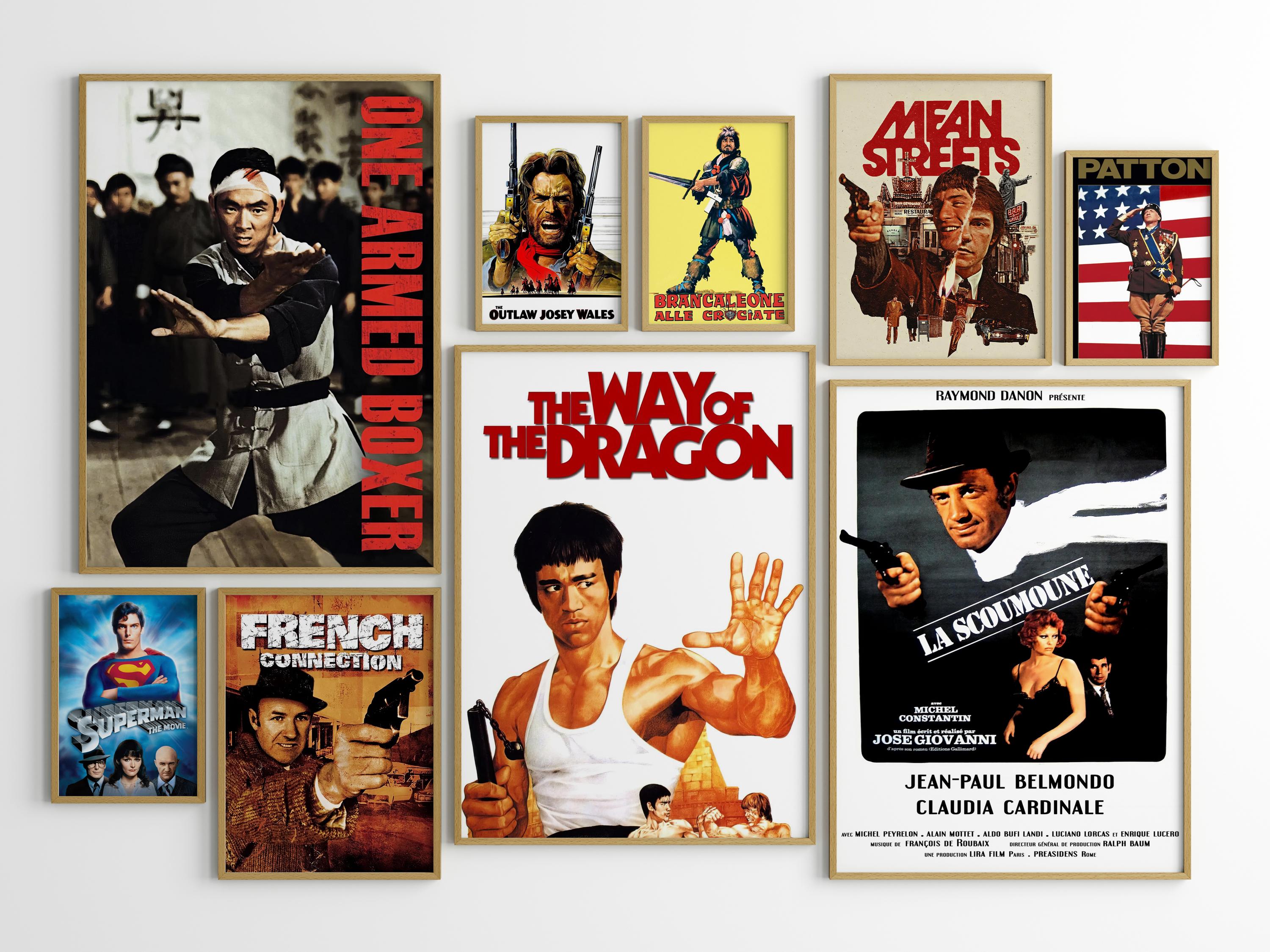
1970s cinema represents a transformative decade where director-led creativity, social realism, and the birth of the modern blockbuster converged. Often called the "New Hollywood" era, it moved away from studio-driven formulas toward gritty, experimental, and commercially ambitious storytelling that redefined global filmmaking standards and remains the benchmark for cinematic artistry in 2026.
The Foundations of the New Hollywood Movement
The 1970s did not begin in a vacuum. The decay of the traditional Hollywood studio system in the late 1960s, coupled with the abolition of the Hays Code (the industry’s moral censorship guidelines) in 1968, created a power vacuum. This vacuum was filled by a new generation of filmmakers, often referred to as the "Movie Brats." Unlike the studio journeymen of the 1940s, these directors—including Francis Ford Coppola, Martin Scorsese, Steven Spielberg, and George Lucas—were often film-school educated and deeply influenced by European art-house cinema.
The primary catalyst for this shift was the financial desperation of major studios. Following several high-profile big-budget flops in the late 60s, studios began to take risks on younger directors who promised to capture the counterculture audience. This era, roughly spanning from 1967 to 1980, prioritized the Auteur Theory, which suggests that the director is the "author" of a film, possessing a unique personal vision that transcends the script or the studio's requirements.
The result was a decade of uncompromising narratives. Films became darker, more cynical, and more reflective of a nation grappling with the Vietnam War, the Watergate scandal, and economic stagflation. The 1970s proved that audiences were willing to engage with morally ambiguous protagonists and unhappy endings, provided the storytelling was authentic and visceral.
The Rise of Revisionist Genres
One of the most significant achievements of 1970s cinema was the deconstruction of classic American genres. Filmmakers took the established tropes of the Western, the Crime Thriller, and the Noir and turned them inside out to reflect contemporary anxieties.
The Revisionist Western
Traditional Westerns often portrayed the American frontier as a place of clear moral binaries—heroic cowboys versus villainous outlaws. In the 1970s, directors like Robert Altman and Sam Peckinpah dismantled this myth. In Altman’s McCabe & Mrs. Miller (1971), the "hero" is a bumbling businessman, and the "frontier" is a muddy, freezing outpost of corporate greed. These films emphasized the brutality of the era and the loss of innocence, reflecting the disillusionment many felt toward American exceptionalism during the Vietnam era.
Neo-Noir and the Paranoia Thriller
The 1970s redefined the detective story through Neo-Noir. Films like Roman Polanski’s Chinatown (1974) and Robert Altman’s The Long Goodbye (1973) updated the hard-boiled tropes of the 1940s with 1970s cynicism. In these films, the detective often fails to solve the deeper systemic corruption, reflecting a societal belief that the "system" was inherently rigged.
This evolved into the "Paranoia Thriller," a subgenre uniquely suited to the post-Watergate climate. Alan J. Pakula’s "Paranoia Trilogy"—comprising Klute (1971), The Parallaxes View (1974), and All the President’s Men (1976)—masterfully captured the sensation of being watched by unseen, all-powerful forces. These films utilized deep-focus cinematography and innovative sound design to create an atmosphere of claustrophobia and distrust.
Technical Innovations and Aesthetic Shifts
The 1970s were characterized by a move away from the polished, artificial look of the soundstage toward "street-level" realism. This was facilitated by several key technical advancements that changed how movies were shot and heard.
- Location Shooting: Improvements in portable camera equipment allowed directors to move out of the studio and into the real world. William Friedkin’s The French Connection (1971) used handheld cameras and natural lighting to create a gritty, documentary-like feel that made the audience feel like participants in the action.
- The Steadicam: Invented by Garrett Brown and first used prominently in films like Bound for Glory (1976) and Rocky (1976), the Steadicam allowed for smooth, stabilized moving shots without the need for heavy tracks or cranes. This gave directors a new level of fluid mobility, most famously seen in the hallway sequences of Stanley Kubrick’s late-70s production of The Shining.
- Dolby Stereo: While multi-channel sound had existed previously, the introduction of Dolby Stereo in the mid-70s revolutionized the theatrical experience. Star Wars (1977) was one of the first films to truly showcase the potential of high-fidelity, surround-sound environments, making the cinema an immersive auditory space.
The Pivot Point: 1975 and 1977
While the early 70s were defined by gritty realism, the latter half of the decade gave birth to the Summer Blockbuster, a phenomenon that would eventually bring the New Hollywood era to a close.
In 1975, Steven Spielberg’s Jaws changed the business model of cinema. Prior to Jaws, films typically opened in a few major cities and slowly moved across the country. Universal Pictures opted for a "wide release," opening the film on hundreds of screens simultaneously, backed by a massive television advertising campaign. The success of Jaws proved that movies could be massive cultural events that generated immense profit through "high-concept" premises.
This was solidified in 1977 with George Lucas’s Star Wars. While Jaws changed distribution, Star Wars changed the scale of cinematic ambition and the importance of merchandising. It shifted the industry's focus away from character-driven dramas toward spectacle-driven escapism. This transition was bittersweet; while it led to some of the most beloved films in history, it also incentivized studios to regain control from the "auteurs" in favor of franchise-ready properties.
International Cinema: A Global Renaissance
The creative explosion of the 1970s was not limited to the United States. Across the globe, various national cinemas were undergoing their own radical transformations.
| Movement/Region | Key Characteristics | Notable Examples |
|---|---|---|
| New German Cinema | Focus on post-war identity, low budgets, and social critique. | Aguirre, the Wrath of God (1972), The Marriage of Maria Braun (1979) |
| Italian Giallo | Stylized horror-thrillers featuring vivid colors and elaborate murder mysteries. | Deep Red (1975), Suspiria (1977) |
| Hong Kong Martial Arts | The rise of Bruce Lee and the refinement of choreographed action. | Enter the Dragon (1973), The 36th Chamber of Shaolin (1978) |
| Australian New Wave | Exploring the vast landscape and "outback" identity with a distinct visual style. | Picnic at Hanging Rock (1975), Mad Max (1979) |
| Soviet Cinema | Deeply philosophical and poetic explorations of time and memory. | Solaris (1972), Stalker (1979) |
In Europe, the New German Cinema movement, led by Werner Herzog, Wim Wenders, and Rainer Werner Fassbinder, dealt directly with the trauma of German history and the alienation of the modern world. In Italy, directors like Dario Argento were pushing the boundaries of the horror genre with the Giallo movement, which influenced the American slasher films of the late 70s and early 80s.
The Cultural Impact of the "New Hollywood" Archetype
The 1970s created a new type of movie star. The "pretty boy" leading men of the 1950s were replaced by "character actors" who became leading men, such as Dustin Hoffman, Al Pacino, Robert De Niro, and Gene Hackman. These actors brought a Method-style intensity to their roles, emphasizing psychological depth over traditional charisma.
Furthermore, the decade saw a significant—if slow—opening for diverse voices. While still dominated by male directors, the 70s produced landmark works from women like Elaine May (The Heartbreak Kid) and showcased the burgeoning "L.A. Rebellion" movement, a group of Black filmmakers at UCLA who sought to create a cinema that reflected the Black experience without the tropes of "Blaxploitation."
By 1979, the era of the unfettered auteur began to wane. The massive financial failure of Michael Cimino’s Heaven’s Gate (released in 1980) is often cited as the symbolic end of the New Hollywood era, as it led studios to re-assert strict fiscal and creative control. However, the DNA of 1970s cinema—its boldness, its technical ingenuity, and its commitment to truth—continues to influence every generation of filmmakers that has followed.
Frequently Asked Questions
What defines the "New Hollywood" era?
New Hollywood refers to a period roughly between 1967 and 1980 when a new generation of directors took creative control away from the traditional studio system. Key characteristics include the influence of European art cinema, a focus on realism, the use of anti-heroes, and the exploration of controversial social and political themes.
Why is 1970s cinema considered the best decade for film?
Many critics and historians consider the 1970s the "Golden Age" because it achieved a rare balance between artistic experimentation and commercial viability. It was a decade where the most creative films were often also the most popular, and directors were given the freedom to take massive risks with narrative and style.
How did the Vietnam War affect 1970s movies?
The Vietnam War infused cinema with a deep sense of cynicism, trauma, and skepticism toward authority. This is evident in direct war films like The Deer Hunter (1978) and Apocalypse Now (1979), but also in the general tone of the decade’s thrillers and dramas, which often featured characters struggling with disillusionment.
What was the first modern "blockbuster"?
Steven Spielberg’s Jaws (1975) is widely credited as the first modern blockbuster. It pioneered the "front-loaded" release strategy, where a film opens simultaneously in hundreds of theaters with a massive marketing campaign, a model that remains the standard for major studio releases today.
Which 1970s films are essential for understanding the decade?
To understand the breadth of 1970s cinema, one should watch The Godfather (1972) for its epic storytelling, Taxi Driver (1976) for its gritty character study, Network (1976) for its social satire, and Star Wars (1977) for its impact on the future of the industry.
Recommendations for Modern Viewers
For those looking to explore 1970s cinema in 2026, the best starting point is to focus on the "Auteur" collections. Many major streaming platforms and boutique distributors like the Criterion Collection offer high-definition restorations of 70s classics.
To truly appreciate the era, viewers should:
- Watch Chronologically: Start with the transition films of the late 60s (The Graduate, Bonnie and Clyde) to see how the "New Hollywood" style evolved.
- Explore International Work: Don't limit yourself to American films; the 1970s was a peak era for Japanese, German, and Italian cinema.
- Pay Attention to Sound: Given the innovations in sound design during this period, watching these films with a high-quality audio setup or headphones provides a much richer experience.