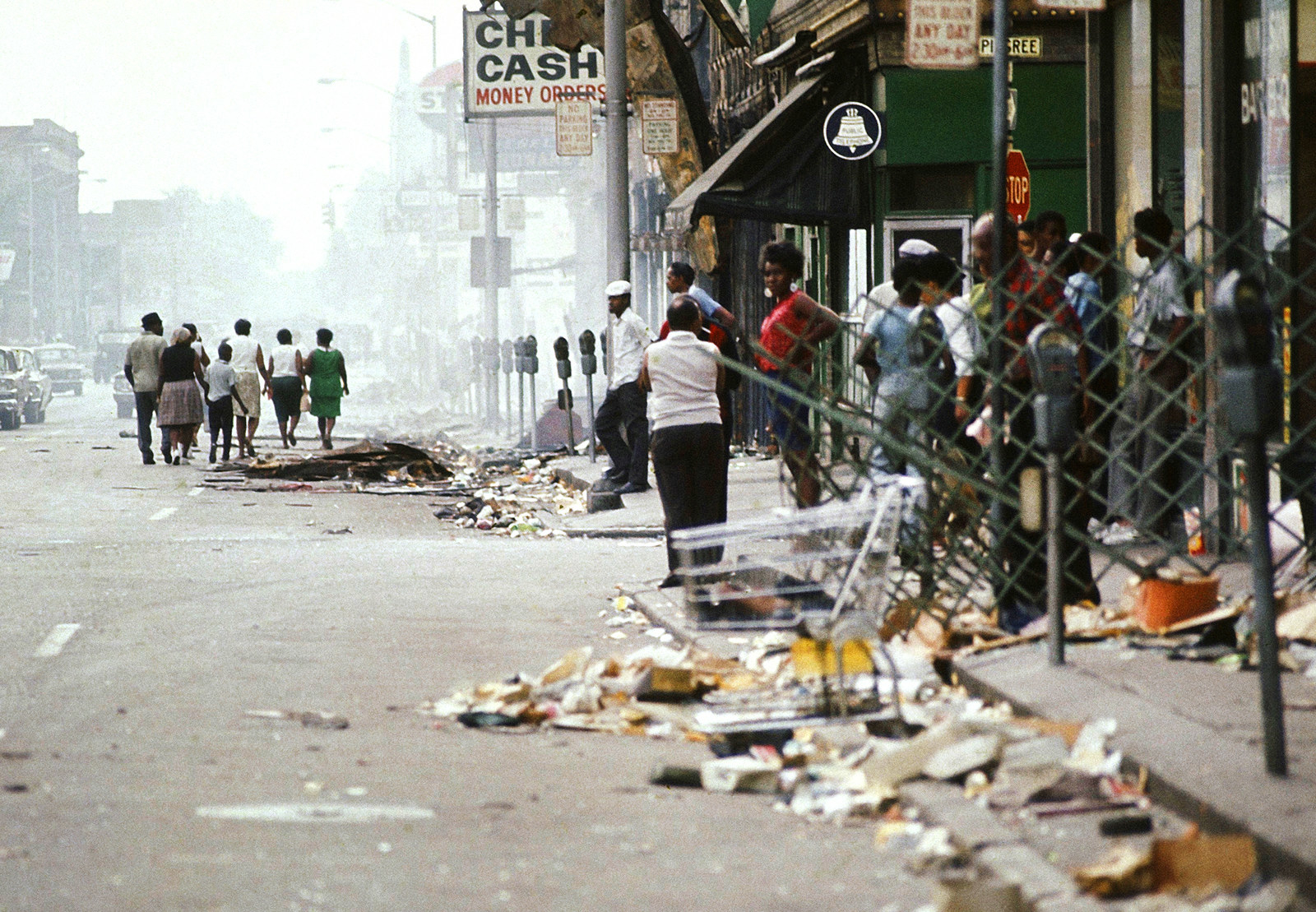
The 1967 Detroit riot, also known as the 12th Street Riot or the 1967 Detroit Rebellion, was one of the most violent and destructive civil disturbances in American history. Beginning on July 23, 1967, and lasting five days, the conflict resulted in 43 deaths, 1,189 injuries, over 7,200 arrests, and the destruction of more than 2,000 buildings, fundamentally altering the city's trajectory.
The Immediate Catalyst: The Raid on 12th Street
The violence began in the early morning hours of Sunday, July 23, 1967. Detroit police officers conducted a raid on an unlicensed, after-hours drinking establishment, colloquially known as a "blind pig," located at the corner of 12th Street and Clairmount Avenue. The establishment was hosting a party for two returning Vietnam War veterans. While the police expected only a few patrons, they found 82 people inside.
The process of arresting and transporting all 82 individuals took time, allowing a crowd to gather on the street. In the heat of a humid summer night, the sight of a large police force arresting Black citizens acted as a flashpoint for long-simmering frustrations. By the time the last police car left, the crowd began smashing windows and looting nearby stores. What began as a localized confrontation rapidly spiraled into a city-wide uprising that the Detroit Police Department (DPD) was unprepared to contain.
Deep-Seated Socioeconomic Causes
While the raid was the spark, the fuel for the 1967 Detroit riot had been accumulating for decades. To understand why the city erupted, one must examine the systemic inequities facing Detroit’s Black population in the mid-20th century.
Housing Discrimination and Urban Renewal
Post-World War II Detroit was a city of rigid racial boundaries. Practices such as redlining—where banks refused to provide mortgages in predominantly Black neighborhoods—prevented Black residents from building generational wealth through homeownership. Furthermore, "urban renewal" projects, often referred to by residents as "Negro removal," demolished thriving Black neighborhoods like Black Bottom and Paradise Valley to make way for the Chrysler Freeway (I-75). This forced residents into overcrowded areas like the 12th Street district, where housing was substandard and rents were exploitatively high.
Employment and Economic Disparity
Although Detroit was the "Arsenal of Democracy," the benefits of the booming auto industry were not distributed equally. Black workers were often the "last hired and first fired," relegated to the most dangerous and lowest-paying jobs in the foundries. By 1967, automation and the decentralization of the auto industry were already beginning to shrink the city's job pool, hitting Black communities the hardest.
Systematic Police Brutality
Perhaps the most direct cause of the tension was the relationship between the DPD and the Black community. In 1967, the police force was overwhelmingly white (approximately 95%) in a city that was about 40% Black. Residents frequently reported harassment, "stop-and-frisk" tactics, and physical abuse at the hands of the "Big Four"—tactical units known for aggressive patrolling. The lack of accountability for police misconduct created a climate of profound distrust and resentment.
The Progression of the Five-Day Conflict
The scale of the unrest required a tiered military response that eventually involved the Michigan National Guard and the United States Army.
- Sunday, July 23: The initial looting and arson were concentrated on 12th Street. Mayor Jerome Cavanagh and Police Commissioner Ray Girardin initially hoped that a "low-key" police presence would allow the tension to simmer down, but the strategy failed as the unrest spread to other major thoroughfares like Linwood and Grand River.
- Monday, July 24: Governor George Romney declared a state of emergency and deployed the Michigan National Guard. A 9:00 PM curfew was established. Despite these measures, the violence intensified, with reports of snipers and widespread fires.
- Tuesday, July 25: Realizing the National Guard was insufficient, President Lyndon B. Johnson authorized the deployment of federal troops. Elements of the 82nd and 101st Airborne Divisions were sent to Detroit. This marked the first time since the 1943 Detroit race riot that federal troops were used to quell domestic civil unrest.
- Wednesday, July 26: The presence of seasoned combat veterans from the 101st Airborne, many of whom had served in Vietnam, began to stabilize the city. Unlike the National Guard, which was often criticized for indiscriminate firing, the federal troops were ordered not to load their weapons unless specifically instructed, which helped reduce civilian casualties in their sectors.
- Thursday, July 27: The violence largely subsided. Fires were brought under control, and the process of assessing the staggering damage began.
The Algiers Motel Incident
One of the darkest chapters of the 1967 riot occurred on the night of July 25 and early July 26 at the Algiers Motel. Following reports of sniper fire, DPD officers, Michigan State Police, and National Guardsmen raided the motel's annex. During the encounter, three Black teenagers—Carl Cooper, Aubrey Pollard, and Fred Temple—were shot and killed.
Investigations later revealed that the "sniper fire" was likely a starter pistol and that the victims were unarmed. The incident became a national symbol of police brutality and judicial failure when, despite confessions and eyewitness testimony, the officers involved were either acquitted or never convicted of the killings. This event remains a focal point for historians studying the racial injustices of the era.
Comparative Data: Scale of Destruction
The following table contextualizes the 1967 Detroit riot against other major periods of civil unrest in American history to illustrate its comparative severity.
| Event | Year | Deaths | Arrests | Buildings Damaged/Destroyed |
|---|---|---|---|---|
| Detroit Race Riot | 1943 | 34 | 1,800+ | Minimal (Mainly Looting) |
| Detroit Riot/Rebellion | 1967 | 43 | 7,231 | 2,000+ |
| Watts Riots (LA) | 1965 | 34 | 3,438 | 600+ |
| Los Angeles Riots | 1992 | 63 | 12,000+ | 3,700+ |
| Newark Riots | 1967 | 26 | 1,500+ | 600+ |
The Kerner Commission Findings
In the wake of the 1967 summer of unrest (which saw similar outbreaks in Newark, Milwaukee, and other cities), President Johnson established the National Advisory Commission on Civil Disorders, known as the Kerner Commission.
The commission’s report, released in 1968, famously concluded: "Our nation is moving toward two societies, one black, one white—separate and unequal." The report explicitly blamed "white racism" for the unrest, pointing to the lack of economic opportunity, failed social service programs, and police brutality. It recommended massive investment in housing, education, and jobs. However, President Johnson, facing the mounting costs of the Vietnam War and a political backlash against the civil rights movement, largely ignored the commission's most ambitious recommendations.
Long-term Impacts on Detroit
The 1967 riot was a turning point from which the city's traditional industrial identity never fully recovered. The consequences were felt for decades and shaped the Detroit of 2026.
White Flight and Demographic Shift
While suburbanization was already underway before 1967, the riot accelerated the "white flight" to suburbs like Warren, Livonia, and Grosse Pointe. This mass exodus decimated the city's tax base, leading to a downward spiral of decreased public services and further urban decay. By the 1970s, Detroit had become a majority-Black city.
Political Realignment
The unrest paved the way for a major shift in city leadership. In 1973, Detroiters elected Coleman Young as their first Black mayor. Young’s administration focused on integrating the police department and ensuring that the city's Black majority had a voice in governance, though he faced intense opposition from suburban leaders and a shrinking industrial economy.
Economic Decline and the "Riot Scars"
For decades, many of the lots cleared by the fires of 1967 remained vacant. The 12th Street corridor (now Rosa Parks Boulevard) struggled to attract new investment. The psychological and physical "riot scars" became part of the city's landscape, serving as a reminder of the unresolved social tensions of the 1960s.
Riot or Rebellion? The Linguistic Debate
In the years following the event, a significant debate emerged regarding the terminology used to describe it.
- Riot: This term is often used by those who focus on the criminality of the event—the looting, arson, and chaos. It suggests a lack of purpose or organization.
- Rebellion or Uprising: Many historians and residents prefer these terms, arguing that the violence was a politically motivated reaction to systemic oppression. From this perspective, the events were a localized revolution against a state that had failed to protect its Black citizens.
In 2026, most academic institutions and the Detroit Historical Society use "1967 Detroit Rebellion" or "the unrest of 1967" to acknowledge the complex social motivations behind the violence.
FAQs About the 1967 Detroit Riot
How many people died in the 1967 Detroit riot?
A total of 43 people died. Of those, 33 were Black and 10 were white. The deaths included civilians caught in crossfire, individuals suspected of looting, and one police officer and one firefighter.
Who was the mayor of Detroit during the riot?
Jerome Cavanagh was the mayor. Initially seen as a progressive leader who had secured significant federal funding for the city, his reputation was severely damaged by the unrest, and he did not seek re-election in 1969.
Did the riot cause the decline of the Detroit auto industry?
While the riot did not cause the decline, it certainly accelerated it. Many businesses that were destroyed never reopened, and the resulting population loss made it harder for the city to maintain the infrastructure needed to support a large industrial base.
What happened to 12th Street?
12th Street was later renamed Rosa Parks Boulevard in honor of the civil rights icon. While the neighborhood has seen some redevelopment in recent years, it remains significantly different from the densely populated commercial hub it was in 1967.
Where can I find primary sources about the 1967 Detroit riot?
The Walter P. Reuther Library at Wayne State University holds the most extensive collection of primary documents, including police records, oral histories, and photographs from the 1967 unrest.
Conclusion and Next Actions
The 1967 Detroit riot remains a defining moment in American history, illustrating the consequences of ignoring systemic racial and economic inequality. For those looking to understand the event more deeply, several actions are recommended:
- Visit the Detroit Historical Museum: Their permanent exhibit "Detroit 67: Perspectives" offers a comprehensive, multi-vocal look at the causes and consequences of the unrest.
- Read the Kerner Commission Report: This document remains essential reading for anyone interested in the sociology of American urban conflict.
- Support Local Detroit History Initiatives: Organizations like the Charles H. Wright Museum of African American History provide vital context on the Black experience in Detroit leading up to and following 1967.
By examining the 1967 Detroit riot not as an isolated incident, but as the result of decades of policy and prejudice, we can better understand the ongoing challenges facing American cities today.