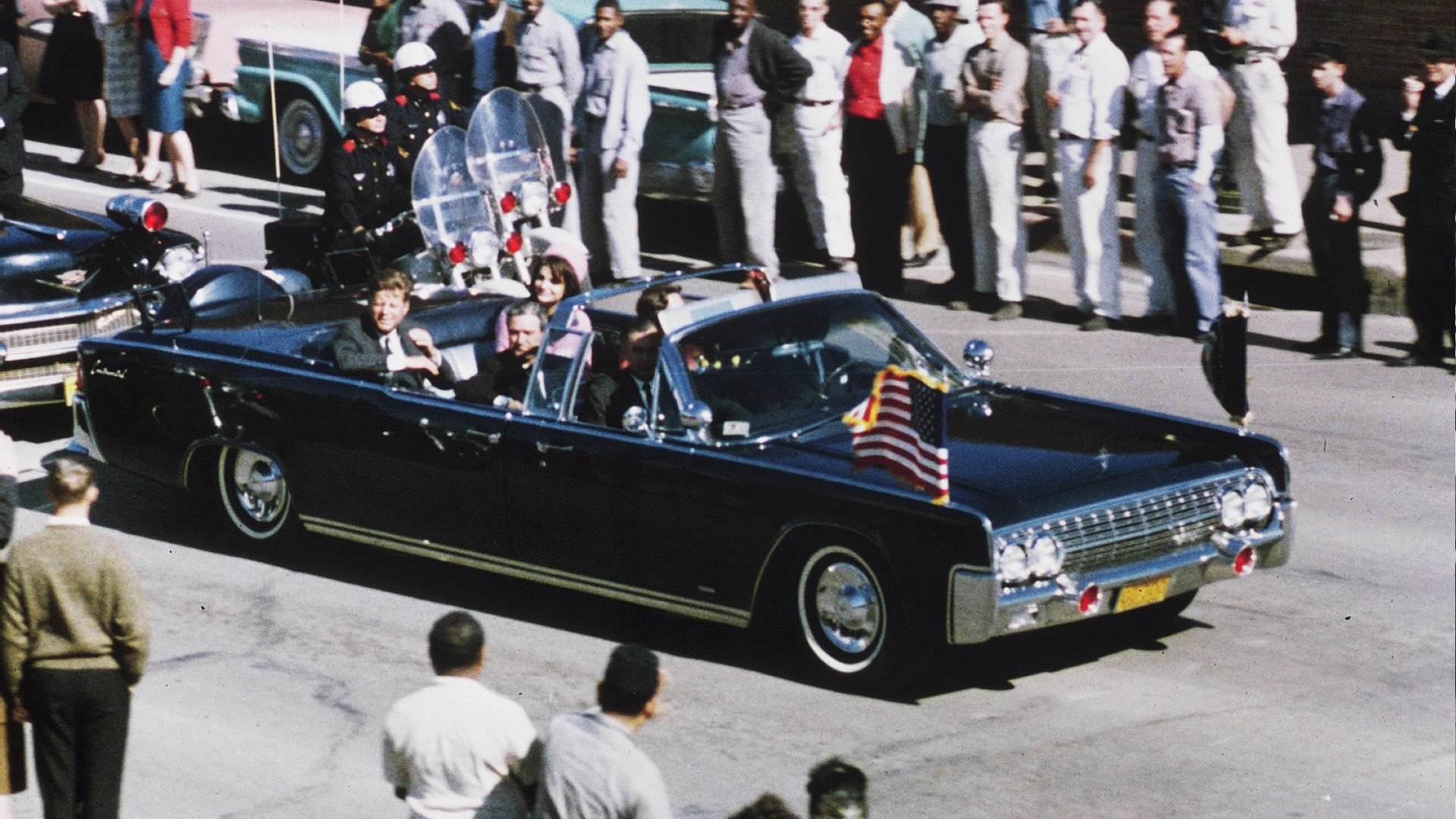
The "untold story" of the 1963 assassination of President John F. Kennedy refers to the evolving body of evidence, including the 2023 revelations from Secret Service agent Paul Landis and recently declassified National Archives documents, that challenges the 1964 Warren Commission’s "lone gunman" conclusion and the controversial "single bullet theory."
The assassination of John F. Kennedy on November 22, 1963, remains the most analyzed, debated, and scrutinized event in American history. While the official narrative was established quickly in the mid-1960s, the "untold story" continues to expand as new witnesses come forward and previously redacted government files are released to the public. As of 2026, the perspective on Dealey Plaza has shifted from mere conspiracy theories to a rigorous, evidence-based examination of procedural failures, medical inconsistencies, and suppressed testimonies that suggest the events of that Friday in Dallas were far more complex than the public was initially led to believe.
The Foundations of the Official Narrative: The Warren Commission
To understand the "untold" aspects of the assassination, one must first understand the "told" story. In the immediate aftermath of the shooting, President Lyndon B. Johnson established the Commission on the Assassination of President Kennedy, popularly known as the Warren Commission, headed by Chief Justice Earl Warren.
In September 1964, the Commission released its 888-page final report. Its primary conclusions were that Lee Harvey Oswald acted entirely alone in shooting the President from the sixth floor of the Texas School Book Depository and that Jack Ruby acted alone in killing Oswald two days later. To support the "lone gunman" theory, the Commission relied heavily on the Single Bullet Theory (often derisively called the "Magic Bullet Theory").
This theory posits that a single pristine bullet, identified as Commission Exhibit 399 (CE 399), passed through President Kennedy’s neck, entered Governor John Connally’s back, exited his chest, shattered his right wrist, and embedded itself in his left thigh. The necessity of this theory arose from the timing of the Zapruder film; if Oswald was the only shooter using a bolt-action rifle, he could not have fired fast enough to hit both men separately within the timeframe shown on the film. Therefore, one bullet must have caused multiple wounds to both victims.
The Paul Landis Revelation: Breaking the Chain of Custody
One of the most significant recent developments in the "untold story" surfaced in late 2023 and has been a central point of debate through 2025 and into 2026. Paul Landis, a former Secret Service agent who was just feet away from Kennedy during the shooting, broke decades of silence with his book, The Final Witness.
Landis’s testimony directly contradicts the official record regarding the discovery of CE 399. The Warren Commission stated that the "magic bullet" was found on a stretcher at Parkland Memorial Hospital, presumably having fallen out of Governor Connally’s wound. However, Landis claims that he found the bullet lodged in the upholstery of the presidential limousine, behind where Kennedy was sitting.
According to Landis, he pocketed the bullet to prevent souvenir hunters from grabbing it and later placed it on the President's stretcher at the hospital, thinking it would help the doctors. Over the chaotic hours that followed, the bullet was shuffled, eventually being found on a stretcher that was assumed to be Connally's. If Landis’s account is accurate, the "Single Bullet Theory" rests on a false premise. If the bullet was found in the car seat and not in Connally's body, the physics of the "magic bullet" collapse, strongly suggesting the presence of a second shooter.
Medical Inconsistencies and the Bethesda Autopsy
The medical evidence has always been a cornerstone of the "untold story." Discrepancies between the observations made by the trauma surgeons at Parkland Hospital in Dallas and the official autopsy conducted at the Bethesda Naval Hospital in Maryland remain a point of intense technical scrutiny.
In Dallas, several highly trained doctors, including Dr. Malcolm Perry and Dr. Kemp Clark, initially described the wound in Kennedy’s throat as an entry wound. This was a critical observation; an entry wound in the front of the neck would imply a shooter located in front of the limousine, likely near the "Grassy Knoll." However, the Bethesda autopsy later categorized the throat wound as an exit wound for a bullet that entered through the President’s upper back.
Furthermore, the description of the head wound varied significantly. Dallas doctors described a massive blowout in the rear of the skull, which typically indicates an exit wound from a shot fired from the front. Conversely, the official autopsy report described the rear of the head as relatively intact, with the primary damage being to the top and right side. These "untold" medical contradictions have led many forensic pathologists to question whether the body or the photographic evidence was altered during transport—a claim that was a central theme of the 1970s House Select Committee on Assassinations (HSCA).
The Role of the JFK Records Act and Declassified Files
For decades, the public believed that the full truth was locked away in government vaults. In response to the renewed interest sparked by Oliver Stone’s 1991 film JFK, Congress passed the Presidential Record Collection Act of 1992 (JFK Records Act). This mandated that all assassination-related records be disclosed by 2017.
While the vast majority of documents have been released, successive administrations (both Trump and Biden) delayed the release of the final, most sensitive tranches of data, citing national security concerns. As of 2026, nearly 99% of the records are now available through the National Archives.
These documents have revealed "untold" details regarding:
- Lee Harvey Oswald’s activities in Mexico City: Declassified cables show that the CIA was monitoring Oswald much more closely than the Warren Commission admitted. His visit to the Soviet and Cuban embassies weeks before the assassination raised red flags that were suppressed in 1963.
- The CIA-Mafia Connections: Files have confirmed various "Executive Action" programs where the CIA collaborated with organized crime figures to attempt the assassination of Fidel Castro. This context provides a potential motive for "blowback" or a pre-emptive strike against Kennedy.
- Operation Northwoods: Documents revealed a 1962 Department of Defense proposal to stage "false flag" terrorist attacks on American soil to justify an invasion of Cuba, highlighting the extreme tension between Kennedy and the military-industrial complex.
Analyzing the Ballistics: The Texas School Book Depository
The technical depth of the "untold story" often focuses on the physical limitations of the Mannlicher-Carcano rifle Oswald allegedly used. Skilled marksmen have frequently struggled to replicate Oswald’s feat: three shots in approximately six seconds with a bolt-action rifle, hitting a moving target through a telescopic sight that was later found to be misaligned.
The "untold" history includes the analysis of the Acoustic Evidence. During the HSCA investigation in the late 1970s, a dictabelt recording from a Dallas police motorcycle was analyzed. Initial findings suggested there was a 95% probability of a fourth shot fired from the Grassy Knoll. Although later studies by the National Academy of Sciences challenged the timing of the recording, the acoustic debate remains a focal point for those investigating the possibility of a crossfire.
| Investigation Component | Warren Commission (1964) | New Evidence / Landis (2023-2026) |
|---|---|---|
| Number of Shooters | One (Lee Harvey Oswald) | Probable Conspiracy (HSCA); Multi-shooter scenario likely |
| Bullet CE 399 Discovery | Found on Connally's stretcher at Parkland | Found in limousine by Agent Paul Landis |
| Single Bullet Theory | Scientific fact; required for lone gunman | Physically impossible if Landis's account is true |
| Throat Wound | Exit wound from the rear | Identified as entry wound by Dallas surgeons |
| Oswald's Motivation | Psychological instability / Marxism | Potential intelligence asset or "patsy" |
| Government Status | Fully transparent (claimed) | Thousands of redactions remained until the 2020s |
The Grassy Knoll and the Second Shooter Theory
The "untold story" is inextricably linked to the Grassy Knoll—a small hill topped by a wooden fence located to the front and right of the motorcade. Numerous witnesses reported seeing smoke or hearing shots from this area.
Abraham Zapruder, the man who filmed the most famous footage of the event, was standing near the Knoll. While his film was used to establish the timeline of the shots, the "untold" part of the Zapruder story is that the original film was held by Life magazine for years, and the public only saw the full, gruesome frames of the fatal head shot (which showed the President's head moving "back and to the left") much later. This "back and to the left" motion is consistent with a shot from the front-right (the Grassy Knoll), rather than the rear (the School Book Depository).
Common Misconceptions and Troubleshooting the Evidence
When researching the "untold story," it is easy to get lost in a sea of conflicting information. It is important to distinguish between verified evidence and speculative theories.
- The "Umbrella Man": For years, a man seen holding an open umbrella on a sunny day was thought to be signaling shooters. He was later identified as Louie Steven Witt, who claimed he was heckling Kennedy using the umbrella as a symbol of Neville Chamberlain’s appeasement policies.
- The "Three Tramps": Three men arrested near Dealey Plaza shortly after the shooting were long rumored to be CIA hitmen. Declassified records in the 1990s identified them as actual vagrants (Harold Doyle, John Gedney, and Gus Abrams), ending that specific line of inquiry.
- The Autopsy Photos: There are persistent claims that the autopsy photos in the National Archives are forgeries. While experts like Robert Groden have argued this for decades, official review panels have generally upheld their authenticity, though the interpretation of what those photos show remains contested.
Frequently Asked Questions
Who was Paul Landis and why did he wait so long to speak?
Paul Landis was a Secret Service agent on the follow-up car (the "Queen Mary") immediately behind the presidential limousine. In his 2023 book, he explained that he suffered from Post-Traumatic Stress Disorder (PTSD) and simply wanted to forget the events of that day. He avoided reading books about the assassination for decades. It was only after he began to process his trauma and realized the discrepancies in the official story that he decided to come forward to "set the record straight."
What is the significance of the "Magic Bullet" being found in the car?
If the bullet (CE 399) was found on the seat of the limousine rather than falling out of Governor Connally's leg, the "Single Bullet Theory" is effectively debunked. Without that theory, the timing of the shots recorded on the Zapruder film makes it impossible for Lee Harvey Oswald to have caused all the injuries to both Kennedy and Connally. This would necessitate a second shooter, thereby proving a conspiracy.
Are there still classified JFK files in 2026?
As of 2026, the vast majority of the JFK collection is open to the public. However, a very small percentage of documents (less than 1%) remains partially redacted. These redactions typically involve the names of CIA sources or specific "methods and sources" that the intelligence community argues could still jeopardize national security or ongoing foreign relations.
Did Lee Harvey Oswald really kill J.D. Tippit?
The official story states that Oswald shot Dallas Police Officer J.D. Tippit roughly 45 minutes after the assassination. While many researchers accept this, the "untold story" highlights inconsistencies in witness descriptions of the shooter and the caliber of the shells found at the scene. This event is often viewed as the moment the "lone gunman" narrative was cemented, but the timeline remains tight and difficult to reconcile.
Why is the 1963 assassination still relevant today?
The assassination marks a turning point in American history, representing a loss of public trust in government institutions. The "untold story" is not just about a murder; it is about the transparency of the state and the accountability of intelligence agencies. Until the public feels the full truth has been told, the case remains an open wound in the American psyche.
Practical Guidance for Further Research
For those looking to explore the "untold story" of the 1963 JFK assassination in 2026, the following steps are recommended:
- Access the National Archives: Use the JFK Assassination Records Collection online database to view declassified cables, memos, and internal reports.
- Review the Mary Ferrell Foundation: This is the most comprehensive private database of assassination records, offering digitized versions of the Warren Commission, HSCA, and ARRB (Assassination Records Review Board) files.
- Visit Dealey Plaza: To understand the geography, a physical visit to the Sixth Floor Museum at Dealey Plaza provides a sense of the distances and angles involved, which often seem much smaller in person than in photographs.
- Compare Expert Analysis: Read both the official Warren Report and the dissenting views in works such as Not in Your Lifetime by Anthony Summers or Best Evidence by David Lifton to understand the technical depth of the medical discrepancies.
The "untold story" of 1963 is a reminder that history is rarely settled. As new technology and new testimonies emerge, our understanding of that day in Dallas continues to evolve, moving closer to a truth that has been obscured for over six decades.