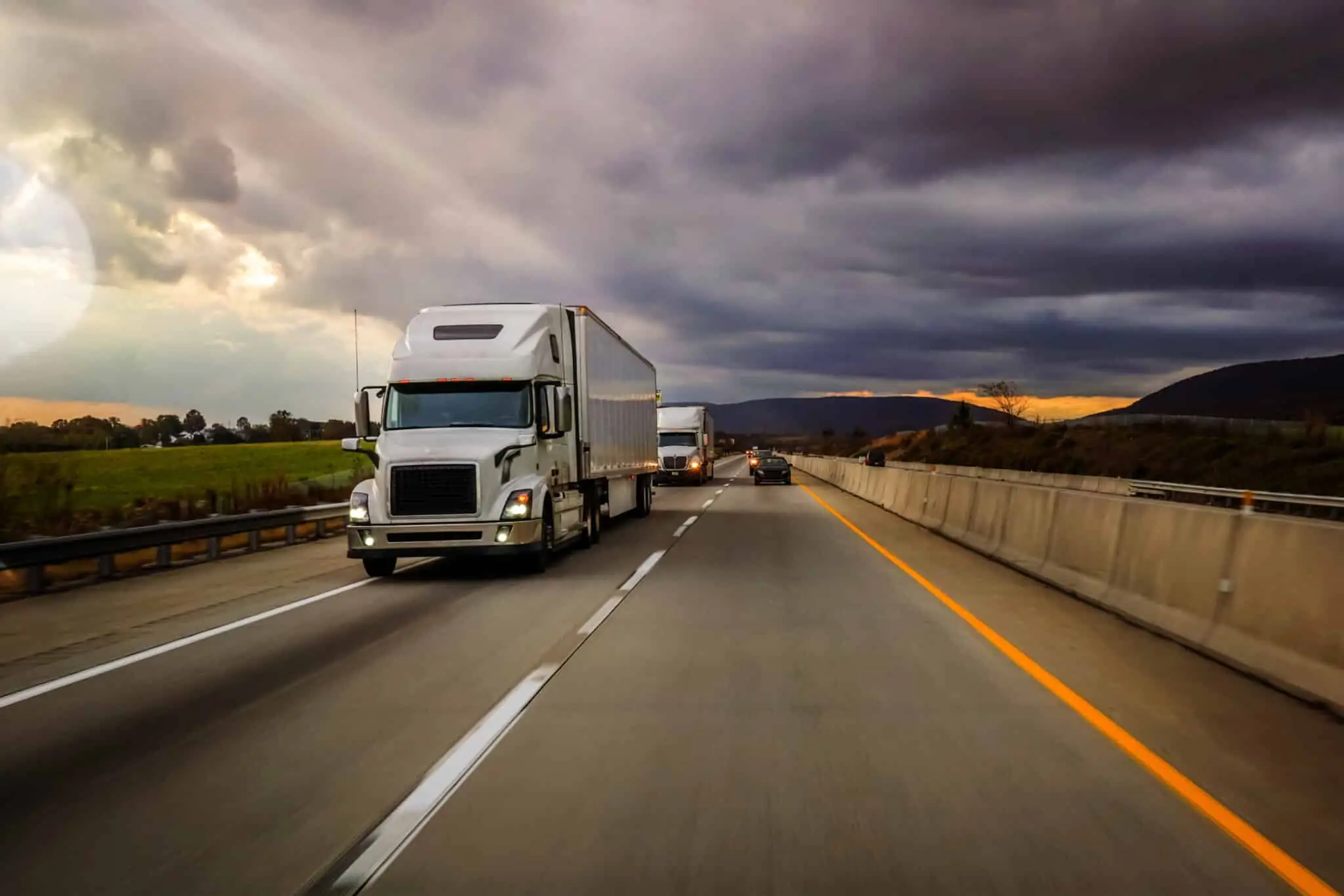
Operating or sharing the road with an 18-wheeler requires an advanced understanding of vehicle physics, blind spots, and the regulatory framework governing commercial trucking. Achieving optimal safety involves maintaining strict adherence to federal hours-of-service regulations, performing rigorous pre-trip equipment inspections, and employing defensive driving techniques that account for the unique handling characteristics of heavy-duty tractor-trailers.
The Physics of Heavy Commercial Vehicles
Understanding the inherent limitations of an 18-wheeler is the foundation of road safety. An 18-wheeler, or Class 8 truck, often weighs up to 80,000 pounds when fully loaded. This massive displacement of weight significantly alters the vehicle’s dynamics compared to a standard passenger car.
Braking Distance and Momentum
The most critical factor in truck safety is momentum. Because of their weight, 18-wheelers require significantly more distance to come to a complete stop than lighter vehicles. Under ideal conditions, a tractor-trailer traveling at 65 mph may require the length of two football fields to stop, depending on road conditions and brake temperature. For motorists, this means that cutting in front of a truck—commonly known as "truck squeezing"—is one of the most dangerous maneuvers possible. If a car enters a gap that is too small, the truck driver may be unable to slow down in time, leading to a rear-end collision with catastrophic force.
The Dynamics of Turning and Jackknifing
18-wheelers utilize "off-tracking" during turns. Because the trailer wheels follow a tighter path than the steering wheels of the tractor, the driver must swing the truck wide to complete a turn. Motorists often make the mistake of attempting to pass a truck on the right side during these maneuvers. This is hazardous, as the trailer may "sweep" across the lane. Furthermore, emergency braking during a turn or on slick surfaces can lead to jackknifing, where the trailer swings around to form an angle with the tractor, effectively rendering the vehicle uncontrollable.
Critical Equipment and Pre-Trip Inspections
For commercial drivers, safety begins in the yard, not on the highway. Federal regulations, overseen by the Federal Motor Carrier Safety Administration (FMCSA), mandate systematic inspections of every commercial vehicle to ensure roadworthiness.
- Braking Systems: Modern 18-wheelers use air brake systems, which differ fundamentally from hydraulic brakes in passenger cars. Drivers must monitor air pressure levels and test for leaks daily.
- Tire Integrity: A tire blowout on a heavy rig is not merely a nuisance; it is a major safety event that can result in the loss of vehicle control. Drivers must inspect sidewalls for bulges, check tread depth, and ensure proper tire inflation to prevent overheating.
- Lighting and Reflectivity: Because of the length of the trailer, visibility is a constant concern. All clearance lights, turn signals, and reflective tape must be functional to ensure that other drivers can accurately judge the truck's position and speed, especially during nighttime operations.
- Load Securement: Improperly loaded or secured cargo creates a shifted center of gravity. This makes the truck highly susceptible to rolling over during high-speed maneuvers or sudden lane changes.
Shared Roadway Strategies: A Motorist’s Guide
Sharing the road with an 18-wheeler requires proactive defensive driving. Motorists should treat the space around a tractor-trailer as a "no-go" zone.
Understanding Blind Spots (No-Zones)
The term "No-Zone" refers to the areas around a truck where the driver cannot see passenger vehicles. These are significantly larger than those of a standard automobile:
- The Front No-Zone: Directly in front of the truck. If a driver cannot see the entire front of the truck cab in their rearview mirror, the truck is too close to be safely positioned.
- The Rear No-Zone: Directly behind the trailer. A driver cannot see a car following closely, and if the truck brakes suddenly, the car has no room to maneuver.
- The Side No-Zones: The left side extends slightly, but the right side (passenger side) is the most dangerous. Because the truck driver sits on the left, the right-hand blind spot covers multiple lanes, making passing on the right extremely hazardous.
Safe Passing Procedures
When passing an 18-wheeler, ensure you can see the driver’s face in their side mirror before pulling alongside. Maintain a steady speed to limit the amount of time spent in the blind spot. Once you pass, do not pull back into the lane until you can see the entire front of the truck in your rearview mirror. Never slow down immediately after completing a pass, as this forces the truck driver to compensate for the sudden change in their path.
Comparative Overview of Safety Factors
| Safety Component | Passenger Vehicle | 18-Wheeler (Tractor-Trailer) |
|---|---|---|
| Braking Distance | Short (approx. 150-200 ft) | Long (up to 600+ ft) |
| Visibility | High (all-around windows) | Restricted (large blind spots) |
| Maneuverability | High (agile steering) | Low (wide turning radius) |
| Sensitivity to Wind | Low | High (large surface area) |
| Control System | Hydraulic Brakes | Air Brakes |
Regulatory Compliance and Professional Standards
The safety of the trucking industry is governed by the FMCSA's Hours of Service (HOS) regulations. These rules are designed to prevent driver fatigue, which is a leading contributor to commercial motor vehicle accidents.
Drivers are restricted to a set number of driving hours within a 24-hour period and a weekly cycle. Electronic Logging Devices (ELDs) are now mandatory in most commercial trucks to ensure that these hours are tracked with precision. Fatigue management goes beyond simple time logs; it involves acknowledging the "circadian rhythm" of the body, which dictates that alertness naturally dips during the early morning hours, regardless of how much rest a driver has had.
Professional trucking companies also prioritize "Safety Ratings," which serve as a performance metric for fleet operators. A company’s rating is based on roadside inspection data, crash involvement, and violations. Maintaining a high safety rating is a requirement for continued operation and insurance eligibility in the 2026 regulatory environment.
Advanced Safety Technology in 2026
Technology continues to play a significant role in modernizing 18-wheeler safety. By 2026, the adoption of Advanced Driver Assistance Systems (ADAS) has become standard in many fleets.
- Collision Mitigation Systems: These systems use radar and cameras to detect potential rear-end collisions, providing audible alerts or automatically engaging the brakes if the driver fails to respond.
- Lane Departure Warnings: Sensors track the position of the truck within the lane, alerting the driver if the vehicle drifts without a turn signal. This is vital in preventing rollover accidents and sideswipes.
- Stability Control: This technology monitors the speed, lateral acceleration, and steering angle to prevent rollovers and directional loss of control by applying individual wheel brakes.
While these technologies are highly effective, they are designed to support—not replace—the skill of the professional driver. The primary safety element remains the vigilance and experience of the person behind the wheel.
Frequently Asked Questions
Why do 18-wheelers need so much space to turn?
Due to their length, the rear wheels of a trailer do not follow the same path as the front wheels of the tractor. This is called "off-tracking." To avoid driving over curbs or into obstacles, the driver must position the tractor into the middle of the adjacent lane to ensure the trailer completes the turn without hitting anything.
What should I do if a truck is tailgating me?
If a large truck is following too closely, do not speed up to create a gap. Instead, safely move to a different lane or allow the truck to pass. If you cannot change lanes, maintain your speed and increase your distance from the vehicle in front of you, giving yourself more room to brake gradually if needed.
Are 18-wheelers always more dangerous than cars?
The danger is not inherent to the vehicle but to the mass and momentum it carries. Because of this, an accident involving an 18-wheeler and a passenger car is more likely to result in severe injuries due to the physics of force and energy transfer. The primary goal of safety regulations is to keep the truck from ever being in a position where an emergency stop is required.
How does weather affect 18-wheeler safety?
High-profile trailers act like sails in high winds, making them susceptible to being blown over on bridges or open highways. Additionally, wet or icy conditions drastically increase the risk of jackknifing. Experienced drivers often reduce speeds well below the posted limit during inclement weather to compensate for these risks.
What is the purpose of the runaway truck ramp?
Runaway truck ramps are designed for trucks that lose their braking ability on long, steep downgrades. These ramps are filled with soft gravel or sand to safely stop a heavy vehicle that can no longer decelerate using its primary braking system. They are critical safety infrastructure for mountainous regions.
Conclusion and Recommended Next Actions
Safety around 18-wheelers is a shared responsibility. Motorists are encouraged to maintain a "safety cushion" of at least four seconds behind any commercial vehicle. For aspiring commercial drivers, the next step in professional development is to undergo advanced defensive driving certification, which covers maneuvers in high-wind conditions, complex mountain driving, and the precise operation of modern electronic safety systems. Always prioritize space, visibility, and patience when navigating highways with heavy commercial traffic.