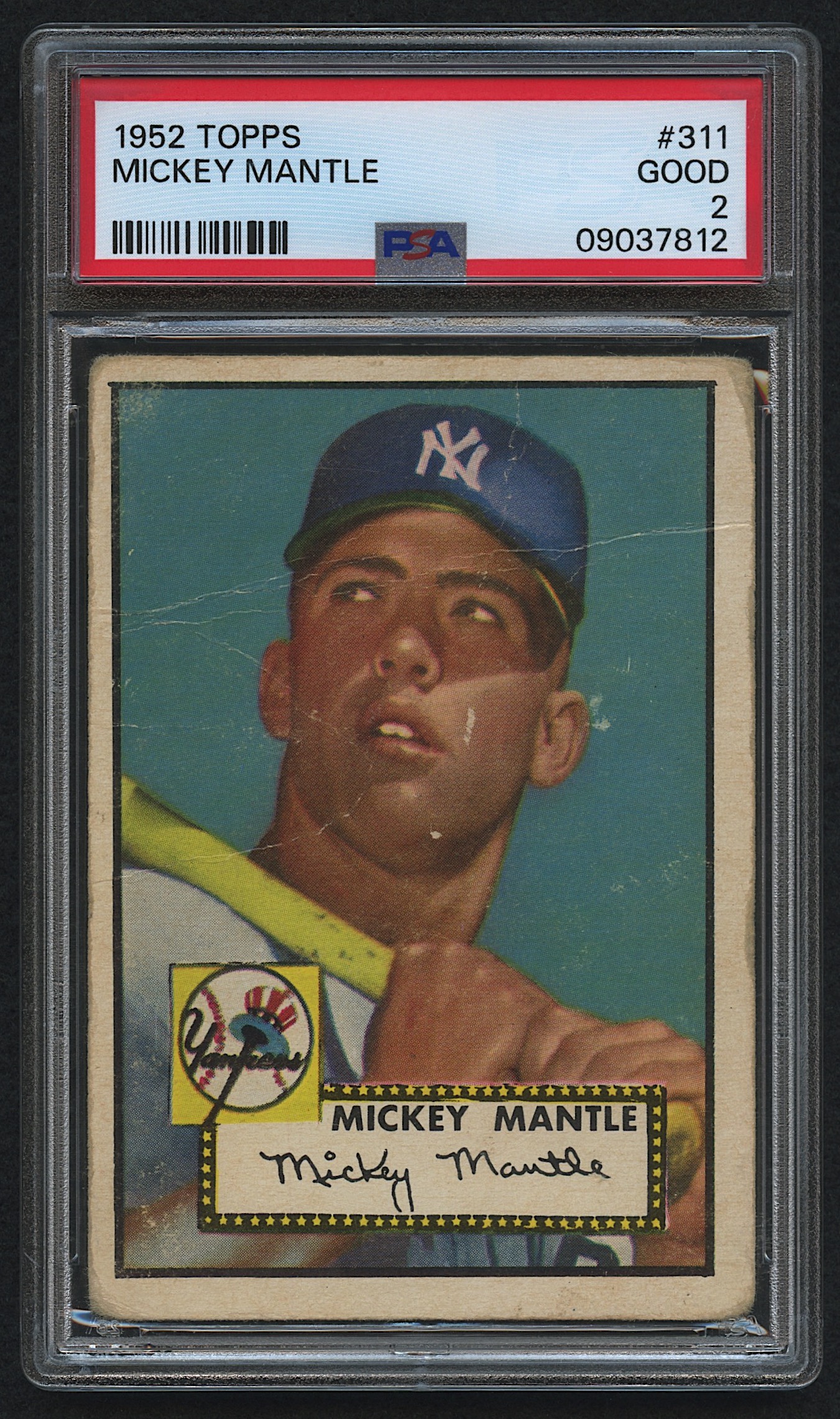
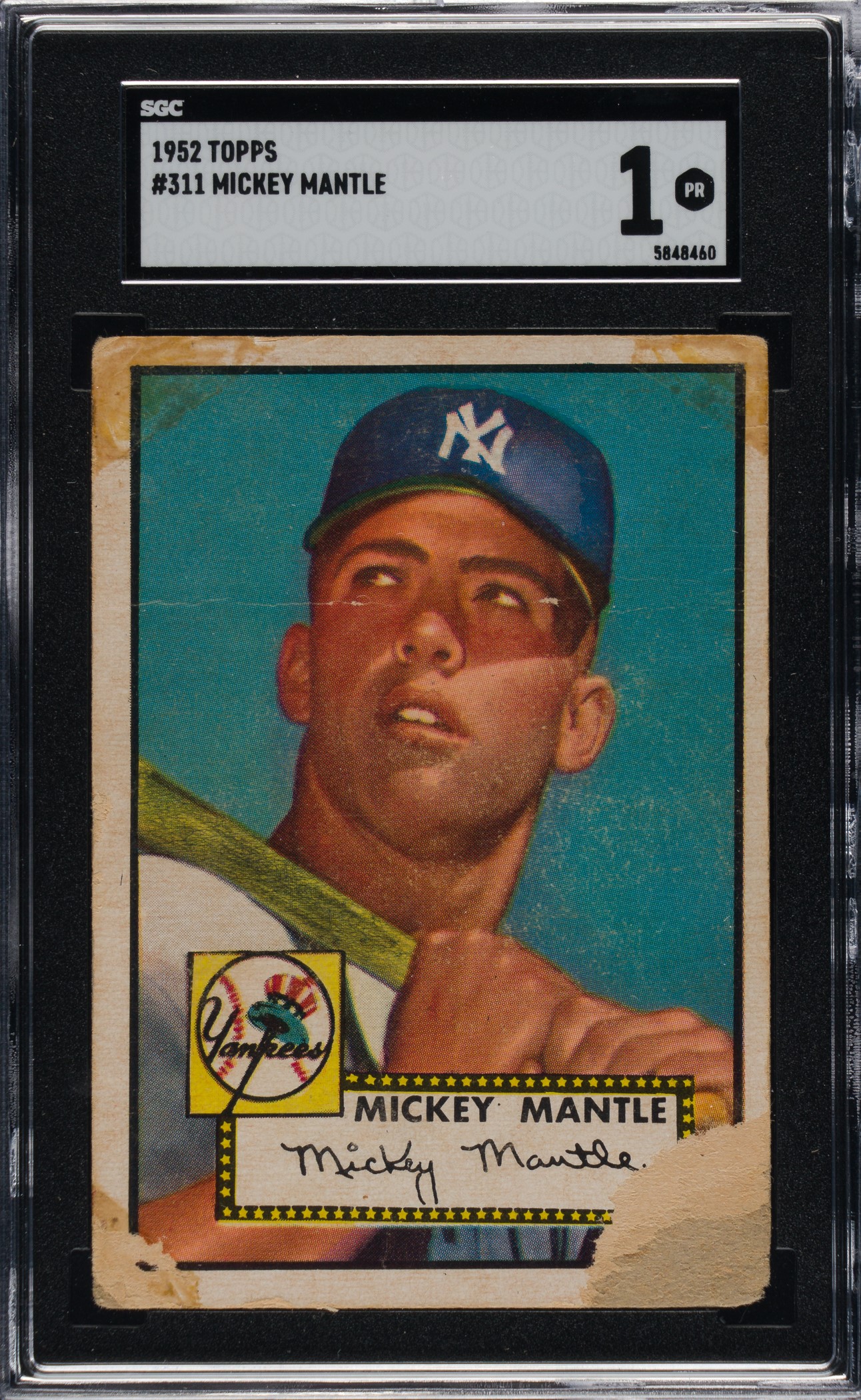
Securing an authentic 1952 Topps Mickey Mantle—card number 311—is the pinnacle of baseball card collecting, requiring extreme due diligence to navigate a market rife with high-value forgeries and misattributed condition grades. Authentic specimens, particularly those in high-grade, graded condition, represent significant capital assets that demand specialized authentication, secure storage, and verified provenance before any transaction is finalized.
The Significance of the 1952 Topps #311
The 1952 Topps Mickey Mantle is widely considered the "Holy Grail" of post-war baseball cards. While it is not Mantle’s rookie card—that distinction belongs to the 1951 Bowman—the 1952 Topps #311 holds an unparalleled status in the hobby due to the iconic nature of the Topps set design and the specific history of the production run.
In 1952, Topps released its massive inaugural set in series. The high-number series (cards 311–407) were released late in the baseball season, leading to poor sales. Legend, supported by long-term industry accounts, holds that Sy Berger, the father of the modern baseball card, authorized the dumping of unsold high-number cases into the Atlantic Ocean in 1960. While the exact volume remains a subject of debate, this scarcity factor drives the immense market value for the Mantle card today.
Understanding Authentication and Grading
In 2026, the marketplace for high-end vintage sports cards is dominated by third-party authentication and grading services. Attempting to purchase a "rare deal" on a raw (ungraded) 1952 Topps Mickey Mantle is a high-risk endeavor that should be approached with extreme caution.
Professional graders evaluate the card based on four primary criteria:
- Centering: The alignment of the image within the borders.
- Corners: The sharpness or wear present on the card’s four points.
- Edges: The smoothness or fraying of the card stock.
- Surface: The presence of creases, printing errors, or discoloration.
Before committing to any purchase, verify the certification number on the holder against the database of the issuing company (such as PSA, SGC, or CGC). In recent years, "re-casing" and fraudulent label fabrication have become sophisticated; checking the specific database image against the physical card in hand is a mandatory step.
Identifying Real vs. Counterfeit Mantle Cards
Because of the astronomical value of the 1952 Topps Mickey Mantle, professional counterfeiters have produced high-quality replicas for decades. When evaluating a potential purchase, focus on these technical indicators:
1. Print Pattern and Ink
Authentic 1952 Topps cards were produced using a specific lithographic process. Under a jeweler’s loupe (at least 10x magnification), you should see a consistent dot pattern. Counterfeits often display a modern digital inkjet pattern, which appears as "fuzzy" dots or solid blocks of color, or they may show signs of an offset lithography pattern that looks mismatched compared to the genuine 1952 production standards.
2. Card Stock Composition
The original 1952 stock was a specific thickness and texture. Authentic cards from this era are prone to natural aging—the card stock should exhibit a consistent, uniform level of browning or mellowing. Be wary of cards that appear too bright or "stark white" for their age, or those that have an artificial "gloss" applied to the surface.
3. Dimensional Accuracy
The standard dimensions for a 1952 Topps card are 2 5/8" by 3 3/4". Any significant deviation from these measurements is a primary red flag for a trimmed or fake card. Trimming is a common tactic used to improve the appearance of edges and corners to obtain a higher grade, which artificially inflates the card’s value.
Market Analysis: Price Drivers in 2026
In 2026, the price for a 1952 Topps Mickey Mantle varies wildly based on technical grade. A card graded "Authentic" or "PSA 1" (Poor) still commands a significant premium, while "Mint" or "Gem Mint" examples reach into the millions of dollars.
| Grade Level | Market Expectation | Primary Value Driver |
|---|---|---|
| Authentic (Altered) | Entry-level investment | Provenance and eye appeal |
| PSA 2–3 (Good) | Mid-tier liquidity | Historical significance |
| PSA 4–6 (Excellent) | Serious collector demand | Edge/Corner stability |
| PSA 7+ (Near Mint) | Institutional asset | Scarcity of high-grade stock |
When searching for a "deal," understand that market prices are generally transparent. If a listing offers a price significantly below current public auction results for a comparable grade, the listing is almost certainly fraudulent. In the world of high-end sports cards, if the price seems too good to be true, it is not a bargain—it is a warning.
Due Diligence and Secure Transaction Procedures
To protect your capital when dealing with high-value assets like the 1952 Topps Mantle, follow these structured protocols:
- Request Third-Party Escrow: Never send funds directly to an unverified private seller for a high-value card. Use reputable auction house escrow services that hold funds until the card is delivered and verified.
- Verification of Provenance: Ask for the chain of ownership. High-value cards often have a documented history of being sold through major auction houses.
- Insured Shipping: Ensure that any transit is covered by high-value, third-party shipping insurance. Standard courier insurance is often insufficient for items valued in the six- or seven-figure range.
- Independent Appraisal: If you are not an expert, pay a fee to have a reputable third-party consultant or a senior grader review the card and the auction listing before you place a bid.
Frequently Asked Questions
Is it possible to find a 1952 Topps Mickey Mantle in "found" condition today?
While estate sales occasionally uncover hidden collections, the probability of finding an authentic 1952 Mickey Mantle in a "forgotten" attic box is extremely low. Most high-value cards have already been cataloged by the hobby’s major databases. Any "deal" claiming to be a fresh discovery should be treated with extreme skepticism and requires rigorous authentication.
What is the difference between an "Altered" and "Authentic" label?
An "Authentic" label from a grading service indicates the card is genuine but has been tampered with—usually through trimming or recoloring. While these cards are real, they hold significantly less market value than a "straight" or unaltered grade.
Why does the same card sell for different prices on different days?
The market is subject to liquidity shifts, auction house buyer premiums, and the specific collector appetite at the time of the sale. Prices in 2026 are heavily influenced by the prestige of the auction platform and the current economic climate surrounding alternative asset classes.
Should I buy a 1952 Mantle as an investment?
Investing in blue-chip sports cards requires knowledge of market cycles. While the 1952 Topps Mickey Mantle has historically appreciated, it is a non-liquid, non-dividend-paying asset. You should consult with a financial advisor regarding the role of "alternative collectibles" in your overall portfolio strategy.
Are there other versions of the 1952 Mickey Mantle?
Yes, there are high-quality modern reprints. Topps has issued various licensed reprints over the years. These are not counterfeit, but they are also not the 1952 original. Always check for a "Reprint" or "Replica" mark, which is often found on the back of the card or in the fine print at the bottom.
Recommended Next Steps
If you are currently looking to acquire a 1952 Topps Mickey Mantle, stop browsing general consumer marketplaces and shift your focus to established, industry-leading auction houses and high-end hobby dealers. Registering with platforms that provide full disclosure of the card’s grade, high-resolution scans, and historical auction data is the only reliable way to ensure you are purchasing a legitimate investment-grade asset. Consult the latest price indices from reputable grading services to establish your budget before entering any bidding process.