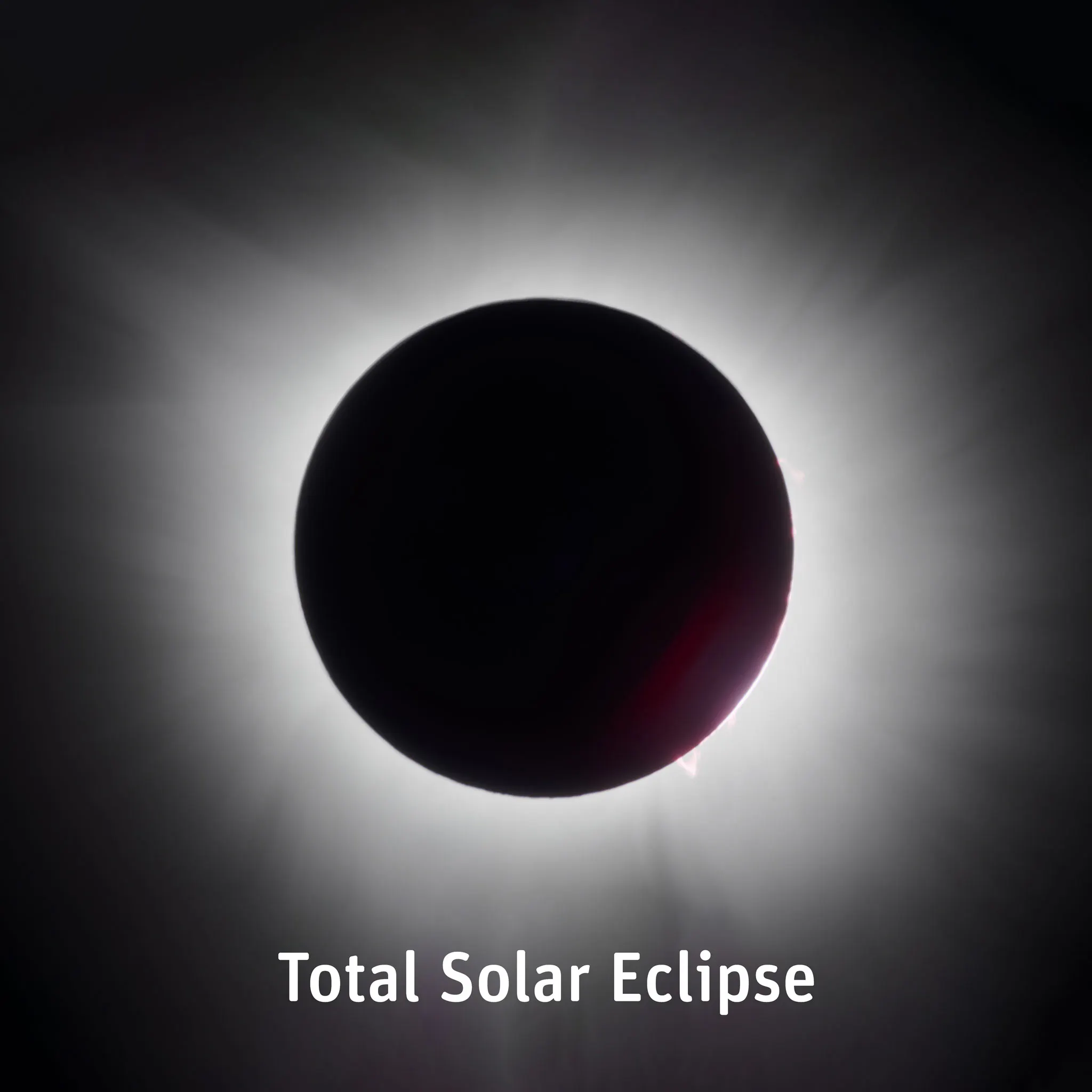
The primary differences between a solar and lunar eclipse lie in the celestial alignment of the Sun, Earth, and Moon; the geographic visibility of the event; and the safety requirements for observers. While a solar eclipse occurs when the Moon passes between the Earth and the Sun, a lunar eclipse happens when the Earth moves between the Sun and the Moon.
Celestial events have fascinated humanity for millennia, serving as markers of time, omens of change, and opportunities for profound scientific discovery. As we navigate the astronomical calendar of 2026, understanding the mechanics behind these phenomena remains essential for amateur astronomers and curious observers alike. Eclipses are not merely random shadows in space; they are the result of precise orbital geometry.
To distinguish between the two, one must look at the specific arrangement of the three bodies involved—the Sun, the Moon, and the Earth—a configuration known in astronomy as syzygy. While both involve shadows and light blocking, the scale, duration, and viewing requirements differ significantly.
1. The Geometry of Alignment: Syzygy and the Order of Bodies
The most fundamental difference between these two events is the physical order of the celestial bodies in space. Every eclipse requires a near-perfect straight-line alignment, but the "middle man" changes depending on the type of eclipse.
Solar Eclipse Alignment (Sun-Moon-Earth)
A solar eclipse occurs during the New Moon phase. For this event to happen, the Moon must be positioned directly between the Sun and the Earth. Because the Moon is significantly smaller than the Sun but also much closer to Earth, it can appear to be the same size in the sky—a coincidence of cosmic proportions.
When the Moon moves into this central position, it casts a shadow onto the Earth’s surface. This shadow consists of three distinct parts:
- The Umbra: The darkest, central part of the shadow where the Sun is completely obscured.
- The Penumbra: The outer part of the shadow where the Sun is only partially obscured.
- The Antumbra: The area beyond the tip of the umbra, responsible for annular eclipses where a "ring of fire" is visible.
Lunar Eclipse Alignment (Sun-Earth-Moon)
In contrast, a lunar eclipse occurs only during the Full Moon phase. In this scenario, the Earth is the central body, positioned directly between the Sun and the Moon. Instead of the Moon casting a shadow on us, we cast our shadow on the Moon.
Because the Earth is much larger than the Moon, its shadow (the umbra and penumbra) is vast. When the Moon enters the Earth's umbra, it does not disappear into total darkness. Instead, it often takes on a deep, coppery red hue. This phenomenon is caused by the Earth’s atmosphere bending (refracting) sunlight around the edges of the planet and filtering out shorter blue wavelengths, allowing only the longer red wavelengths to reach the lunar surface. This effect is known as Rayleigh scattering, the same principle that creates red sunsets.
2. Visibility and Geographic Reach
The second major difference is who can see the eclipse and from where. The scale of the shadows involved dictates the "audience" for each event.
The Narrow Path of the Solar Eclipse
Solar eclipses are notoriously difficult to catch from a specific location. Because the Moon is relatively small, the shadow it casts on Earth (the path of totality) is very narrow—usually only about 100 to 150 miles wide. To see a total solar eclipse, you must be standing within this specific, moving "stripe" on the Earth's surface.
Even though solar eclipses happen somewhere on Earth approximately every 18 months, any given spot on the planet may only experience a total solar eclipse once every 375 years on average. Those outside the path of totality but still within the penumbra will only see a partial eclipse, where the Moon appears to take a "bite" out of the Sun.
The Global Reach of the Lunar Eclipse
Lunar eclipses are far more "democratic" in their visibility. Because the Earth’s shadow is much larger than the Moon, the entire night side of the Earth can witness the event simultaneously. If the Moon is above your horizon and it is nighttime during the eclipse, you can see it.
This means that roughly half the planet has the opportunity to view any single lunar eclipse. Consequently, while solar eclipses are technically as frequent as lunar ones, lunar eclipses feel much more common to the average observer because they are accessible from a much larger geographic area.
3. Duration, Safety, and Observation Methods
The experience of watching these two events differs in both timing and the equipment required to protect your health.
Observation Safety
One of the most critical distinctions is safety. You should never look directly at a solar eclipse without specialized eye protection. Even when the Sun is 99% covered, the remaining sliver of the solar photosphere emits enough ultraviolet and infrared radiation to cause permanent retinal damage, a condition known as solar retinopathy. Observers must use eclipse glasses that meet the ISO 12312-2 international safety standard.
Lunar eclipses, however, are completely safe to view with the naked eye. Since you are looking at the Moon—which only reflects sunlight and does not emit its own intense radiation—there is no risk to your vision. Binoculars or telescopes can be used freely to enhance the view of the Moon's changing colors.
Duration of the Event
Solar eclipses are fleeting. The phase of "totality"—when the Sun is completely covered—lasts only a few minutes. The longest possible duration for a total solar eclipse is roughly 7 minutes and 32 seconds, though most are much shorter (often 2 to 4 minutes). The entire process, from the first contact to the last, takes a few hours, but the "main event" is over quickly.
Lunar eclipses are much more leisurely. The total phase of a lunar eclipse can last for over an hour, and the entire event from the moment the Moon enters the Earth's penumbra until it leaves can span five to six hours. This extended duration allows for a more relaxed viewing experience, often enjoyed by families and community groups.
Comparison Summary Table
The following table provides a quick reference for the primary technical and observational differences between solar and lunar eclipses.
| Feature | Solar Eclipse | Lunar Eclipse |
|---|---|---|
| Celestial Alignment | Sun - Moon - Earth | Sun - Earth - Moon |
| Lunar Phase | New Moon | Full Moon |
| Primary Shadow Actor | Moon casts shadow on Earth | Earth casts shadow on Moon |
| Visibility Area | Narrow path (approx. 100-150 miles wide) | Entire night-side of Earth |
| Duration of Totality | Minutes (usually 2–7 minutes) | Hours (up to 100+ minutes) |
| Frequency for a Spot | Rare (approx. once every 375 years) | Relatively frequent (multiple times a decade) |
| Eye Safety | Requires ISO 12312-2 filters | Safe for naked-eye viewing |
| Visual Appearance | Black disk with solar corona | "Blood Moon" (reddish/copper hue) |
The Role of Orbital Inclination
A common question arises: if a solar eclipse happens at New Moon and a lunar eclipse happens at Full Moon, why don't we see them every single month?
The answer lies in the orbital inclination. The Moon’s orbit around the Earth is tilted by about 5.14 degrees relative to the Earth’s orbit around the Sun (the ecliptic plane). Most of the time, the Moon passes slightly "above" or "below" the Sun or the Earth’s shadow.
An eclipse can only occur when the New or Full Moon coincides with the Moon crossing the ecliptic plane at points called nodes. This intersection happens twice a year during periods known as "eclipse seasons," which are roughly six months apart. This orbital dance ensures that eclipses remain special, localized events rather than monthly occurrences.
Types of Solar and Lunar Eclipses
While the three key differences cover the broad categories, both types of eclipses have sub-variations based on the exact distance of the Moon from the Earth and the precision of the alignment.
Solar Variations
- Total Solar Eclipse: The Moon completely covers the Sun’s disk. This is the only time the solar corona (the Sun's outer atmosphere) is visible.
- Annular Solar Eclipse: Occurs when the Moon is near apogee (its farthest point from Earth). It appears too small to cover the Sun completely, leaving a "ring of fire" around the dark lunar disk.
- Partial Solar Eclipse: The Moon and Sun are not perfectly aligned, so only a portion of the Sun is obscured.
- Hybrid Solar Eclipse: A rare event where the eclipse shifts between total and annular along different parts of the path.
Lunar Variations
- Total Lunar Eclipse: The entire Moon enters the Earth's umbral shadow, turning red.
- Partial Lunar Eclipse: Only a portion of the Moon enters the umbra. One side of the Moon appears dark or reddish, while the rest remains in the penumbra.
- Penumbral Lunar Eclipse: The Moon passes only through the Earth's faint penumbral shadow. These are often difficult to detect with the naked eye, appearing only as a slight dimming of the Moon's brightness.
The Saros Cycle: Predicting the Patterns
Astronomers use a period called the Saros Cycle to predict eclipses. One Saros period is approximately 18 years, 11 days, and 8 hours. Two eclipses separated by one Saros period share very similar geometry. They occur at the same node, with the Moon at nearly the same distance from Earth, and at the same time of year.
However, because of the extra 8 hours in the cycle, the Earth rotates an additional one-third of a turn, meaning the eclipse path shifts about 120 degrees westward on the globe each cycle. This mathematical precision allows scientists to calculate eclipse paths thousands of years into the past and future with incredible accuracy.
Viewing Tips for 2026
As we move through 2026, several significant events are on the horizon. To make the most of your viewing experience:
- Check Local Timing: Use reputable astronomical sites to find the exact "First Contact" and "Totality" times for your specific coordinates.
- Verify Equipment: If you are preparing for a solar eclipse, inspect your eclipse glasses for scratches or pinholes. If the filter is damaged, discard it immediately.
- Find High Ground: For lunar eclipses, a clear view of the horizon is helpful if the eclipse occurs near moonrise or moonset.
- Weather Preparedness: Cloud cover is the enemy of the eclipse chaser. Have a "Plan B" location identified if your primary viewing site is forecasted to be overcast.
Frequently Asked Questions
Why does the Moon turn red during a total lunar eclipse?
The red color is caused by the Earth’s atmosphere. As sunlight passes through our atmosphere, it is scattered and refracted. Blue light is scattered away, while longer-wavelength red light is bent inward toward the Earth’s shadow. This filtered light strikes the Moon, giving it the characteristic "Blood Moon" appearance. The specific shade of red depends on the amount of dust and clouds in the Earth's atmosphere at that time.
Can I use regular sunglasses to watch a solar eclipse?
No. Regular sunglasses, even very dark ones or those with UV protection, are not nearly dense enough to protect your eyes from the Sun’s radiation during an eclipse. Solar filters are thousands of times darker and must comply with the ISO 12312-2 international standard to be safe for direct solar viewing.
How many eclipses occur in a single year?
In a typical calendar year, there are between four and seven eclipses (combining both solar and lunar). The most common arrangement is two solar and two lunar eclipses. Seven eclipses in a single year is rare; the last time this occurred was 1982, and the next will be 2038.
Do eclipses affect animal behavior?
Yes, especially solar eclipses. Because a total solar eclipse causes a sudden drop in light and temperature, many animals react as if night has fallen. Birds may return to their nests, bees may stop flying, and nocturnal animals may begin to emerge. Scientists often use eclipses as opportunities to study animal circadian rhythms and behavioral responses to rapid environmental changes.
Is the Moon moving away from Earth affecting eclipses?
Yes, but on a very long timescale. The Moon is receding from Earth at a rate of approximately 1.5 inches (3.8 cm) per year. In about 600 million years, the Moon will be far enough away that it will no longer appear large enough in the sky to completely cover the Sun. At that point, total solar eclipses will cease to occur, and only annular eclipses will be possible.
Final Recommendation for Observers
To experience the profound difference between these two events firsthand, plan your observations based on your location and safety needs. For a solar eclipse, prioritize mobility and safety equipment; you may need to travel to find the path of totality and must have certified eye protection. For a lunar eclipse, focus on comfort and photography; find a dark site with a clear view of the sky, bring a tripod for your camera, and enjoy the gradual transformation of the Moon over several hours.