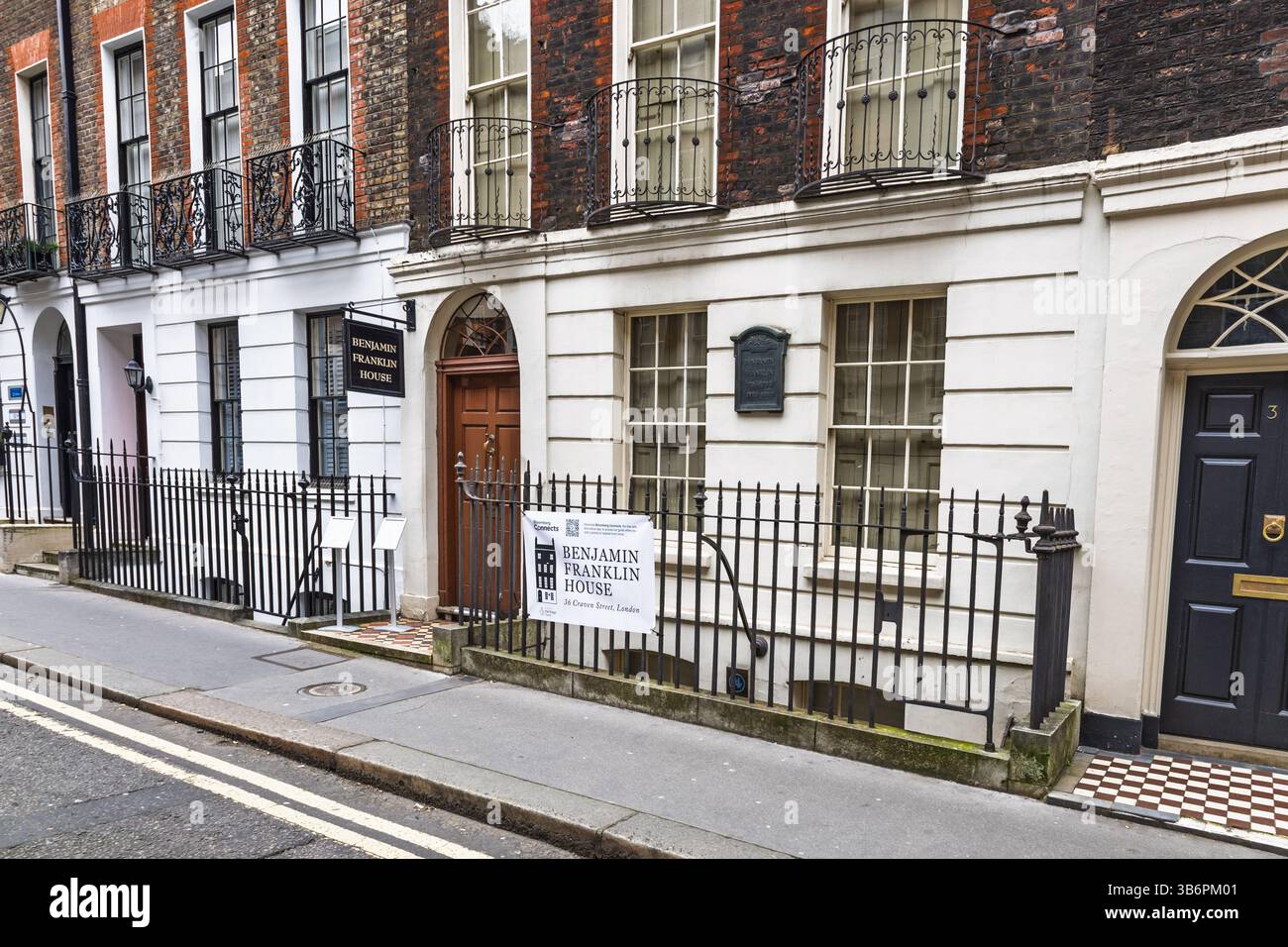
Located just steps from London’s bustling Trafalgar Square, 36 Craven Street is the only remaining residence of Benjamin Franklin in the world. Between 1757 and 1775, this Georgian terraced house served as the base for Franklin’s diplomatic efforts, scientific inquiries, and social life during his nearly sixteen years in the British capital.
Today, the building functions as the Benjamin Franklin House, a museum and educational center. It stands as a unique historical site that bridges the gap between Enlightenment-era London and the burgeoning American identity. As of 2026, it remains a Grade I listed building, preserved to showcase not just the life of a Founding Father, but also the complex medical history and architectural heritage of the 18th century.
The Architectural and Historical Context of 36 Craven Street
36 Craven Street was built circa 1730 as part of a speculative development of terraced houses. The street itself is named after William, Lord Craven, who originally owned the land. Architecturally, the house is a quintessential example of the "side-passage" Georgian terrace, a design ubiquitous in 18th-century London to maximize living space on narrow city plots.
The house consists of five floors, including a basement and an attic. When Franklin arrived in July 1757, the house was owned and managed by Margaret Stevenson, a widow. Franklin did not purchase the house; rather, he rented the first-floor "parlour" and the rooms above it. His relationship with Mrs. Stevenson and her daughter, Mary (Polly) Stevenson, became familial, providing the bachelor Franklin with a surrogate family during his long absences from his wife, Deborah, who remained in Philadelphia.
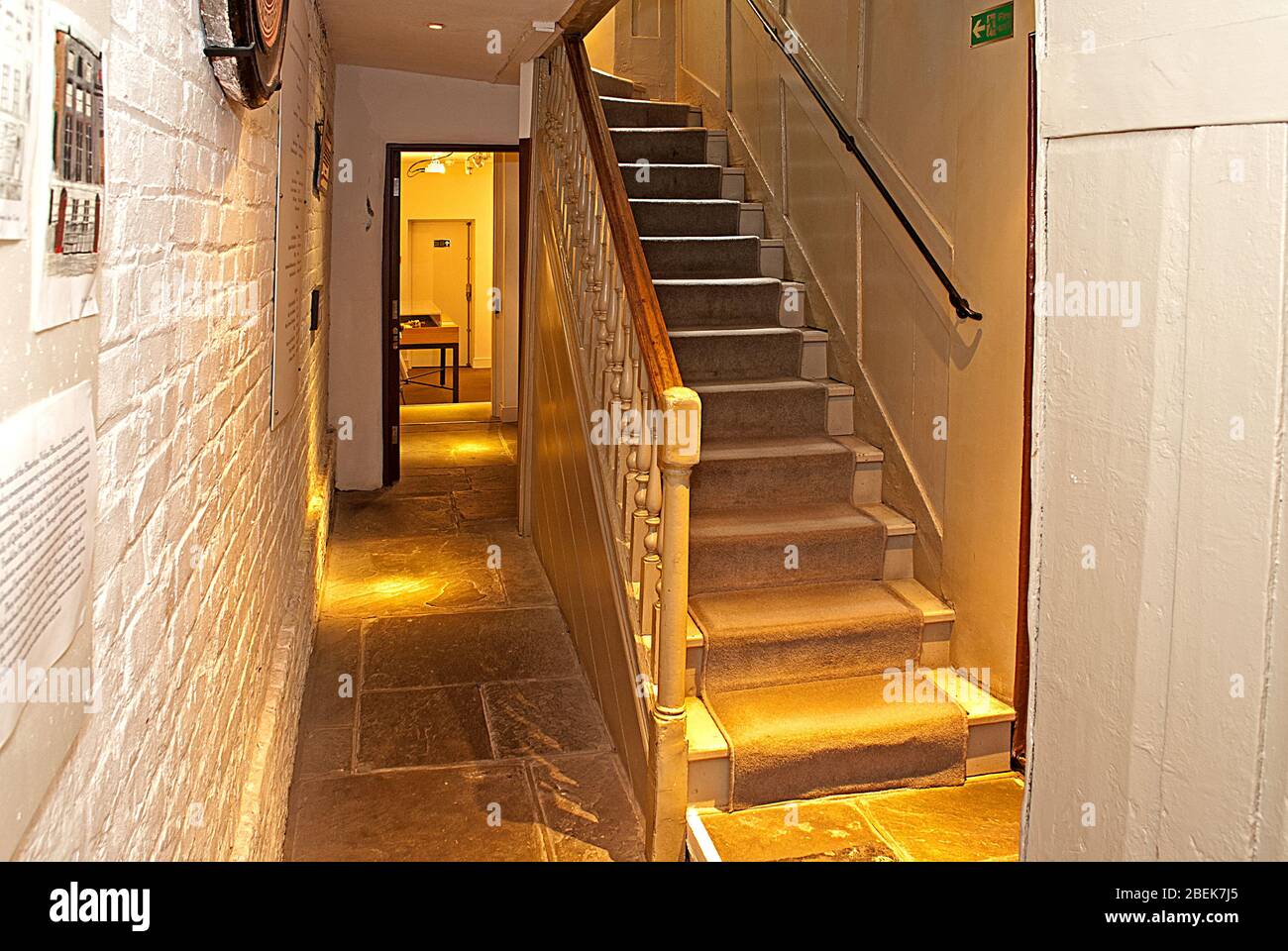
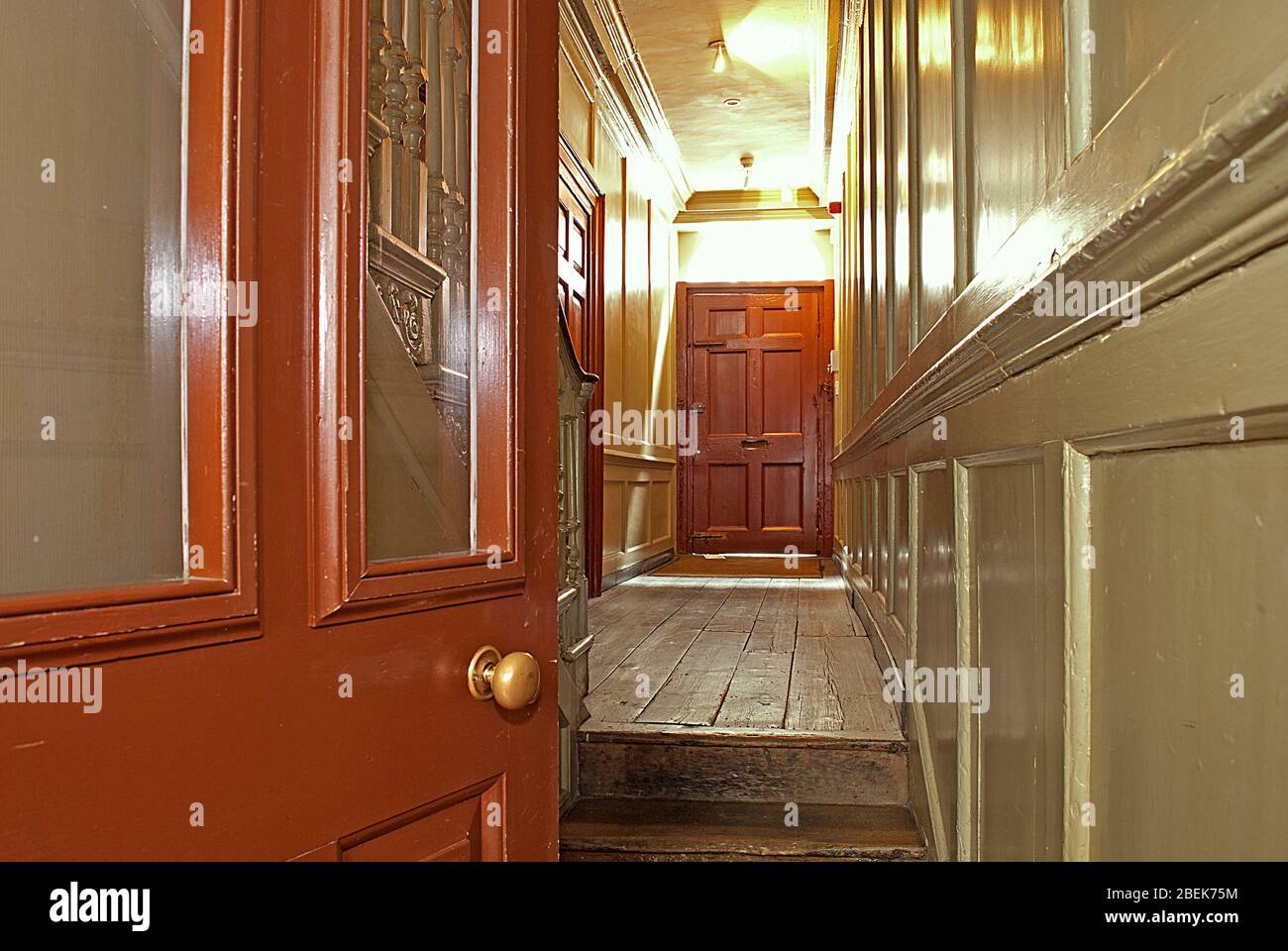
As of 2026, the preservation of the house is managed by the Benjamin Franklin House trust. Unlike many other historic homes that are filled with period-appropriate furniture from elsewhere, 36 Craven Street is celebrated as a "living museum." The rooms are intentionally left largely unfurnished to highlight the original architectural features, including the original floorboards, 18th-century wood paneling, and the central staircase that Franklin himself ascended thousands of times.
Benjamin Franklin’s Life and Diplomacy in London (1757–1775)
Franklin’s residency at 36 Craven Street was defined by his role as a colonial agent. Initially, he was sent by the Pennsylvania Assembly to protest the influence of the Penn family, the proprietors of the colony. However, as tensions between Great Britain and its American colonies escalated, his role expanded. He eventually represented the interests of Georgia, New Jersey, and Massachusetts as well.
The house became an unofficial American embassy. Franklin hosted high-profile visitors, including scientists, philosophers, and politicians. It was within these walls that Franklin debated the merits of the Stamp Act (1765) and the subsequent Townsend Acts. His efforts were focused on reconciliation, though his experiences in London eventually convinced him that American independence was inevitable.
In 1774, Franklin was summoned to the "Cockpit" (a nearby government building) to be publicly berated by Solicitor General Alexander Wedderburn over the leaking of the Hutchinson Letters. This event was a turning point, marking the end of Franklin’s effectiveness as a diplomat in London and prompting his departure from 36 Craven Street in March 1775, just weeks before the outbreak of the American Revolutionary War.
Scientific Discoveries and Innovations at the House
While 36 Craven Street was a political hub, it was also a laboratory. Franklin, a world-renowned polymath, continued his scientific pursuits in his private rooms. The Enlightenment was characterized by a thirst for knowledge, and Franklin’s residence in London placed him at the center of the Royal Society and the intellectual "Lunar Society."
Several of Franklin’s notable contributions were either conceived or refined at 36 Craven Street:
- The Glass Armonica: Inspired by the sound of singing glasses he heard at a London concert, Franklin developed a mechanical version of the instrument. It consisted of a series of nested glass bowls rotating on a spindle, played by touching the rims with dampened fingers.
- Bifocals: Frustrated by the need to constantly switch between glasses for reading and distance, Franklin is credited with inventing bifocal lenses during his time in London, allowing him to see clearly through a single pair of spectacles.
- The Franklin Stove: While invented earlier, he continued to refine his designs for energy-efficient heating and studied the "curing of smoky chimneys," a significant urban problem in 18th-century London.
- Electricity Research: Franklin continued his correspondence regarding electrical theory and the installation of lightning rods. He even advocated for the installation of pointed lightning rods on St. Paul’s Cathedral and the royal powder magazines.
The Mystery of the "Craven Street Bones"
One of the most startling discoveries at 36 Craven Street occurred during restoration work in 1998. Excavators discovered a pit in the basement containing over 1,200 human and animal bone fragments. The discovery initially sparked fears of a historical crime scene, but forensic analysis revealed a more scientific explanation.
The bones date back to the 1770s, coinciding with the residency of William Hewson, the son-in-law of Franklin’s landlady. Hewson was a brilliant anatomist and a protégé of William Hunter. He ran an anatomy school from the basement of 36 Craven Street. At the time, the study of anatomy was hampered by a lack of legal cadavers, leading to the rise of "resurrectionists" (grave robbers).
Hewson’s school used these bodies for dissection and teaching. To avoid the legal and social stigma associated with the disposal of human remains, the bones were buried in the garden (now the basement area). Analysis of the remains showed marks from surgical instruments, confirming their use in medical education. This discovery has added a layer of medical history to the site, making it a significant location for the study of the history of surgery and anatomy.
Visiting Benjamin Franklin House in 2026
As of 2026, the Benjamin Franklin House offers several ways for the public to engage with its history. The museum has adapted to modern tourism needs while maintaining its commitment to historical integrity.
The Historical Experience
This is the primary tour offered at the house. It utilizes "seamless" technology, including audio-visual projections onto the original walls and soundscapes that bring the 18th-century atmosphere to life. Visitors follow the story of Franklin’s time in London, narrated by "Polly Stevenson," the daughter of his landlady.
Architectural Tours
For those interested in the physical structure, specialized architectural tours are held on specific days (typically Tuesdays). These tours focus on the Georgian design, the materials used in construction, and the challenges of preserving a 300-year-old building in central London.
The Student Science Centre
The basement level, where the Hewson bones were found, now serves as an educational space. It focuses on Franklin’s scientific method and his London discoveries. It is a popular destination for school groups, offering hands-on experiments related to electricity and acoustics.
Access and Requirements
- Booking: Advance booking is highly recommended, especially for the Historical Experience, as group sizes are limited to preserve the fragile structure of the house.
- Accessibility: Due to its status as a Grade I listed Georgian terrace, the house has many narrow stairs and no elevator. Accessibility is limited for those with mobility issues, though the museum provides virtual resources for the upper floors.
- Location: 36 Craven Street, London, WC2N 5NF. It is a two-minute walk from Charing Cross Station.
Comparison of Historical Residences in London
To understand the unique position of 36 Craven Street, it is helpful to compare it with other high-profile historical homes in London.
| House Name | Primary Occupant | Era | Focus of Exhibit |
|---|---|---|---|
| 36 Craven Street | Benjamin Franklin | Georgian (1757–1775) | Diplomacy, Science, Anatomy |
| Dickens House | Charles Dickens | Victorian (1837–1839) | Literature and Victorian life |
| Dr. Johnson's House | Samuel Johnson | Georgian (1748–1759) | Lexicography and 18th-century social history |
| Apsley House | Duke of Wellington | Regency (1817+) | Military history and fine art |
| Keats House | John Keats | Romantic (1818–1820) | Poetry and the Romantic movement |
Restoration and Preservation Efforts
The journey to turn 36 Craven Street into a museum was long and complex. Following Franklin’s departure, the house served various functions, including as a hotel and a lodging house. By the mid-20th century, it had fallen into disrepair.
The Friends of Benjamin Franklin House was formed to save the building from demolition or conversion into commercial offices. The restoration, which culminated in the museum’s opening on Franklin’s 300th birthday in 2006, focused on conservation rather than recreation. Expert restorers stripped away layers of modern paint to find the original Georgian colors and reinforced the structural timber.
In 2026, the building undergoes regular "fabric checks" to ensure the London environment—vibrations from the nearby Underground and urban pollution—does not degrade the masonry. The house serves as a case study for heritage conservation, demonstrating how a historical site can be technologically modern while physically original.
Frequently Asked Questions
Did Benjamin Franklin own 36 Craven Street?
No, Franklin was a lodger. He rented rooms from Margaret Stevenson. While he spent the majority of his time in London at this address, he remained a tenant. This was a common arrangement for colonial agents and visitors to London during the 18th century.
Can you see the "Craven Street Bones" at the museum?
While most of the bones were reinterred or sent for specialized laboratory study, the museum’s Student Science Centre provides detailed information, forensic photographs, and educational displays about the discovery and William Hewson’s anatomy school.
Is the house suitable for young children?
Yes, particularly the Student Science Centre. However, the Historical Experience tour is best suited for children aged seven and older, as it involves guided movement through the house and historical narration that requires a degree of attention.
How much does it cost to visit in 2026?
As of 2026, standard adult admission for the Historical Experience is approximately £12.00 to £15.00. Discounts are typically available for students, seniors, and National Trust or Art Fund members. It is always best to check the official Benjamin Franklin House website for the most current pricing and seasonal hours.
Why is this house significant to British history?
While Franklin is an American icon, 36 Craven Street is a vital piece of British history. It represents the era of the Enlightenment in London and the scientific progress of the Royal Society. It also stands as a monument to the period when the British Empire was grappling with the political challenges that would eventually lead to the loss of its American colonies.
Next Steps for Visitors
For those planning a visit to 36 Craven Street in 2026, the following actions are recommended:
- Check the Calendar: Ensure your visit aligns with the type of tour you prefer (Historical vs. Architectural).
- Combine with Nearby Sites: Given its central location, a visit to 36 Craven Street pairs well with a trip to the National Gallery or the Banqueting House in Whitehall.
- Review the Science: If you are visiting with students, review Franklin’s experiments with electricity and the glass armonica beforehand to maximize the educational impact of the Science Centre.
- Support the Trust: As a small, independent museum, the Benjamin Franklin House relies on donations and memberships. Consider joining the "Friends of Benjamin Franklin House" to support the ongoing preservation of this Grade I listed landmark.
By visiting 36 Craven Street, you are not just entering a museum; you are stepping into the workspace of one of history’s most versatile minds during the most pivotal years of the 18th century.