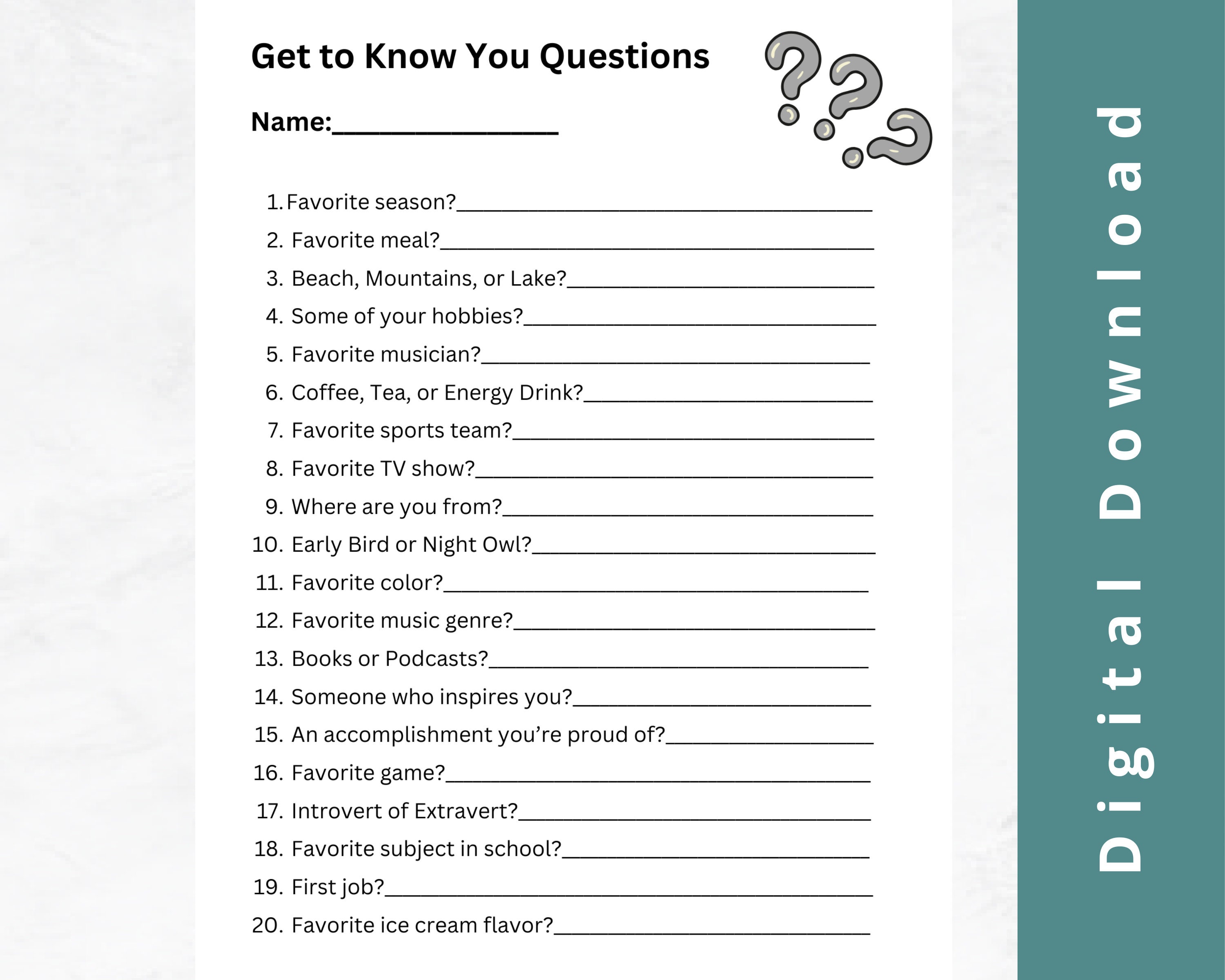
Building a genuine relationship requires moving beyond small talk and surface-level pleasantries to explore values, vulnerabilities, and personal histories. By asking thoughtful questions that progress naturally from lighthearted curiosity to deeper emotional resonance, you can create a safe space for authentic self-expression, build mutual trust, and accelerate the process of forming a meaningful, lasting connection with someone new.
The Psychology of Connection: Why Small Talk Fails and Curiosity Succeeds
Human interaction often defaults to safe, transactional subjects like weather, traffic, or professional titles. While these conversational openers help break the ice, they rarely stimulate the reward centers of the brain associated with bonding and intimacy. True interpersonal chemistry relies on self-disclosure and perceived partner responsiveness—the feeling that someone is genuinely listening and cares about your internal world.
When you transition from asking "What do you do?" to inquiring about what truly drives a person, you alter the psychological dynamic of the interaction. Curiosity signals safety. It communicates to the other person that you are not evaluating them for social compliance, but rather seeking to understand their unique perspective. This shifts the conversation from a performance to an exploration, lowering psychological defenses and allowing both individuals to lower their guard.
However, diving immediately into heavy philosophical queries can feel jarring or interrogative. Effective conversation building follows a progressive gradient. It starts with low-stakes inquiries that establish comfort, moves into experiential and creative territory to reveal personality traits, and eventually opens the door to core values, emotional vulnerabilities, and future aspirations.
Phase 1: Breaking the Ice with Intention (Questions 1–10)
Initial conversations set the emotional tone. Instead of asking generic questions that yield predictable, one-word answers, use these prompts to invite storytelling and playful reflection.
- What is the most memorable meal you have ever had, and what made it special?
- If you could instantly master any skill without practicing, what would you choose?
- What is a small, everyday thing that brings you an unreasonable amount of joy?
- If you had to curate a soundtrack for your life right now, what would be the first three songs?
- What is the best piece of advice you have ever received, and who gave it to you?
- If you could live in any era of history for just one year, which would you pick?
- What is a hobby or interest you have that surprises people when they find out?
- What is the most spontaneous thing you have ever done on a whim?
- If you could trade lives with any fictional character for a week, who would it be?
- What is your absolute favorite way to spend a completely unstructured, free weekend?
Phase 2: Uncovering Passions, Quirks, and Creative Outlets (Questions 11–20)
As initial comfort settles in, you can deepen the dialogue by exploring how the other person interacts with the world, their creative inclinations, and the nuances of their personality.
- What is something you used to care deeply about when you were younger that you no longer care about at all?
- Do you prefer planning every detail of an adventure or showing up and seeing where the day takes you?
- What is a belief or opinion you held strongly five years ago that you have completely changed your mind about?
- When you are feeling stressed or overwhelmed, what is your go-to method for resetting?
- What is something you are currently trying to learn, unlearn, or improve about yourself?
- If someone handed you a completely free, blank notebook, what would be the very first thing you wrote or drew in it?
- What is a movie, book, or album that fundamentally shifted how you view the world?
- Do you feel more energized by spending time in large social groups or by having quiet time alone?
- What is a weird or irrational fear you had as a child that you can laugh at now?
- What is an experience on your bucket list that you are determined to check off within the next five years?
Phase 3: Exploring Core Values and Life Philosophy (Questions 21–35)
Moving past preferences brings you into the realm of values. These questions examine what guides a person's moral compass, how they define success, and what they prioritize in life.
- How do you personally define success, and has that definition changed over the course of your life?
- What is a non-negotiable boundary you hold in your friendships and relationships?
- In moments of conflict, do you tend to process internally before speaking, or do you prefer to talk things out immediately?
- What does community mean to you, and how do you cultivate it in your daily life?
- If you could dedicate your time to solving one major social or environmental issue, which one would you choose?
- What qualities do you admire most in the people you choose to keep close to you?
- How do you know when you truly trust someone?
- What role does curiosity play in your daily decision-making?
- If you could change one thing about how society operates today, what would it be?
- What is a risk you took that did not pay off, but that you would still take again if given the chance?
- How do you handle failure, and what has been your greatest teacher in overcoming setbacks?
- What is something you wish more people understood about you without you having to explain it?
- How do you show up for the people you love when they are going through a difficult season?
- What does living an authentic life look like to you on a practical, day-to-day level?
- What is a lesson you had to learn the hard way that you are ultimately grateful for?
| Question Category | Primary Focus | Best Used When |
|---|---|---|
| Icebreakers | Establishing baseline comfort and lighthearted engagement | First few minutes of meeting or casual catch-ups |
| Passions & Quirks | Revealing personality traits, habits, and creative outlets | Early-to-mid conversation as rapport builds |
| Core Values | Exploring ethics, worldview, and emotional boundaries | Deeper dates, long drives, or established friendships |
| Vulnerability & Future | Building profound intimacy, trust, and shared vision | Advanced stages of relationship building |
Phase 4: Venturing into Vulnerability and Future Dreams (Questions 36–50)
The final tier of connection-building touches on vulnerability, formative memories, and future aspirations. These questions require emotional safety and are best deployed when mutual trust has already been established.
- What is a childhood memory that instantly makes you feel safe and grounded when you think about it?
- What is something you are deeply proud of that you rarely get the chance to talk about?
- How has your relationship with your family shaped the person you are today?
- What is a dream for your future that feels a little too vulnerable to share with most people?
- What does emotional intimacy look like to you in its purest form?
- What is the most meaningful compliment you have ever received from someone?
- How do you process grief, loss, or major life transitions?
- What is something you are currently working through or healing from?
- If you could write a brief letter to your younger self ten years ago, what would you say?
- What is a standard or expectation you have set for yourself that you refuse to compromise on?
- When do you feel most like your true, unmasked self?
- What is a question you wish people asked you more often?
- How do you want to be remembered by the people who know you best?
- What is something you are looking forward to experiencing in the next chapter of your life?
- If we were to look back on this conversation a year from now, what do you hope we will have built together?
Practical Tips for Asking Deep Questions Without Being Interrogative
Asking profound questions is an art form that requires balance, active listening, and emotional intelligence. To ensure your conversation feels like a natural exchange rather than a job interview or a therapist's session, keep several operational principles in mind:
- Practice Reciprocity: Never treat the questions as a one-way street. When the other person answers, share your own perspective, vulnerability, or story in return. Connection requires mutual exposure.
- Read the Room: Pay attention to non-verbal cues. If someone crosses their arms, gives short answers, or changes the subject, respect their boundary and pivot back to a lighter topic.
- Listen Without Rehearsing: Resist the urge to formulate your next question while the other person is still speaking. Focus entirely on understanding their narrative, and let follow-up questions emerge organically from what they just shared.
- Validate Before Moving On: Acknowledge the emotional weight or thoughtfulness of their answer. Simple affirmations like "That makes a lot of sense" or "Thank you for sharing that with me" validate their experience and deepen trust.
Frequently Asked Questions
How do I transition from small talk to deep questions without it feeling awkward?
The smoothest transition relies on bridging. Take a routine small-talk topic—such as weekend plans—and connect it to an exploratory question. For example, if someone mentions they are reading a book, you can ask, "What is a book that fundamentally shifted how you view the world?" This keeps the context relevant while elevating the depth.
What should I do if the other person gives a short or dismissive answer?
Do not force it or press for more details immediately. A brief answer often indicates a lack of comfort, fatigue, or disinterest in that specific topic. Gracefully pivot to a lighter question or share a vulnerable story of your own to model safety without demanding reciprocal exposure.
Are these questions suitable for professional networking or only personal relationships?
Phases 1 and 2 (Icebreakers and Passions) work wonderfully in professional settings to build rapport with colleagues, clients, or mentors. Phases 3 and 4 (Core Values and Vulnerability) are generally tailored for romantic partnerships, close friendships, and intentional relationship-building where emotional intimacy is the desired outcome.
How many deep questions should I ask in a single conversation?
Quality vastly outweighs quantity. Asking two or three meaningful questions and spending thirty minutes exploring the nuances of those answers is far more effective than rapid-firing a list of ten heavy inquiries. Let the conversation breathe and develop at its own pace.
What if I ask a question and the response makes me uncomfortable?
Curiosity is the antidote to discomfort. If a response surprises or challenges you, lean in with gentle, non-judgmental follow-up questions to understand their perspective. The goal of getting to know someone is comprehension and empathy, not agreement on every single topic.
Next Actions for Building Lasting Connection
Sparking real connection is not a one-time event; it is an ongoing practice of intentional curiosity and active listening. Start by selecting three or four questions from this guide that resonate most with your current interactions—whether you are going on a first date, catching up with an old friend, or trying to understand a partner better. Commit to listening without judgment, sharing your own truths in return, and allowing the conversation to unfold organically. True intimacy is built one honest answer at a time.