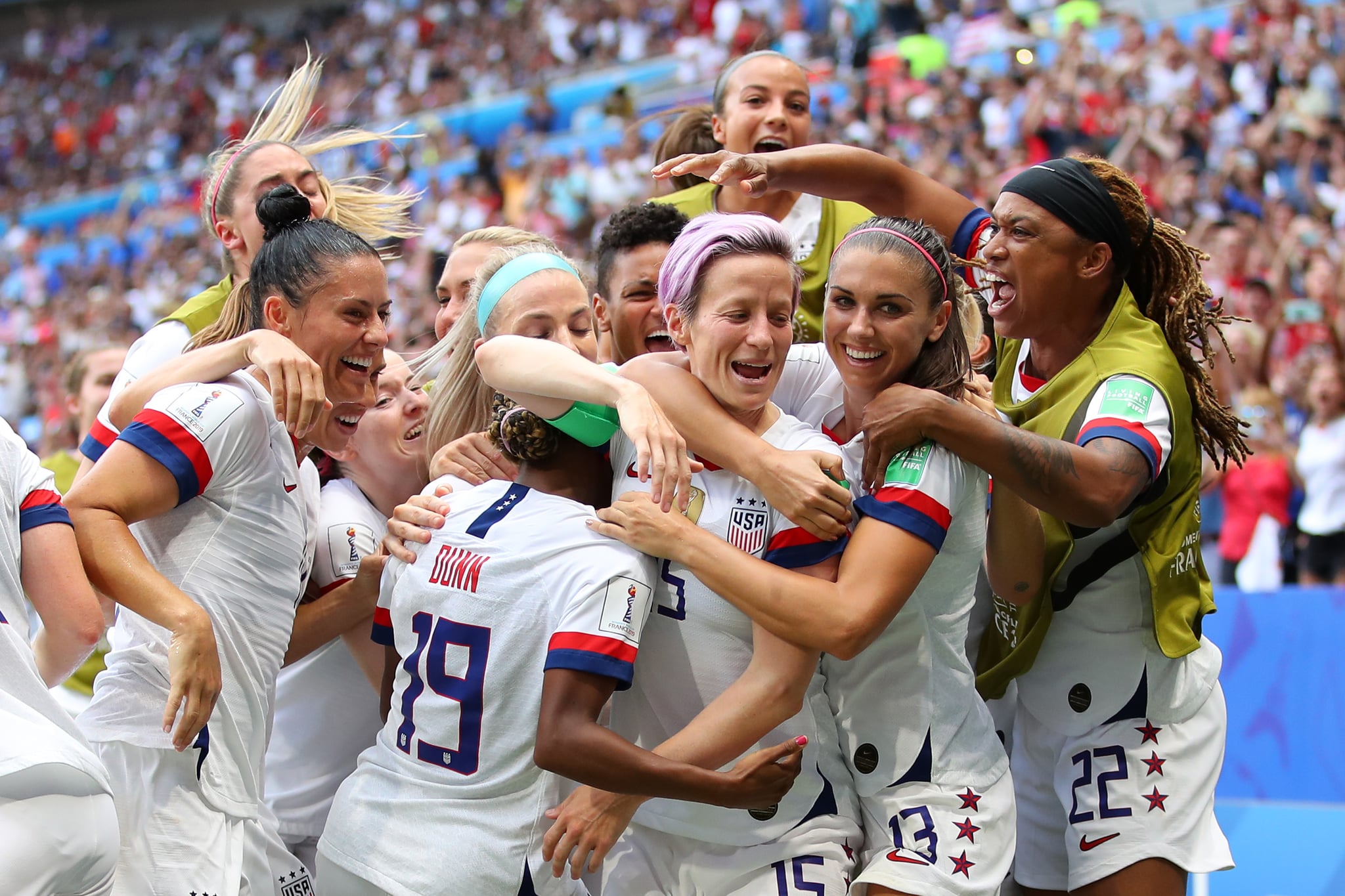
The 2019 FIFA Women’s World Cup, hosted by France, stands as a landmark event in the history of international women’s football. It featured 24 nations competing across nine host cities, ultimately resulting in the United States defending their title. This overview provides the final standings, match progression, and statistical breakdown of the tournament's 52 matches held in June and July 2019.
Tournament Overview and Format
The 2019 tournament was the eighth edition of the FIFA Women’s World Cup. It followed a rigorous qualification process, bringing together the top teams from every confederation. The competition was structured into an initial group stage consisting of six groups (A through F), followed by a knockout phase featuring a Round of 16, Quarter-finals, Semi-finals, the Third Place match, and the Final.
For football enthusiasts and historians, reviewing the results of this tournament provides insight into the tactical evolution of the women’s game. The 2019 edition was noted for its record-breaking broadcast audiences and the high intensity of play, which set a new standard for future FIFA events.
The Group Stage: Paths to the Knockout Rounds
In the group stage, teams played three matches each. The top two teams from each group, along with the four best third-placed teams, advanced to the Round of 16. The group stage results established the competitive hierarchy for the remainder of the tournament.
Group A
France, as the host nation, led Group A with a perfect record. They were joined by Norway and Nigeria, the latter advancing as one of the best third-placed finishers.
- France: 9 points
- Norway: 6 points
- Nigeria: 3 points
- South Korea: 0 points
Group B
Germany dominated Group B, followed by Spain and China PR.
- Germany: 9 points
- Spain: 4 points
- China PR: 4 points
- South Africa: 0 points
Group C
Italy topped the group on goal difference, leading a highly competitive field that included Australia and Brazil.
- Italy: 6 points
- Australia: 6 points
- Brazil: 6 points
- Jamaica: 0 points
Group D
England performed flawlessly, winning all three group matches. Japan and Argentina followed, with Argentina missing out on the knockout stages despite a resilient effort.
- England: 9 points
- Japan: 4 points
- Argentina: 2 points
- Scotland: 1 point
Group E
The Netherlands emerged as the group leader, with Canada securing second place. Cameroon advanced as a top-tier third-placed team.
- Netherlands: 9 points
- Canada: 6 points
- Cameroon: 3 points
- New Zealand: 0 points
Group F
The United States and Sweden advanced comfortably, with the U.S. establishing an early dominance that would characterize their entire tournament run.
- United States: 9 points
- Sweden: 6 points
- Chile: 3 points
- Thailand: 0 points
The Knockout Phase: Road to the Final
Once the knockout phase commenced, the margin for error vanished. The bracket was structured to reward those who maintained defensive discipline while exploiting attacking transitions.
Round of 16 Results
- Norway (1) vs. Australia (1) – Norway won on penalties (4–1)
- England (3) vs. Cameroon (0)
- France (2) vs. Brazil (1) – After extra time
- Germany (3) vs. Nigeria (0)
- Italy (2) vs. China PR (0)
- Netherlands (2) vs. Japan (1)
- Sweden (1) vs. Canada (0)
- United States (2) vs. Spain (1)
Quarter-Finals
The Quarter-finals saw the departure of major contenders, setting the stage for the final four.
- England (3) vs. Norway (0)
- France (1) vs. United States (2)
- Germany (1) vs. Sweden (2)
- Italy (0) vs. Netherlands (2)
Semi-Finals and Final
The Semi-finals determined the championship matchups. England faced the United States in a tightly contested game, while the Netherlands overcame Sweden in extra time.
- Semi-Final 1: United States (2) vs. England (1)
- Semi-Final 2: Netherlands (1) vs. Sweden (0) – After extra time
- Third Place Match: England (1) vs. Sweden (2)
- Final: United States (2) vs. Netherlands (0)
Summary of Tournament Standings
The final standing of the teams is defined by the stage reached and, for teams eliminated at the same stage, by their overall performance record.
| Rank | Team | Final Stage |
|---|---|---|
| 1 | United States | Champion |
| 2 | Netherlands | Runner-up |
| 3 | Sweden | Third Place |
| 4 | England | Fourth Place |
| 5 | Germany | Quarter-finals |
| 6 | France | Quarter-finals |
| 7 | Italy | Quarter-finals |
| 8 | Norway | Quarter-finals |
Technical Analysis: Tactics and Trends
The 2019 tournament highlighted several shifts in how the women’s game is played at the elite level. Teams increasingly prioritized high-press defensive structures and rapid transitions. The success of the United States was predicated on an aggressive attacking philosophy, while the Netherlands showcased the efficacy of a disciplined, possession-based tactical framework.
Defensively, the tournament saw the introduction of more stringent VAR (Video Assistant Referee) enforcement, particularly regarding goalkeeper positioning during penalty kicks. This adjustment forced a change in how teams prepared for set-piece scenarios and penalties, making tactical discipline in the box more critical than in previous iterations of the tournament.
Common Questions Regarding 2019 Results
How did the United States win the tournament? The United States won by maintaining a consistent offensive output throughout the tournament, scoring 26 goals in total. They defeated the Netherlands 2-0 in the final with goals from Megan Rapinoe and Rose Lavelle, effectively neutralizing the Dutch counter-attack.
Which teams qualified for the 2020 Olympics based on these results? The 2019 World Cup acted as the qualification pathway for UEFA nations to the 2020 Tokyo Olympic Games. Great Britain (representing England) qualified based on their performance, alongside the Netherlands and Sweden.
What was the significance of the 2019 tournament for the Netherlands? 2019 marked the best finish in the history of the Netherlands women’s national team. After winning the 2017 UEFA Women’s Euro, their runner-up finish in the World Cup cemented their status as a global powerhouse in the sport.
Why was the match between England and Cameroon considered controversial? The match in the Round of 16 was marked by multiple VAR reviews and disputes regarding refereeing decisions. It remains one of the most discussed games of the tournament due to the high tension and multiple disciplinary interruptions throughout the second half.
Strategic Considerations for Historical Research
When analyzing these scores for research purposes, it is essential to distinguish between regular-time results and results occurring after extra time or penalty shootouts. FIFA records the score at the end of the full duration (plus extra time) as the official result for the match, with a separate notation for the penalty shootout outcome.
For those looking to verify specific statistics beyond the match results, the FIFA Official Archive serves as the primary repository for player disciplinary records, official goal-scoring tallies, and comprehensive match reports.
Next Steps for Followers of Women’s Football
To stay informed about the evolution of these teams and their subsequent performance cycles, interested parties should review the biennial updates provided by FIFA regarding regional tournament rankings. Keeping track of the "Road to the World Cup" qualification series remains the most effective way to understand how performance metrics translate from one tournament cycle to the next.