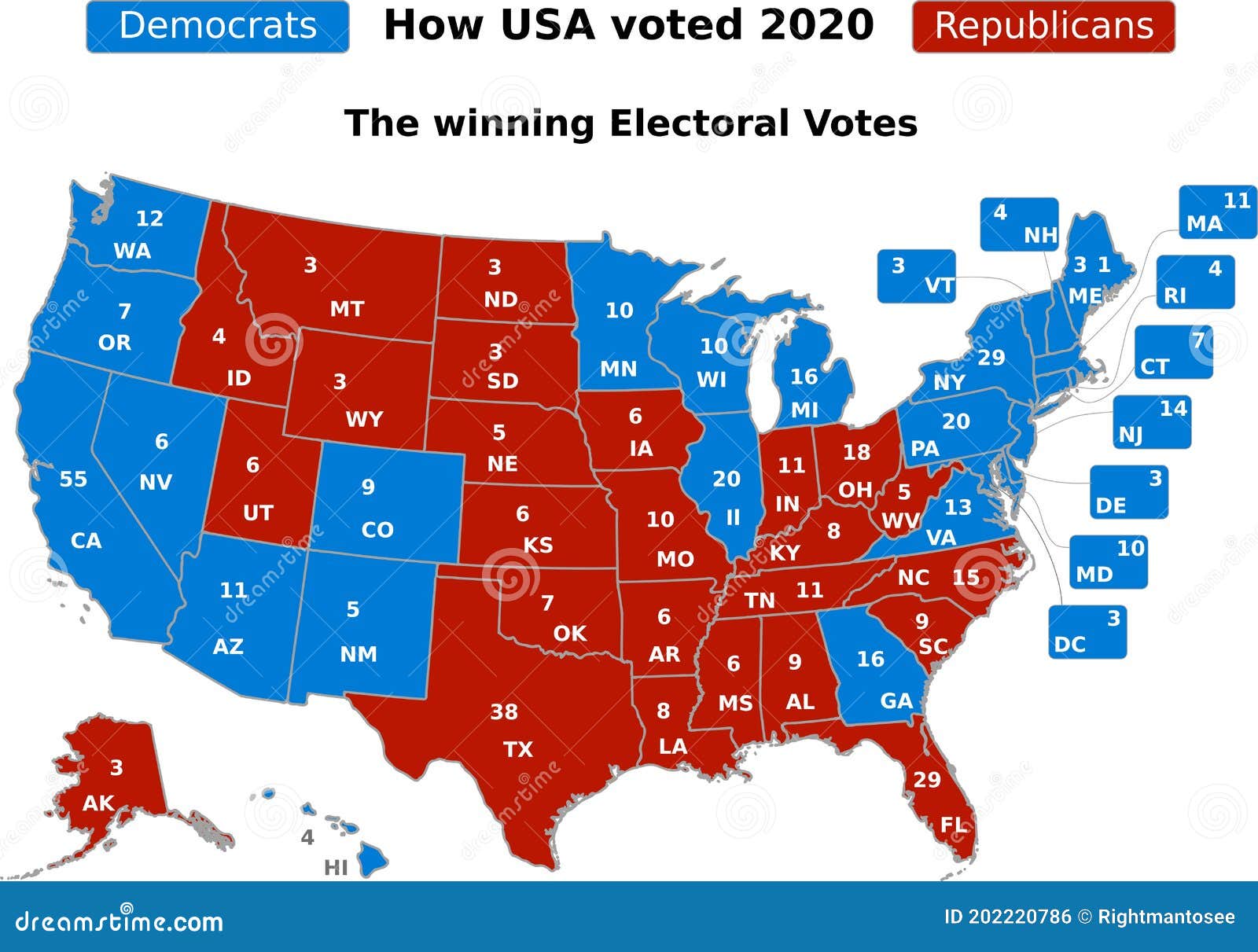
The 2020 United States presidential election saw Democrat Joe Biden defeat incumbent Republican Donald Trump, securing 306 Electoral College votes to Trump's 232. Marked by record-breaking turnout despite the COVID-19 pandemic, the election results were certified across all 50 states following numerous audits and legal challenges, leading to Biden’s inauguration on January 20, 2021.
The Sociopolitical Climate of the 2020 Election Cycle
The 2020 election occurred during one of the most tumultuous periods in modern American history. Looking back from 2026, the convergence of a global pandemic, significant economic volatility, and widespread social unrest created a high-stakes environment that fundamentally altered traditional campaigning and voting behaviors. The COVID-19 pandemic acted as the primary catalyst for change, forcing both major parties to reconsider how they engaged with voters and how those voters would eventually cast their ballots.
By the summer of 2020, the United States was grappling with the health crisis and the resulting economic contraction. The federal government's response to the pandemic became a central campaign issue, with the Trump administration emphasizing economic reopening and "Operation Warp Speed" for vaccine development, while the Biden campaign criticized the administration’s public health management. Simultaneously, the death of George Floyd in May 2020 sparked a national movement for racial justice, further polarizing the electorate and placing issues of policing and systemic inequality at the forefront of the national conversation.
These external pressures led to an unprecedented expansion of voting access. Many states, both Republican and Democratic-led, implemented temporary or permanent changes to their election laws to facilitate safe voting. This included the widespread mailing of ballot applications, the installation of secure drop boxes, and the extension of early voting periods. As a result, the 2020 election saw the highest voter turnout in over a century, with approximately 66.7% of the eligible voting population participating.
Candidate Profiles: Joe Biden vs. Donald Trump
The 2020 contest featured two candidates with diametrically opposed visions for the country's future. Incumbent President Donald Trump ran on a platform of "Promises Kept," focusing on his pre-pandemic economic record, judicial appointments (including three Supreme Court justices), and a "Law and Order" message in response to summer protests. His campaign relied heavily on large-scale in-person rallies, often defying local public health guidance to demonstrate a return to normalcy.
Joe Biden, the former Vice President under Barack Obama, positioned himself as a "steady hand" capable of restoring traditional norms and managing the pandemic through scientific consensus. His campaign adopted a cautious approach to the pandemic, utilizing virtual events and socially distanced gatherings. Biden’s platform, titled "Build Back Better," emphasized infrastructure investment, climate change action, and an expansion of the Affordable Care Act.
Third-party candidates also participated, though they did not reach the 5% threshold required for federal funding in future cycles. Jo Jorgensen of the Libertarian Party and Howie Hawkins of the Green Party represented the largest of these "alternative" choices, collectively drawing a small but occasionally significant percentage of the vote in certain battleground states.
The Mechanics of the 2020 Vote: Pandemic Adaptations
The logistical execution of the 2020 election was a massive undertaking that required coordination between federal, state, and local authorities. Because the U.S. election system is decentralized, each state determined its own procedures for handling the influx of mail-in ballots. This led to a patchwork of rules regarding when ballots could be sent out, how signatures were verified, and—crucially—when officials could begin counting them.
In states like Florida and Ohio, election officials were permitted to process mail-in ballots weeks before Election Day. This allowed these states to report nearly complete results on election night. Conversely, in "Blue Wall" states like Pennsylvania, Michigan, and Wisconsin, state legislatures required that officials wait until Election Day to begin processing the millions of mail ballots received. This discrepancy in processing times created a significant lag in reporting, which contributed to public confusion as the "Election Night" results shifted over the following days.
The Cybersecurity and Infrastructure Security Agency (CISA), along with the Election Infrastructure Government Coordinating Council (GCC), monitored the election for foreign interference and technical failures. In a joint statement, these agencies famously termed the 2020 election "the most secure in American history," noting that there was no evidence that any voting system deleted or lost votes, changed votes, or was in any way compromised.
Election Night and the "Blue Shift" Phenomenon
The staggered reporting of votes led to a phenomenon known as the "Red Mirage" and the subsequent "Blue Shift." On the night of November 3, 2020, early returns from in-person voting showed President Trump leading in several key battleground states. Because Republican voters were more likely to vote in person on Election Day, while Democratic voters utilized mail-in options at higher rates, the initial tallies skewed Republican.
As the days progressed and the more labor-intensive mail-in ballots were tabulated, Joe Biden’s totals rose steadily. This shift was most pronounced in Pennsylvania and Georgia. Major news organizations did not call the election until Saturday, November 7, 2020, when the math in Pennsylvania made it statistically impossible for Trump to overtake Biden’s lead.
Key Battleground Shifts: 2016 vs. 2020
The 2020 result hinged on Biden’s ability to reclaim the "Blue Wall" and expand into the Sun Belt. The following table illustrates the margin of victory in key states that flipped between the 2016 and 2020 cycles.
| State | 2016 Winner (Margin) | 2020 Winner (Margin) | Net Shift |
|---|---|---|---|
| Pennsylvania | Trump (+0.72%) | Biden (+1.17%) | +1.89% Dem |
| Michigan | Trump (+0.23%) | Biden (+2.78%) | +3.01% Dem |
| Wisconsin | Trump (+0.77%) | Biden (+0.63%) | +1.40% Dem |
| Georgia | Trump (+5.13%) | Biden (+0.23%) | +5.36% Dem |
| Arizona | Trump (+3.55%) | Biden (+0.30%) | +3.85% Dem |
The flips in Georgia and Arizona were particularly significant, as they represented the first time a Democratic presidential candidate had won those states since 1992 and 1996, respectively. These shifts were attributed to changing demographics, increased suburban support for Democrats, and high turnout among voters of color.
Statistical Breakdown: The Final Results
When the final tallies were certified, Joe Biden had won the popular vote by more than 7 million votes. He received 81,283,501 votes (51.3%), while Donald Trump received 74,223,975 votes (46.8%). Despite the large popular vote margin, the Electoral College remained the deciding factor.
Biden's victory was solidified by winning 306 electoral votes, the exact same number Donald Trump had won in 2016 (though Trump’s final 2016 count was 304 due to faithless electors). To reach this number, Biden held all the states Hillary Clinton won in 2016 and added the five "flip" states mentioned in the table above, along with one electoral vote from Nebraska's 2nd congressional district.
The 2020 election also saw significant results in the "down-ballot" races. While Democrats maintained control of the House of Representatives, their majority narrowed. The Senate remained in Republican control until January 5, 2021, when two runoff elections in Georgia resulted in a 50-50 tie, giving Democrats the majority via Vice President Kamala Harris’s tie-breaking vote.
The Post-Election Period: Challenges and Certification
The period between Election Day and the inauguration was marked by an unprecedented effort by the incumbent president to contest the results. The Trump campaign and its allies filed more than 60 lawsuits in state and federal courts, including the U.S. Supreme Court, alleging widespread voter fraud and procedural irregularities.
Judges appointed by presidents from both parties, including several appointed by Trump himself, dismissed nearly all of these cases due to a lack of evidence. Recounts were conducted in several states, including Georgia (which performed three separate counts) and Wisconsin. These recounts did not fundamentally alter the results; in some cases, they slightly increased Biden's margin of victory.
The certification process follows a strict timeline mandated by the Electoral Count Act of 1887. By December 8, 2020 (the "Safe Harbor" deadline), all states had certified their results. On December 14, 2020, the electors met in their respective states to cast their official votes. Despite these steps, the transition of power was complicated by a delay in the General Services Administration’s (GSA) "ascertainment" of the winner, which held up transition funds and briefings for several weeks.
The process culminated on January 6, 2021, during the joint session of Congress to count the electoral votes. This session was interrupted by a riot at the U.S. Capitol, but Congress reconvened later that night to complete the certification. Joe Biden and Kamala Harris were sworn into office on January 20, 2021, in a ceremony characterized by heightened security and social distancing.
Looking Back from 2026: The Long-term Impact
Six years later, the 2020 election remains a defining moment in American political science. It demonstrated the resilience of the U.S. election infrastructure under extreme stress, but it also exposed deep fractures in public trust. Since 2020, many states have passed new legislation—some expanding voting access and others tightening rules around mail-in ballots and voter ID—reflecting the diverging interpretations of the 2020 experience.
Technically, the election spurred a massive investment in election security and auditing technology. The move toward paper-verifiable trails for all electronic voting machines became nearly universal by 2024, a direct response to the debates of 2020. Furthermore, the 2022 reform of the Electoral Count Act was a direct legislative consequence of the 2020 post-election period, clarifying that the Vice President's role in certification is purely ministerial and raising the threshold for objecting to a state's results.
For historians and political analysts, 2020 serves as a case study in "high-turnout polarization." It proved that even in a crisis, the American electorate is capable of massive mobilization, though that mobilization often reinforces existing political divides rather than bridging them.
Frequently Asked Questions
What was the total voter turnout in the 2020 election?
The 2020 election saw approximately 158.4 million people cast ballots, representing about 66.7% of the voting-eligible population. This was the highest turnout for a U.S. presidential election since 1900. The surge was driven by the high stakes of the candidates, widespread mail-in voting options, and intense national interest in the government's response to the pandemic and social issues.
How many electoral votes did Joe Biden receive?
Joe Biden received 306 electoral votes, surpassing the 270 required to win the presidency. Donald Trump received 232 electoral votes. This total was finalized after the electors met in December 2020 and was officially counted by Congress in January 2021. Biden’s electoral count matched the 2016 winning total of Donald Trump.
Which states "flipped" from Republican to Democrat in 2020?
Five states that voted for Donald Trump in 2016 switched to Joe Biden in 2020: Pennsylvania, Michigan, Wisconsin, Georgia, and Arizona. Additionally, Biden won the 2nd Congressional District of Nebraska, which awards its electoral votes separately from the rest of the state.
Was there evidence of widespread fraud in the 2020 election?
No. Federal agencies, including the Cybersecurity and Infrastructure Security Agency (CISA) and the Department of Justice, stated that there was no evidence of widespread fraud that could have changed the outcome of the election. Over 60 court challenges were dismissed by various judges for lack of evidence or standing, and multiple audits in battleground states confirmed the accuracy of the original counts.
What was the "Red Mirage" during election night?
The "Red Mirage" refers to the initial appearance of a Republican lead in several states on election night. This occurred because Republican-leaning voters were more likely to vote in person on Election Day, and these votes were often counted and reported first. The "Blue Shift" followed as mail-in ballots, which skewed heavily Democratic, were processed and added to the totals over the following days.
Who was the first woman elected as Vice President in 2020?
Kamala Harris, Joe Biden's running mate, became the first woman, the first African American woman, and the first South Asian American woman to be elected Vice President of the United States. Her election was a historic milestone in American politics, breaking several demographic barriers for the executive branch.
Practical Recommendations for Researching Election Data
For those seeking to verify historical data or conduct academic research on the 2020 election, it is essential to use primary and non-partisan sources. The Federal Election Commission (FEC) provides the official, certified results for all federal elections. For state-level details, the National Association of Secretaries of State (NASS) serves as a portal to the official election websites of all 50 states.
When reviewing claims regarding election security, the Cybersecurity and Infrastructure Security Agency (CISA) remains the authoritative body for technical assessments of the voting infrastructure. Researchers should also consult the U.S. National Archives, which maintains the definitive record of the Electoral College proceedings. These resources provide a factual foundation for understanding the complexities of the 2020 cycle and its lasting impact on American governance.