Prison infrastructure encompasses the physical architecture, specialized security systems, utilities, and life-support networks required to safely, securely, and humanely confine individuals remanded or sentenced by a court of law. It bridges civil engineering, penology, and public administration, balancing strict institutional control with compliance with constitutional and international human rights standards.
Evolution and Core Components of Correctional Facilities
The design and execution of correctional facilities have evolved significantly from the purely punitive, fortress-like structures of the 19th and early 20th centuries. Modern prison infrastructure requires a multidisciplinary approach that integrates civil engineering, advanced electronics, environmental controls, and human-centric spatial planning to mitigate the psychological and physical strains of incarceration while maintaining absolute perimeter security.
At its core, a correctional facility functions as a self-sustaining municipality. It must house, feed, monitor, and provide medical and rehabilitative services for hundreds or thousands of residents under conditions of involuntary confinement. Consequently, the physical plant is divided into distinct zones, each governed by specialized engineering and security requirements.
Perimeter Security and Hardened Architecture
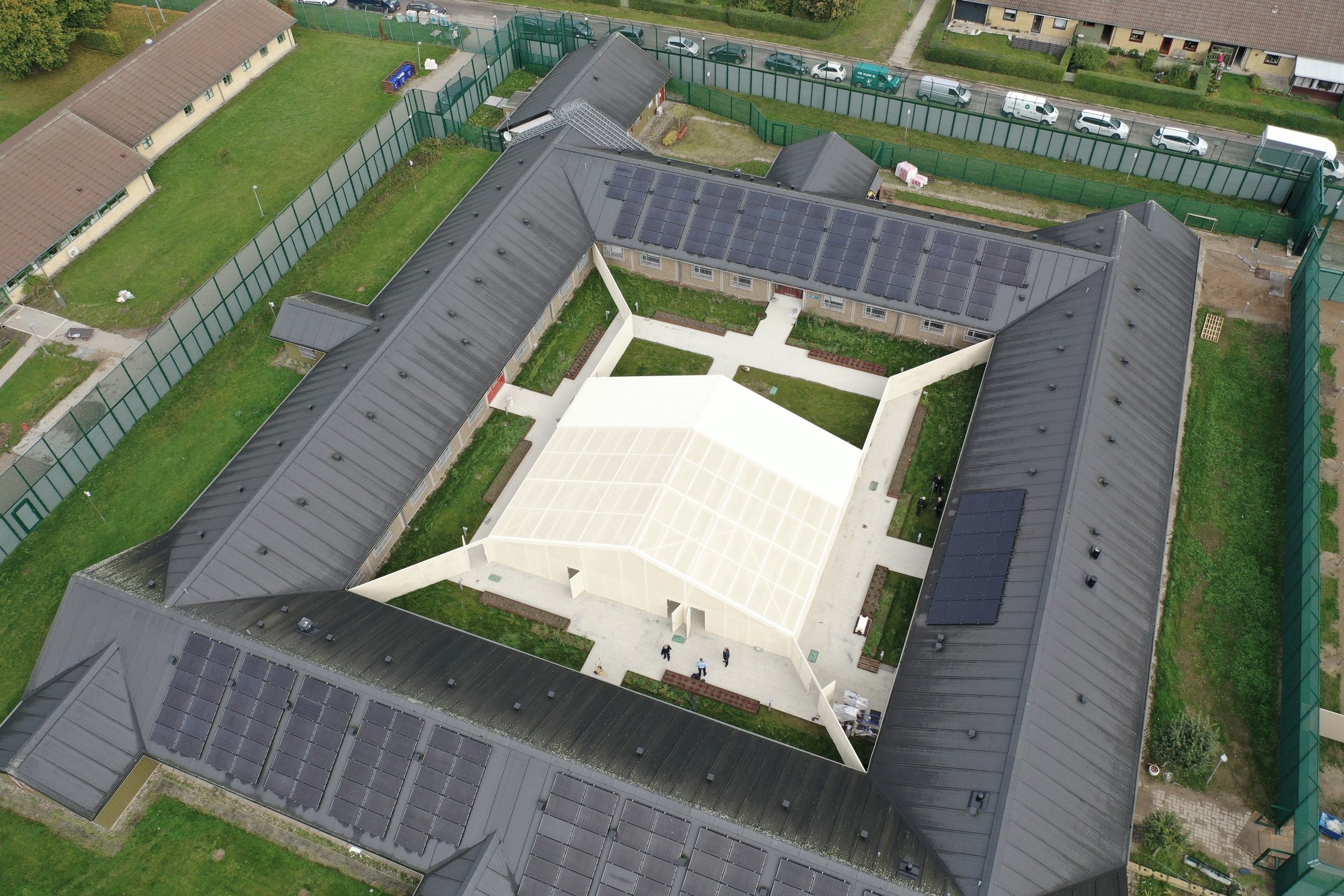
The outermost layer of any secure correctional institution is its perimeter security system. Historically defined by massive stone walls and watchtowers, modern perimeters rely on a layered defense-in-depth model.
- Physical Barriers: Double-fencing configurations utilizing high-tensile galvanized steel mesh, topped with concertina or razor wire, remain standard. These fences are often integrated with anti-ram vehicle barriers and clear-zones designed to eliminate blind spots.
- Electronic Detection: Microphonic cable systems, infrared motion sensors, microwave detection fields, and closed-circuit television (CCTV) arrays monitor the perimeter continuously.
- Sluice Gates and Sally Ports: Vehicle and pedestrian access points utilize interlocking gates or sally ports, ensuring that no outer portal can open until the inner portal is securely locked, preventing unauthorized egress or vehicular breaches.
Housing Unit Design and Internal Classification
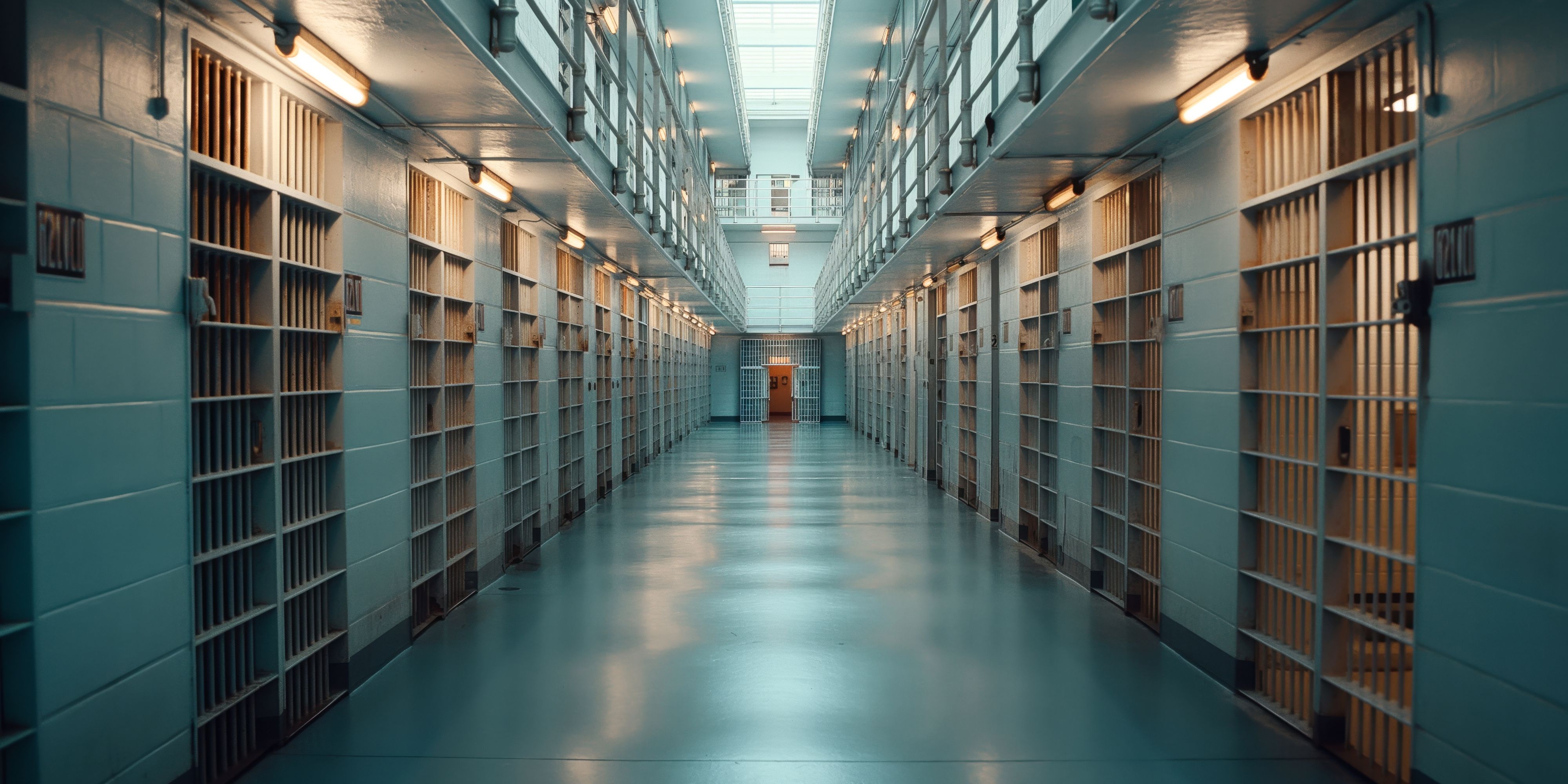
Internal architecture dictates the operational safety of staff and residents. Over the past several decades, prison design has shifted from traditional linear cell blocks—where long, echoing corridors complicate surveillance—to direct-supervision pods and modular designs.
- Direct-Supervision Pods: In these configurations, living quarters are arranged in a circular or semicircular tier around a central command station. Correctional officers are stationed directly inside the living unit without physical barriers separating them from the population. This design fosters active communication, reduces tension, and suppresses violent incidents before they escalate.
- Cellular Hardening: Cells are constructed using reinforced, high-strength concrete and security-grade steel fixtures. Fixtures are anti-ligature and tamper-resistant to prevent self-harm and structural sabotage.
- Classification Segregation: Infrastructure must physically separate different security classifications (maximum, medium, minimum), protective custody, administrative segregation, and specialized medical or mental health housing units to prevent cross-contamination of institutional violence.
Critical Utility Systems and Lifeline Engineering
Maintaining a secure environment requires uninterrupted utility infrastructure. Unlike standard commercial or residential buildings, a failure in prison utility systems can trigger institutional emergencies, riots, or catastrophic health crises.
Water, Sanitation, and Environmental Controls
Potable water supply, wastewater management, and climate control are fundamental requirements. Because residents cannot leave the facility, backup pumping stations, redundant municipal connections, and large-scale emergency generators are mandatory.
- Air Handling and Ventilation: HVAC systems must handle high-density occupancy while preventing the spread of airborne pathogens (such as tuberculosis). Air changes per hour are strictly regulated, and smoke-evacuation systems are integrated into the master fire-safety architecture.
- Waste and Plumbing Integrity: Plumbing fixtures are robustly mounted to prevent inmates from accessing pipes, which can be utilized to construct contraband weapons or smuggling tunnels. Wastewater outflows are often monitored for illicit substances or contraband disposal.
Power Resilience and Backup Generation
Correctional facilities operate 24 hours a day, 365 days a year. Power outages compromise automated locking systems, lighting, surveillance, and electronic communication.
- Critical loads—including electronic door controls, perimeter lighting, fire suppression systems, and refrigeration for food and medical supplies—are supported by uninterruptible power supplies (UPS) and automatic diesel generators capable of sustaining facility operations for extended periods during grid failures.
Comparison of Correctional Housing Models
The architectural model chosen for a facility profoundly influences operational costs, staff safety, and resident rehabilitation outcomes.
| Architectural Model | Surveillance Efficiency | Staff-Resident Interaction | Construction Cost | Rehabilitation Potential |
|---|---|---|---|---|
| Linear Cell Block | Low (Blind spots common) | Minimal (Guards patrol intermittently) | Moderate | Low (Reinforces isolation and tension) |
| Direct-Supervision Pod | High (Unobstructed lines of sight) | Continuous (Officers integrated into unit) | High | High (Promotes normative behavior) |
| Panopticon / Radial | Moderate-High (Central observation point) | Low-Moderate (Distant observation) | Very High | Low (Outdated security focus) |
| Modular / Campus Style | Variable (Depends on yard design) | Moderate (Distributed management) | Low-Moderate | Moderate-High (Better for minimum security) |
Technological Integration and Security Infrastructure
Modern correctional facilities are heavily reliant on low-voltage electronic systems that integrate physical security with administrative management.
Electronic Access Control and Locking Mechanisms
The heart of interior security is the master control system, which manages pneumatic, electromechanical, and magnetic locking mechanisms.
- Interlocking Systems: Doors within secure corridors are electronically interlocked so that opening one door automatically disables the release mechanism of adjacent doors, preventing unauthorized movement or rushing of staff.
- Biometrics and Smart Cards: Staff and authorized visitors utilize biometric scanners (fingerprint or iris recognition) or smart-card credentials to navigate secure zones, generating an auditable digital trail of all movements.
Communication and Surveillance Networks
- Duress Alarms: Staff carry portable wireless duress transmitters that instantly pinpoint their exact location within the facility, triggering immediate armed response protocols.
- Digital Video Surveillance: High-definition IP cameras with pan-tilt-zoom capabilities and thermal imaging cover common areas, recreation yards, and perimeter zones, backed by long-term digital video recording (DVR) archives.
Compliance, Health, and Human Factors
Designing and maintaining prison infrastructure is governed by strict legal frameworks, human rights standards, and correctional accreditation bodies, such as the American Correctional Association (ACA) in the United States or equivalent international standards.
Medical and Mental Health Infrastructure
Modern facilities require dedicated clinical spaces that mirror outpatient clinics or small hospitals. These areas must securely house psychiatric observation cells, infirmary beds, dental suites, and pharmaceutical dispensaries. Security hardware must be carefully balanced with clinical needs to ensure patient safety and prevent clinical staff from being compromised.
Mitigating Environmental Stressors
Substandard infrastructure—characterized by chronic overcrowding, poor ventilation, extreme ambient temperatures, and inadequate lighting—amplifies institutional violence, self-harm, and mental deterioration. Sustainable engineering practices increasingly focus on natural lighting (where security permits), acoustic dampening to reduce chronic noise pollution, and climate control systems that prevent extreme thermal stress during heatwaves.
Frequently Asked Questions
What is the difference between maximum-security and minimum-security prison infrastructure?
Maximum-security infrastructure relies on high-density concrete, multiple perimeter fences, electronic motion detectors, continuous CCTV monitoring, and remote-controlled steel doors. Minimum-security facilities, often termed "campus style" or federal prison camps, feature lower perimeter fences, dormitory-style housing, reduced reliance on physical cell hardening, and a focus on community reintegration.
How do correctional facilities maintain power during an extended blackout?
Facilities utilize redundant commercial power feeds backed by industrial-grade diesel generators. These generators are designed to kick in automatically within seconds of a grid failure, powering critical life-safety systems, perimeter security, automated locks, and refrigeration units.
What are direct-supervision housing units?
Direct-supervision units place correctional officers inside the resident living area rather than behind a glass booth or security partition. This architectural and operational model encourages proactive communication, lowers stress levels, and allows staff to detect and de-escalate conflicts early.
Why is anti-ligature infrastructure critical in prison design?
Anti-ligature fixtures—such as recessed shower heads, rounded door handles, sloped shelving, and specialized plumbing—are engineered to eliminate anchor points that individuals could use to attach ropes or cords for self-harm.
How does prison infrastructure impact rehabilitation outcomes?
Infrastructure that reduces overcrowding, manages noise pollution, provides adequate natural light, and offers dedicated spaces for educational, vocational, and therapeutic programs creates an environment conducive to behavioral modification and successful post-release reintegration.
Practical Recommendation for Facility Planning and Assessment
When evaluating or planning correctional infrastructure projects, stakeholders must prioritize life-cycle cost analysis over initial capital expenditures. Investing upfront in durable, energy-efficient building materials, robust utility redundancies, and modern direct-supervision layouts significantly reduces long-term operational costs, lowers staff turnover, minimizes safety incidents, and ensures sustained legal compliance with human rights and safety standards.