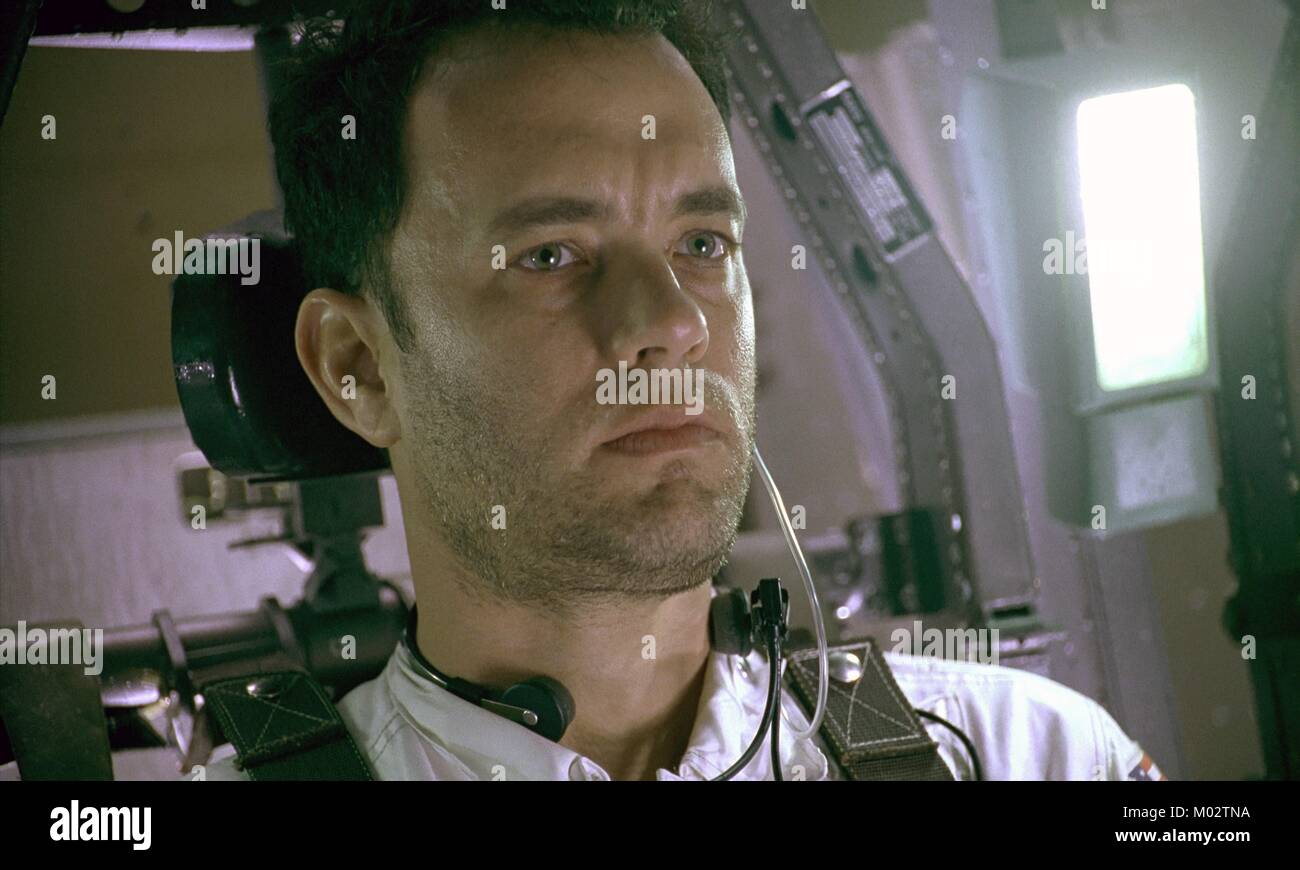
Ron Howard’s 1995 film Apollo 13 stands as a definitive cinematic recreation of the 1970 lunar mission crisis, celebrated for its rigorous commitment to historical accuracy, technical realism, and the complex engineering challenges faced by NASA during the aborted flight of the Odyssey command module.
Origins and Artistic Vision
When Ron Howard undertook the task of adapting Jim Lovell and Jeffrey Kluger’s book Lost Moon, he was not merely looking to create a standard survival drama. His objective was to capture the claustrophobia, the intellectual intensity, and the collaborative problem-solving inherent in the mission. By 1995, the cultural memory of the Apollo program was fading, and Howard sought to restore the visceral tension of the "successful failure" by treating the spacecraft as a character rather than a mere setting.
To achieve this, Howard bypassed traditional soundstage mockups where possible. He insisted on working with actual aerospace hardware and engineering consultants to ensure that the internal dialogue—much of which was lifted from transcripts of the mission—felt authentic. This decision elevated the film from a space-faring adventure to a procedural drama that demanded the audience understand the mechanics of the survival plan.
Technical Realism: The KC-135 Experience
The most distinct technical achievement of the production was the replication of weightlessness. Rather than relying on wires or complex post-production computer-generated imagery (CGI), which remained in its infancy, Howard utilized a Boeing KC-135 Stratotanker, nicknamed the "Vomit Comet," operated by NASA.
By flying parabolic arcs, the production team achieved approximately 25 seconds of true weightlessness per maneuver. This was not a stylistic choice for aesthetic flair; it was a foundational requirement for physical authenticity. The actors had to perform complex mechanical maneuvers while in freefall, accurately depicting the difficulty of maneuvering in a cramped command module. For the audience, this translates to a palpable sense of reality that modern digital animation often struggles to replicate. The physical toll on the cast—who performed hundreds of these parabolas—mirrored the physical exhaustion experienced by the real-life crew of Lovell, Swigert, and Haise.
Engineering as Narrative
The narrative structure of Apollo 13 is unique because it forces the audience to engage with engineering as the primary antagonist and, eventually, the savior. The central conflict—the explosion of oxygen tank number two—requires the film to explain complex concepts like CO2 scrubbing, the "mail slot" filter adapter, and power-up sequences for the Command Module under extreme temperature conditions.
Howard manages this by anchoring the technical jargon in high-stakes human consequences. When Mission Control, led by Ed Harris’s Gene Kranz, must solve the issue of fitting a square CO2 canister into a round hole, the props team famously used the exact items available to the astronauts in 1970. This constraint-based problem-solving serves as the film’s heartbeat. It teaches the audience the necessity of standardizing parts and the perils of ignoring telemetry data, effectively turning the engineering manuals into the script’s most important dialogue.
Comparison of Mission Phases
To understand why the film is considered a benchmark for historical technical accuracy, one must compare the cinematic depiction with the actual mission milestones.
| Mission Phase | Technical Challenge | Film Depiction Strategy |
|---|---|---|
| The Explosion | Rapid loss of oxygen and power | Sudden, jarring sound design; focus on instrument needles dropping |
| CO2 Accumulation | LiOH canister incompatibility | Use of physical, makeshift parts; "square peg in a round hole" |
| Trajectory Burn | Manual navigation via Earth visual | Use of the lunar module engine; the "Earth in the window" scene |
| Re-entry | Damaged heat shield/power loss | Extreme focus on cold temperatures and electrical load shedding |
The Role of Mission Control
While the astronauts are the face of the mission, Ron Howard correctly identified that the true story of Apollo 13 exists in the sterile, high-pressure environment of the Mission Operations Control Room in Houston. The film serves as a study in organizational culture. It portrays the chain of command, the division of labor between specialized consoles, and the relentless reliance on data verification.
The technical depth here is found in the portrayal of the "Flight" role. Ed Harris’s performance captures the stoicism required to manage hundreds of engineers while simultaneously communicating with desperate astronauts. The film highlights the "Failure is not an option" ethos not as a heroic mantra, but as a technical necessity: they had to find a way, or the mission would objectively end in a loss of life. By focusing on the interplay between the back-room analysts and the flight crew, Howard provides a masterclass in crisis management that is still studied in corporate and engineering environments today.
Legacy and Modern Relevance
As of 2026, Apollo 13 remains a cornerstone of aerospace cinema. It bridged the gap between hard science fiction and documentary-style filmmaking. Its legacy is found in how it elevated public interest in space travel, ensuring that the specific nomenclature and technical hurdles of the Apollo era were preserved for future generations.
Critics and historians often point to the film’s handling of the "cold-start" problem—re-entering the cold, damp Command Module after days in the Lunar Module—as the most impressive feat of the film. It accurately demonstrates how moisture, electrical systems, and thermal regulation are not just background details, but the factors that determine whether a spacecraft survives its return to Earth’s atmosphere.
Frequently Asked Questions
How much of the film’s dialogue is accurate to the mission transcripts? A significant portion of the radio chatter between the crew and Houston is taken directly from archival NASA tapes. Ron Howard mandated that the actors study these recordings to match the cadence and technical brevity of professional astronauts.
Did the actors actually experience zero gravity during filming? Yes. To simulate the weightless environment of space, the cast and crew flew on a NASA-contracted Boeing KC-135, which creates weightlessness through parabolic flight maneuvers. This resulted in authentic movement and physical reactions that would have been impossible to duplicate on a soundstage.
What was the most difficult technical hurdle the production faced? The biggest hurdle was the creation of the interior of the Command and Lunar Modules. The production team had to build exact, life-sized replicas of the spacecraft interiors. Because they had to fit cameras and crew inside, the sets were designed with removable walls, yet they remained constrained by the actual dimensions of the real craft.
Was the "square peg in a round hole" scene staged for drama? No. This was a literal task performed by the NASA engineering team. The mission controllers in Houston had to figure out how to modify the Lunar Module’s CO2 filters to fit the Command Module’s receptacle using only the materials the astronauts had on board, such as plastic bags, manuals, and duct tape.
Why is the film considered a standard for technical accuracy? The film is frequently cited in aerospace circles because it avoids "Hollywood physics." It relies on the real-world physics of orbital mechanics and the actual limitations of 1970-era technology, making it a reliable, if dramatized, educational tool for understanding the Apollo mission architecture.
Recommended Next Actions
For those interested in the technical minutiae behind the film, it is highly recommended to consult the official Apollo 13 Mission Technical Debriefing documents available through the NASA History Office. Additionally, viewing the original 1970 mission flight logs will provide context for the specific engineering decisions highlighted by Howard. If you are interested in the filmmaking process, the documentary Apollo 13: To the Edge and Back offers a deep look into the construction of the zero-gravity set pieces.