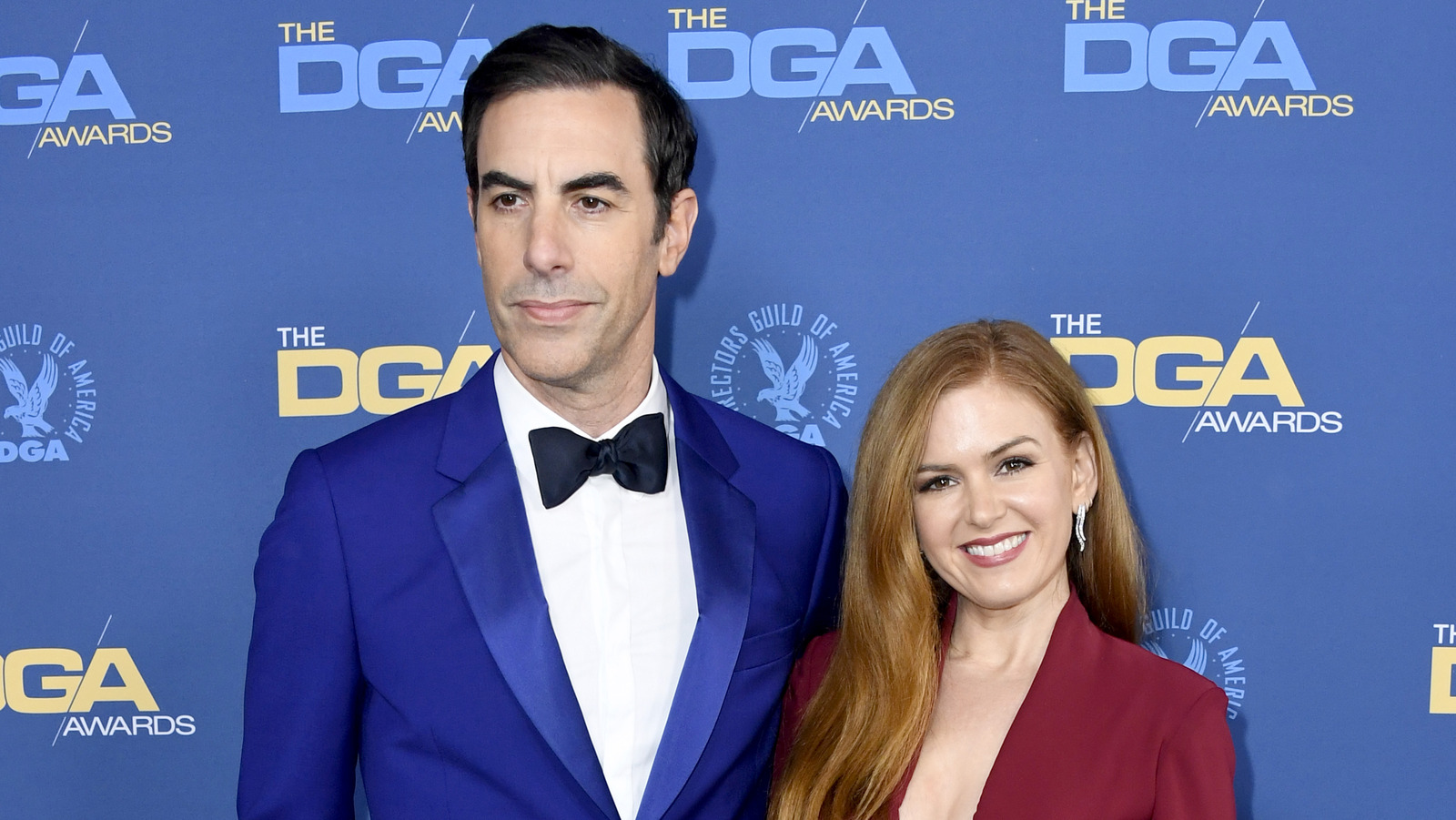
Sacha Baron Cohen uses satirical personas—including Ali G, Borat Sagdiyev, and Admiral General Aladeen—to expose prejudice, political hypocrisy, and the fragility of truth. By weaponizing discomfort and absurdity, he forces public figures to reveal their private biases, effectively blending high-concept performance art with investigative journalism to challenge the status quo in Western political discourse.
The Evolution of the Satirical Method
Sacha Baron Cohen’s approach to political commentary is defined by the “long-con” interview style. Unlike traditional late-night hosts who engage in overt partisan rhetoric, Baron Cohen remains in character for months or years, creating a vacuum of sincerity that his subjects inevitably fill with their own unfiltered viewpoints. This methodology relies on the psychological principle that individuals are more likely to reveal controversial opinions when they believe they are in a "safe space"—often a space they perceive as being occupied by someone less informed or socially beneath them.
The evolution from Da Ali G Show to Who Is America? tracks a shift in his targets. Initially, his humor focused on the collision of hip-hop culture and sheltered British/American elites. As his career progressed, the targets became more entrenched in the political apparatus. By the time he reached the production of Borat Subsequent Moviefilm (2020), his work functioned as a sociological survey of radicalization and polarization in the United States, providing a snapshot of the cultural tensions that define the mid-2020s.
Institutional Critique and Political Exposure
Baron Cohen’s political influence stems from his ability to bypass the curated image of public officials. When a subject agrees to an interview, they are usually coached by media handlers to remain on-message. By operating through a persona, Baron Cohen renders these traditional media strategies useless. The subject, confused by the absurdity of the interviewer, often abandons their talking points, revealing how they speak when they believe they are off the record or shielded from public scrutiny.
Notable Areas of Focus
- Legislative Hypocrisy: Through Who Is America?, Baron Cohen successfully prompted public officials to endorse absurd or extreme policies, effectively holding a mirror to the performative nature of populist politics.
- Media Responsibility: He frequently challenges the way news outlets curate reality. His portrayal of media figures often suggests that the pursuit of a "viral moment" or a sensational quote supersedes factual integrity.
- The Weaponization of Ignorance: His characters often rely on the bigotry of the interviewer to facilitate a conversation, effectively documenting the ease with which hate speech or fringe conspiracy theories can be introduced into polite society.
Public Influence and the Limits of Satire
The effectiveness of Baron Cohen’s influence is frequently debated. Supporters argue that he acts as an essential "court jester," performing the vital democratic function of holding power to account when traditional journalism fails to do so. His work forces viewers to confront the reality that many influential figures harbor views they would never state in a formal, professional setting.
However, critics argue that his methods are inherently deceptive and push his subjects into traps, which may undermine the ethical standard of journalism. Furthermore, there is the question of the "satire paradox": does mocking a political extreme diminish it, or does it inadvertently provide the subject with a platform? By 2026, the landscape of digital media has evolved to the point where even negative exposure can be reframed by subjects as "victimization by the elite," potentially neutralizing the intended critical impact of his work.
Comparison of Satirical Approaches
| Style | Mechanism | Intended Goal | Example |
|---|---|---|---|
| Direct Satire | Irony/Parody | Highlight absurdity | Late-night talk shows |
| Guerilla Persona | Deep deception | Expose hidden bias | Borat |
| Investigative Satire | Documenting events | Expose policy flaws | Who Is America? |
| Cinematic Drama | Narrative realism | Historical education | The Trial of the Chicago 7 |
The Role of Persona in Political Discourse
The genius—and the controversy—of Baron Cohen’s work lies in his commitment to the bit. A persona serves as a social lubricant; his characters often represent archetypes that people feel comfortable dismissing or mocking. When a politician or public figure interacts with Borat, they are not interacting with a famous actor but with a fictional entity they feel superior to. This power dynamic is where the political exposure happens.
In the contemporary media climate, the "fact-check" has become a secondary concern for many voters, with emotional resonance taking precedence. By engaging in emotional, often uncomfortable, encounters, Baron Cohen taps into the same psychological undercurrents that drive modern political polarization. He does not just report on the divide; he creates scenarios that force the participants to enact it.
Challenges and Ethical Considerations
Engaging in this type of work carries significant legal and professional burdens. Baron Cohen’s productions involve complex legal clearances, high-level security, and the constant threat of litigation. His influence is also limited by the fact that he is a polarizing figure; those who already disagree with his political leanings are unlikely to be swayed by his revelations, often dismissing them as "staged" or "edited."
Furthermore, as society becomes more cynical, the "gotcha" interview is becoming harder to execute. Subjects are increasingly media-trained to identify "ambush" tactics. His future projects will likely require even more sophisticated camouflage, illustrating a technological and tactical arms race between the satirist and the political establishment.
Frequently Asked Questions
1. Does Sacha Baron Cohen identify with a specific political party? Baron Cohen generally aligns with progressive and liberal values, particularly regarding civil rights, anti-fascism, and the regulation of hate speech on social media. However, his work often avoids explicit party endorsements to maintain the integrity of his satirical targets, which include figures across the political spectrum.
2. Are his interviews legally permissible? His productions operate within the bounds of "one-party consent" recording laws in many U.S. jurisdictions, where the interviewer is a party to the conversation. However, the legal complexity of his work is immense, involving extensive release forms and a team of legal experts to ensure that his content is protected as artistic expression or parody.
3. What is the main critique of his methods? The most common critique is that his methods are unethical because they rely on deception. Critics argue that tricking someone into saying something offensive is a manufactured event rather than a discovery of their true character, potentially leading to unfair or out-of-context portrayals.
4. How has his influence changed over the last decade? His influence has shifted from "shock comedy" to a more targeted form of political activism. His public speeches, such as his address to the Anti-Defamation League in 2019 regarding the responsibility of tech companies to curb misinformation, demonstrate that he is transitioning from purely performance-based critique to direct advocacy.
5. Is his work still relevant in 2026? Yes. As the divide in public discourse continues to rely on algorithm-driven echo chambers, the type of "real-world" intervention Baron Cohen provides remains a rare form of physical confrontation with conflicting ideologies. His work remains a diagnostic tool for the state of political discourse.
Conclusion and Next Steps for Analysis
To understand Sacha Baron Cohen’s political influence, one must move past the surface-level laughter or outrage and examine the specific segments he curates. His work is not merely entertainment; it is an interrogation of the intersection between private morality and public policy.
If you wish to further analyze his impact, begin by comparing the initial reception of Borat (2006) to the reception of his later work like Who Is America?. Notice how the political temperature in the U.S. has changed and how the subjects of his interviews have become more defensive or media-savvy. By observing these changes, you can better grasp how satire functions as a barometer for political health in the digital age.