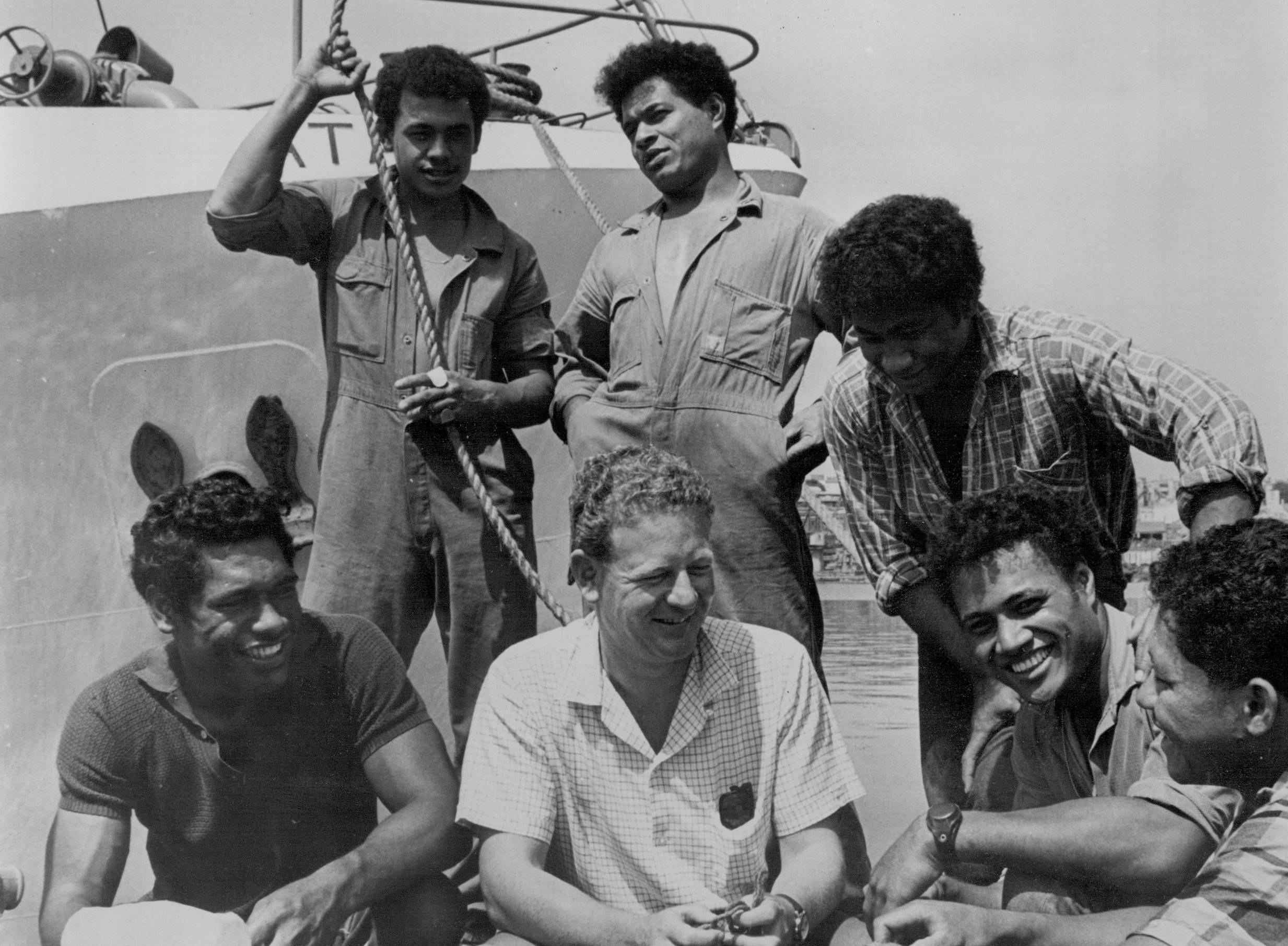
In June 1965, six Tongan teenagers became stranded on the uninhabited, volcanic island of 'Ata after their small fishing boat was crippled by a storm. Unlike the fictional chaos of William Golding’s Lord of the Flies, these boys survived for 15 months through rigorous organization, mutual support, and remarkable ingenuity before being rescued in September 1966.
The story of the 1965 Tongan castaways is often cited by sociologists and historians as a definitive counter-narrative to the idea that humans naturally descend into savagery when removed from civilization. As of 2026, the events on 'Ata Island remain a cornerstone of survival studies, illustrating how cultural values and disciplined cooperation can sustain life in the most inhospitable environments.
The Voyage of the Vaea: From Boredom to Disaster
The saga began at St. Andrew’s Anglican School in Nuku'alofa, Tonga. Six boys—Sione Fataua, Tevita Fatai Latu, Fatai Latu, Kolo Fekitoa, David Itele’a, and Mano Totau—felt restricted by the rigors of school life. Aged between 13 and 18, they dreamed of adventure, specifically wanting to sail to Fiji or even as far as New Zealand.
Lacking a vessel of their own, they "borrowed" a 24-foot (some sources say 15-foot whaler) wooden boat named the Vaea from a local fisherman they disliked. They set out with a meager supply of two sacks of bananas, a few coconuts, and a small gas burner. They did not bring a map or a compass, relying instead on youthful confidence.
On their first night at sea, the boys fell asleep, leaving the boat drifting. A sudden storm struck, snapping the mast and destroying the rudder. For eight days, they drifted in the Pacific Ocean, using empty coconut shells to bail out water. By the time they sighted the jagged cliffs of 'Ata Island, they were severely dehydrated and malnourished.
'Ata Island: A Formidable Survival Challenge
'Ata is a remote, volcanic island located at the southern end of the Tongan archipelago. It had been uninhabited since the 1860s, when its population was decimated by Peruvian slave traders and the survivors were subsequently evacuated by the Tongan King to 'Eua for their protection.
The island is characterized by steep, 1,000-foot cliffs and a lack of easily accessible fresh water. Landing a crippled boat there was nearly impossible, but the boys managed to swim ashore, braving the heavy surf and sharp rocks. Once on land, they faced the immediate threat of starvation.
The First Stages of Survival
Initially, the boys survived by eating raw fish, seabirds, and sea turtle eggs. They drank the blood of seabirds to supplement their fluid intake when rain was scarce. Eventually, they scaled the cliffs to reach the island’s plateau, where they discovered the remains of the abandoned 19th-century village, Kolomaile.
In this ancient settlement, they found feral chickens, wild papayas, and taro that had continued to grow in the volcanic soil. This discovery was the turning point that allowed them to transition from desperate foragers to a structured micro-society.
The Social Structure of the "Real" Lord of the Flies
The most remarkable aspect of the 1965 Tongan castaways is the social order they maintained. Rather than succumbing to internal conflict, they established a system of governance based on their Tongan upbringing and shared Christian faith.
- Division of Labor: They worked in pairs. Two were responsible for the garden, two for the kitchen, and two for lookout duty.
- Conflict Resolution: If a quarrel broke out, the parties involved were required to separate and go to opposite ends of the island to "cool down" for several hours before returning to apologize and reconcile.
- Spiritual Life: They began and ended every day with prayer and song. Kolo Fekitoa even constructed a makeshift guitar from a piece of driftwood, half a coconut shell, and six steel wires salvaged from their wrecked boat.
- The Eternal Flame: Perhaps their greatest technical achievement was the fire. After finally managing to strike a spark using a traditional friction method, they never let the fire go out for the remainder of their 15-month stay. They took turns guarding the embers 24 hours a day.
Medical Ingenuity
The boys' resilience was tested when Stephen (Kolo) fell from a cliff and broke his leg. The others used sticks and leaves to set the bone in a makeshift cast. They took over his duties and cared for him until he healed. When the boys were eventually rescued, a doctor who examined them was astonished to find that the leg had set perfectly.
The Rescue: Peter Warner and the Just David
In September 1966, an Australian millionaire and sailor named Peter Warner was cruising near 'Ata in his boat, the Just David. Warner was searching for fishing grounds when he noticed unusual patches of burned grass on the island’s cliffs—a sign of human activity on an island known to be deserted.
As Warner approached the shore, he saw a naked, long-haired youth swimming toward his boat, followed by five others. When the first boy reached the vessel, he shouted in English, "My name is Stephen. There are six of us and we reckon we’ve been here fifteen months."
Warner was initially skeptical, knowing the island was uninhabited. However, after radioing Nuku'alofa, the operator tearfully informed him that the boys had been given up for dead and their funerals had already been held.
Comparison: The Tongan Castaways vs. Lord of the Flies
The story gained international prominence in the early 2020s, largely through the work of historian Rutger Bregman, who used it to challenge the pessimistic view of human nature presented in William Golding's Lord of the Flies. The table below highlights the stark differences between the fictional account and the actual events on 'Ata.
| Feature | Lord of the Flies (Fiction) | Tongan Castaways (Reality) |
|---|---|---|
| Leadership | Power struggle between Ralph and Jack | Cooperative council; shared responsibility |
| Social Order | Descends into tribalism and violence | Maintained through prayer and strict routines |
| Conflict | Results in murder (Piggy and Simon) | Resolved through mandated "cooling-off" periods |
| Survival Skills | Failure to maintain the signal fire | Maintained a fire for over a year |
| Psychology | Regression to "savagery" | Adaptation through cultural values (Tongan Anga fakatonga) |
| Ending | Rescue occurs amidst a murderous hunt | Rescue occurs while the boys are thriving |
The Aftermath and Return to Society
The return to Tonga was not immediately celebratory. Upon arriving in Nuku'alofa, the boys were arrested and jailed for "stealing" the Vaea. The owner of the boat, still angry about the loss of his vessel, pressed charges despite the miraculous nature of their survival.
Peter Warner stepped in once again. Recognizing the commercial potential of the story, he paid the owner for the boat, secured the boys' release from prison, and arranged for a documentary film crew to record their return to 'Ata to reenact their survival. Warner eventually hired all six boys as crew members for his fishing fleet, fostering a lifelong bond with the group.
In the decades that followed, the boys moved on to various lives in Tonga and Australia. Sione Fataua and Mano Totau, in particular, became vocal advocates for the story, ensuring that the legacy of their cooperation was not forgotten. As of 2026, their story continues to be taught as a masterclass in survival psychology and the power of communal resilience.
Technical Analysis of Their Survival Strategy
From a technical survival perspective, the Tongan boys succeeded where many others have failed due to three critical factors:
1. Water Management
On a volcanic island like 'Ata, fresh water is the primary constraint. The boys initially relied on the hollowed-out trunks of trees to catch rainwater. They also monitored the movements of birds to find small seeps of water in the rocks. Their ability to manage these scarce resources without modern containers was a feat of primitive engineering.
2. High-Protein Diet
The group maintained their physical strength by developing a rotation for fishing and bird-catching. By drying meat and fish when they had a surplus, they created a food buffer for times when the weather prevented them from foraging or fishing. This "stockpiling" mentality prevented the physical degradation often seen in castaways.
3. Psychological Fortitude
The "Anga fakatonga" (the Tongan way) emphasizes family, respect, and community. The boys applied these cultural frameworks to their isolated environment. By mimicking the structure of their home village—complete with a "gym" they built for exercise and a designated area for religious service—they preserved their sanity and identity.
Frequently Asked Questions
Did any of the Tongan castaways die on the island?
No. All six boys who set sail from Nuku'alofa survived the entire 15-month ordeal. Despite injuries (including a broken leg) and severe dehydration in the initial weeks, they remained in remarkably good health until their rescue.
Why was 'Ata Island uninhabited in 1965?
'Ata was once home to a thriving community called Kolomaile. In 1863, a slave ship lured roughly half the population on board and sailed for Peru. To protect the remaining 200 residents from further raids, King George Tupou I ordered the island to be evacuated to 'Eua, leaving 'Ata a restricted, uninhabited territory.
Where can I watch a documentary about them?
The original footage filmed by Channel 7 shortly after their rescue in 1966 remains the most authentic visual record. Peter Warner’s book, Ocean of Light, also provides a detailed first-hand account of the rescue and the boys' lives afterward.
Are the Tongan castaways still alive in 2026?
As of 2026, several of the original six have passed away, but their families and the surviving members continue to share the story. Mano Totau has been particularly active in recent years, participating in interviews to ensure the accuracy of the historical record against fictionalized versions of the story.
How did they make fire without matches?
The boys used a traditional Polynesian method known as the "fire plow." This involves rubbing a hard wooden stick into a groove of a softer wooden base. The friction generates heat and eventually a small amount of "dust" that becomes an ember. It is a physically demanding process that requires significant skill and patience.
Practical Lessons from 'Ata Island
The 1965 Tongan castaways offer more than just a historical anecdote; they provide a blueprint for crisis management and group dynamics. If you are interested in historical survival or group psychology, consider the following takeaways:
- Routine is a Survival Tool: The boys' insistence on daily chores and religious services prevented the psychological "drift" that often leads to despair in isolation.
- Skill Diversification: Each boy brought a different set of knowledge—gardening, fishing, construction—which made the group more resilient than any individual could be.
- Cultural Values as Infrastructure: In the absence of written laws, the boys relied on their ingrained cultural values of respect and reconciliation to prevent violence.
For those looking to explore this subject further, the historical archives of the Pacific Islands Monthly and the reporting by The Guardian provide extensive context on how this story reshaped our understanding of human nature in the 21st century.