The 2012 doomsday phenomenon was a widespread cultural panic centered on the belief that a cataclysmic event would end the world on or around December 21, 2012, based on misinterpretations of the Mesoamerican Long Count Maya calendar. Scientists, historians, and Mayan scholars repeatedly debunked these claims, explaining that the date marked merely the end of a major cycle in the calendar rather than the destruction of Earth.
Understanding the Roots of the 2012 Phenomenon
The panic surrounding December 21, 2012, did not emerge from a vacuum. It was the culmination of decades of fringe pseudoscientific theories, New Age mysticism, and aggressive marketing by media outlets capitalizing on public anxiety at the turn of the 21st century.
The Misinterpretation of the Maya Calendar
At the heart of the 2012 myth was the Mesoamerican Long Count calendar, a sophisticated system used by ancient Mayan civilizations to track long stretches of time. Unlike the 365-day Haab' calendar or the 260-day Tzolkin calendar, the Long Count measured time linearly in a series of great cycles, or baktuns.
A single baktun lasts approximately 144,000 days, or roughly 394 solar years. The calendar begins at a mythological zero date, which scholars correlate to August 11, 3114 BCE in the Gregorian calendar. The completion of the 13th baktun cycle occurred on December 21, 2012.
Popular culture and amateur researchers falsely claimed that this date represented the end of the world. In reality, surviving Mayan inscriptions and modern epigraphers confirmed that the date simply marked the transition to a new cycle—much like turning the page on a calendar from December 31 to January 1, or resetting an odometer after reaching 999,999 miles. Notably, the Monument 6 inscription from the Tortuguero site in Tabasco, Mexico, references the completion of this cycle with mention of the deity Bolon Yokte, but it speaks of a transition and renewal rather than physical annihilation.
Convergence of Pseudoscience and Modern Prophecy
As the year 2012 approached, internet forums, television networks, and paperback books combined the Mayan calendar date with unrelated apocalyptic theories. Early proponents of the myth claimed that ancient Sumerian prophecies regarding a rogue planet named Nibiru—originally popularized by self-proclaimed author Zecharia Sitchin—would collide with Earth in 2012.
Other theories suggested a total polar shift, a sudden reversal of Earth's magnetic field that would wipe out civilization, or a devastating galactic alignment where our solar system would line up with the center of the Milky Way, triggering catastrophic gravitational forces. All of these claims lacked empirical backing and were thoroughly refuted by astrophysicists, geologists, and NASA scientists.
Scientific Rebuttal to Popular Doomsday Scenarios
To address public panic, scientists and space agencies launched extensive educational campaigns to separate astronomical fact from science fiction. The sheer volume of inquiries prompted NASA to launch a dedicated "Beyond 2012" website section to address common misconceptions.
| Doomsday Claim | Scientific Reality |
|---|---|
| Nibiru Collision | Nibiru is a fictional internet hoax. If a massive planet were heading toward Earth in 2012, astronomers would have tracked it with naked-eye visibility for decades. |
| Galactic Alignment | The Sun and Earth align with the center of the Milky Way every December. This geometric arrangement has no physical consequence for Earth's gravity or climate. |
| Magnetic Pole Reversal | Earth's magnetic poles reverse periodically over hundreds of thousands of years, but the process takes thousands of years to complete and does not cause sudden planetary destruction. |
| Solar Storm Maximum | The Sun operates on an 11-year cycle of activity (Solar Cycle 24). While severe solar flares can disrupt satellites and power grids, they pose no threat of planetary annihilation. |
The Role of NASA and Academic Institutions
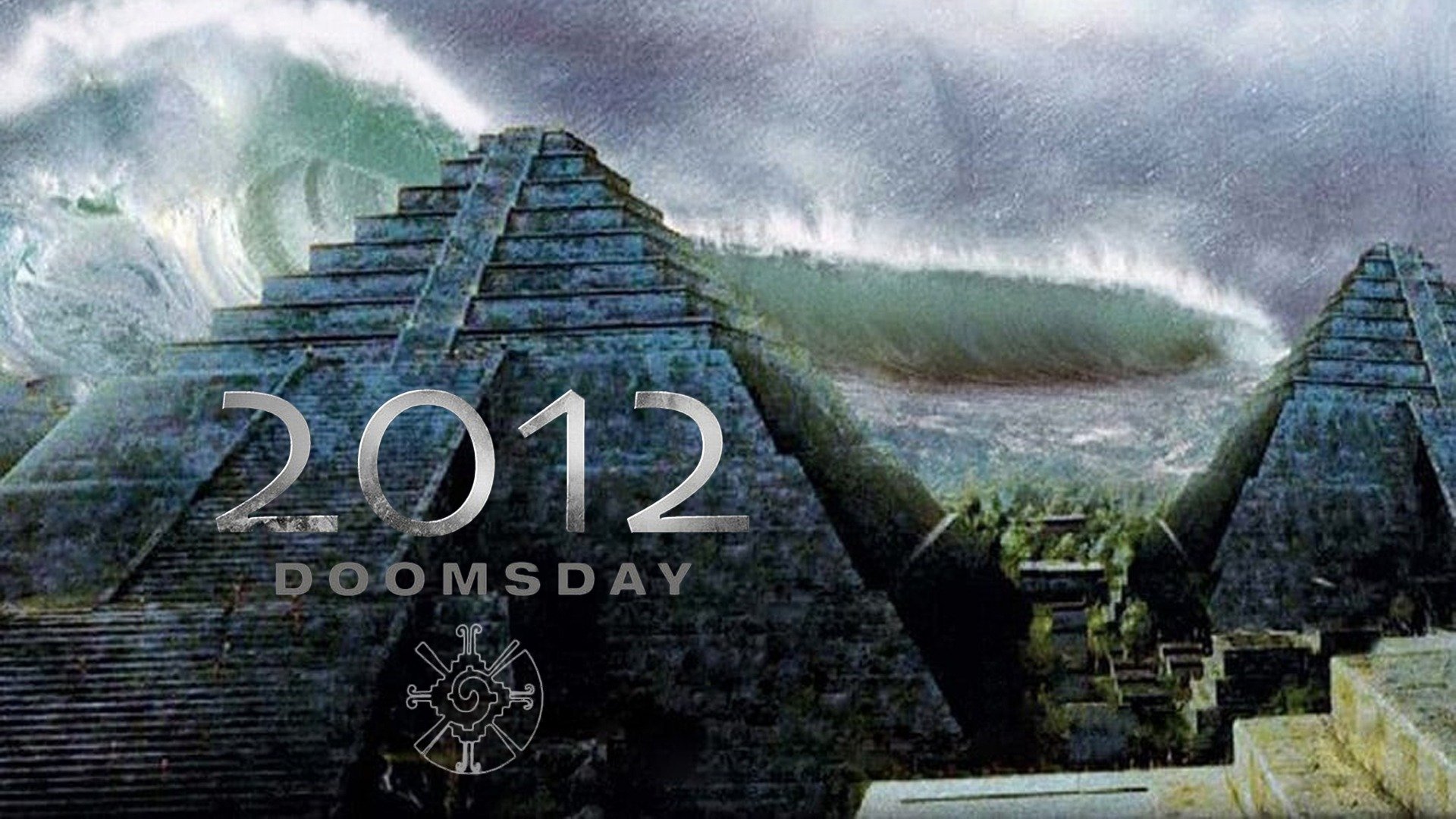
The scientific community faced an unprecedented challenge in combating misinformation amplified by the internet. NASA astrobiologist David Morrison answered thousands of letters and emails from frightened citizens, particularly children and teenagers experiencing severe anxiety due to sensationalized disaster films like Roland Emmerich's 2012 (2009).
Institutions such as the National Institute of Anthropology and History (INAH) in Mexico also stepped forward, emphasizing that the linear, catastrophic end-of-the-world concept is a Judeo-Christian framework improperly projected onto ancient Mesoamerican cosmology. Mayan elders and indigenous leaders publicly denounced the commercialized panic, clarifying that their ancestors viewed time as cyclical, continuous, and characterized by renewal rather than terminal destruction.
Cultural and Sociological Aftermath
The 2012 phenomenon offers a compelling case study in modern media sociology, digital panic propagation, and the monetization of fear.
Media Sensationalism and Entertainment
Throughout the late 2000s, documentary channels shifted programming schedules to feature speculative specials on ancient prophecies, alien interventions, and geological disasters. The apex of this cultural wave was the release of the blockbuster feature film 2012, which grossed over $760 million worldwide despite being panned for its scientific inaccuracies.
Book publishers capitalized on the trend by printing dozens of guides on how to survive the impending apocalypse, ranging from spiritual alignment handbooks to tactical survivalism guides. Concurrently, sales of underground fallout shelters and doomsday kits surged as a niche group of consumers prepared for worst-case scenarios.
Psychological Impact on the Public
For vulnerable individuals, the constant bombardment of doomsday messaging caused genuine psychological distress. Mental health professionals reported treating patients suffering from "2012 anxiety," characterized by sleep disorders, panic attacks, and obsessive preoccupation with impending doom. The phenomenon demonstrated how rapidly misinformation can spread across global digital networks and underscored the critical need for scientific literacy in public education.
Summary of Key Facts Regarding the 2012 Event
- Target Date: December 21, 2012 (corresponding to 13.0.0.0.0 in the Maya Long Count calendar).
- True Nature of Date: Completion of a major 394-year cycle, initiating a new era rather than a termination.
- Primary Misconceptions: Nibiru collision, galactic alignment, pole shifts, and global cataclysms.
- Consensus Source: Verified by NASA, INAH, and international scholars of Mesoamerican history.
Frequently Asked Questions
Did the ancient Maya predict the end of the world in 2012?
No. The ancient Maya did not predict the end of the world. Their Long Count calendar measured time in large cyclical periods. Reaching the end of the 13th baktun on December 21, 2012, simply signaled the start of a new calendar cycle, akin to turning a calendar page.
What was the Nibiru cataclysm theory?
The Nibiru cataclysm was a pseudoscientific internet hoax claiming that a mythical planet discovered by ancient Sumerians would collide with or pass dangerously close to Earth in 2012. Astronomers confirmed that Nibiru does not exist and has no basis in actual astronomical data or Sumerian mythology.
Why did NASA feel the need to address the 2012 rumors?
NASA created public outreach resources, including articles and video responses, because millions of people—including children—expressed genuine fear due to widespread internet rumors, sensationalized documentaries, and viral marketing campaigns promoting the apocalypse myth.
How do modern Mayan communities view the 2012 date?
Modern Maya descendants and indigenous leaders in Guatemala, Mexico, and throughout Central America viewed the 2012 date as a time for cultural celebration, spiritual renewal, and reflection on their heritage, explicitly rejecting Western interpretations of doom and destruction.
Are there any similar calendar-based apocalypse scares in modern history?
Yes. Throughout history, humanity has experienced numerous calendar-based panic episodes, most notably the Y2K bug panic at the turn of the year 2000 and various religious date-setting prophecies. Each instance relies on human psychological tendencies to attribute profound mystical significance to arbitrary numerical milestones.
Final Practical Recommendations
The 2012 phenomenon serves as an enduring reminder to critically evaluate sensational claims encountered across digital media and entertainment platforms. When confronted with extraordinary scientific or historical claims, always consult peer-reviewed research, official statements from recognized scientific bodies like NASA or academic institutions, and primary historical documents. Maintaining a foundation of scientific literacy remains the most effective defense against manufactured panics and pseudoscientific exploitation.