The 2016 film calendar delivered a remarkable array of cinema, defined by critically acclaimed independent dramas, blockbuster franchise expansions, and original musicals that dominated global box offices and awards circuits alike. This transitional era in modern filmmaking highlighted shifting audience preferences toward streaming integration, bold auteur-driven projects, and diverse storytelling mediums that permanently altered Hollywood production models.
Introduction to the 2016 Cinematic Landscape
The year 2016 occupied a fascinating transitional space in modern motion picture history. Traditional studio paradigms encountered rapid disruptions from streaming distribution models, while theatrical releases balanced massive intellectual property expansion against daring, mid-budget original projects.
For film historians, critics, and dedicated cinephiles, evaluating 2016 cinema requires examining how major studios, independent production houses, and international creators adapted to changing viewing habits. From breakout indie darlings that defied conventional distribution strategies to massive visual effects showcases that pushed digital cinematography forward, the features released during this twelve-month span left an indelible mark on global visual culture.
Understanding this era necessitates a structured look at box office dynamics, critical achievements, technological shifts, and the long-term legacy of the era's most celebrated releases.
Box Office Dynamics and Industry Trends
The global box office in 2016 experienced record-breaking attendance figures, driven primarily by established intellectual property, cinematic universes, and family-oriented animation. Major studios increasingly consolidated their financial resources around guaranteed franchise returns, creating a polarized theatrical ecosystem where mega-budget blockbusters competed directly with ultra-low-budget streaming acquisitions.
Franchise Dominance and Intellectual Property
Disney maintained unprecedented market share throughout 2016, propelled by a diverse slate of live-action adaptations, animated features, and Marvel Cinematic Universe entries. Captain America: Civil War and Rogue One: A Star Wars Story both crossed the coveted one-billion-dollar threshold globally, demonstrating the enduring financial power of interconnected narrative universes. Similarly, Warner Bros. expanded its DC Extended Universe with Batman v Superman: Dawn of Justice and Suicide Squad, proving that audience appetite for superhero cinema remained insatiable despite polarizing critical reception.
At the same time, traditional animation enjoyed immense commercial success. Walt Disney Animation Studios released Zootopia and Moana, both of which combined sophisticated social commentary and cultural exploration with state-of-the-art computer-generated imagery. Illumination Entertainment capitalized on family audiences with The Secret Life of Pets and Sing, establishing reliable alternative revenue streams outside the traditional Disney hegemony.
The Mid-Budget Dilemma and Independent Survival
While blockbusters captured major headlines, the traditional mid-budget drama faced mounting economic pressure. Studios grew increasingly reluctant to finance original adult dramas in the twenty-to-fifty-million-dollar range unless attached to established directors or guaranteed cast draws. Consequently, independent financing models and specialty divisions—such as A24, Fox Searchlight, and Focus Features—became vital curators of original cinematic art.
A24 experienced a breakout year in 2016, distributing Barry Jenkins’s Moonlight and Yorgos Lanthimos’s The Lobster. These releases demonstrated that specialized distributors could leverage targeted marketing campaigns, festival buzz, and digital word-of-mouth to turn specialized independent features into major cultural milestones and commercial successes.
Critical Darlings and Awards Season Landmarks
The 2016 awards season will forever be remembered for historic missteps, unexpected triumphs, and a profound shift toward more diverse representation in mainstream cinema. The Academy Awards ceremony held in early 2017 encapsulated this tension, culminating in the legendary Best Picture envelope mix-up between La La Land and Moonlight.
The Cultural Resonance of Moonlight
Directed by Barry Jenkins, Moonlight emerged as a watershed moment for American independent cinema. Structured in three distinct chapters following the life of a young Black man growing up in Miami, the film combined lyrical visual lyricism with an intimate, empathetic character study. Winning the Academy Award for Best Picture—alongside Mahershala Ali's supporting actor victory—marked a significant milestone for LGBTQ+ representation and Black auteur-driven storytelling within Hollywood's highest institutional circles.
The Revival of the Modern Musical
Damien Chazelle’s La La Land captured global imaginations with its vibrant homage to classic Hollywood musicals and French New Wave cinema. Starring Emma Stone and Ryan Gosling, the film became an international box office phenomenon and tied the record for the most Academy Award nominations in history with fourteen nods, ultimately securing six wins, including Best Director for Chazelle and Best Actress for Stone. The feature ignited widespread debate regarding the evolution of nostalgic pastiche versus contemporary original storytelling.
| Title | Director | Primary Genre | Key Accolades |
|---|---|---|---|
| Moonlight | Barry Jenkins | Drama | Academy Award for Best Picture |
| La La Land | Damien Chazelle | Musical / Romance | 6 Academy Awards, including Best Director |
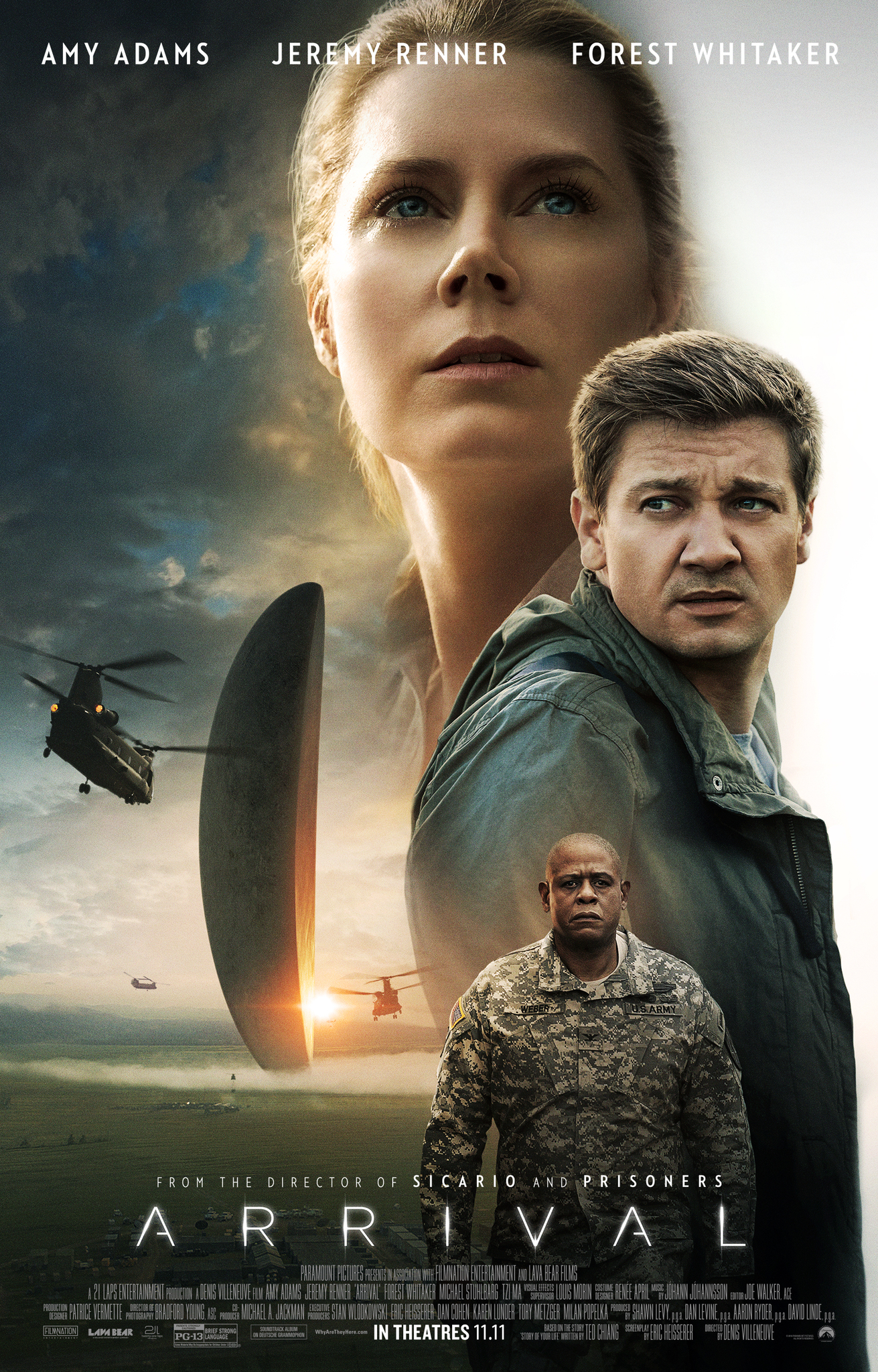
| Arrival | Denis Villeneuve | Sci-Fi / Drama | 8 Academy Award Nominations |
| Manchester by the Sea | Kenneth Lonergan | Drama | Academy Awards for Best Actor and Original Screenplay |
| Zootopia | Byron Howard, Rich Moore | Animation | Academy Award for Best Animated Feature |
Technical Innovation and Cinematographic Evolution
Cinematography and visual effects in 2016 continued a rapid migration toward digital capture workflows, while selected filmmakers championed celluloid preservation. The technical achievements of the year highlighted an industry in dialogue with its own history while aggressively adopting emergent digital tools.
The Rise of Immersive Science Fiction
Denis Villeneuve’s Arrival redefined intellectual science fiction for the modern era. Eschewing traditional alien invasion tropes in favor of linguistic relativity, grief, and global cooperation, Bradford Young’s subdued, atmospheric cinematography utilized low-key lighting and anamorphic lenses to ground a speculative premise in emotional reality.
Concurrently, visual effects milestones were achieved in fantasy and adventure cinema. Disney’s photo-realistic reimagining of The Jungle Book, directed by Jon Favreau, relied almost exclusively on virtual production environments and advanced digital rendering to create a believable ecosystem populated by talking animals and a single human actor.
Sound Design and Practical Authenticity
In the realm of historical drama and survivalism, Mel Gibson’s Hacksaw Ridge and Martin Scorsese’s Silence demonstrated contrasting approaches to immersive auditory and visual world-building. Hacksaw Ridge utilized visceral, practical combat effects and meticulous sound design to convey the horrors of the Battle of Okinawa, earning Academy Awards for Best Film Editing and Best Sound Mixing.
International Cinema and Global Perspectives
Beyond Hollywood, the international film community produced remarkable works that expanded the boundaries of narrative form and political commentary. Korean cinema achieved major global visibility with Park Chan-wook’s The Handmaiden and Yeon Sang-ho’s groundbreaking zombie thriller Train to Busan. Both films demonstrated exceptional command of pacing, genre convention, and visual framing, crossing over successfully into Western arthouse and commercial markets.
European cinema similarly delivered powerful auteur works, including Paul Verhoeven’s provocative psychological thriller Elle, starring Isabelle Huppert, and Maren Ade’s critically adored tragicomedy Toni Erdmann. These international releases reinforced the vitality of foreign-language distribution channels during a period of intense globalization and media saturation.
Frequently Asked Questions
What film won the Academy Award for Best Picture for releases in 2016?
Moonlight, directed by Barry Jenkins, won the Academy Award for Best Picture at the 89th Academy Awards ceremony held in February 2017, following the historic announcement correction on stage.
Which movie was the highest-grossing release globally in 2016?
Captain America: Civil War, distributed by Walt Disney Studios Motion Pictures and produced by Marvel Studios, finished as the highest-grossing worldwide release of the year, earning over 1.1 billion dollars at the global box office.
How did the rise of streaming services impact the 2016 film industry?
Streaming platforms like Netflix and Amazon Studios began aggressively acquiring distribution rights and financing original feature films, signaling a permanent shift in how independent and mid-budget movies reached audiences outside traditional theatrical windows.
Were there any notable breakouts for independent studios in 2016?
A24 established itself as a major force in independent cinema by distributing critical and commercial hits such as Moonlight, The Lobster, Swiss Army Man, and American Honey.
Why was the 2016 awards season considered historic?
The season marked a crucial turning point for industry inclusivity following years of public scrutiny regarding representation, culminating in historic wins for diverse filmmakers, actors, and storytelling perspectives.
Conclusion and Next Actions
Examining the films of 2016 reveals a pivotal moment where commercial blockbuster engineering, streaming disruption, and daring independent authorship intersected. For cinephiles and industry researchers looking to study this period further, the most productive approach involves cross-referencing major festival winners from Cannes, Venice, and Toronto with box office data logs from organizations like Box Office Mojo. Exploring these titles provides a comprehensive blueprint for understanding contemporary motion picture evolution.