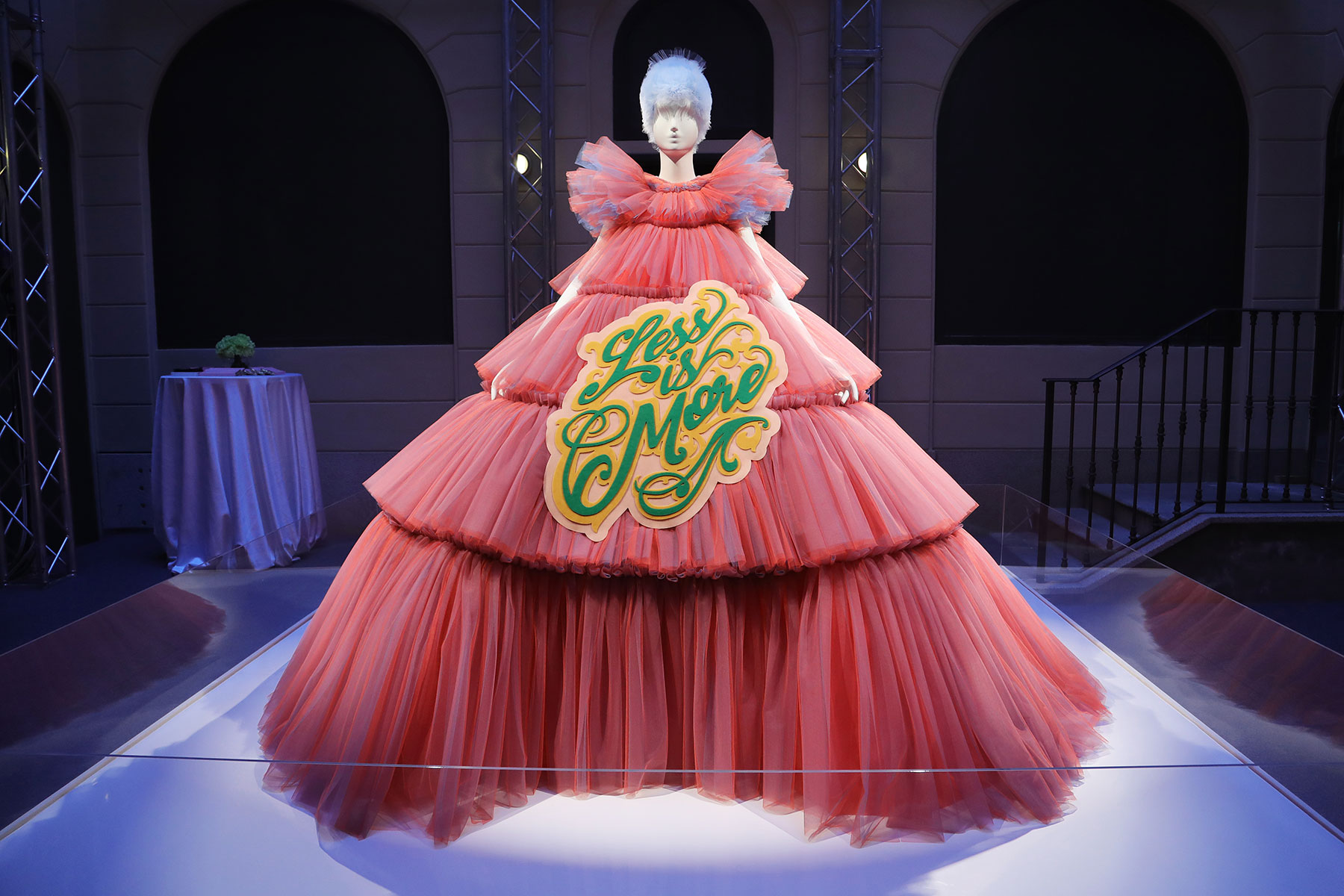
The 2019 Met Gala theme, "Camp: Notes on Fashion," served as a definitive exploration of artifice, exaggeration, and the "love of the unnatural," inspired by Susan Sontag’s seminal 1964 essay. It challenged attendees to move beyond traditional beauty, embracing a sensibility that prioritizes style over content and irony over seriousness.
The Philosophical Foundation: Susan Sontag’s "Notes on 'Camp'"
To understand the 2019 Met Gala, one must first understand the literary work that birthed its theme. In 1964, Susan Sontag published "Notes on 'Camp'" in the Partisan Review, attempting to codify a sensibility that had long existed in queer subcultures but remained largely unnamed in the mainstream. Sontag’s essay consisted of 58 numbered points that dissected the "Camp" aesthetic.
Camp, as Sontag defined it, is not a fixed set of rules but a way of seeing the world. It is "the love of the exaggerated, the 'off,' of things-being-what-they-are-not." Crucially, Sontag distinguished between "pure Camp"—which is unintentional and takes itself seriously but fails—and "intentional Camp," which is a deliberate parody. The 2019 Met Gala primarily celebrated the latter, though the exhibition curated by Andrew Bolton at the Costume Institute explored the historical nuances of both.
The theme was a departure from the previous year’s "Heavenly Bodies: Fashion and the Catholic Imagination," moving from the sacred and the solemn to the theatrical and the irreverent. By choosing Camp, the Metropolitan Museum of Art’s Costume Institute signaled a shift toward celebrating fashion as a tool for subversion and social commentary.
The Role of the Co-Chairs
Every Met Gala is defined by its leadership, and the 2019 committee was particularly attuned to the theme of artifice and performance. The co-chairs for the evening were:
- Lady Gaga: A performer whose entire career has been a study in Camp, Gaga provided the evening's most literal interpretation of the theme through a multi-layered fashion performance.
- Alessandro Michele: The Creative Director of Gucci at the time, Michele was the primary sponsor of the exhibition. His aesthetic—maximalist, gender-fluid, and historically referential—was the modern embodiment of Camp.
- Harry Styles: Representing a new generation of gender-blurring fashion, Styles arrived in a sheer Gucci ensemble that challenged traditional masculine archetypes.
- Serena Williams: Combining high fashion with athletic utility, Williams famously wore a neon yellow Off-White x Nike gown paired with matching sneakers, highlighting the "unnatural" juxtaposition central to Camp.
- Anna Wintour: The perennial chair of the event, who oversaw the curation of the guest list and the translation of the theme into a global cultural moment.
Defining the Camp Aesthetic on the Red Carpet
The red carpet (which was actually pink for the 2019 event) became a live-action theater. Because Camp is often misunderstood as merely "tacky" or "costume-like," the most successful attendees were those who understood the nuance of the "failed seriousness" Sontag described.
The Performance of Lady Gaga
Lady Gaga’s arrival lasted sixteen minutes. She began in a voluminous fuchsia Brandon Maxwell gown, which was then peeled away to reveal a black strapless dress, followed by a slim pink slip dress, and finally, sparkling lingerie as she pulled a wagon of "Haus of Gaga" champagne. This was Camp in its purest intentional form: a performance of the act of dressing and being seen.
The Theatricality of Billy Porter
Billy Porter arrived as a "Sun God," carried on a litter by six shirtless men. His custom "Sunway" ensemble by The Blonds featured a 10-foot wingspan and a 24-karat gold headpiece. Porter’s entrance referenced Ancient Egypt, disco culture, and ballroom history, encapsulating the "extra-ness" that Camp demands.
The Surrealism of Janelle Monáe
Monáe wore a Christian Siriano gown that was a literal interpretation of Cubism and Surrealism, featuring a blinking mechanical eye over one breast and a stack of top hats. This look leaned into the "artifice" of Camp, turning the human body into a walking art installation.
The Irony of Jared Leto
Jared Leto arrived carrying a prosthetic replica of his own head, a direct reference to Gucci’s Autumn/Winter 2018 runway show. This move epitomized the Camp idea of the "double": the self-conscious awareness of one’s own image as an object.
| Key Attendee | Designer | Camp Element |
|---|---|---|
| Lady Gaga | Brandon Maxwell | Performance art and multi-layered reveals |
| Billy Porter | The Blonds | Historical hyperbole and theatrical entrance |
| Katy Perry | Moschino | Literalism (Chandelier and Hamburger suits) |
| Janelle Monáe | Christian Siriano | Surrealism and mechanical artifice |
| Harry Styles | Gucci | Gender subversion and Victorian romanticism |
| Zendaya | Tommy Hilfiger | Narrative Camp (Cinderella "transformation" with light-up dress) |
| Cardi B | Thom Browne | Proportion distortion and anatomical exaggeration |
The Costume Institute Exhibition: A Historical Deep Dive
While the gala is a celebrity-driven event, the exhibition itself was a scholarly look at the history of the aesthetic. Curated by Andrew Bolton, the "Camp: Notes on Fashion" exhibition was divided into two main sections.
Section One: The Origins of Camp
This section traced the term "Camp" back to the French court of Louis XIV. The term likely originated from the French verb se camper, meaning "to posture" or "to strike a pose." The display highlighted the "Sun King" as a central figure of early Camp, emphasizing the performance of royalty and the extreme artifice of the Versailles court.
The exhibition then moved through the 19th-century "dandy" culture, focusing on figures like Oscar Wilde. For Wilde, Camp was a survival mechanism—a way for queer individuals to signal to one another through coded language, aesthetics, and wit. The displays included original manuscripts and garments that reflected the shift of Camp from a royal posture to a subcultural identity.
Section Two: The 58 Notes
The second part of the exhibition was structured around Sontag’s 58 notes. It featured over 200 objects, including womenswear, menswear, sculptures, and paintings. Designers featured prominently included:
- Cristóbal Balenciaga: For his architectural distortions of the female form.
- Jean Paul Gaultier: For his subversion of gender and high-low culture.
- Vivienne Westwood: For her use of historical pastiche and punk irony.
- Jeremy Scott (Moschino): For his literal interpretations of consumer culture (e.g., the cleaning product bottle perfume).
The exhibition concluded with a "Camp-O-Rama," a vibrant display of contemporary fashion that showcased how the aesthetic had permeated every level of the industry, from streetwear to haute couture.
Why the 2019 Theme Remains Relevant in 2026
From the vantage point of 2026, the 2019 Met Gala is viewed as a turning point in how fashion events interact with digital culture. "Camp" was the perfect theme for the Instagram and TikTok era because it prioritizes the "spectacle."
- The Rise of Content Fashion: Before 2019, Met Gala looks were often judged on beauty and craftsmanship. After 2019, the "viral moment" became the primary metric of success. This shift paved the way for more radical themes in subsequent years.
- Gender Neutrality: The 2019 theme provided a safe, intellectual framework for mainstream celebrities to experiment with gender-fluid clothing. Harry Styles’ sheer top and pearl earring were revolutionary at the time and have since become a standard for male red-carpet fashion.
- The Mainstreaming of Queer Aesthetics: While Sontag’s essay was criticized by some for "de-queering" Camp, the 2019 gala brought the history of drag and ballroom culture into the hallowed halls of the Met. This forced a broader conversation about the origins of the trends that dominate modern pop culture.
Common Misconceptions About the Theme
During and after the event, there was significant debate regarding who "understood the assignment." Many critics argued that simply wearing a "crazy outfit" did not constitute Camp.
- Camp vs. Kitsch: Kitsch is often sincere but "bad" art. Camp is a way of looking at kitsch with a sense of irony. A person wearing a tacky sweater because they like it is kitsch; a person wearing a tacky sweater to mock the idea of "good taste" is Camp.
- Camp vs. Glamour: Traditional glamour seeks to hide flaws and present a polished image of perfection. Camp highlights the effort behind the polish. It is the "performance of being glamorous."
- The Problem of "Safety": Many attendees in 2019 were criticized for wearing standard "pretty" gowns. In the context of Camp, a standard Dior or Chanel gown was seen as a failure because it lacked the necessary artifice or irony.
Frequently Asked Questions
What was the official title of the 2019 Met Gala?
The official title was "Camp: Notes on Fashion." It was based on the 1964 essay by Susan Sontag, which sought to define a "sensibility" rather than a specific style.
Why was the carpet pink in 2019?
The switch from the traditional red carpet to a pink one was a deliberate choice by the organizers to align with the "Camp" theme. Pink is historically associated with artifice, gender subversion, and the "flamboyance" often linked to the Camp aesthetic.
Who was the most "Camp" person at the 2019 Met Gala?
While subjective, fashion critics generally agree that Lady Gaga, Billy Porter, and Janelle Monáe provided the most accurate interpretations. Gaga's four-part reveal and Porter's "Sun God" entrance were cited as the gold standards for the theme.
Is the 2019 Met Gala exhibition still open?
No, the physical exhibition at the Metropolitan Museum of Art’s Costume Institute ran from May 9 to September 8, 2019. However, the museum maintains digital archives, and a comprehensive catalog titled Camp: Notes on Fashion is still available for purchase through the Met Store and academic booksellers.
How did the theme affect the fashion industry?
The theme accelerated the trend toward "maximalism" and "ugly-chic." It encouraged designers to take more risks with irony and humor, leading to a decade (the 2020s) where the boundaries between high fashion and meme culture became increasingly blurred.
Conclusion and Next Actions
The 2019 Met Gala was a landmark event that successfully bridged the gap between academic art theory and pop culture spectacle. By centering the theme on Susan Sontag’s "Notes on 'Camp'," the Costume Institute provided a lens through which we can still analyze the performative nature of modern life in 2026.
To further explore the impact of this event:
- Read the Original Essay: Susan Sontag’s "Notes on 'Camp'" is essential reading for anyone interested in the philosophy of style.
- Examine the Catalog: The Metropolitan Museum of Art’s official exhibition book provides high-resolution photography of the historical garments that inspired the theme.
- Review Subsequent Themes: Compare "Camp" with later themes like 2022's "In America: An Anthology of Fashion" to see how the Met continued to explore the intersection of identity and attire.