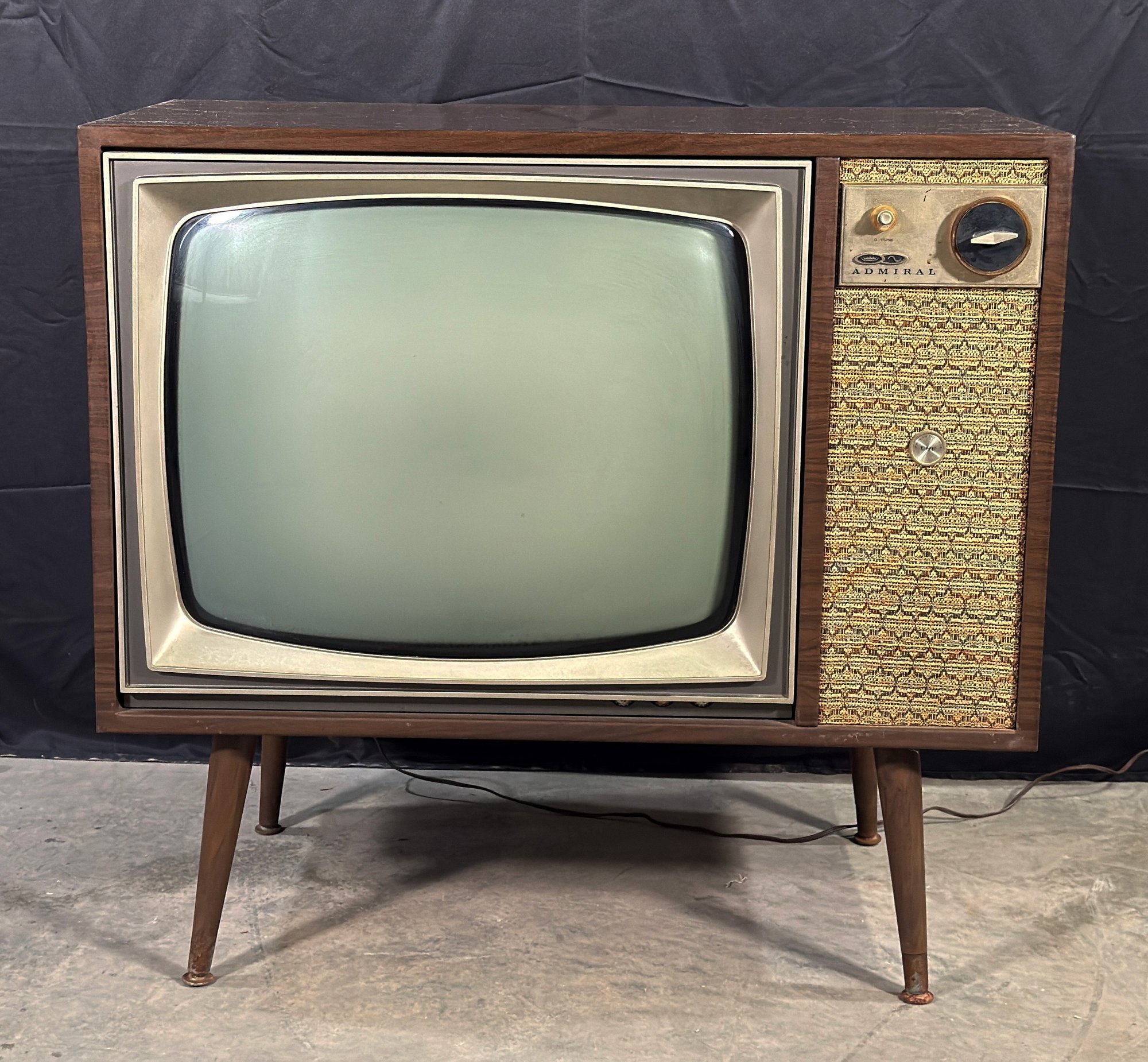
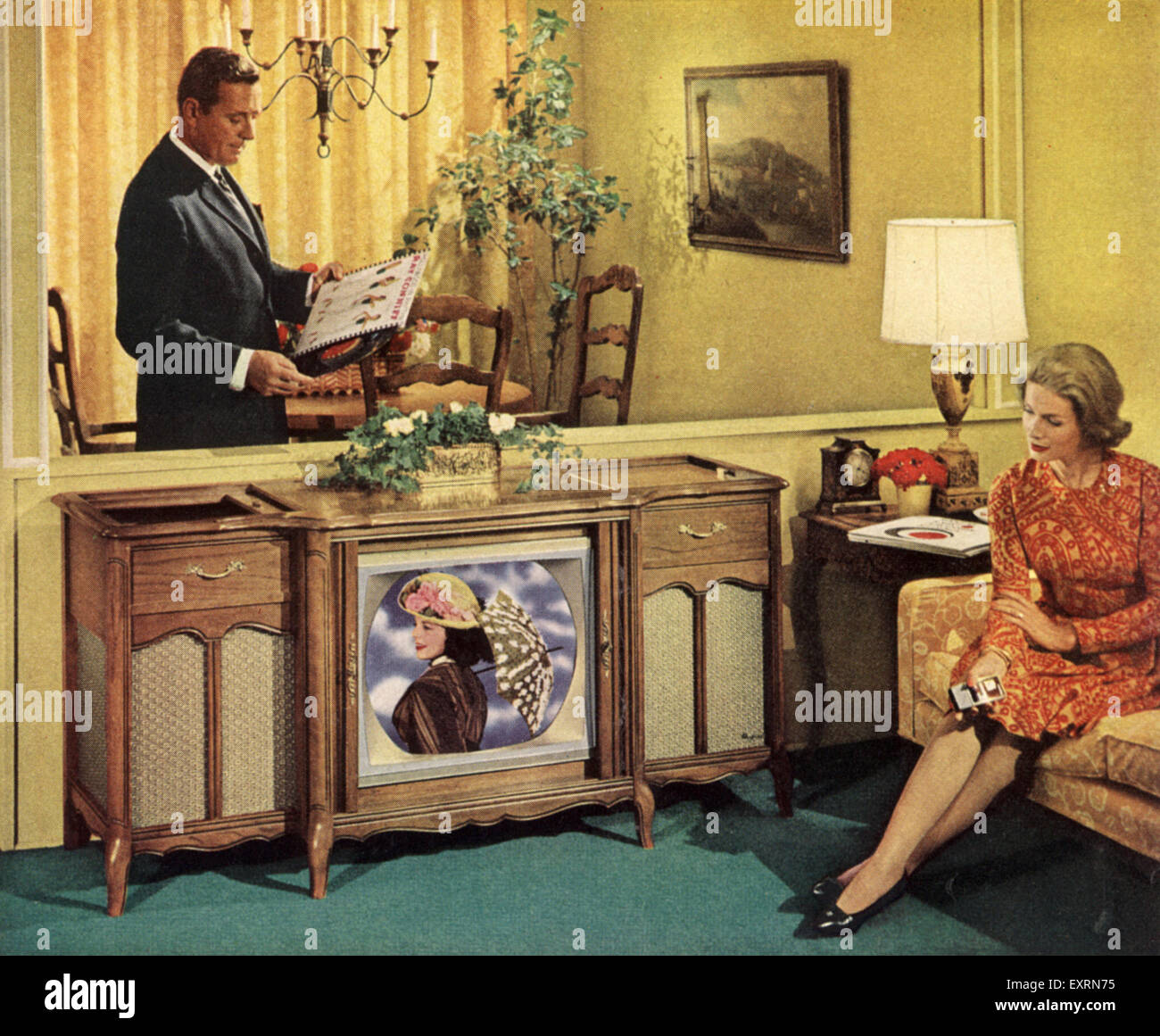
In the 1960s, television evolved from a luxury novelty into the primary lens through which the world viewed itself. This pivotal decade saw the medium transition from black-and-white to "living color," the rise of the "Big Three" networks (ABC, CBS, and NBC), and the transformation of news broadcasting into a real-time record of social revolution and space exploration.
By 1960, nearly 90% of American households owned a television set, marking the point where the small screen officially overtook radio and newspapers as the most influential source of information and entertainment. This decade was defined by a shift from the stage-bound live dramas of the 1950s to filmed episodic series, the birth of modern political campaigning, and the emergence of television as a unifying—and sometimes polarizing—national hearth. As we examine this era from the perspective of 2026, the 1960s remain the most significant period of growth in the history of mass communication.
The Technological Leap: From Black and White to Living Color
The most visible transformation of 1960s television was the widespread adoption of color broadcasting. While the technical standards for color (the NTSC system) had been approved by the FCC in 1953, the high cost of color television sets and the lack of color programming kept adoption low throughout the late 1950s.
The Adoption of Color Standards
The 1960s saw a coordinated push, primarily led by RCA (the parent company of NBC), to make color the industry standard. NBC, branded as "The Full Color Network," began airing its famous "Laramie" peacock logo in 1956, but it wasn’t until 1965 that the network announced its entire prime-time schedule would be broadcast in color. CBS and ABC followed suit shortly after, and by the 1966-1967 television season, virtually all prime-time network programming was in color.
For the consumer, this transition was expensive. In the early 1960s, a color TV set could cost upwards of $500—roughly equivalent to $5,000 in 2026 currency. However, as production scaled and technology improved, prices dropped, leading to a "color boom" in the middle of the decade. By 1970, color sets finally began to outsell black-and-white units.
The Shift to Filmed Content
Technologically, the 1960s also marked the end of the "Live Era." Most 1950s television was produced live in New York City, much like a stage play. The 1960s saw production move decisively to Hollywood, where shows were shot on 35mm film. This allowed for higher production values, outdoor location shooting, and—crucially for the networks—the ability to sell shows into syndication. Re-runs became a viable business model, ensuring that iconic 1960s programs would remain in the public consciousness for decades.
The Big Three Networks and the Monopoly of Attention
Before the advent of cable, satellite, or streaming services, the television landscape was a triopoly. ABC, CBS, and NBC controlled virtually everything the public saw. This concentration of power meant that a hit show in the 1960s could command an audience of 30 to 40 million viewers—numbers that are almost impossible to achieve in the fragmented media market of 2026.
The Role of the Networks
- CBS (The Columbia Broadcasting System): Known as the "Tiffany Network" for its high-quality programming, CBS dominated the ratings for much of the decade with rural comedies like The Beverly Hillbillies and prestige news programs led by Walter Cronkite.
- NBC (The National Broadcasting Company): A pioneer in color and variety programming, NBC was home to The Tonight Show Starring Johnny Carson, which became a cultural institution starting in 1962.
- ABC (The American Broadcasting Company): Often the third-place network, ABC targeted younger audiences with "hip" programming like American Bandstand and innovative genres like the spy-fi hit The Avengers.
This era of "Appointment Television" meant that the entire nation was often watching the same thing at the same time, creating a shared cultural experience that modern viewers rarely encounter.
Genre Revolutions: From Westerns to Escapism
The 1960s saw dramatic shifts in what people wanted to watch. The decade began with the absolute dominance of the Western and ended with a move toward high-concept escapism and socially conscious storytelling.
The Decline of the TV Western
At the start of the 1960s, Westerns like Gunsmoke, Bonanza, and Wagon Train occupied the top of the ratings. These shows often presented a black-and-white morality that appealed to a post-WWII audience. However, as the decade progressed and the realities of the Vietnam War and domestic unrest set in, the traditional Western began to feel antiquated. By the late 1960s, many Westerns were cancelled to make room for more "relevant" or urban-themed programming.
The Rise of Spy Fiction and Sci-Fi
Influenced by the Cold War and the success of the James Bond films, the 1960s embraced the "Spy-Fi" genre. Shows like The Man from U.N.C.L.E., Get Smart, and Mission: Impossible blended espionage with high-tech gadgets and humor. Simultaneously, science fiction emerged as a way to explore contemporary social issues under the guise of fantasy. The Twilight Zone and Star Trek used allegorical storytelling to address racism, war, and ethics, bypassing network censors who might have blocked more direct critiques of American society.
Television as a Window to Social Change
The most profound impact of 1960s television was its role in shaping public opinion on major social and political issues. For the first time, the "news" was not just something you read; it was something you witnessed.
The Vietnam War: The First "Living Room War"
The Vietnam War was the first conflict to be televised extensively. Dispatches from journalists like Morley Safer showed the grim reality of combat and the civilian toll, contradicting the more optimistic reports coming from the Pentagon. In 1968, after a visit to Vietnam, Walter Cronkite famously declared the war a stalemate. President Lyndon B. Johnson reportedly remarked, "If I've lost Cronkite, I've lost Middle America." This demonstrated the unprecedented power of the television news anchor as a moral authority.
The Civil Rights Movement and Representation
Television played a crucial role in the Civil Rights Movement. Images of protesters being attacked by police dogs in Birmingham or being beaten on the Edmund Pettus Bridge in Selma were broadcast into millions of homes, galvanizing support for the Civil Rights Act of 1964 and the Voting Rights Act of 1965.
On the entertainment side, the 1960s saw the first significant—though still limited—steps toward racial integration. In 1965, Bill Cosby became the first Black actor to star in a dramatic lead role in I Spy. In 1968, Julia, starring Diahann Carroll, featured a Black woman in a non-stereotypical role as a nurse and widowed mother. These shows began to challenge the "whites-only" landscape of early television.
Comparison of Iconic 1960s Television Series
The following table highlights the diversity of programming that defined the decade, showing the transition from traditional formats to experimental genres.
| Show Title | Years Active | Genre | Significance |
|---|---|---|---|
| Gunsmoke | 1955–1975 | Western | Defined the "Adult Western"; one of the longest-running scripted shows. |
| The Twilight Zone | 1959–1964 | Sci-Fi/Anthology | Introduced sophisticated, allegorical storytelling and social commentary. |
| The Dick Van Dyke Show | 1961–1966 | Sitcom | Moved the sitcom away from "perfect" families toward workplace/home balance. |
| Star Trek | 1966–1969 | Sci-Fi | Culturally revolutionary for its diverse cast and optimistic view of the future. |
| The Ed Sullivan Show | 1948–1971 | Variety | The ultimate gatekeeper of pop culture; hosted The Beatles in 1964. |
| Mission: Impossible | 1966–1973 | Spy Fiction | Popularized the ensemble "caper" format and used intricate tech gadgets. |
| Rowan & Martin's Laugh-In | 1968–1973 | Sketch Comedy | Introduced fast-paced, psychedelic editing and counter-culture humor. |
The Business of 1960s Television: Advertising and Production
The 1960s cemented the "commercial" model of television that would persist for decades. As the audience grew, so did the stakes for advertisers.
The Evolution of Commercials
In the 1950s, it was common for a single advertiser to sponsor an entire program (e.g., The Texaco Star Theatre). However, the "Quiz Show Scandals" of the late 50s led the networks to take control of production away from advertisers. In the 1960s, the "magazine style" of advertising became standard, where multiple brands bought 30- or 60-second spots within a show. This increased network profits and gave them more creative control over content.
Production and Syndication
The move to film was a business masterstroke. Because filmed shows didn't degrade like the "kinescopes" of live broadcasts, they could be sold to local stations and international markets. This created the "off-network syndication" market. Series like The Andy Griffith Show and Gilligan’s Island became enormously profitable in reruns, a model that continues to influence the industry in 2026.
Frequently Asked Questions
What was the most-watched television event of the 1960s?
The Apollo 11 Moon Landing on July 20, 1969, remains the most-watched event of the decade. An estimated 650 million people worldwide watched as Neil Armstrong took his first steps on the lunar surface. It was a triumph of both space exploration and global broadcasting technology.
How did the 1960 Kennedy-Nixon debates change politics?
The 1960 debates were the first televised presidential debates in history. They proved that visual image was as important as verbal substance. Radio listeners largely felt Richard Nixon won the debate, while television viewers, seeing a tanned, confident John F. Kennedy versus a pale, sweating Nixon, overwhelmingly gave the win to Kennedy. This changed political campaigning forever, making "telegenic" qualities a prerequisite for candidates.
When did television news expand to 30 minutes?
For most of the 1950s, national news broadcasts were only 15 minutes long. In September 1963, both CBS and NBC expanded their evening news programs to 30 minutes. This allowed for more in-depth reporting and coincided with the era's increasingly complex global news cycle, including the escalating Vietnam War and the assassination of JFK later that year.
Why were there so many "fantasy" sitcoms in the mid-1960s?
The mid-60s saw a surge in shows like Bewitched, I Dream of Jeannie, and The Addams Family. Historians often attribute this to "escapism." As the real world became more chaotic with the Civil Rights struggle and the Vietnam War, audiences gravitated toward lighthearted shows where problems could be solved with a twitch of a nose or a blink of an eye.
What was the "Rural Purge" in television?
While the Rural Purge technically culminated in the early 1970s, the seeds were sown in the late 1960s. Networks realized that while "rural" shows like Petticoat Junction and The Beverly Hillbillies had high total viewership, they didn't attract the young, urban, affluent viewers that advertisers wanted. This led to a massive cancellation of rural-themed shows in favor of "socially relevant" programming like All in the Family.
Practical Recommendation for Historians and Enthusiasts
To truly understand the impact of 1960s television, researchers should look beyond the popular sitcoms and examine the era's news archives and variety shows. The Library of Congress and The Paley Center for Media offer extensive archives of original broadcasts. Observing how advertisements evolved alongside the programs provides a clear picture of the decade's changing social norms and economic priorities. For those interested in the technical evolution, the National Museum of American History maintains collections of early color television hardware and broadcasting equipment.