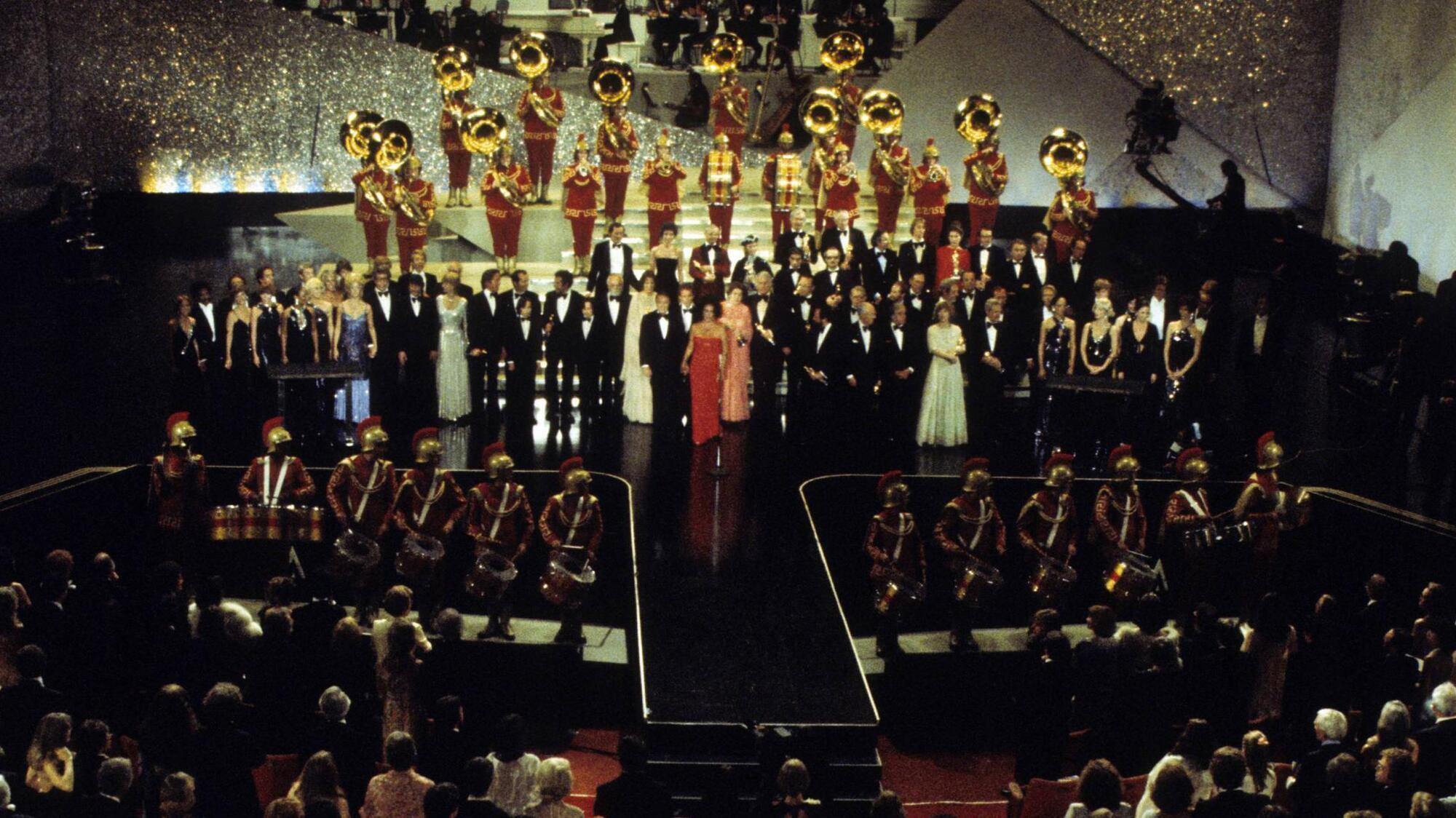
The 43rd Academy Awards, held on April 15, 1971, at the Dorothy Chandler Pavilion in Los Angeles, celebrated the cinematic achievements of 1970. The ceremony is best remembered for the dominance of the biographical war epic Patton, which won seven awards, and the unprecedented refusal of the Best Actor Oscar by George C. Scott.
The 1971 Oscars occurred during a transformative period in American cinema, often referred to as the "New Hollywood" era. As of 2026, film historians continue to view this particular ceremony as a flashpoint where traditional epic filmmaking collided with the burgeoning counter-culture movement and gritty realism that would define the 1970s. The event was broadcast by NBC and notably lacked a single primary host, opting instead for a rotating cast of "Friends of Oscar" to lead the proceedings.
The Cultural Landscape of the 43rd Academy Awards
To understand the 1971 Oscars, one must look at the tension within the film industry at the start of the 1970s. The traditional studio system was struggling to compete with television and shifting social values, leading to a diverse slate of nominees that ranged from the old-fashioned disaster spectacle Airport to the cynical, anti-establishment comedy of M*A*S*H.
The eligibility period for the 43rd Academy Awards covered films released in Los Angeles County between January 1, 1970, and December 31, 1970. This year was particularly significant because it marked a shift in how the Academy approached political and social themes, particularly concerning the Vietnam War, which was reflected in the contrasting ideologies of the two major war films nominated: Patton and M*A*S*H.
The Multi-Host Format Experiment
In a departure from the long-standing tradition of having a singular host like Bob Hope, the 1971 ceremony utilized 32 different presenters to guide the evening. This "hostless" approach was an attempt to modernize the broadcast and keep the pace moving, a strategy that the Academy would revisit decades later. Presenters included a mix of classic stars and rising talent, such as:
- Helen Hayes
- Alan King
- Ali MacGraw
- Richard Pryor
- Burt Lancaster
Major Winners and Nominees
The 1971 ceremony was largely a triumph for Patton, a film that managed to appeal to both conservative audiences who admired the titular general and liberal audiences who saw the film as a critique of the military-industrial complex.
Best Picture: The Dominance of Patton
Patton, directed by Franklin J. Schaffner and produced by Frank McCarthy, entered the night with ten nominations. It eventually secured seven wins, including Best Picture, Best Director, and Best Screenplay (Original). The film’s success signaled that the Academy still valued high-production-value biopics, provided they offered more psychological depth than the standard hagiographies of the 1950s.
The Best Actor Controversy: George C. Scott
The most enduring headline from the 1971 Oscars was George C. Scott’s refusal of the Best Actor award for his portrayal of General George S. Patton. Scott had famously sent a telegram to the Academy months prior, stating that he did not consider himself in competition with other actors and dismissed the ceremony as a "meat parade."
When his name was announced as the winner, the audience was silent as the film's producer, Frank McCarthy, accepted the statuette on his behalf. This was the first time in Oscar history that a living actor had refused the award (the second being Marlon Brando in 1973). Scott's stance was a significant blow to the Academy's prestige at the time, though it ultimately cemented his legacy as a principled, if prickly, artist.
Best Actress: Glenda Jackson
The Best Actress category was equally notable for an absence. Glenda Jackson won for her role in Women in Love, but like Scott, she did not attend the ceremony. Jackson was in London filming at the time. Her victory was seen as a win for "serious" British cinema and a validation of the bold, often transgressive themes explored by director Ken Russell.
| Category | Winner | Film |
|---|---|---|
| Best Picture | Frank McCarthy (Producer) | Patton |
| Best Director | Franklin J. Schaffner | Patton |
| Best Actor | George C. Scott (Refused) | Patton |
| Best Actress | Glenda Jackson | Women in Love |
| Best Supporting Actor | John Mills | Ryan's Daughter |
| Best Supporting Actress | Helen Hayes | Airport |
| Best Original Screenplay | Francis Ford Coppola & Edmund H. North | Patton |
| Best Adapted Screenplay | Ring Lardner Jr. | M*A*S*H |
| Best Original Score | Francis Lai | Love Story |
| Best Foreign Language Film | Elio Petri (Director) | Investigation of a Citizen Above Suspicion |
Supporting Categories and Significant Returns
The supporting acting categories in 1971 featured a mix of veteran talent and surprising victories.
John Mills and Ryan’s Daughter
John Mills won Best Supporting Actor for his role as the "village idiot" Michael in David Lean’s Ryan’s Daughter. While the film itself received mixed reviews from critics who found Lean's grand scale ill-suited to the intimate story, Mills' transformative performance was widely praised. His win was a nod to the traditional school of character acting.
Helen Hayes’ Historic Win
Helen Hayes won Best Supporting Actress for her role as an elderly stowaway in the disaster epic Airport. This win was historic, as it came 39 years after her Best Actress win for The Sin of Madelon Claudet (1931/32). At the time, this was the longest gap between Academy Award wins in history. Hayes’ victory also highlighted the massive commercial success of Airport, which was the highest-grossing film among the Best Picture nominees.
Honorary Awards and Special Recognition
The 1971 Oscars were notable for honoring the pioneers of cinema, bridging the gap between the silent era and the modern age.
- Orson Welles: Welles was awarded an Honorary Oscar "for superlative artistry and versatility in the creation of motion pictures." Welles did not attend the ceremony; his acceptance was filmed in advance and shown via a pre-recorded segment. John Huston accepted the physical award on his behalf.
- Lillian Gish: Known as the "First Lady of American Cinema," Gish received an Honorary Award "for superlative artistry and for distinguished contribution to the progress of motion pictures." Her presence at the ceremony provided a poignant link to the birth of the medium.
- The Irving G. Thalberg Memorial Award: This was presented to Ingmar Bergman, though he was not present to accept it.
Technical Achievements and Production
The 43rd Academy Awards showcased the industry's evolving technical capabilities. Patton won for Best Art Direction, Best Sound, and Best Film Editing, emphasizing the meticulous craftsmanship required to recreate historical battles on such a massive scale.
Meanwhile, Tora! Tora! Tora!, a film detailing the attack on Pearl Harbor from both American and Japanese perspectives, won the Oscar for Best Special Effects. This film utilized sophisticated practical effects and miniatures that remained the industry standard for years.
In the realm of music, Love Story took home the award for Best Original Score. Composed by Francis Lai, the theme became a global phenomenon, helping the film achieve massive box-office success. Despite its commercial power, Love Story only won this single award out of its seven nominations, reflecting the Academy's preference for the more rigorous Patton.
The Significance of Nominees That Didn't Win
Looking back from 2026, many of the 1971 nominees that lost the top prizes are now considered seminal works of American cinema:
- M*A*S*H: While it only won for Best Adapted Screenplay, Robert Altman's film revolutionized the use of overlapping dialogue and non-linear narrative. It remains one of the most influential comedies ever made.
- Five Easy Pieces: This film garnered nominations for Best Picture, Best Actor (Jack Nicholson), and Best Supporting Actress (Karen Black). It represented the "New Hollywood" aesthetic—character-driven, ambiguous, and emotionally raw.
- I Never Sang for My Father: Melvyn Douglas and Gene Hackman were both nominated for their roles in this intimate family drama, showcasing a shift toward smaller, more personal storytelling that would flourish in the 70s.
Broadcast and Reception
The ceremony lasted approximately 2 hours and 50 minutes. The lack of a host led to a somewhat disjointed but fast-moving show. Critics at the time praised the brevity compared to previous years but noted the awkwardness of having so many different people rotating on and off the stage.
From a technical standpoint, the NBC broadcast was a major success, pulling in high ratings driven by the popularity of Love Story and Airport. It was one of the first years where the "Oscar buzz" was heavily marketed to a younger audience, acknowledging that the demographic of moviegoers was changing rapidly.
Legacy of the 1971 Oscars
The 1971 Oscars served as a transition point. It honored the classic epic with Patton, but the presence of M*A*S*H and Five Easy Pieces indicated that a new guard was taking over. The refusal by George C. Scott foreshadowed a decade where artists would become more vocal and less beholden to the traditional industry honors.
As we evaluate these awards in 2026, the 1971 ceremony stands as a reminder of a time when the Academy Awards were forced to reckon with a changing culture. The films honored that night—specifically Patton, M*A*S*H, and Five Easy Pieces—continue to be studied for their craftsmanship and their reflection of the American psyche during a period of intense social upheaval.
Frequently Asked Questions
Why did George C. Scott refuse his Oscar in 1971?
George C. Scott refused the Best Actor award because he fundamentally disagreed with the concept of actors competing against one another. He referred to the Academy Awards as a "meat parade" and believed that every performance was unique and could not be objectively ranked as "best." He had previously attempted to withdraw his name from the nominations for The Hustler in 1962.
Which film won the most awards at the 1971 Oscars?
Patton was the most successful film of the night, winning seven Academy Awards out of its ten nominations. These included Best Picture, Best Director (Franklin J. Schaffner), Best Actor (George C. Scott), Best Screenplay (Original), Best Art Direction, Best Sound, and Best Film Editing.
Who hosted the 43rd Academy Awards?
The 1971 ceremony did not have a single host. Instead, the Academy utilized a "Friends of Oscar" format, featuring 32 different celebrities who shared hosting duties and presented awards throughout the night. This was intended to keep the ceremony's pace brisk and modern.
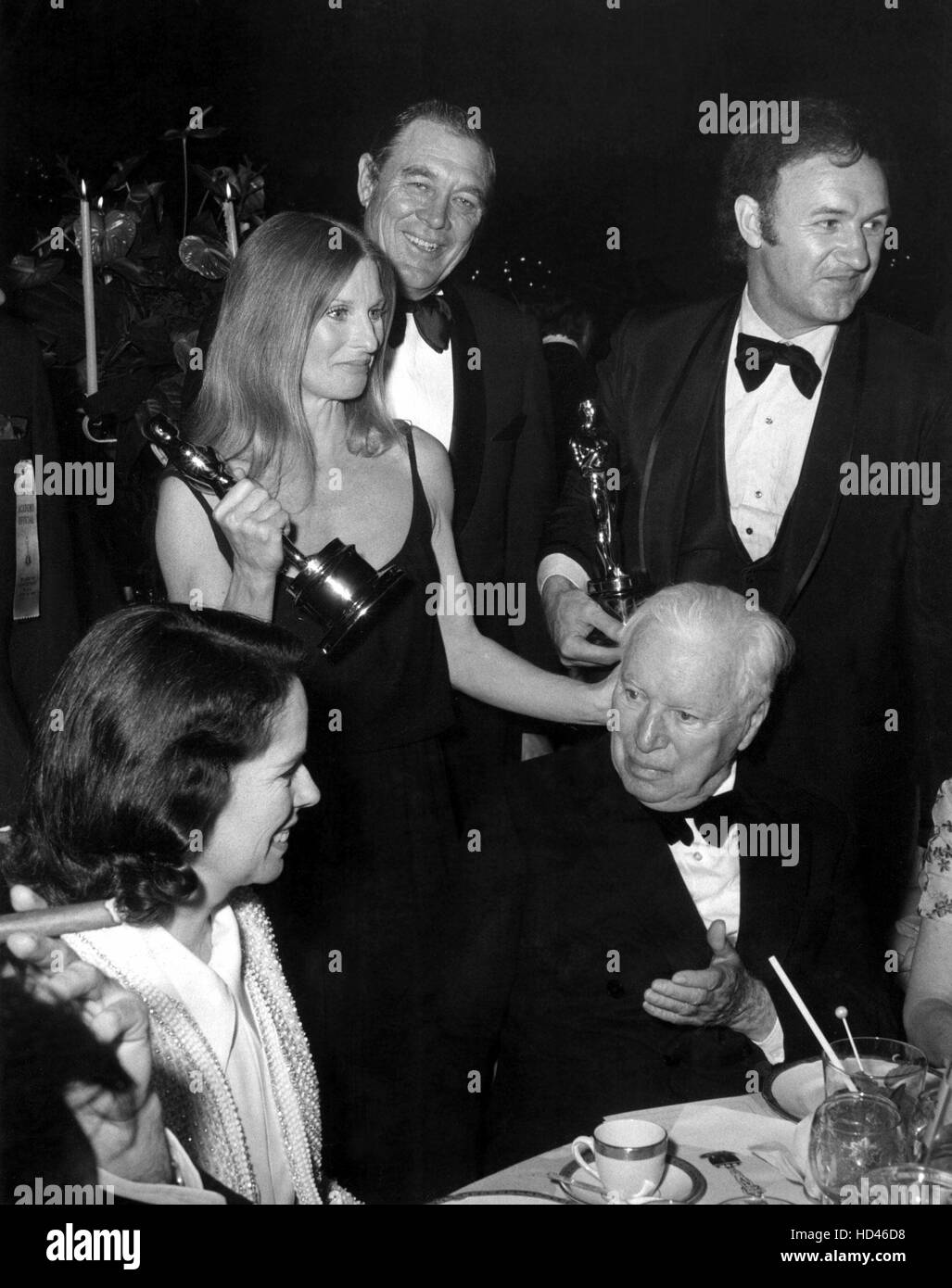
Was Charlie Chaplin honored at the 1971 Oscars?
No, Charlie Chaplin received his famous Honorary Award the following year, at the 44th Academy Awards in 1972. In 1971, the Honorary Awards were given to Lillian Gish and Orson Welles.
Where were the 1971 Oscars held?
The ceremony took place at the Dorothy Chandler Pavilion in Los Angeles, California. This venue served as the primary home of the Academy Awards from 1969 until 1999.
Practical Recommendation for Film Students and Historians
For those researching the 1971 Oscars, it is highly recommended to view the nominated films in pairs to see the era's stylistic clash. Contrast Patton with M*A*S*H to understand the differing perspectives on military leadership and war, or compare Airport with Five Easy Pieces to see the divide between traditional studio blockbusters and the rise of independent-spirited "New Hollywood" cinema. Official records and footage of the 1971 ceremony can be accessed via the Academy of Motion Picture Arts and Sciences archives for those seeking primary source material on the presenters and acceptance speeches.