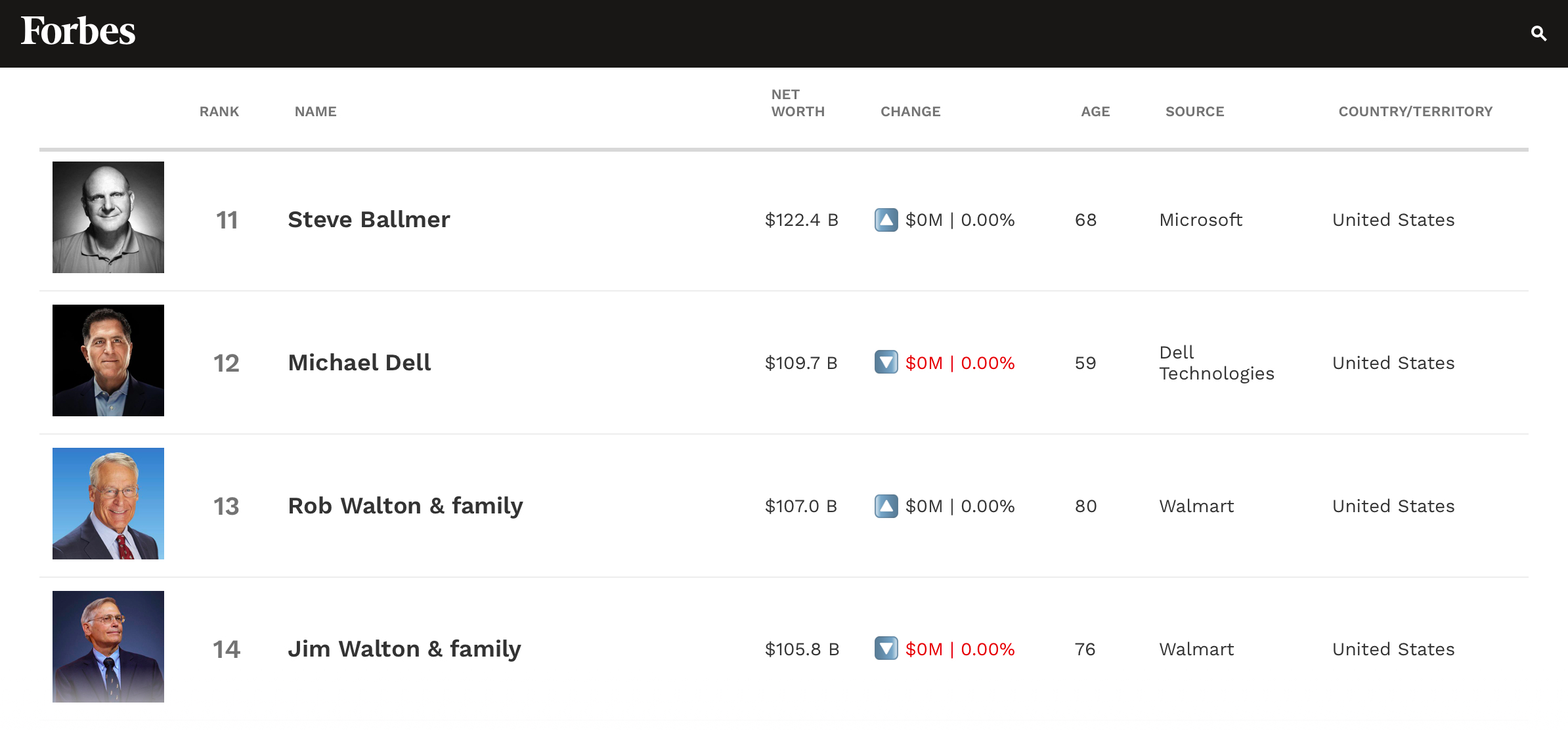
The 2010 wealth rankings provide a fascinating historical snapshot of global affluence following the 2007–2008 financial crisis, capturing the stabilization of international markets, the resurgence of tech fortunes, and the shifting geographical distribution of extreme wealth among individuals and institutions.
Introduction to the 2010 Wealth Landscape
The year 2010 marked a critical inflection point for global economics and wealth accumulation. Just two years after the severe disruption of the global financial crisis, international markets began a tentative recovery. Publications and financial institutions tracking net worth—most notably Forbes with its definitive billionaire tallies, alongside wealth management firms analyzing high-net-worth individuals (HNWIs)—published their 2010 wealth rankings to document how the world's wealthiest individuals navigated the post-crisis environment.
Analyzing the 2010 wealth rankings requires looking past the raw numbers to understand the underlying economic shifts. This period highlighted a dramatic rebound in asset values, particularly in emerging markets such as the BRIC economies (Brazil, Russia, India, and China), while traditional financial centers in North America and Western Europe restructured. Understanding these rankings offers valuable context on how wealth generation evolved in the wake of systemic shocks, setting the stage for the modern technology- and real-estate-driven fortunes of subsequent decades.
Methodology Behind Wealth Tracking in 2010
Tracking private fortunes on a global scale is a complex exercise in financial forensic accounting, asset valuation, and market analysis. In 2010, major financial publications and research groups relied on transparent yet rigorous frameworks to estimate net worth for public and private individuals.
Valuation of Public Equities
The foundation of any major billionaire ranking is publicly traded stock. For individuals whose fortunes derived primarily from public companies, researchers in 2010 utilized stock prices and exchange rates from a fixed point in time—typically mid-February for annual lists.
- Shareholder Registries: Analysts verified ownership stakes through regulatory filings, proxy statements, and stock exchange disclosures.
- Lock-up Periods and Restrictions: Adjustments were made for restricted stock, executive options, and legal encumbrances that prevented immediate liquidation.
Assessment of Private Assets
Estimating the value of privately held companies, vast real estate holdings, art collections, and luxury yachts presents a significantly greater challenge. In 2010, researchers employed comparative market analysis to value private entities.
- Comparable Multiples: Analysts applied price-to-earnings (P/E) or enterprise-value-to-EBITDA multiples from publicly traded comparable companies operating in the same sector.
- Real Estate and Tangible Assets: Property holdings were cross-referenced against public property records, local tax assessments, and expert broker estimates. Debt associated with these assets was subtracted wherever verifiable documentation existed.
Key Milestones and Notable Figures in the 2010 Rankings
The 2010 rankings captured a reshuffling at the very top of the global economic ladder, reflecting changing industrial dominance and international market expansion.
The Return to the Top: Technology and Industrial Titans
By 2010, the composition of the world's richest individuals demonstrated a departure from pure reliance on traditional industrial conglomerates, though foundational industries remained powerful.
- Carlos Slim Helú: For the first time, Mexican telecommunications magnate Carlos Slim Helú claimed the top spot on major global wealth lists, surpassing long-standing leaders like Bill Gates and Warren Buffett. His fortune, largely built on América Móvil, highlighted the immense growth potential of telecommunications infrastructure in Latin America.
- Bill Gates and Warren Buffett: Representing software innovation and disciplined value investing respectively, Gates and Buffett occupied the immediate runner-up positions, reflecting the steady recovery of U.S. technology and diversified holding companies.
- The Rise of Emerging Market Tycoons: Industrialists and natural resource magnates from Russia, India, and China secured prominent positions within the top twenty, demonstrating how global commodity demand and domestic consumption fueled rapid wealth creation outside traditional Western hubs.
Geographical Distribution of High-Net-Worth Individuals
Beyond individual billionaires, 2010 wealth rankings encompassed reports detailing the broader population of high-net-worth individuals (HNWIs) and ultra-high-net-worth individuals (UHNWIs), typically defined as those with investable assets exceeding $1 million and $30 million, respectively.
Regional Recovery and Growth Dynamics
The geographic distribution of wealth in 2010 revealed distinct post-crisis recovery patterns:
- North America: Remained the dominant region for total wealth concentration, though growth rates were tempered by the lingering effects of the U.S. housing market correction and banking sector deleveraging.
- Asia-Pacific: Exhibited the fastest growth rate in HNWI population and total wealth, driven by rapid industrialization, robust domestic credit expansion, and strong equity markets in China and India.
- Europe: Experienced slower, uneven growth. While Western European economies grappled with early sovereign debt concerns, Central and Eastern European wealth centers benefited from commodity export revenues.
| Region | HNWI Population Trend (2010 vs. 2009) | Primary Wealth Drivers | Key Challenges |
|---|---|---|---|
| North America | Moderate Increase (~10-15%) | Equity market rebound, corporate earnings | Real estate stagnation, tight credit |
| Asia-Pacific | Rapid Expansion (~20%+) | Infrastructure spending, manufacturing, exports | Inflationary pressures, regulatory changes |
| Europe | Modest Recovery (~5-8%) | Luxury goods, specialized manufacturing | Sovereign debt concerns, strict fiscal policy |
| Latin America | Strong Growth | Telecommunications, commodities, banking | Income inequality, currency volatility |
Economic Context: Post-Crisis Financial Restructuring
The backdrop of the 2010 wealth rankings was defined by the aftermath of the global financial crisis. Wealth creators had to adapt to a vastly different regulatory and financial landscape.
Asset Class Performance
Following the liquidity crunch of 2008 and early 2009, central banks enacted aggressive monetary easing policies, including historically low interest rates and quantitative easing. This policy environment profoundly impacted asset valuations:
- Equities: Provided the primary engine for wealth recovery as stock markets rebounded from their early 2009 troughs.
- Commodities: Surged on robust demand from developing economies, directly bolstering fortunes tied to mining, energy, and agriculture.
- Real Estate: Remained highly bifurcated. Prime commercial and residential real estate in global gateway cities (such as New York, London, and Hong Kong) recovered rapidly due to international capital inflows, while suburban and secondary residential markets struggled with foreclosures and depressed valuations.
Common Misconceptions Regarding Wealth Rankings
Public perception of wealth rankings often involves several misconceptions that merit clarification for an accurate historical understanding.
Net Worth Versus Liquid Cash
A common assumption is that individuals listed in 2010 wealth rankings possessed billions of dollars in liquid bank accounts. In reality, the vast majority of extreme wealth is illiquid, tied up in controlling blocks of stock, private company equity, real estate, and operational infrastructure. Liquidating such large positions without drastically depressing asset prices is practically impossible.
Static Versus Dynamic Valuations
Rankings published in 2010 represented a single snapshot in time. Because public equity markets fluctuate daily, individual net worth figures were subject to constant volatility. A sharp drop in a single stock price could erase billions of dollars in theoretical net worth within hours, meaning rankings served as relative indicators rather than absolute, permanent financial balances.
Frequently Asked Questions
Who was ranked as the richest person in the world in 2010?
Mexican telecommunications magnate Carlos Slim Helú was ranked as the richest person in the world in 2010, breaking a long-running streak held primarily by U.S. technology and investment leaders. His net worth was estimated through his holdings in América Móvil and other industrial enterprises.
How did the 2008 financial crisis impact the 2010 wealth rankings?
The 2008 financial crisis caused a temporary contraction in global wealth, resulting in lower net worth figures and reduced billionaire counts across the 2008 and 2009 lists. The 2010 rankings reflected the initial rebound, as aggressive monetary stimulus and market stabilization restored values for equities and commodities.
What criteria define a high-net-worth individual (HNWI) in wealth reports?
In standard financial reporting and wealth management studies, a high-net-worth individual is generally defined as someone with liquid financial assets or a net worth of $1 million or more, excluding primary residence and consumable personal property.
Why do estimates of billionaire wealth vary between publications?
Different financial publications and research firms utilize varying methodologies for valuing private assets, distinct cut-off dates for stock pricing, and divergent approaches to verifying private debt and family trust structures, leading to slight variations in published net worth figures.
Did emerging markets outpace traditional Western economies in wealth growth in 2010?
Yes, emerging markets—particularly in the Asia-Pacific region and Latin America—demonstrated faster percentage growth in both total wealth and the population of high-net-worth individuals, driven by higher GDP growth rates and expanding industrial sectors compared to post-crisis North America and Europe.
Next Steps and Historical Research
For researchers, economists, and historians examining the 2010 wealth rankings, the recommended approach is to review original archived publications from Forbes and wealth management reports from institutions such as Capgemini and Merrill Lynch. Analyzing these primary source documents alongside macroeconomic data from the International Monetary Fund (IMF) provides a comprehensive view of how global wealth distribution evolved in the decade following the financial crisis.