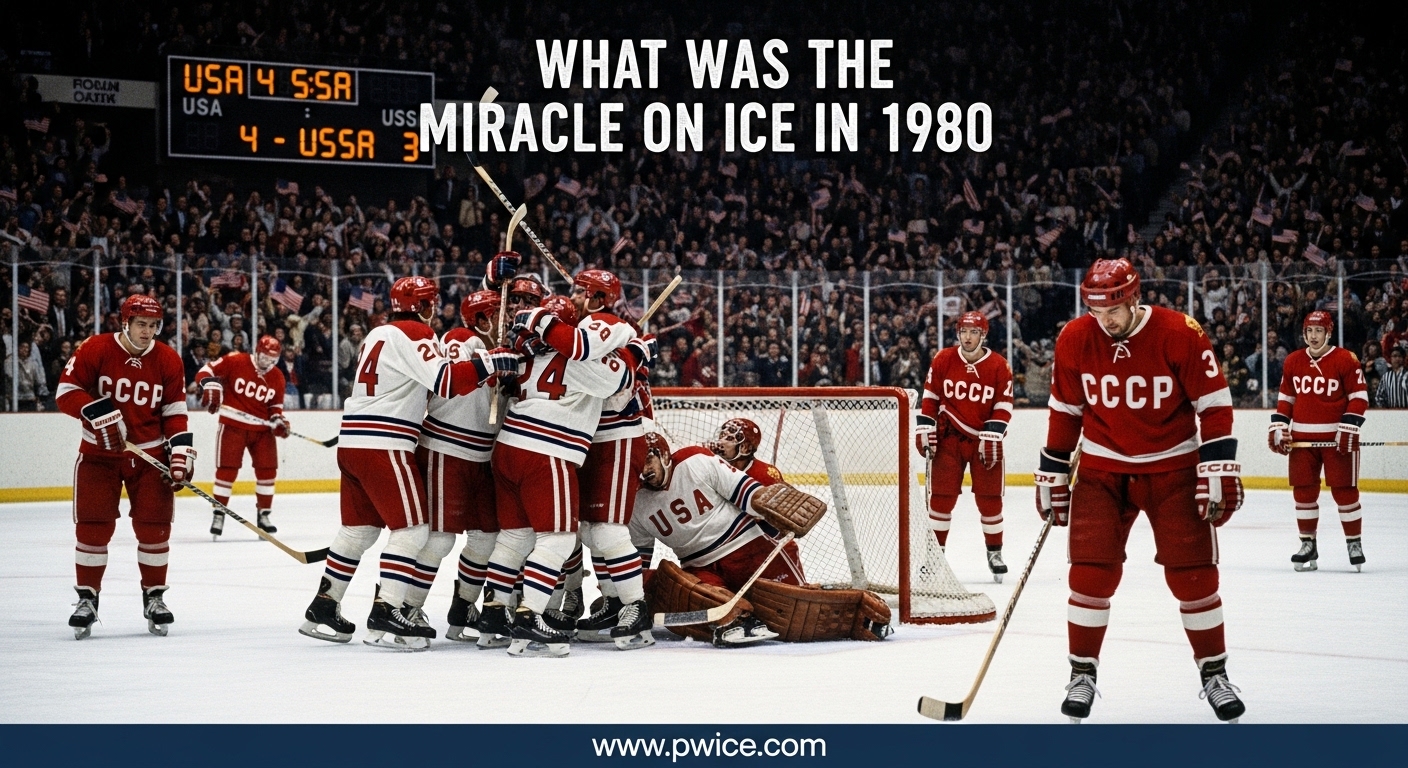
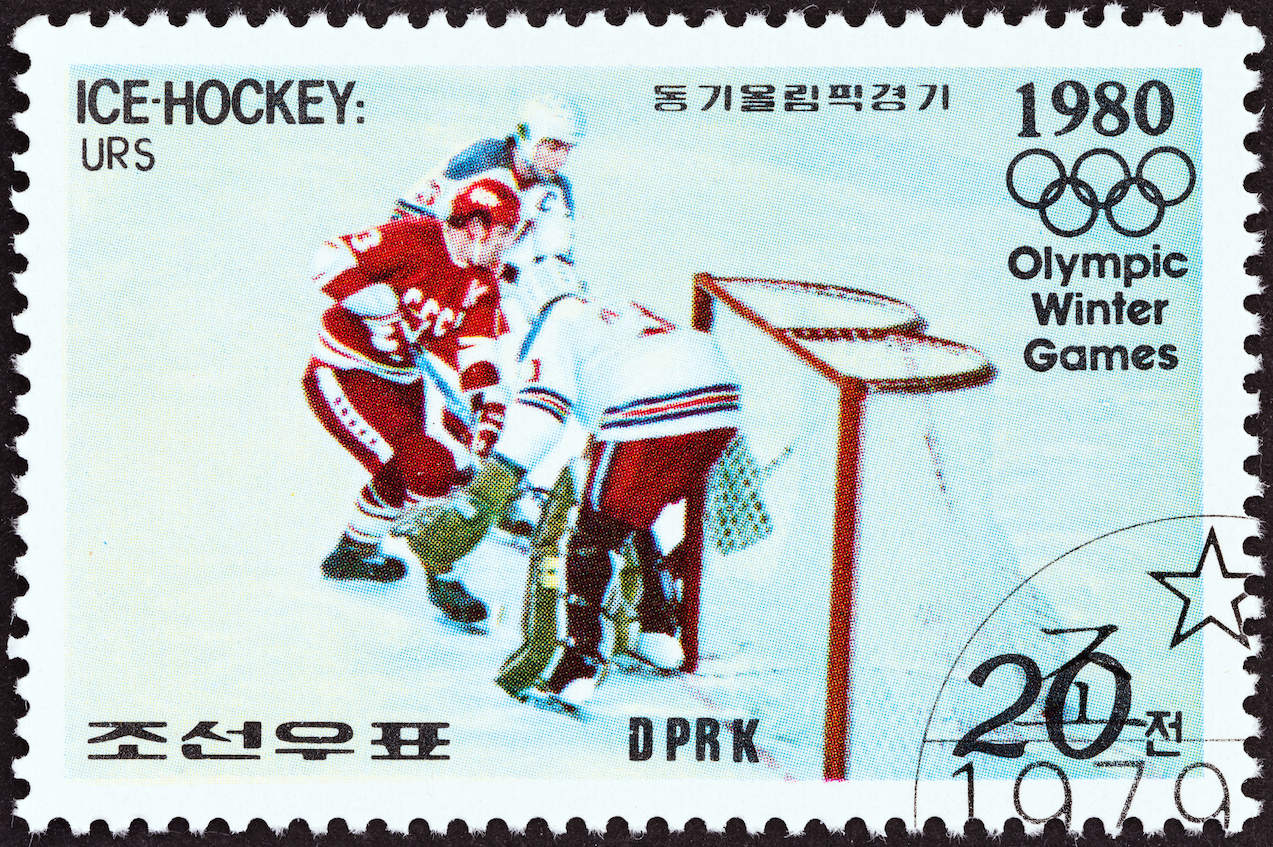
The 1980 United States Olympic ice hockey team achieved what is widely regarded as the greatest upset in sports history by defeating the heavily favored Soviet Union team 4-3 at the Winter Olympics in Lake Placid, New York. Beyond the famous television call and the Cold War backdrop lies an untold story of meticulous psychological conditioning, unprecedented physical endurance, and a radical tactical shift orchestrated by head coach Herb Brooks that forged a band of collegiate amateurs into an unstoppable unit.
The Geopolitical and Athletic Landscape of 1980
To understand the magnitude of the Miracle on Ice, one must examine the state of international ice hockey in 1979 and 1980. The sport was dominated globally by the Soviet Union's national team, a powerhouse composed of seasoned professionals who competed under amateur status. These Soviet players were government-supported athletes who played together year-round in the Soviet Championship League and international tournaments, winning consecutive Olympic gold medals from 1964 through 1976. They routinely defeated National Hockey League (NHL) all-star teams in exhibition series, possessing a style of play characterized by flawless passing, surgical precision, and telepathic teamwork.
Conversely, the United States team was constructed entirely of amateur and collegiate players, primarily from rival universities in Minnesota and Boston. These young men had never played together at the international level. In an era before NHL players were permitted to participate in the Winter Olympic Games, assembling a competitive American squad required identifying the absolute best young talent in the country and accelerating their development through a brutal preparation schedule.
The political atmosphere further magnified the stakes. The late 1970s marked a period of intense geopolitical friction between the United States and the Soviet Union. Just months before the Lake Placid Games, the Soviet Union invaded Afghanistan, prompting U.S. President Jimmy Carter to issue an ultimatum that would eventually lead to the American boycott of the 1980 Summer Olympics in Moscow. The hockey game became a symbolic proxy conflict for the Cold War, placing an immense psychological burden on a roster of players whose average age was just 21 years old.
Herb Brooks and the Philosophy of Total Conditioning
The architect of the 1980 U.S. Olympic hockey team was Herb Brooks, a former University of Minnesota head coach and a member of the 1960 U.S. Olympic team who had been cut from the final roster just before those Games. Brooks possessed a brilliant tactical mind and an uncompromising dedication to physical fitness. He recognized early on that his players could not match the raw individual skill or the sophisticated passing game of the Soviet professionals if they played a traditional, North American physical style.
Instead, Brooks envisioned a hybrid system that combined the physical toughness and board-battling mentality of North American hockey with the speed, conditioning, and fluid passing of the European style. To implement this, he subjected his players to what became legendary training regimens designed to build unimaginable aerobic capacity.
| Training Phase | Objective | Key Components |
|---|---|---|
| Selection Camp | Roster reduction and baseline testing | Rigorous skating drills, psychological interviews |
| Exhibition Tour | Tactical integration and chemistry | 61 games played across Europe and North America |
| Peak Conditioning | Absolute fatigue resistance | "Legions of Dunns" skating sprints, continuous flow drills |
Brooks famously utilized a punishing skating drill known simply as "legs, agility, and conditioning"—though players and fans soon referred to it as skating "suicides" or running the line. When players showed a lack of discipline or effort during an exhibition game against the Norwegian national team, Brooks forced them to skate baseline sprints long after the stadium lights had been turned off. This shared suffering forged an unbreakable bond among the players, transforming a fractured group of regional rivals into a cohesive brotherhood.
Tactical Innovation: Breaking the Soviet Mold
While physical conditioning grabbed headlines, the tactical evolution of the U.S. team changed how the game was played. Traditional American hockey relied on dump-and-chase strategies and physical intimidation. Brooks instructed his team to keep possession of the puck, utilize short, crisp passes, and maintain constant motion in the offensive zone.
Furthermore, Brooks studied how the Soviet team exploited the wider international ice surface. He taught his defensemen to pinch in closer to the offensive blue line, cutting off clearing attempts and keeping constant pressure on the opposition. Offensively, he emphasized the concept of positionless hockey, where forwards and defensemen rotated fluidly to create odd-man rushes and confuse the structured defensive formations of the Soviet team.
This style required a level of physical endurance that defied conventional athletic wisdom. By the third period of games, when opponents typically tired, the U.S. team seemed to accelerate. This cardiovascular superiority became the decisive variable during the medal-round game against the Soviet Union on February 22, 1980.
The Road to Lake Placid and the Exhibition Shockwave
The journey to the medal round was fraught with skepticism. The media and sports analysts gave the U.S. team virtually no chance against the Soviets, especially after an exhibition game played at Madison Square Garden just three days before the Olympic tournament began. In that tune-up match, the Soviet Union thoroughly dismantled the United States, winning 10-3.
That blowout loss proved to be a masterclass in psychological manipulation by Herb Brooks. Rather than demoralizing the team, the defeat exposed every flaw in their defensive coverage and stripped away any lingering hubris. The players realized that if they played a conservative game, they would lose heavily. They had to play with absolute abandon, aggression, and tactical discipline.
The U.S. team opened tournament play with a dramatic 2-2 tie against Sweden, securing the point with a late-game extra-attacker goal by Bill Baker. This was followed by a stunning 7-3 victory over Czechoslovakia, a perennial world powerhouse. Consecutive wins against Norway, Romania, and West Germany propelled the United States into the medal round with a 4-0-1 record, setting up the historic showdown with the Soviet Union.
February 22, 1980: Inside the Miracle on Ice
The game at the Olympic Center in Lake Placid began under immense pressure. The Soviet Union struck first with a goal by Boris Mikhailov, but the U.S. answered when Buzz Schneider scored on a blistering slapshot from the left circle. After the Soviets scored again, U.S. coach Herb Brooks made a pivotal personnel change, replacing starting goaltender Jim Craig with backup Steve Janaszak briefly before Craig returned to play the game of his life.
With just seconds remaining in the first period, U.S. forward Mark Johnson intercepted an errant clearing pass by Soviet defenseman Valeri Vasiliev, deked around goaltender Vladislav Tretiak—who was controversially pulled by Soviet coach Viktor Tikhonov after that goal—and slipped the puck across the line to tie the game 2-2.
- 1st Period: Soviets Lead 2-1
- Johnson Intercepts & Scores at 19:59
- Tie Game 2-2 at First Intermission
The second period saw the Soviet Union dominate play, capitalizing on a power play to take a 3-2 lead. Yet, the U.S. defense, anchored by Craig's 36 total saves, held firm against wave after wave of attacks.
In the third period, the conditioning instilled by Brooks paid catastrophic dividends for the Soviets. Fatigue set in, and the U.S. team intensified its forecheck. At 8:39 of the third period, Mark Johnson scored his second goal of the game on a power play, squeezing a loose puck past backup goaltender Vladimir Myshkin to tie the score 3-3.
The decisive moment arrived at 10:00 of the third period. Team captain Mike Eruzione received a pass from Mark Pavelich in the slot, settled the puck, and fired a wrist shot past Myshkin to give the United States a 4-3 lead. The final ten minutes of the game tested the collective nerves of a nation. As the clock wound down, broadcaster Al Michaels delivered his immortal countdown: "Do you believe in miracles? Yes!"
The Gold Medal Final and the Legacy of the Victory
Many casual sports fans forget that beating the Soviet Union did not automatically secure the gold medal; it merely advanced the United States to the gold-medal game against Finland. On February 24, 1980, a fatigued and emotionally drained U.S. team faced Finland. Trailing 2-1 after two periods, the team rallied in the third period with three unanswered goals to win 4-2, officially capturing the Olympic gold medal.
The impact of the 1980 Miracle on Ice extended far beyond the medal podium. The victory catalyzed a massive surge in the popularity of ice hockey throughout the United States. Prior to 1980, elite hockey talent was heavily concentrated in traditional cold-weather regions like Minnesota, Michigan, and New England. In the decades following the upset, youth hockey programs experienced unprecedented exponential growth across non-traditional markets nationwide.
Furthermore, the success of these American amateurs fundamentally shifted the perspective of the National Hockey League. NHL executives and general managers recognized the untapped potential of American-born players and college hockey development systems. In the years that followed, the pipeline from U.S. collegiate programs to the NHL expanded dramatically, paving the way for future generations of American hockey superstars who would go on to win Stanley Cups and international championships.
Frequently Asked Questions
Why was the 1980 U.S. hockey team considered such a massive underdog?
The U.S. roster consisted entirely of amateur and collegiate players with an average age of 21, whereas the Soviet team was composed of seasoned state-supported professionals who had won the previous four Olympic gold medals and routinely defeated NHL all-star teams.
Did the U.S. team win the gold medal immediately after beating the Soviet Union?
No. Beating the Soviet Union advanced the United States to the final medal round. The U.S. still had to defeat Finland on February 24, 1980, to secure the gold medal, which they accomplished with a 4-2 comeback victory.
Who scored the winning goal against the Soviet Union?
Team captain Mike Eruzione scored the game-winning goal at 10:00 of the third period, breaking a 3-3 tie to give the United States a 4-3 lead that they held until the final buzzer.
Why did the Soviet coach pull goaltender Vladislav Tretiak during the game?
Soviet coach Viktor Tikhonov replaced legendary goaltender Vladislav Tretiak with backup Vladimir Myshkin after Tretiak gave up a last-second goal to Mark Johnson at the end of the first period. Tikhonov later called this substitution the biggest mistake of his coaching career.
How did Herb Brooks prepare his team to beat the Soviets?
Herb Brooks implemented an intense, European-style conditioning program and tactical system focused on speed, puck possession, and relentless cardiovascular endurance, allowing his young team to out-skate opponents in the third period.
Conclusion and Next Actions
The 1980 Miracle on Ice remains a defining moment in modern sports history, proving that disciplined preparation, collective chemistry, and audacious belief can overcome seemingly insurmountable odds. For those looking to explore this historic event further, consider visiting the Lake Placid Olympic Center where the game took place, examining the comprehensive archives at the U.S. Hockey Hall of Fame in Eveleth, Minnesota, or studying the detailed coaching methodologies outlined in sports science literature regarding Herb Brooks' training programs.