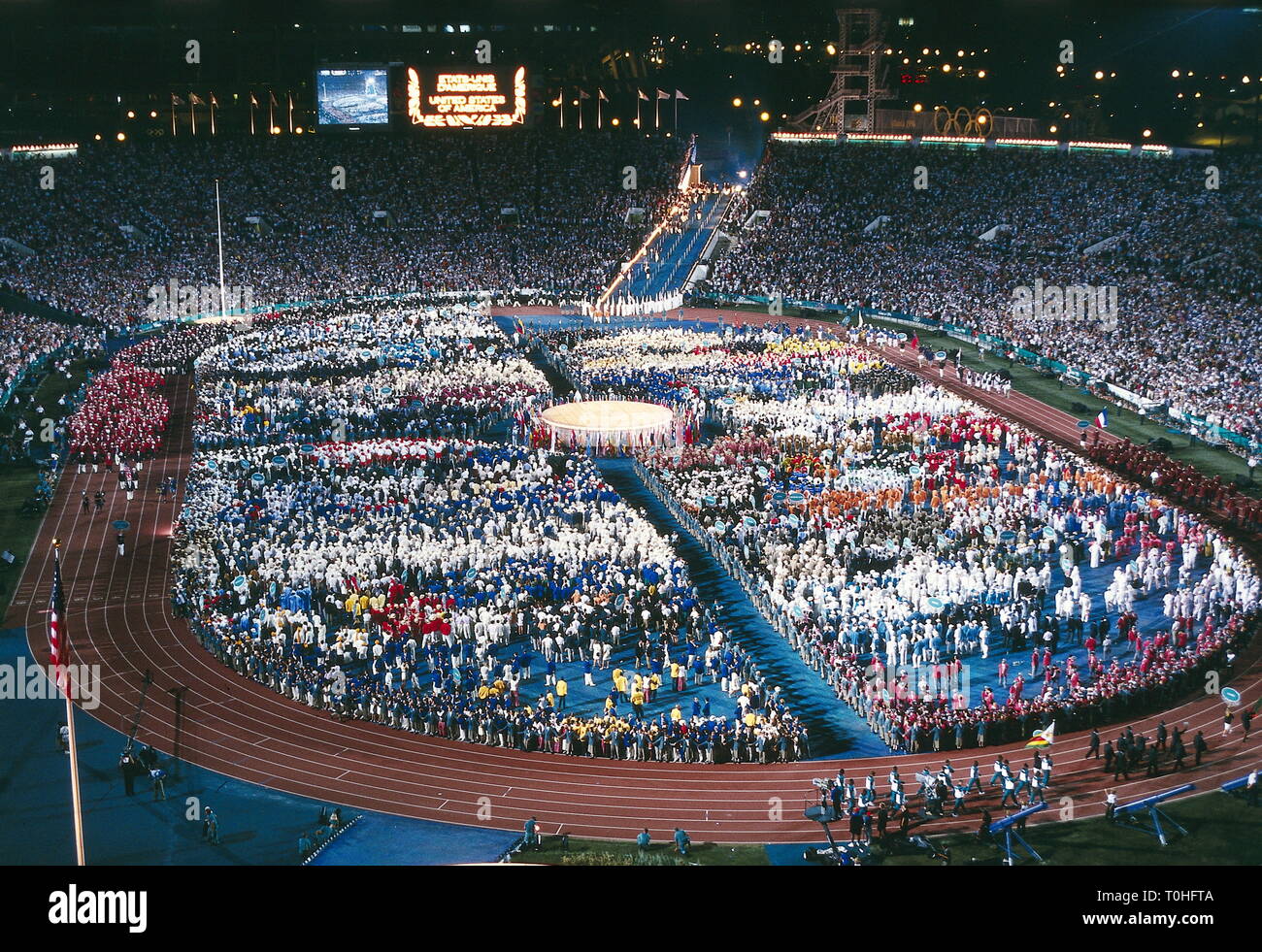
The 1996 Summer Olympics, officially known as the Games of the XXVI Olympiad, were held in Atlanta, Georgia, United States, from July 19 to August 4, 1996. Marking the centennial of the modern Olympic Games—which began in Athens in 1896—these Games brought together a record number of nations and athletes while leaving a complex, lasting economic, cultural, and infrastructural legacy for the host city and the international sports community.
Historical Context and the Selection of Atlanta
The journey to the 1996 Summer Olympics began years before the opening ceremony, rooted in urban ambition, civic leadership, and fierce international competition. In the late 1980s, Atlanta was a rising economic power in the American Southeast, eager to project its status on the global stage. Led by former UN Ambassador Andrew Young and local businessman Billy Payne, the Atlanta Olympic Committee formed in 1987 to pursue the bid for the centennial Games.
The competition was formidable. Atlanta competed against Athens, Greece—the sentimental favorite to host the centennial games—as well as major international cities including Toronto, Melbourne, Manchester, and Belgrade. Despite initial skepticism from international sports officials regarding Atlanta's infrastructure and the intense southern summer heat, the city's bid emphasized state-of-the-art facilities, existing corporate backing from companies like Coca-Cola and Delta Air Lines, and a meticulously organized financial plan.
On September 18, 1990, in Tokyo, the International Olympic Committee (IOC) announced that Atlanta had won the bid for the 1996 Summer Olympics, defeating Athens in the final round of voting. While the decision was celebrated locally, it sparked international debate regarding whether the sentimental significance of returning to Athens for the centennial outweighed Atlanta's modern commercial proposal. This tension between tradition and commercialization would characterize much of the narrative surrounding the Atlanta Games.
Scale, Participation, and Athletic Milestones
The 1996 Summer Olympics achieved unprecedented global reach. For the first time in Olympic history, all member nations of the International Olympic Committee—197 at the time—participated, overcoming long-standing geopolitical divides and boycotts that had plagued previous decades, such as the 1980 Moscow and 1984 Los Angeles Games. More than 10,300 athletes competed across 271 events in 26 sports.
The Games introduced several new sports and disciplines to the Olympic program, reflecting changing global athletic trends and youth culture. Beach volleyball, mountain biking, softball, and lightweight rowing made their official Olympic debuts in Atlanta, quickly becoming fan favorites and permanent fixtures of subsequent programs. Association football (soccer) expanded to include women's tournaments, a milestone that significantly accelerated the growth of women's sports globally.
Athletically, the Atlanta Games produced iconic moments that remain etched in sports history:
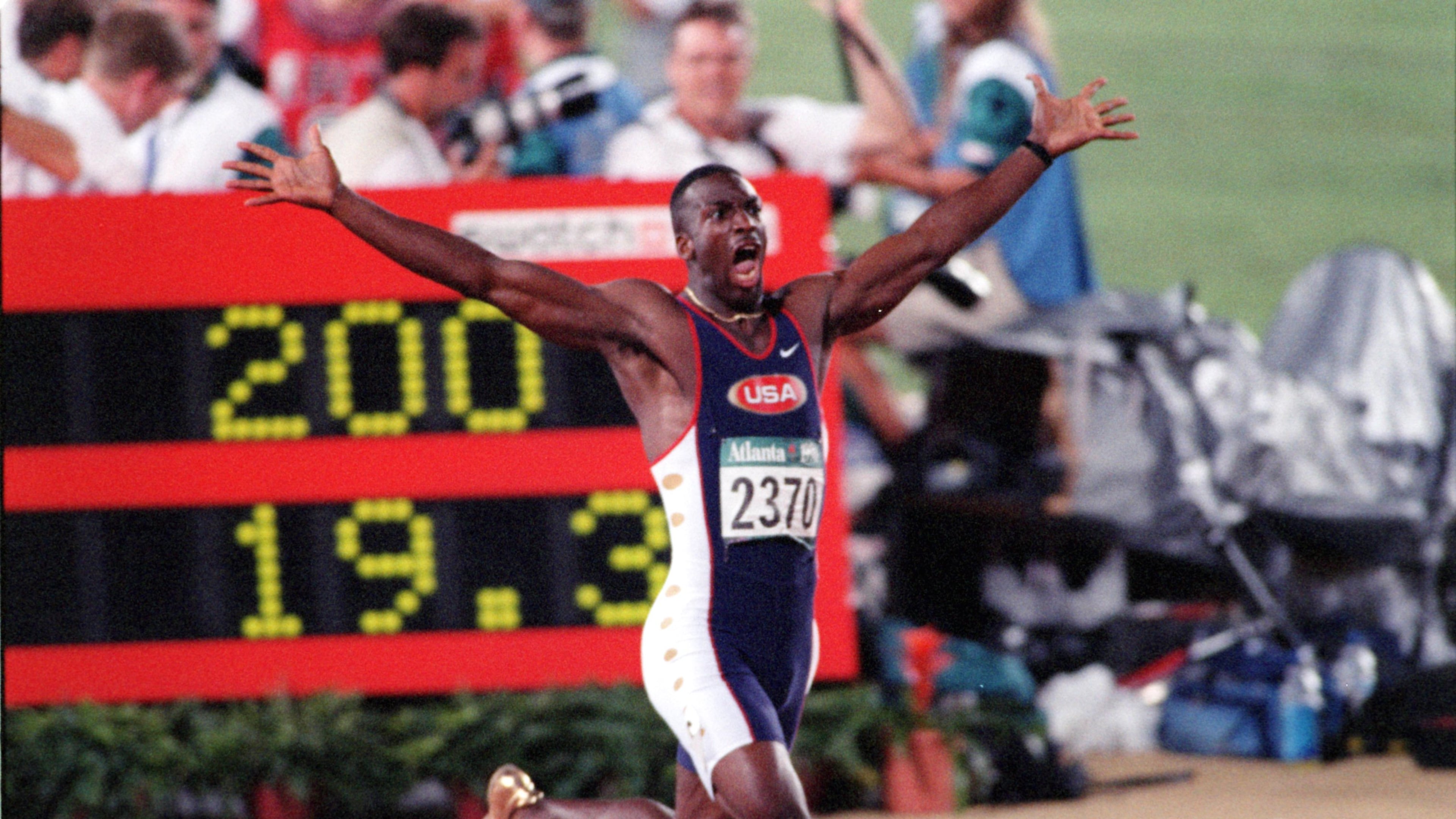
- Michael Johnson's Double: American sprinter Michael Johnson electrified the world by winning gold in both the 200-meter and 400-meter races, setting a world record of 19.32 seconds in the 200 meters that stood for over a decade. He achieved this feat while wearing custom gold-colored spikes.
- The Magnificent Seven: The United States women's gymnastics team, nicknamed the "Magnificent Seven," captured the first-ever team gold medal for the U.S. in gymnastics. A defining moment occurred when injured gymnast Kerri Strug successfully landed her second vault on an injured ankle to secure the gold.
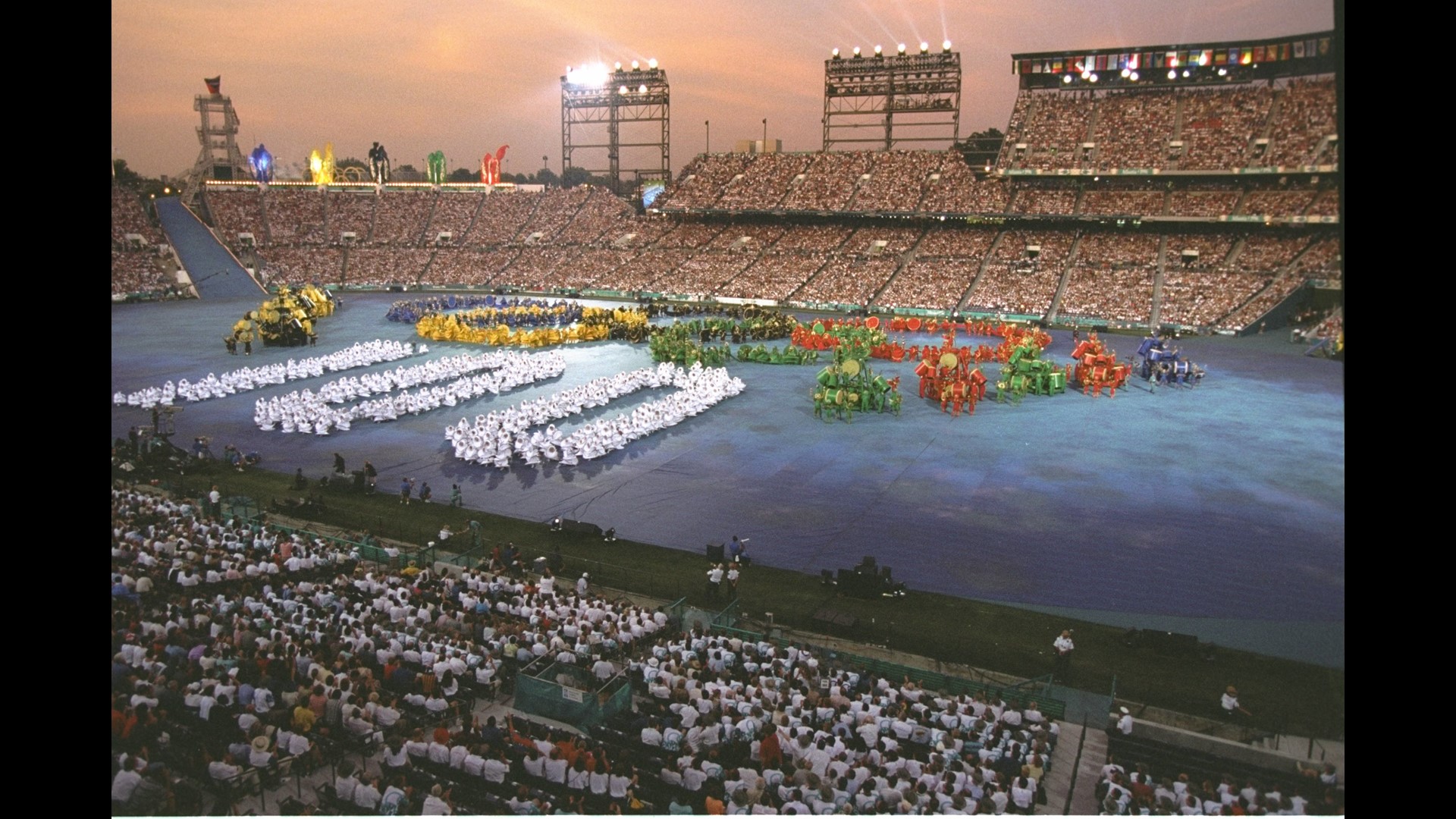
- Ali's Lighting of the Flame: In one of the most emotional moments in Olympic history, boxing legend Muhammad Ali—battling Parkinson's disease—lit the Olympic flame during the opening ceremony at Centennial Olympic Stadium, uniting the stadium and billions of television viewers worldwide.
- Dominique Dawes and Marie-José Pérec: Dawes became the first African American gymnast to win an individual Olympic medal (bronze on the floor exercise), while French sprinter Marie-José Pérec won the 200m and 400m, cementing her status as one of track and field's greatest athletes.
Infrastructure Development and Urban Transformation
Preparing a sprawling southern metropolis for millions of global visitors required a massive construction and revitalization effort. Unlike many subsequent Olympic hosts that relied entirely on government funding, the Atlanta Committee for the Olympic Games (ACOG) funded the vast majority of the event through private investment, corporate sponsorships, ticket sales, and television broadcasting rights, minimizing taxpayer burden.
Major infrastructure projects transformed downtown Atlanta and the surrounding region:
- Centennial Olympic Stadium: Built specifically for the Games with a capacity of 85,000, the stadium hosted the opening and closing ceremonies as well as track and field events. After the Games, it was structurally reconfigured into Turner Field, a baseball-specific stadium for the Atlanta Braves, before later becoming Center Parc Stadium for Georgia State University football.
- The Georgia Dome: Opened in 1992 ahead of the Games, this massive indoor facility hosted gymnastics and basketball finals, showcasing modern architectural design.
- Centennial Olympic Park: Designed as the "town square" of the Games, this 21-acre public park provided a central gathering space for spectators, athletes, and broadcasters, serving as the cultural heart of the event.
- Olympic Village: Located on the campus of the Georgia Institute of Technology (Georgia Tech) and Georgia State University, the housing complexes provided modern accommodations for athletes and were later integrated back into student housing.
Despite these successes, the infrastructural push faced criticism. Critics pointed to the displacement of low-income residents in neighborhoods surrounding downtown Atlanta, as urban renewal projects cleared blighted areas to make way for Olympic venues and beautification initiatives. The long-term efficacy of affordable housing integration remained a point of debate among urban planners for years following the event.
Security Challenges: The Centennial Olympic Park Bombing
The most somber chapter of the 1996 Summer Olympics occurred on July 27, 1996, in the middle of the Games. A pipe bomb packed with shrapnel was detonated in Centennial Olympic Park during a late-night concert. The blast killed spectator Alice Hawthorne and injured 111 others. A cameraman, Mel Maher, also suffered a fatal heart attack during the chaos following the explosion.
Security guard Richard Jewell discovered the backpack containing the bomb prior to the detonation and alerted law enforcement, helping to evacuate the immediate area and likely saving numerous lives. Initially hailed as a hero, Jewell became the focus of an intense and flawed FBI investigation and media scrutiny before being completely exonerated months later.
The true perpetrator, domestic terrorist Eric Rudolph, evaded capture for years before being arrested in 2003. He was subsequently sentenced to multiple life imprisonments without the possibility of parole.
Despite the tragedy, the Olympic organizers and security forces made the decision not to suspend the Games. IOC President Juan Antonio Samaranch declared that the Games must go on, and athletes returned to competition within hours, framing the response as a testament to resilience against terrorism.
Medal Standings and Global Performance
The competitive landscape of the 1996 Summer Olympics reflected a shifting global balance of power in sports following the dissolution of the Soviet Union. While Russia and other post-Soviet states still competed powerfully under various banners, the United States dominated the overall medal table.
| Nation | Gold | Silver | Bronze | Total |
|---|---|---|---|---|
| United States (USA) | 44 | 32 | 25 | 101 |
| Russia (RUS) | 26 | 21 | 16 | 63 |
| Germany (GER) | 20 | 18 | 27 | 65 |
| China (CHN) | 16 | 22 | 12 | 50 |
| France (FRA) | 15 | 7 | 15 | 37 |
The performance of emerging sporting nations highlighted how globalization and sports science investments were altering international competition. China continued its ascent as a global sporting powerhouse, particularly in diving, weightlifting, and gymnastics.
Legacy and Long-Term Impact
Decades after the closing ceremony, the legacy of the 1996 Summer Olympics remains multifaceted, influencing Atlanta’s urban identity, transportation systems, and economic standing.
- Global Brand Recognition: Hosting the Games elevated Atlanta from a regional southern hub into a truly international city, boosting tourism, foreign investment, and corporate headquarters relocation over the subsequent decades.
- Public Space and Urban Revitalization: Centennial Olympic Park remains a thriving public green space in downtown Atlanta, serving as a catalyst for surrounding commercial and residential development, including the Georgia Aquarium and the National Center for Civil and Human Rights.
- Technological and Broadcast Evolution: The Atlanta Games were the first to utilize the internet extensively for real-time results and media distribution, laying the groundwork for modern digital sports journalism and data tracking.
- Corporate-Led Model: The heavy reliance on private financing established a new precedent for Olympic bidding and management, prompting subsequent host cities to re-evaluate public spending models.
Frequently Asked Questions
Who lit the Olympic flame at the 1996 Summer Olympics?
Boxing legend Muhammad Ali lit the Olympic flame during the opening ceremony. The surprise appearance became one of the most enduring and emotional moments in Olympic history, celebrated globally.
Why were the 1996 Olympics controversial?
The Games faced criticism regarding commercialization, corporate sponsorship dominance by companies like Coca-Cola, transportation congestion during the early days of the event, and the commercial atmosphere of Centennial Olympic Park, which critics dubbed the "Midway" due to corporate branding.
What sports made their Olympic debut in Atlanta?
Beach volleyball, mountain biking, softball, and lightweight rowing all made their official debut as medal events at the 1996 Summer Olympics.
How were the 1996 Olympics funded?
Unlike many previous and subsequent Games funded heavily by public taxes, the Atlanta Olympics were financed almost entirely through private funds, including corporate sponsorships, ticket sales, television broadcasting rights, and merchandise, organized by the Atlanta Committee for the Olympic Games.
What security incident impacted the Atlanta Games?
On July 27, 1996, a domestic terrorist bomb exploded in Centennial Olympic Park, killing one person directly, causing a fatal heart attack in another, and injuring 111 others. Security guard Richard Jewell discovered the device before detonation, helping evacuate the area.
Conclusion and Historical Significance
The 1996 Summer Olympics stand as a monumental chapter in modern sports history, balancing athletic triumph, technological advancement, and organizational innovation against the backdrop of commercial debate and tragic adversity. By successfully uniting every IOC member nation for the centennial celebration, Atlanta left a permanent imprint on the Olympic movement and reshaped its own urban destiny.