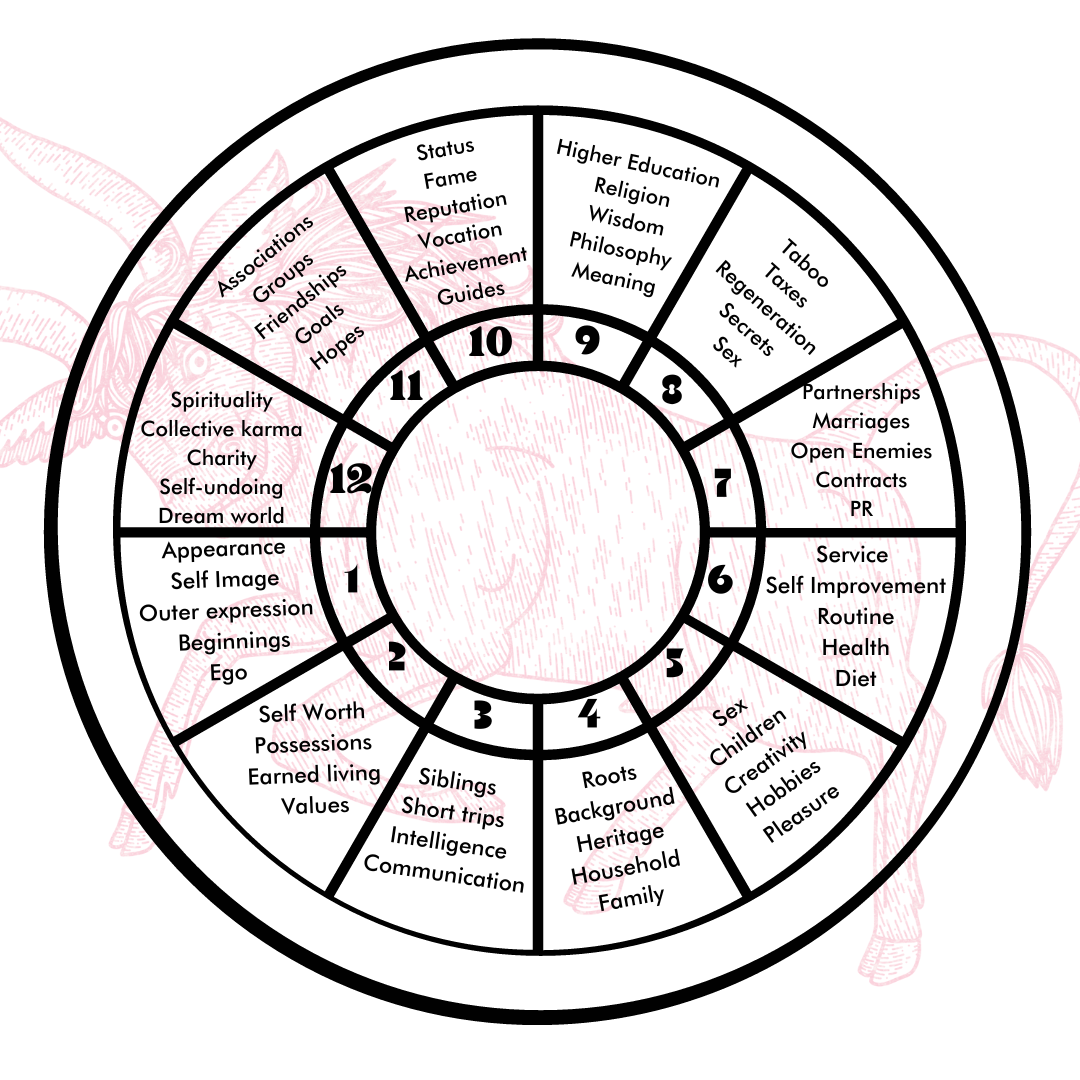
In astrology, the 12 houses represent the different arenas of life where planetary energies manifest. While your zodiac signs describe "how" you act and planets describe "what" is acting, the houses define the specific "where"—the physical and situational environments like your career, home, and relationships.
Understanding the 12 houses is essential for moving beyond basic sun-sign horoscopes and into the nuanced world of professional natal chart interpretation. As we navigate the astrological landscape of 2026, practitioners continue to emphasize the houses as the structural foundation of the birth chart. Without the houses, a planet is merely a wanderer; within a house, that planet finds its specific purpose and field of operation.
The Structural Foundation of the Astrological Houses
Before examining each house individually, it is necessary to understand how the house system is constructed. The 12 houses are based on the Earth's 24-hour rotation on its axis. This is why two people born on the same day, but a few hours apart, will have the same planetary placements in different houses, resulting in vastly different life experiences.
The Four Angles
The most critical points in the house system are the "angles," which form the cross of the chart:
- The Ascendant (1st House Cusp): The eastern horizon at the moment of birth. It represents the self and how you project yourself to the world.
- The Imum Coeli (4th House Cusp): The lowest point of the chart, representing your roots, private life, and foundations.
- The Descendant (7th House Cusp): The western horizon, representing how you relate to others in one-on-one partnerships.
- The Midheaven (10th House Cusp): The highest point of the chart, representing your public reputation, career, and highest aspirations.
House Systems: Placidus vs. Whole Sign
In 2026, the debate between house systems remains a significant topic among students. The Placidus system is the most common in modern Western astrology; it calculates houses based on time, often resulting in houses of unequal sizes. Conversely, the Whole Sign system, which dates back to Hellenistic traditions, assigns one full zodiac sign to each house, starting with the rising sign. Both systems are valid, though beginners often find Whole Sign more intuitive for initial study, while Placidus offers psychological depth regarding "intercepted" signs.
Detailed Meaning of the 12 Astrological Houses
The First House: The House of Self
The First House begins at the Ascendant and governs the physical body, outward personality, and first impressions. It is the "filter" through which you see the world and the world sees you. Planets located here have a profound impact on your vitality and your approach to new beginnings.
As the "House of Self," it dictates your "brand" or persona. If you have Mars in the first house, you may appear assertive or athletic. If Venus resides here, you might possess a natural charm or a strong focus on aesthetics. This house is the ultimate indicator of your "I Am" presence in the world.
The Second House: The House of Values and Possessions
The Second House governs what you own, what you value, and your relationship with the material world. While often simplified as "the money house," it encompasses much more, including your self-worth and innate talents that you use to generate income.
This house reveals your financial habits, your sense of security, and your physical senses. It is where we find our "moveable" assets—things we can take with us. A strong emphasis in the second house suggests a life where building a tangible legacy and securing comfort are primary motivators.
The Third House: The House of Communication
The Third House handles the immediate environment. This includes your communication style, your siblings, your neighbors, and short-distance travel. It also governs early education and how your mind processes information on a day-to-day basis.
In the digital age of 2026, the Third House also relates to your presence on social media and your local community interactions. It is the house of the "lower mind," focusing on facts, data, and technical skills rather than abstract philosophy.
The Fourth House: The House of Home and Family
The Fourth House sits at the bottom of the chart, representing your private life and the "roots" of your being. It governs your home environment, your ancestry, your parents (traditionally the father or the nurturing parent), and your sense of domestic security.
This is the most hidden part of the chart. It represents the psychological foundation upon which you build your public life. Planets here describe the atmosphere of your childhood home and what you require to feel emotionally "at home" as an adult.
The Fifth House: The House of Pleasure and Creativity
The Fifth House is where we find joy, creativity, romance, and children. It governs all forms of self-expression, from artistic pursuits to the "procreation" of ideas or offspring. It is also the house of speculative risks, gambling, and "fun" for its own sake.
If you have many planets in the Fifth House, you likely have a strong need to be seen and celebrated for your unique talents. It is the house of the "inner child," reminding us that life is not just about work, but about the heart’s desires.
The Sixth House: The House of Health and Service
The Sixth House moves into the realm of daily responsibility. It governs your work environment (specifically day-to-day tasks rather than your overall career path), your health habits, your routines, and your service to others. It also traditionally relates to small pets.
This house is about the maintenance of the "machine" that is your life. It shows how you deal with chores, physical fitness, and the necessary but often mundane aspects of existence. High activity here often indicates someone who finds fulfillment in being useful and organized.
The Seventh House: The House of Partnerships
The Seventh House is the first house "above the horizon," shifting the focus from the "self" to the "other." It governs marriage, business partnerships, and legal contracts. Interestingly, it also governs "open enemies"—people with whom you have a clear, documented conflict.
While the First House is who you are, the Seventh House is who you are drawn to. We often project the qualities of our Seventh House onto our partners. For example, someone with Saturn in the Seventh may seek a partner who is disciplined, older, or provides a sense of structure.
The Eighth House: The House of Transformation
The Eighth House is one of the most complex and misunderstood sectors. It governs shared resources (money from others, taxes, inheritances), intimacy, and deep psychological transformation. It is the house of "birth, death, and taxes."
This house deals with the things we keep hidden or the things we must "merge" with others. It is where we find the "shadow self." Planets here suggest a life filled with deep shifts and the need to let go of old versions of the self to be reborn.
The Ninth House: The House of Philosophy
The Ninth House represents the "higher mind." It governs long-distance travel, higher education (university and beyond), religion, philosophy, and law. While the Third House is about "facts," the Ninth House is about "meaning."
This is the house of the seeker. It describes your belief systems and your desire to expand your horizons, whether physically through travel or mentally through study. It is where we seek to understand our place in the cosmic order.
The Tenth House: The House of Public Status
The Tenth House, topped by the Midheaven, is the highest point of visibility. it governs your career, your reputation, your social standing, and your legacy. It also represents authority figures and the "public" parent.
Unlike the Sixth House (which is about the work you do), the Tenth House is about who you become because of that work. It is the summit of your ambitions. Planets here are very prominent and often define how the public perceives you.
The Eleventh House: The House of Community
The Eleventh House governs friendships, social circles, humanitarian groups, and your hopes and wishes for the future. It is the house of collective action and the "greater good."
While the Seventh House is one-on-one, the Eleventh is one-to-many. It describes your ability to collaborate and find your "tribe." It is also the sector where we manifest our long-term visions and social ideals.
The Twelve House: The House of the Unconscious
The Twelfth House is the final sector, representing endings, the subconscious, spirituality, and solitude. It governs things that are "hidden from view," such as hospitals, prisons, and retreats, but also the vast ocean of the collective unconscious.
Planets in the Twelfth House can be difficult to access because they operate "behind the scenes." This is the house of karma and self-undoing, but also of profound spiritual transcendence. It is where we dissolve the ego to prepare for the rebirth of the First House.
Technical Summary: House Classifications
Understanding the "quality" of a house helps in prioritizing its influence. Astrology categorizes the 12 houses into three groups: Angular, Succedent, and Cadent.
| House Type | Houses | Description | Energy |
|---|---|---|---|
| Angular | 1, 4, 7, 10 | The pillars of the chart; houses of action. | Dynamic, initiating, highly visible. |
| Succedent | 2, 5, 8, 11 | Houses of stability; they support the angles. | Stable, resourceful, consolidating. |
| Cadent | 3, 6, 9, 12 | Houses of transition and learning. | Adaptable, mental, preparatory. |
Practical Application: How to Read the Houses
When you look at an astrological chart in 2026, you aren't just looking at the houses in isolation. You must combine the Planet, the Sign, and the House.
1. Planets in Houses
A planet in a house is like a guest in a room. The planet (the actor) performs its function (the what) within the environment of the house (the where). For example, if Jupiter (abundance/growth) is in the Second House (money), the individual may experience growth through financial means or a "larger than life" approach to their possessions.
2. The Ruler of the House
What if a house is empty? An empty house does not mean that area of life is inactive. Instead, you look at the zodiac sign on the cusp of that house. You then find the "ruling planet" of that sign and see where it is located in the chart.
- Example: If your empty 10th House (Career) starts in Aries, the ruler is Mars. If Mars is in your 2nd House (Money), your career success is directly linked to your ability to generate personal wealth or use your physical talents.
3. House Stelliums
A "stellium" occurs when three or more planets are clustered in a single house. This creates an intense focus on that specific area of life. A person with a 4th House stellium may spend their entire life focused on family dynamics, real estate, or internal emotional work, regardless of their career or social status.
Common Mistakes in House Interpretation
- Over-identifying "Bad" Houses: Beginners often fear the 8th and 12th houses because they deal with "death" and "undoing." However, in modern 2026 practice, these are seen as essential sectors for psychological growth and spiritual liberation.
- Ignoring the Cusp: The exact degree where a house begins is the "cusp." If a planet is within 3–5 degrees of the next house cusp, many astrologers consider it to be acting in the next house.
- Confusing Signs with Houses: While the First House is "naturally" associated with Aries, they are not the same thing. You can have a First House in Libra, which would mean you approach your "self" and "beginnings" with a focus on balance and partnership rather than Aries-like impulsivity.
Frequently Asked Questions
What does it mean if I have an empty house?
An empty house simply means there is no major planetary "actor" stationed there permanently. It does not mean you won't have a career (10th house) or a partner (7th house). You must look at the ruling planet of the sign on the cusp to understand how that area of life functions.
Which house system is the most accurate?
There is no single "most accurate" system. The Placidus system is excellent for psychological modern astrology, while the Whole Sign system is often preferred for predictive and traditional astrology. As of 2026, many professionals suggest trying both to see which "clicks" with your personal history.
Why is the First House called the Ascendant?
The First House begins at the Ascendant (or Rising Sign), which was the sign rising over the eastern horizon at the exact moment of your birth. This is why having an accurate birth time is vital for determining which planets fall into which houses.
Do house meanings change over time?
The core meanings remain stable, but their "manifestations" evolve. For instance, the 3rd House once primarily governed "letters and couriers"; in 2026, it governs "emails, instant messaging, and digital networking." The essence—communication—remains the same.
How do I find my house placements?
To find your house placements, you need your date of birth, your exact birth time (from a birth certificate), and your birth location. You can then use any reputable 2026 astrological software or online calculator to generate your natal chart.
Practical Recommendation for Further Study
To master the 12 houses, start by identifying the house where your Sun, Moon, and Chart Ruler (the planet that rules your Ascendant) are located. Observe how these three placements describe your primary life focus. Once you understand your own "where," begin comparing your chart to friends or family members to see how their planetary energies manifest in different sectors. For the most accurate results in 2026, consult an astrologer who can synthesize these houses with your current "transits"—the movements of planets today across your birth houses.