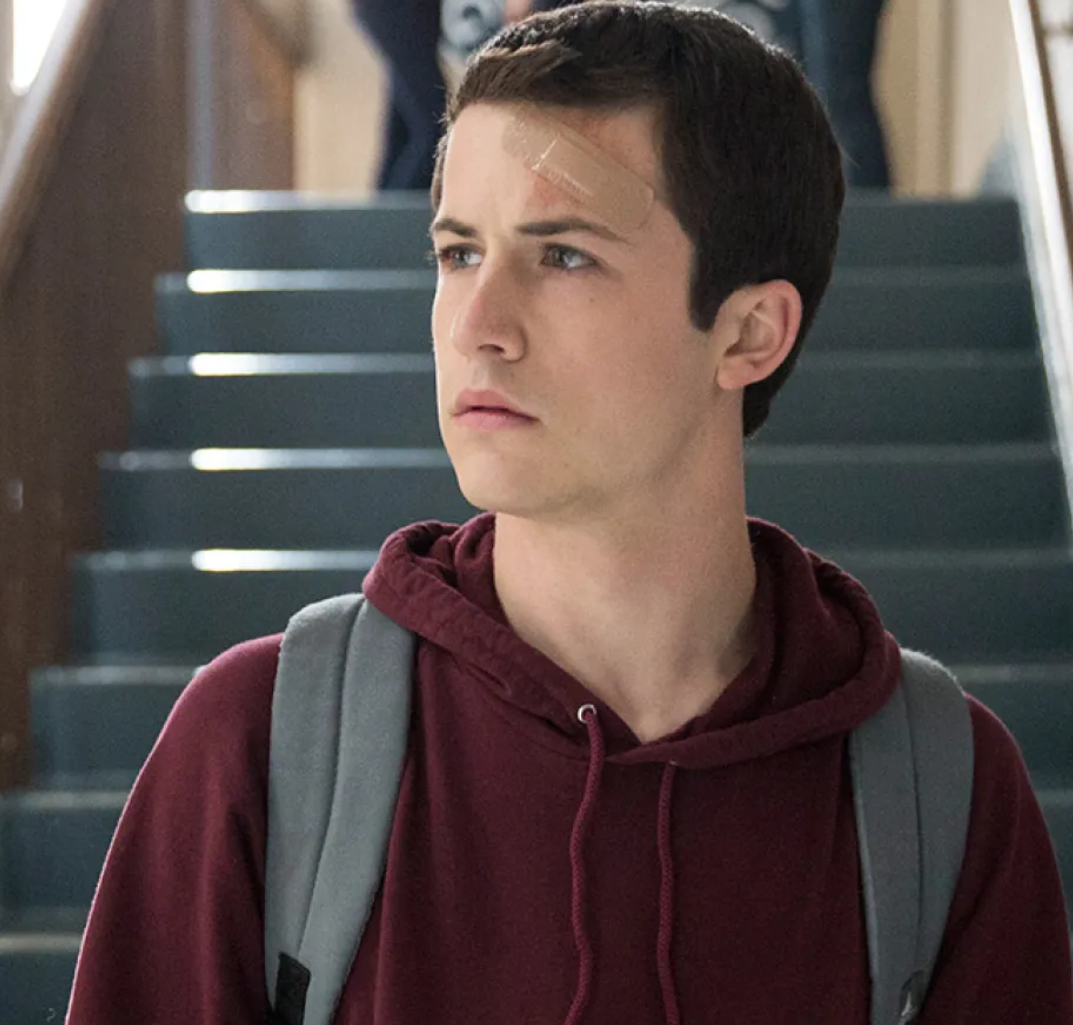
Dylan Minnette’s portrayal of Clay Jensen in the Netflix series 13 Reasons Why served as the emotional anchor of the controversial drama, tracing a complex trajectory from a grieving classmate into a psychologically fractured investigator carrying the weight of institutional secrets. As the narrative progressed across four seasons from 2017 to 2020, Minnette navigated rapid narrative shifts, intense fan scrutiny, and profound emotional demands that ultimately cemented his status as a defining television protagonist of the late 2010s.
The Genesis of Clay Jensen: Casting and Initial Premise
When Netflix adapted Jay Asher’s 2007 young adult novel 13 Reasons Why into a television series, the casting of the central protagonist was critical to the show's viability. Clay Jensen needed to feel like an ordinary, unassuming teenager thrust into an extraordinary and harrowing circumstance. Dylan Minnette, who had built a reliable resume in television and film including roles in Prison Break, Scandal, and the horror film Don't Breathe, stepped into the role with a grounded, understated screen presence that contrasted sharply with the high-concept premise.
In the first season, Clay is introduced as a quiet, introverted student at Liberty High School who receives a box of cassette tapes recorded by Hannah Baker (played by Katherine Langford), a classmate who died by suicide. Each tape outlines a specific person and circumstance she blames for her decision. Clay’s role functions as the audience’s proxy; he listens to the tapes sequentially, experiencing shock, grief, denial, and guilt.
Minnette's performance in this foundational season relied heavily on reaction shots, internal monologue delivery, and subtle shifts in body language. Unlike characters who reacted with immediate anger or grand gestures, Clay internalized his suffering. This choice gave the series an anchor of vulnerability, helping viewers process difficult subject matter through a character who felt bewildered, morally conflicted, and deeply human.
Narrative Evolution Across Four Seasons
As 13 Reasons Why moved beyond the source material of Jay Asher's novel after its first season, the writers pivoted the narrative focus from Hannah Baker's tapes to systemic corruption, institutional cover-ups, and the psychological aftermath of trauma within Liberty High School. This shift fundamentally altered Clay Jensen’s character arc, pushing him from a passive listener into an active, and frequently unstable, participant in a web of secrets and crimes.
| Season | Primary Narrative Focus | Clay Jensen's Role and Arc | Key Psychological Shift |
|---|---|---|---|
| Season 1 | Hannah Baker's tapes and immediate aftermath | Passive listener, moral investigator, grieving classmate | Shock and guilt transitioning into a quest for accountability |
| Season 2 | The trial against Liberty High School | Active participant in legal proceedings, protector of witnesses | Anger, defensiveness, and increasing obsession with justice |
| Season 3 | The murder investigation of Bryce Walker | Cover-up architect, protector of friends, moral compromise | Paranoia, ethical erosion, and mounting psychological distress |
| Season 4 | Graduation, mental health breakdown, and redemption | Crisis survivor, processing repressed trauma, closure | Severe dissociation followed by acceptance and healing |
This table outlines how Minnette had to adapt his performance style across the series run. While Season 1 required quiet grief, Seasons 3 and 4 demanded physical manifestations of anxiety, panic attacks, hallucinations, and deep moral compromises. Clay transitioned from a symbol of teenage innocence to a complex anti-hero burdened by the secrets he and his friends kept to protect one another.
Psychological Toll and the Portrayal of Mental Health
One of the most consequential aspects of Dylan Minnette’s role impact was his depiction of severe mental health struggles under extreme duress. As the series progressed, Clay’s grief manifested as clinical depression, severe anxiety, insomnia, and dissociative episodes. In Season 4 particularly, Clay experienced vivid hallucinations, losing touch with reality as he grappled with guilt over his actions and the deaths of classmates like Bryce Walker and Justin Foley.
Minnette approached these heavy storylines with a physical commitment that drew both praise and critical debate. His portrayal of panic attacks—characterized by hyperventilation, tremors, and cognitive disorientation—avoided the polished tropes often seen in television, presenting raw vulnerability.
However, the series itself faced intense scrutiny from mental health advocates, psychologists, and educators regarding its depiction of suicide, self-harm, and violence. While organizations like the Jed Foundation collaborated with Netflix to provide resource warnings and support lines, critics argued that the heavy emotional weight placed on Minnette's character sometimes bordered on sensationalism. Despite these external controversies, Minnette's grounded performance often acted as the emotional buffer that kept the show tethered to human stakes rather than pure melodrama.
Cultural Impact and Audience Reception
The cultural footprint of 13 Reasons Why remains a subject of intense academic and media analysis. At the height of its popularity between 2017 and 2018, the show dominated global pop culture discussions, turning its young ensemble cast into immediate international stars. For Dylan Minnette, the role solidified his transition from a dependable child actor and adolescent guest star to a leading man capable of carrying a massive, globally consumed franchise.
The reception of Clay Jensen among viewers was notably polarized, reflecting the shifting tone of the show:
- The Relatable Everyman: Early fans viewed Clay as a vital representation of teenage empathy, loyalty, and the devastating impact of unspoken feelings.
- The Frustrated Protagonist: As Clay made increasingly erratic decisions in later seasons, viewers frequently expressed frustration with his self-righteousness and cyclical trauma, though many acknowledged that these flaws made him more realistically human.
- The Transition Point: Industry analysts noted that the series allowed Minnette to demonstrate dramatic range, paving the way for his subsequent film choices, such as Scream (2022) and his work with the alternative rock band Wallows.
By anchoring a series that sparked necessary—albeit difficult—conversations about bullying, consent, and mental health, Minnette became permanently linked to a specific era of streaming television where teen dramas tackled prestige-level social issues.
Behind the Scenes: Transitioning Out of the Role
Stepping away from a character as consuming as Clay Jensen required a deliberate recalibration for Minnette. Having spent four formative years of his young adult life inhabiting a character defined by relentless trauma and high-stress scenarios, the conclusion of 13 Reasons Why in 2020 marked a clear professional turning point.
In interviews following the series finale, Minnette spoke candidly about the physical and emotional exhaustion of playing a character who was constantly crying, screaming, or experiencing a crisis. This exhaustion influenced his career choices immediately following the show's end. Rather than immediately jumping into another heavy dramatic television series, he balanced acting projects—such as starring in the fifth installment of the Scream franchise—with a concentrated focus on his music career as the lead vocalist and rhythm guitarist for Wallows.
This deliberate diversification protected him from typecasting, ensuring that his legacy in entertainment would not be permanently confined to the anxious, grief-stricken hallways of Liberty High School.
Summary of Role Impact
Dylan Minnette’s work in 13 Reasons Why remains a masterclass in sustaining a character through radical narrative shifts. Transforming Clay Jensen from a quiet literary archetype into a psychologically fractured focal point of a cultural firestorm required immense discipline, emotional availability, and stamina. While the series itself remains a lightning rod for discussions regarding media responsibility and teen mental health representation, Minnette's performance successfully grounded its most chaotic elements in authentic human emotion.
Frequently Asked Questions
How old was Dylan Minnette when he started playing Clay Jensen?
Dylan Minnette was born in December 1996 and was approximately 20 years old when the first season of 13 Reasons Why premiered in March 2017, playing a high school junior who was roughly 17 years old.
Did Dylan Minnette perform his own stunts and intense emotional scenes?
Yes, Minnette handled the physical and emotional demands of Clay Jensen's extensive panic attacks, altercations, and psychological breakdown sequences across all four seasons, working closely with directors and intimacy/safety coordinators where applicable.
How did Clay Jensen's character change from Season 1 to Season 4?
In Season 1, Clay is primarily a passive investigator reacting to Hannah Baker's tapes. By Season 4, he evolves into an active participant in criminal cover-ups and experiences severe mental health crises, dissociation, and trauma responses before finally finding closure.
What impact did 13 Reasons Why have on Dylan Minnette's career?
The series served as Minnette's breakout leading role, elevating his global profile, demonstrating his dramatic range, and allowing him to successfully transition into major film projects and full-time dedication to his band, Wallows.
Did Dylan Minnette return for a reboot or continuation of the series?
No, 13 Reasons Why concluded definitively with its fourth season in July 2020, and no continuation, reboot, or spin-off has been produced or planned.
Conclusion and Next Action
To fully appreciate the scope of Dylan Minnette’s television work, viewers should watch 13 Reasons Why with a focus on his subtle physical acting in Season 1 contrasted against the explosive emotional breakdown scenes in Season 4. For further exploration, examine contemporaneous critical reviews of the series and interviews regarding the physical realities of long-term dramatic television acting.