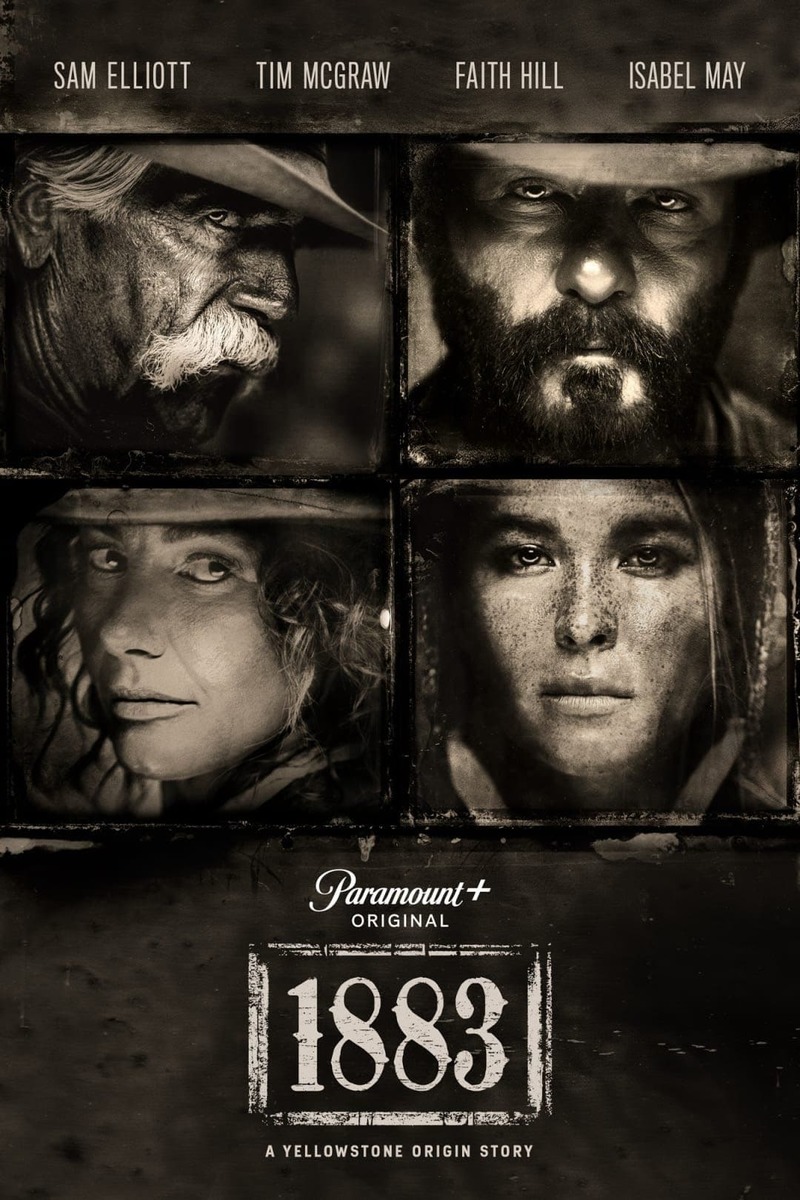
The limited series 1883 serves as the definitive origin story for the Dutton family dynasty, chronicling their arduous journey from Tennessee to Montana. Unlike traditional television productions that span multiple installments, 1883 was conceived and executed as a single, self-contained season, acting as a prequel to the modern Yellowstone saga by detailing the historical sacrifices required to establish the Yellowstone Ranch.
Understanding the Structure of the Yellowstone Universe
The Yellowstone franchise, created by Taylor Sheridan, has expanded into a complex web of historical and contemporary narratives. To understand 1883, it is essential to distinguish it from its successors and predecessors. 1883 is not a multi-season show; it is a finite, ten-episode event series that concludes the story of James and Margaret Dutton's initial westward expansion.
While viewers often search for "1883 seasons," the reality is that the story was designed with a beginning, middle, and end. The series provides the foundational context for why the Duttons occupy the land that becomes the Yellowstone Dutton Ranch. It bridges the gap between the chaotic aftermath of the American Civil War and the eventual establishment of the powerful cattle empire depicted in the contemporary Yellowstone series.
The Narrative Arc: From Tennessee to the Paradise Valley
The story of 1883 centers on the Dutton family—James, Margaret, and their children, Elsa and John—joining a wagon train heading toward Oregon. Guided by the battle-hardened Shea Brennan and his partner Thomas, the caravan traverses the Great Plains, facing unforgiving terrain, disease, and the constant threat of banditry.
Elsa Dutton, the show’s primary narrator, provides a coming-of-age perspective that grounds the epic scope of the series. Her transition from a sheltered young woman to a frontierswoman surviving the harsh realities of the trail provides the emotional heartbeat of the origin story. The narrative culminates not in a sprawling settlement, but in the tragic and somber realization of their dream in Montana, which sets the geographic stage for all subsequent Yellowstone lore.
Key Characters and Their Roles in the Origin Story
The ensemble cast of 1883 represents the diverse groups of people involved in the Western expansion. Understanding these roles is crucial to grasping the thematic weight of the series:
- James Dutton (Tim McGraw): The patriarch whose stoic drive to find a place where his family can thrive defines the moral center of the journey.
- Margaret Dutton (Faith Hill): A resilient mother whose practical survival skills are as vital as her husband's protection.
- Elsa Dutton (Isabel May): The daughter whose experiences on the trail offer the audience an intimate, albeit harrowing, view of 19th-century frontier life.
- Shea Brennan (Sam Elliott): A Pinkerton agent seeking one last purpose after the loss of his own family, representing the transition from the lawlessness of the Civil War to the organized violence of the West.
- Thomas (LaMonica Garrett): An African American Buffalo Soldier who plays a pivotal role in the protection and navigation of the caravan.
Production and Historical Context
1883 was filmed with a rigorous attention to historical detail, utilizing real cattle drives and authentic wardrobe and period equipment. Production took place primarily in Texas and Montana, locations that mirror the real-life route of pioneers moving across the frontier.
The series is categorized as a "limited series," which distinguishes it from long-running broadcast dramas. As of 2026, there are no plans for a "second season" of 1883 because the intended narrative conclusion was met at the end of the tenth episode. Subsequent stories in the Yellowstone timeline are handled through other spin-offs, such as 1923, which follows the next generation of the Dutton family in a different socio-economic era.
Comparison of the Dutton Origin Series
To help viewers navigate the Yellowstone timeline, the following table compares the essential aspects of the prequel series.
| Series Name | Primary Setting | Focus | Status |
|---|---|---|---|
| 1883 | Post-Civil War | The migration and origin of the ranch | Limited Series (Complete) |
| 1923 | Prohibition/Depression | Generational survival and expansion | Multi-season |
| Yellowstone | Modern Day | Preservation of land and legacy | Multi-season |
Prerequisites for Understanding the Series
While 1883 serves as a prequel, you do not need to have watched Yellowstone to understand the plot of 1883. However, viewing them in order provides a richer context:
- Start with 1883: This establishes the "why" behind the Duttons’ attachment to their specific parcel of land.
- Move to 1923: This series explains how the family solidified their hold on the ranch amidst the changing landscape of the early 20th century.
- Engage with Yellowstone: The contemporary show focuses on the high-stakes political and legal battles of the current era, now informed by the historical context provided by the two prequels.
Common Misconceptions
A frequent point of confusion for audiences is the expectation of additional seasons of 1883. Because the series finale provides a definitive conclusion to the specific wagon train journey and the immediate fate of the characters, a second season would be narrative-inconsistent with the established timeline. When platforms or advertisements mention "Yellowstone origins," they are often referring to the franchise as a whole rather than a continuation of the 1883 plotline.
Additionally, some viewers confuse the 1883 characters with those in 1923. While they share the same bloodline, the characters in 1923 are distinct individuals dealing with different cultural shifts, such as the Great Depression and the aftermath of World War I.
Why the Story Ends in 1883
The choice of the year 1883 was deliberate. It represents the height of the westward migration, a time when the American frontier was still largely ungoverned and subject to the whims of the environment and individual willpower. By ending the story when it does, the creators honor the specific sacrifice—symbolized by the burial of those who did not survive the journey—that consecrated the land in the eyes of the Dutton family. This foundational myth is what gives the modern-day characters their sense of entitlement to the Yellowstone Ranch.
Navigating the Content: Accessibility and Viewing
As of 2026, the complete ten-episode arc of 1883 remains available via streaming services that host the Paramount collection. Because the series contains mature themes, including realistic portrayals of violence, disease, and the harsh mortality of the 19th-century frontier, it is categorized for adult audiences. Potential viewers should be prepared for a somber tone that contrasts significantly with the more political, fast-paced thriller elements of the main Yellowstone series.
Frequently Asked Questions
Is there a Season 2 of 1883? No, there is no second season. The series was created as a self-contained limited series with a singular, definitive ending that concludes the story of the original wagon train journey.
Do I need to watch Yellowstone before starting 1883? No. 1883 acts as a standalone origin story. Watching it first can actually enhance your appreciation of the modern Yellowstone series, as you will already understand the emotional significance the land holds for the Dutton family.
Are the actors in 1883 the same as in the modern Yellowstone show? Generally, no. 1883 features an entirely different cast because it is set over a century before the events of Yellowstone. While there are brief appearances by characters who appear in flashbacks, the primary cast members in 1883 are unique to that timeline.
What is the connection between 1883 and 1923? Both are prequel series to Yellowstone. 1883 depicts the initial founding of the ranch, while 1923 follows the next generation of the family as they navigate the challenges of the early 20th century, such as Prohibition and the Great Depression.
Does 1883 accurately depict history? 1883 is a work of historical fiction. While it uses real historical context, such as the conditions of the American frontier and the hazards of the Oregon Trail, it is dramatized for narrative purposes. It should be viewed as a story set in history rather than a documentary.
Recommendation for New Viewers
If you are planning to experience the Yellowstone universe for the first time, begin with 1883. Its focused, linear, and deeply emotional narrative provides the best possible introduction to the stakes of the franchise. Approach the series as a historical drama—an epic of survival—rather than a typical western action series. By understanding the foundational trauma and triumph of James and Margaret Dutton, you will gain a much deeper understanding of the motivations driving the modern-day characters in the broader Yellowstone saga.