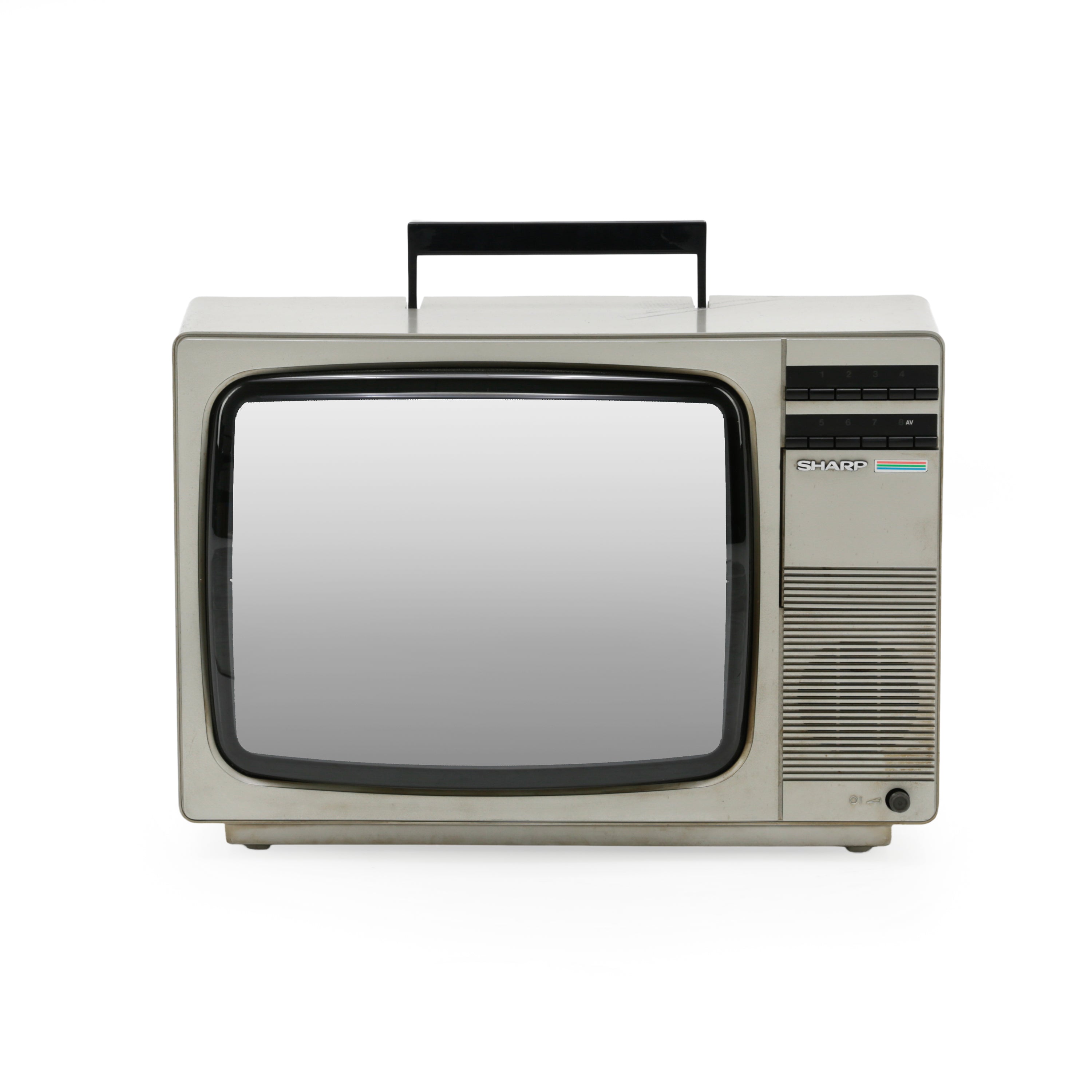
The television landscape of the 1980s underwent a massive transformation, shifting from a three-network dominance model to an era defined by cable expansion, remote controls, videocassette recorders, and groundbreaking cultural programming that forever altered home entertainment.
The Structural Evolution of 1980s TV
The television industry of the 1980s was characterized by the gradual erosion of the traditional "Big Three" broadcast networks—ABC, CBS, and NBC. While these networks still commanded massive prime-time audiences, their collective market share steadily declined with the expansion of cable television and the launch of new competitors.
Independent stations proliferated across the ultra-high frequency (UHF) band, often relying on syndicated reruns, low-budget afternoon cartoons, and older feature films to fill their schedules. Meanwhile, the launch of the Fox Broadcasting Company in October 1986 challenged the status quo by introducing edgy programming geared toward younger demographics, eventually establishing itself as a viable fourth network.
The Rise of Cable and Specialty Networks
During the late 1970s and throughout the 1980s, cable television expanded from a rural antenna-sharing utility into an urban and suburban entertainment staple. Cable operators laid coaxial cable networks capable of delivering dozens of channels, introducing consumers to niche programming models.
- Superstations: Ted Turner transformed Atlanta's WTCG (later WTBS) into a national superstation, beaming its signal via satellite to cable systems across the United States. This model relied heavily on syndicated sitcoms, classic movies, and Atlanta Braves baseball.
- The 24-Hour News Cycle: The launch of CNN (Cable News Network) on June 1, 1980, revolutionized journalism by delivering continuous news coverage, fundamentally altering how major world events were reported and consumed.
- Music Television (MTV): Debuting on August 1, 1981, MTV merged popular music with visual media, creating a distinct youth culture and establishing the music video as a primary promotional tool for the recording industry.
- Premium Movie Channels: HBO and Cinemax expanded rapidly, offering uncut, commercial-free theatrical motion releases and original boxing matches directly to living rooms for a monthly subscription fee.
Technological Advancements in Receiver Design and Home Media
The hardware inside the living room experienced a quiet revolution during this decade. While color television had become standard by the 1970s, the 1980s introduced technologies that changed how viewers interacted with their screens.
The Videocassette Recorder (VCR)
The format war between Sony’s Betamax and JVC’s VHS format dominated the early part of the decade, with VHS ultimately winning the consumer market due to longer recording times and more aggressive licensing agreements. The VCR liberated viewers from strict broadcast schedules, introducing the concepts of "time-shifting" (recording a program to watch later) and video rental stores. Consumers could now purchase or rent feature films to watch at home on demand, laying the groundwork for the modern home video market.
Remote Controls and Wireless Convenience
Before the 1980s, changing channels frequently required getting up to turn a mechanical dial on the television set. The widespread adoption of ultrasonic and later infrared remote controls in the 1980s changed household ergonomics. The ability to flip channels effortlessly fostered the phenomenon of "channel surfing," prompting broadcasters to rethink pacing and commercial break strategies to retain drifting audiences.
Audio Enhancements: Stereo Sound and Closed Captioning
The introduction of multichannel television sound (MTS) in the mid-1980s brought stereo broadcasting to network television, enhancing the fidelity of musical variety shows, dramatic action series, and theatrical films. Concurrently, the Federal Communications Commission (FCC) and broadcasters began implementing closed captioning for the deaf and hard of hearing, initially requiring a dedicated decoder box before regulations mandated built-in decoding chips in larger sets later in the decade.
Iconic Programming and Genre Defining Shows
Programming in the 1980s reflected changing social norms, political climates, and technological capabilities. The decade produced enduring formats across drama, comedy, and children's entertainment.
The Prestige Serial Drama and Anthology Series
The 1980s birthed the modern prime-time soap opera and serialized police procedural. Series like Hill Street Blues and Miami Vice introduced cinematic aesthetics, complex ensemble casts, and serialized storytelling arcs that stretched across multiple episodes, departing from the strictly episodic format of earlier decades.
Prime-time soap operas such as Dallas and Dynasty captured global audiences with tales of corporate greed, family feuds, and high-society melodrama, culminating in cultural phenomenons like the famous "Who shot J.R.?" cliffhanger.
The Sitcom Renaissance
The sitcom genre evolved from traditional domestic setups to address contemporary social dynamics. Shows like The Cosby Show revitalized the traditional family sitcom format, dominating ratings throughout much of the decade and proving that minority-led casts could achieve universal commercial success.
Concurrently, workplace comedies such as Cheers and Night Court utilized tight ensemble writing and closed-set studio audience dynamics to explore urban professional and municipal life.
| Show Title | Original Run | Network | Primary Genre | Cultural Significance |
|---|---|---|---|---|
| Cheers | 1982–1993 | NBC | Situation Comedy | Redefined the workplace ensemble sitcom and pioneered slow-burn ratings recovery. |
| Miami Vice | 1984–1989 | NBC | Police Procedural | Popularized cinematic music-video styling, pastel fashion, and pop-rock soundtracks. |
| The Cosby Show | 1984–1992 | NBC | Situation Comedy | Revitalized the network's financial standing and redefined the upper-middle-class family sitcom. |
| The Golden Girls | 1992 | NBC | Situation Comedy | Addressed aging, friendship, and social issues through an older female ensemble cast. |
Children's Television and the Deregulation Impact
The regulatory landscape of children's programming shifted dramatically following the Federal Communications Commission's 1984 ruling under the Reagan administration, which deregulated commercial limits and content standards for children's broadcasts.
Prior to the 1980s, strict guidelines prohibited networks from broadcasting commercials for products directly tied to characters featured in the same program. The 1984 deregulation opened the floodgates for toy-driven animation. Studios rushed to produce syndicated animated series explicitly designed to market action figures, board games, and dolls.
- Syndicated Animation: Shows like He-Man and the Masters of the Universe, G.I. Joe: A Real American Hero, and Transformers bypassed traditional network distribution, airing directly on local independent stations on weekday afternoons.
- Saturday Morning Cartoons: While weekday syndication grew, the traditional Saturday morning block remained a battleground for networks like ABC, CBS, and NBC, featuring animation powerhouses from Hanna-Barbera, Ruby-Spears, and later DiC Entertainment.
Frequently Asked Questions
How did the VCR change television viewing habits in the 1980s?
The VCR introduced time-shifting, allowing households to record broadcasts and watch them at their convenience. It also created a massive home video rental market, enabling consumers to watch theatrical films at home outside of network schedules and premium cable subscriptions.
What caused the decline of the Big Three broadcast networks in the 1980s?
The primary driver was the rapid expansion of cable television systems, which brought specialty channels like CNN, ESPN, MTV, and superstations into millions of homes. The launch of the Fox network in 1986 further fractured the traditional three-network viewership model.
Were televisions in the 1980s high definition?
No. Standard broadcast television in the 1980s utilized analog transmission formats, specifically NTSC in North America, PAL in most of Europe and Australia, and SECAM in France and parts of the Soviet bloc. These formats operated at standard definition resolutions with a 4:3 aspect ratio.
How did television technology differ between the early and late 1980s?
Early 1980s sets typically featured mechanical rotary dials or electronic push-button tuners with limited channel memory, mono sound, and heavy cathode-ray tube (CRT) glass enclosures. By the late 1980s, sets frequently included infrared remote controls, on-screen display menus, stereo audio inputs, and larger screen sizes.
Conclusion and Preservation of 1980s Media
The television ecosystem of the 1980s served as a crucial bridge between the analog consensus of the mid-20th century and the fragmented digital media landscape of today. Understanding this era requires looking past the nostalgia of pop culture icons to examine the structural, technological, and regulatory shifts that enabled modern home entertainment. For researchers, collectors, and enthusiasts, preserving original broadcast recordings, vintage hardware, and archival documents remains essential for studying this pivotal decade in media history.