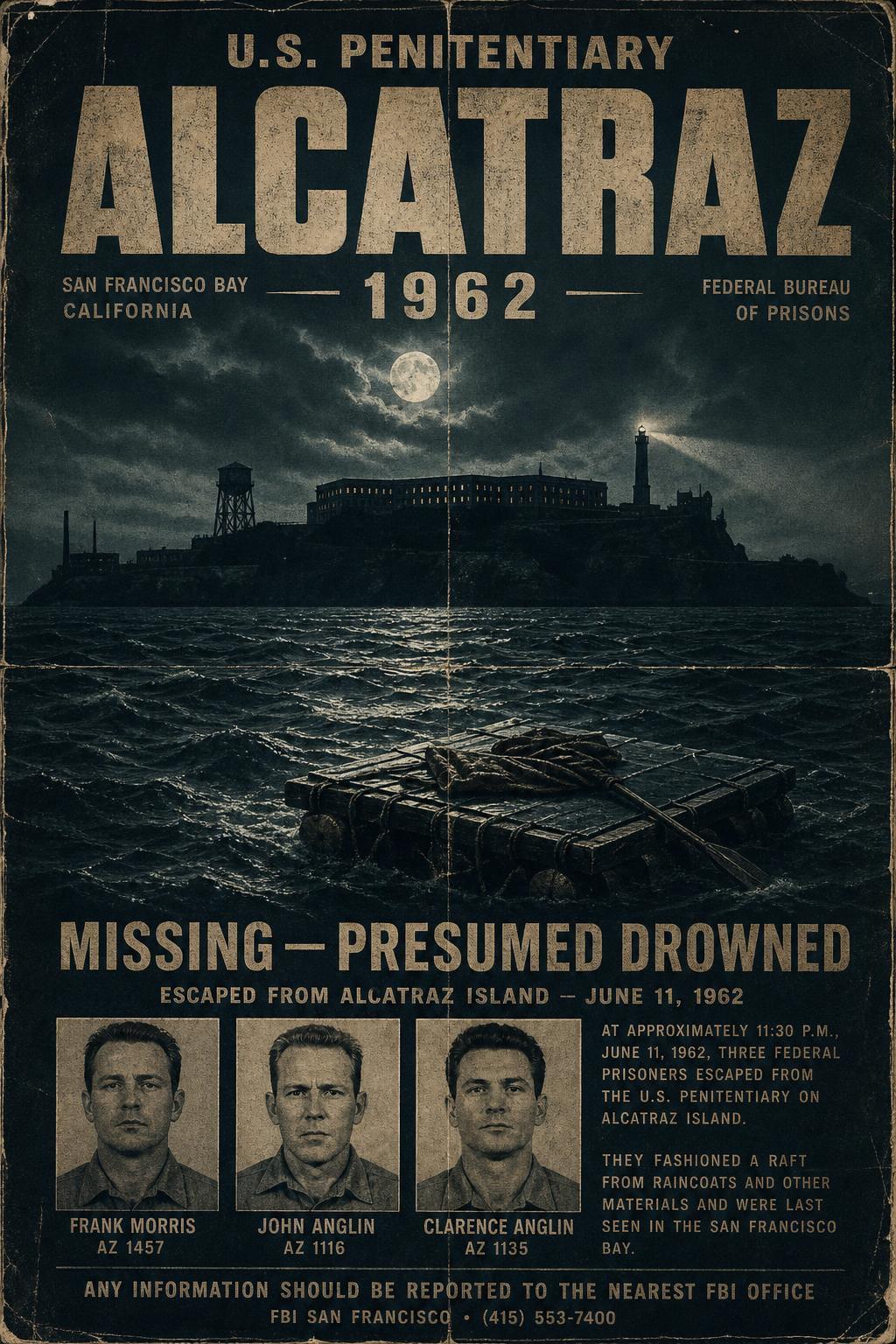
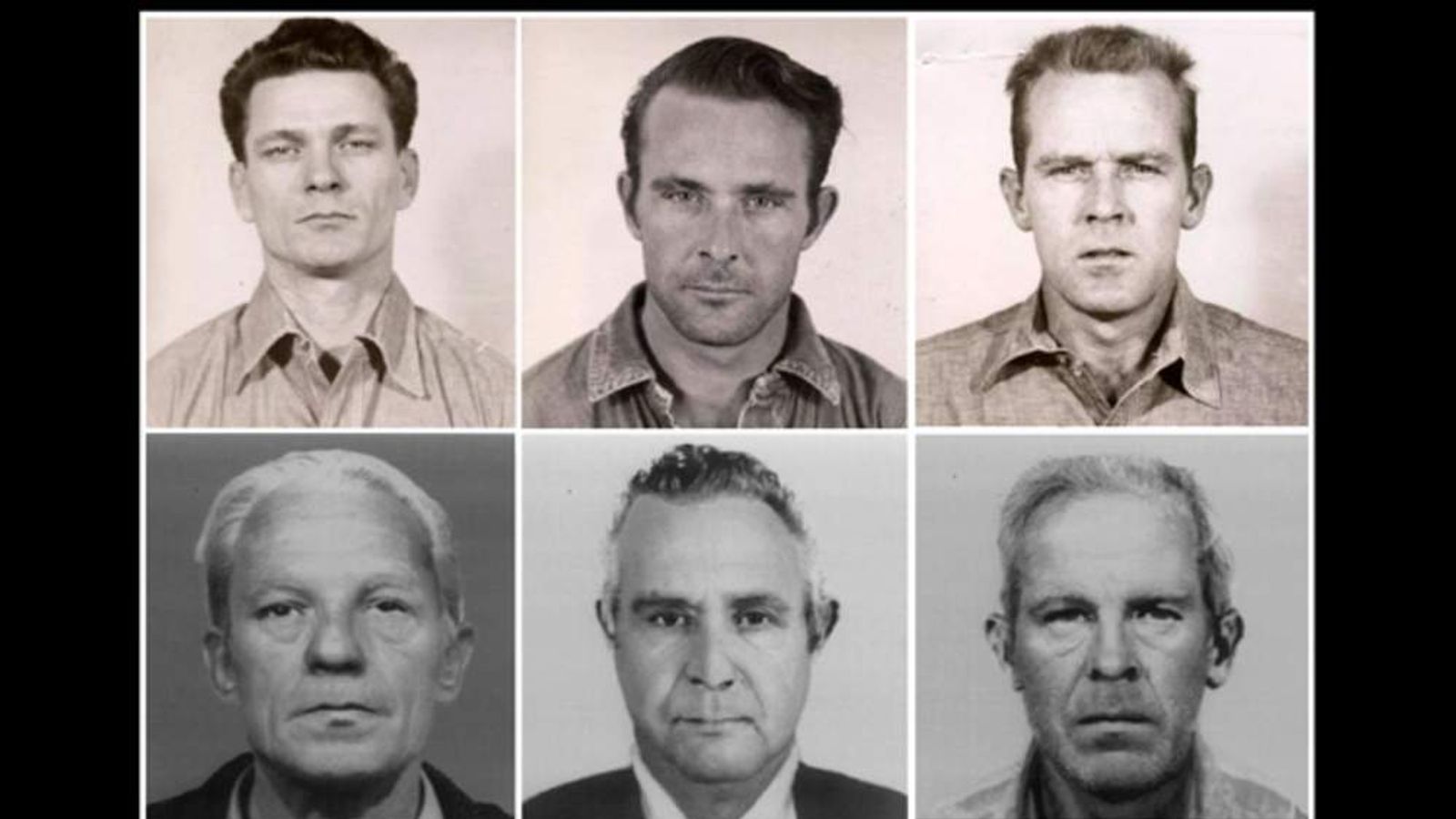
The 1962 prison escape from Alcatraz Federal Penitentiary remains the most significant unsolved mystery in the history of the American penal system. On June 11, 1962, Frank Morris and brothers John and Clarence Anglin vanished from their cells, leaving behind a trail of ingenious makeshift tools and a cold case that continues to challenge the U.S. Marshals Service in 2026.
The Inescapable Reputation of Alcatraz Island
To understand the magnitude of the 1962 prison escape, one must first understand the environment of Alcatraz Island. Situated 1.25 miles off the coast of San Francisco, the island was designed to be the final stop for the nation's most "uncorrectable" prisoners. By the early 1960s, it held a reputation as a fortress from which no inmate had ever successfully escaped—at least, not according to official records.
The prison was surrounded by the frigid, turbulent waters of the San Francisco Bay. The currents were notoriously strong, and the water temperature rarely rose above 55 degrees Fahrenheit. These natural barriers, combined with a high guard-to-inmate ratio and a structure composed of reinforced concrete and tool-proof steel, made Alcatraz the ultimate deterrent. Before the 1962 event, there had been 13 previous escape attempts involving 33 inmates; nearly all were captured, shot, or drowned.
By 1962, however, the prison was aging. The salty sea air had begun to corrode the concrete and metal, a structural vulnerability that the escapees would eventually exploit. As we examine the case from the perspective of 2026, it is clear that the decay of the facility played as much of a role in the escape as the brilliance of the inmates' plan.
Profiles of the Escapees
The success of the 1962 prison escape relied on a specific combination of intelligence, mechanical skill, and desperation. The three men who made it into the water—and the one who was left behind—formed a highly effective team.
Frank Morris
Frank Morris was the presumed mastermind of the operation. With an IQ of 133, which placed him in the top 2% of the population, Morris was a career criminal who had spent much of his life in various correctional institutions. He had a history of escaping from other prisons, which is what eventually led him to Alcatraz in 1960. His ability to synthesize information and lead a team was the primary driver behind the complex engineering required for the breach.
John and Clarence Anglin
The Anglin brothers were experts in swimming and outdoor survival, having grown up in Florida. They were arrested for bank robbery and arrived at Alcatraz after several escape attempts from the Atlanta Federal Penitentiary. Their physical stamina and knowledge of water currents were essential to the plan's final phase.
Allen West
Allen West was the fourth member of the group. He was instrumental in the planning and construction of the tools. However, on the night of the escape, West was unable to remove the ventilator grill in his cell in time to join the others. He remained in his cell and eventually provided the FBI with the majority of the details regarding how the escape was executed.
Engineering the Impossible: The Preparation Phase
The 1962 prison escape was not a spur-of-the-moment act. It required over six months of meticulous preparation and the clandestine manufacturing of specialized equipment.
The Ventilation Holes
The inmates used discarded saw blades, spoons stolen from the dining hall, and a makeshift drill fashioned from the motor of a broken vacuum cleaner to widen the ventilation holes at the back of their cells. To hide their progress from the guards during the hourly headcounts, they created fake vent covers out of painted cardboard. The noise of the drilling was muffled by the "music hour," a period when inmates were allowed to play instruments or listen to the radio.
The Decoy Heads
Perhaps the most famous aspect of the 1962 prison escape was the use of "dummy heads." Using a mixture of soap, toilet paper, and toothpaste, the inmates sculpted realistic human heads. They used paint from the prison’s hobby shop for skin tones and real hair collected from the barbershop floor. On the night of the escape, they placed these heads in their beds, tucked under the blankets, to fool guards into thinking they were asleep.
The Raft and Life Jackets
The team’s most impressive feat was the construction of a 6x14-foot inflatable rubber raft and makeshift life vests. These were made from more than 50 vulcanized raincoats, which were standard issue for Alcatraz inmates. They used contact cement stolen from the prison's glove factory to seal the seams and used the heat from the prison's steam pipes to vulcanize the rubber. The raft was inflated using a concertina (a small accordion) that had been modified to act as a bellows.
The Night of June 11, 1962: A Timeline
The execution of the escape was a masterclass in timing and stealth. Below is the chronological sequence of events as reconstructed by the FBI and the U.S. Marshals Service.
- 9:30 PM: The inmates placed the dummy heads in their beds and exited their cells through the widened ventilation holes.
- The Utility Corridor: They entered the narrow, unguarded utility corridor located behind the cell walls. This corridor contained the plumbing and electrical conduits for the block.
- Climbing the Pipes: Using the plumbing pipes as a ladder, they climbed 30 feet to the top of the cell block.
- The Roof Access: They reached the roof by forcing open the ventilator at the top of the shaft. They had previously removed the rivets from the ventilator and replaced them with fake ones made of soap.
- Descending to the Ground: Carrying their raft and paddles, they ran across the roof and slid down a 50-foot kitchen exhaust pipe to the ground.
- The Fence: They scaled two 12-foot barbed-wire fences.
- The Launch: On the northeast shore of the island, near the power plant, the men inflated the raft and entered the San Francisco Bay at approximately 10:00 PM.
The disappearance was not discovered until the morning of June 12 during the 7:00 AM headcount. By that time, the men had a nine-hour head start.
Investigation and Scientific Analysis
Following the discovery of the escape, one of the largest manhunts in American history began. The FBI officially opened a case file, but after 17 years of investigation, they closed it in 1979, concluding that the prisoners likely drowned in the bay. However, the U.S. Marshals Service, which maintains jurisdiction over federal fugitives, has kept the case open to this day.
Physical Evidence Recovered
In the days following the escape, several items were found:
- A makeshift life jacket was found washed up on Cronkhite Beach.
- Remnants of the raincoat raft were found near Angel Island.
- A waterproof plastic bag containing letters, photographs, and addresses belonging to the Anglin brothers was discovered.
The Role of San Francisco Bay Currents
The primary argument against the survival of the inmates is the nature of the bay. In 2014, researchers at Delft University used advanced computer modeling to simulate the conditions of the bay on the night of the escape. Their findings indicated that if the men entered the water exactly at midnight, the outgoing tide would have almost certainly swept them out to sea (the Golden Gate). However, if they entered the water between 11:00 PM and 11:30 PM, they would have had a narrow window to reach Horseshoe Bay near the Golden Gate Bridge.
Comparative Analysis: Prison Security vs. Escape Strategy
The 1962 prison escape succeeded because the inmates identified and countered every major security protocol of the era.
| Security Protocol | Inmate Countermeasure | Effectiveness |
|---|---|---|
| Hourly Headcounts | Realistic papier-mâché dummy heads with real hair. | Highly Effective; delayed discovery by 9 hours. |
| Tool-Proof Bars | Exploited corroded concrete around ventilation grates. | Effective; bypassed the need to cut steel. |
| High Guard Presence | Timed drilling during the communal music hour. | Effective; muffled mechanical noise. |
| San Francisco Bay | Hand-stitched, vulcanized raincoat raft and life vests. | Uncertain; facilitated entry but sea-worthiness is debated. |
| Barbed-Wire Fencing | Identified blind spots in the guard tower searchlights. | Effective; allowed for covert descent. |
Modern Developments and the 2013 Letter
As of 2026, the mystery remains fueled by tantalizing pieces of evidence that have surfaced in the decades since the event.
In 2013, the San Francisco Police Department received a letter purportedly written by John Anglin. The letter claimed that Frank Morris had died in 2008 and Clarence Anglin in 2011. The writer offered to surrender in exchange for medical treatment for cancer. While the FBI's laboratory analyzed the handwriting, the results were deemed "inconclusive."
Furthermore, in 2015, the Anglin family released a photograph allegedly showing John and Clarence in Brazil in 1975. Facial recognition experts have analyzed the photo with varying results, but some modern forensic analysts suggest a high probability that the men in the photo are indeed the escapees.
The U.S. Marshals Service continues to investigate every lead. Their official stance remains that until the men are proven dead or reach the age of 100, the warrants for their arrest remain active.
Frequently Asked Questions
Did anyone actually survive the 1962 Alcatraz escape?
There is no definitive proof of survival or death. While the FBI officially presumed they drowned, no bodies were ever recovered. Scientific tide modeling suggests survival was possible if their timing was precise, and various family testimonies and letters suggest they may have lived out their lives in South America.
How did the prisoners get enough raincoats for the raft?
The inmates obtained the raincoats through their jobs in the prison's industries or by trading with other inmates. At the time, Alcatraz had a raincoat factory, and the specific vulcanized rubber material was readily available to those with the right connections within the prison's black market.
Why did the FBI close the case if the U.S. Marshals kept it open?
The FBI closed its investigation in 1979 because no evidence surfaced that the men were still alive, and the bureau felt its resources were better spent elsewhere. The U.S. Marshals Service, however, is the agency responsible for pursuing federal fugitives regardless of how much time has passed, which is why the case remains active in 2026.
What happened to Allen West?
Allen West was never charged for the escape attempt, largely because he cooperated with the authorities and provided the details of the plan. He was eventually transferred to other prisons and died of peritonitis in 1978 while incarcerated at the Florida State Prison.
Could modern technology have prevented the escape?
Yes. Modern correctional facilities use motion sensors, infrared cameras, and biometric scanning that would have detected the movement in the utility corridors and the lack of biometric signatures in the beds. Furthermore, 21st-century concrete is treated to resist the corrosive effects of salt air much better than the 1930s-era materials used on Alcatraz.
Final Recommendations for Further Research
For those interested in the technical details of the 1962 prison escape, the most authoritative source remains the FBI Records: The Vault, which contains thousands of pages of original investigative documents. Additionally, the National Park Service provides historical context on the structural integrity of the prison during that era.
The case serves as a perennial reminder of the human drive for freedom and the limitations of even the most sophisticated security systems. Whether Morris and the Anglins died in the bay or escaped to a new life, their actions ensured that Alcatraz would be remembered not just as a prison, but as the site of the greatest disappearing act in American history.