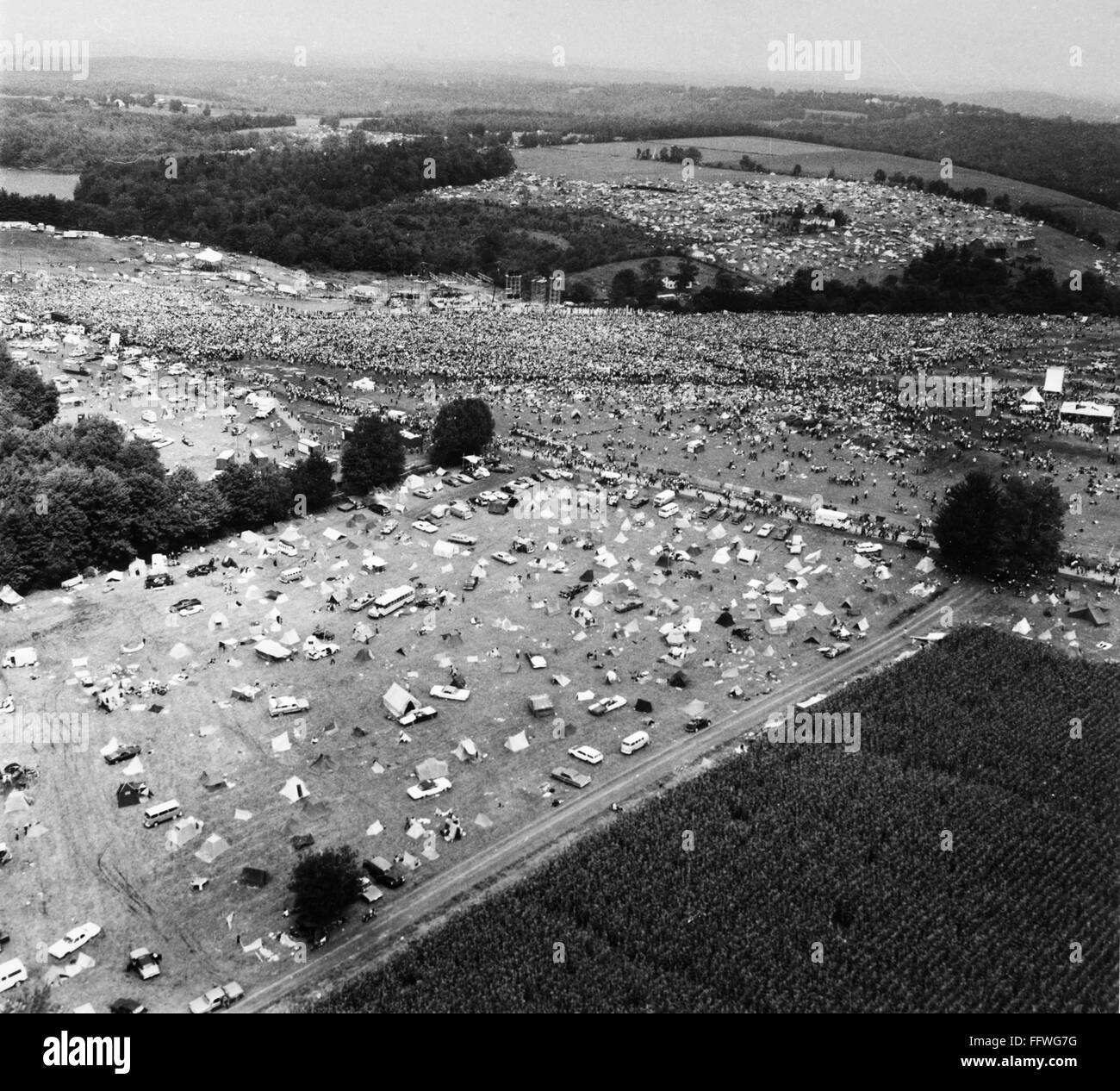
The music festivals of 1969 represented the absolute zenith of the 1960s counterculture movement, transitioning rock music from a niche youth subculture into a massive, multi-million dollar industry. These events, ranging from the legendary Woodstock to the tragic Altamont and the overlooked Harlem Cultural Festival, established the foundational blueprints for modern concert logistics, large-scale sound reinforcement, and festival culture.
The Cultural Landscape of 1969
As 1969 dawned, the United States and the Western world were in a state of profound flux. The "Summer of Love" of 1967 had faded into a more politically charged and often violent atmosphere. The Vietnam War was at its height, the Civil Rights Movement was evolving, and the "Generation Gap" had become a chasm. Music was the primary medium through which these tensions and aspirations were expressed.
While 1967 and 1968 had seen significant gatherings like the Monterey Pop Festival, 1969 was the year the "rock festival" became a recurring phenomenon rather than an isolated experiment. These festivals were not merely about the music; they were social experiments in communal living, political demonstrations of youth power, and testing grounds for new technologies. By 2026, historians look back at 1969 as the year that proved large-scale outdoor events were viable, even if the financial models of the time were often disastrously flawed.
Woodstock: The Paradigm of the Counterculture
Woodstock, officially billed as the "Woodstock Music & Art Fair: An Aquarian Exposition," remains the most famous music festival in history. Held from August 15 to 18, 1969, on Max Yasgur’s dairy farm in Bethel, New York, it came to symbolize an entire generation.
Logistics and the "Free Festival" Reality
The organizers—Michael Lang, Artie Kornfeld, Joel Rosenman, and John P. Roberts—originally intended for Woodstock to be a profit-making venture with tickets priced at $18 for three days. However, the sheer volume of attendees—estimated at over 400,000—overwhelmed the fencing and ticket booths. To prevent a riot and maintain safety, the organizers declared it a "free concert." This decision ensured the festival's place in history but led to decades of financial recovery for the backers.
Technical Innovations in Sound
One of the most significant technical legacies of Woodstock was the sound system. Bill Hanley, often called the "father of festival sound," engineered a system that could project audio to nearly half a million people—an unprecedented feat at the time. He used custom-built speaker towers and Macintosh amplifiers to ensure that even those at the back of the massive natural amphitheater could hear the performances. This set the standard for the large-scale PA systems used in modern stadium tours today.
The Harlem Cultural Festival: The "Black Woodstock"
For decades, the story of 1969 was dominated by white rock narratives. However, the Harlem Cultural Festival, held in Mount Morris Park (now Marcus Garvey Park) between June 29 and August 24, 1969, was equally significant. It featured legendary artists including Stevie Wonder, Nina Simone, Sly and the Family Stone, and Gladys Knight & the Pips.
Unlike Woodstock, which was a rural retreat, the Harlem Cultural Festival was an urban celebration of Black pride and culture. It drew over 300,000 people over several weekends. For years, the footage of this event remained largely unseen until the 2021 documentary Summer of Soul brought it back into the public consciousness. By 2026, the festival is recognized not just as a musical event, but as a pivotal moment in the Civil Rights and Black Power movements, proving that massive urban festivals could be peaceful and culturally transformative.
Altamont: The End of the Innocence
If Woodstock represented the "Peace and Love" ideal, the Altamont Free Concert on December 6, 1969, represented its dark conclusion. Held at the Altamont Speedway in Northern California, the event was headlined by The Rolling Stones and intended to be a "Woodstock West."
The Failure of Security
The logistical failures at Altamont were catastrophic. Unlike the rural isolation of Bethel, Altamont was a stark, industrial setting. The organizers famously hired the Hells Angels motorcycle club to provide "security" in exchange for $500 worth of beer. This led to escalating violence throughout the day, culminating in the death of Meredith Hunter, a young Black man who was killed by a member of the Hells Angels during the Rolling Stones' set.
Altamont changed the legal landscape of music festivals. It highlighted the absolute necessity for professional security, crowd control barriers, and proper emergency medical services. The event effectively ended the era of loosely organized, massive free concerts, as local governments began passing strict ordinances regarding large gatherings.
The International Reach: Isle of Wight and Beyond
The festival phenomenon was not limited to the United States. Across the Atlantic, the 1969 Isle of Wight Festival (held in August) served as a major European counterpart. It was most notable for the return of Bob Dylan to the stage after a long hiatus following a motorcycle accident.
The Isle of Wight attracted approximately 150,000 people and featured a lineup that included The Who and Free. It proved that the festival model was internationally scalable. However, like its American counterparts, it faced local opposition from residents, eventually leading to the Isle of Wight County Council Act 1971, which prohibited large gatherings on the island without a special license—a precursor to modern UK licensing laws.
Comparison of Major 1969 Music Festivals
The following table compares the key metrics of the most influential festivals held throughout 1969.
| Festival Name | Location | Estimated Attendance | Key Headliners | Legacy |
|---|---|---|---|---|
| Woodstock | Bethel, NY | 400,000+ | Jimi Hendrix, Santana, Janis Joplin | Defined the "Hippie" generation. |
| Harlem Cultural Festival | New York, NY | 300,000 | Nina Simone, Stevie Wonder | Major milestone for Black culture. |
| Altamont Free Concert | Livermore, CA | 300,000 | The Rolling Stones, Jefferson Airplane | Ended the "Peace and Love" era. |
| Isle of Wight | Isle of Wight, UK | 150,000 | Bob Dylan, The Who | Established the UK festival scene. |
| Atlanta Pop Festival | Hampton, GA | 125,000 | Led Zeppelin, Janis Joplin | Integrated the Deep South via music. |
| Toronto Rock and Roll Revival | Toronto, ON | 20,000 | John Lennon, Chuck Berry | Debut of the Plastic Ono Band. |
Technical and Operational Challenges of the Era
Organizing a festival in 1969 was significantly more difficult than it is in 2026. Many of the tools we take for granted today—digital communication, GPS, advanced meteorology, and modular staging—did not exist or were in their infancy.
Sanitation and Health
Sanitation was perhaps the greatest failure of the 1969 festivals. At Woodstock, there were only 600 portable toilets for 400,000 people. Food shortages were rampant, and medical tents were overwhelmed by "bad trips" and minor injuries. These failures led to the development of the "Mass Gathering Laws" that now govern every modern festival, requiring specific ratios of toilets, water stations, and medical staff per attendee.
Transportation and Access
The "clogging" of the New York State Thruway during Woodstock became a national news story. It demonstrated that rural infrastructure could not support massive influxes of people without a coordinated transport plan. Modern festivals now utilize shuttle systems, satellite parking, and traffic engineering models that were born out of the chaos of 1969.
The Financial Reality of 1969 Festivals
Despite the massive crowds, very few 1969 festivals were profitable in the short term. The business model was still being "invented" on the fly.
- Ticket Slippage: Many festivals became "free" because organizers couldn't secure the perimeter.
- Rising Artist Fees: As festivals grew, so did the demands of artists. Jimi Hendrix was paid $18,000 for Woodstock (roughly $150,000 in today's inflation-adjusted terms), a record for the time.
- Insurance and Liability: After Altamont, insurance premiums for rock concerts skyrocketed, forcing promoters to become more professional and corporate.
By the mid-1970s, the "wild west" era of festivals had transitioned into the structured touring industry we recognize today. The amateurism of 1969 was replaced by professional promotion companies like Bill Graham Presents and eventually global entities like Live Nation.
Frequently Asked Questions
Which 1969 festival had the largest attendance?
Woodstock is widely cited as having the largest attendance, with estimates ranging from 400,000 to 500,000 people. However, the Harlem Cultural Festival collectively drew over 300,000 people over its multi-week run, and the Atlanta International Pop Festival also saw significant numbers exceeding 125,000.
Why was Altamont so much more dangerous than Woodstock?
The danger at Altamont was the result of several factors: poor venue choice (a concrete speedway vs. a grassy farm), the ill-advised use of the Hells Angels for security, and a more aggressive, drug-fueled atmosphere. Woodstock benefited from a natural "bowl" topography and a general spirit of cooperation that was lacking at the starker Altamont site.
Were there any major festivals in 1969 outside the US and UK?
Yes, the festival movement was global. For example, the Essen Pop & Blues Festival in Germany (October 1969) was one of the first major rock festivals in continental Europe, featuring acts like Pink Floyd and Muddy Waters. It helped establish the European circuit for touring American bands.
How did 1969 festivals change sound technology?
Prior to 1969, most concert sound came from the band's backline (their own amps) and rudimentary house systems designed for public speaking. 1969 saw the birth of the "Touring PA." Engineers like Bill Hanley and companies like Shure and Macintosh developed ways to daisy-chain amplifiers and use high-compression drivers to reach large crowds without massive distortion.
Did any 1969 festivals actually make money?
The Atlanta International Pop Festival is often cited as one of the few that was reasonably well-organized and financially stable compared to Woodstock. However, the real profit from these festivals often came later through film rights and soundtrack albums, such as the Woodstock documentary (1970), which became a massive box-office hit.
Recommendation for Researchers and Fans
For those looking to understand the technical and cultural weight of these events in 2026, the best approach is to examine primary source documents rather than just the legendary films. The National Archives and various university libraries have digitized thousands of documents related to the permits, legal battles, and logistical maps of these festivals.
If you are a student of music history, focus on the "failed" festivals of 1969 as much as the successful ones. The failures at Altamont and the financial ruin of Woodstock's early years provided the hard-learned lessons that allow the multi-billion dollar festival industry of the 21st century to function safely and profitably.