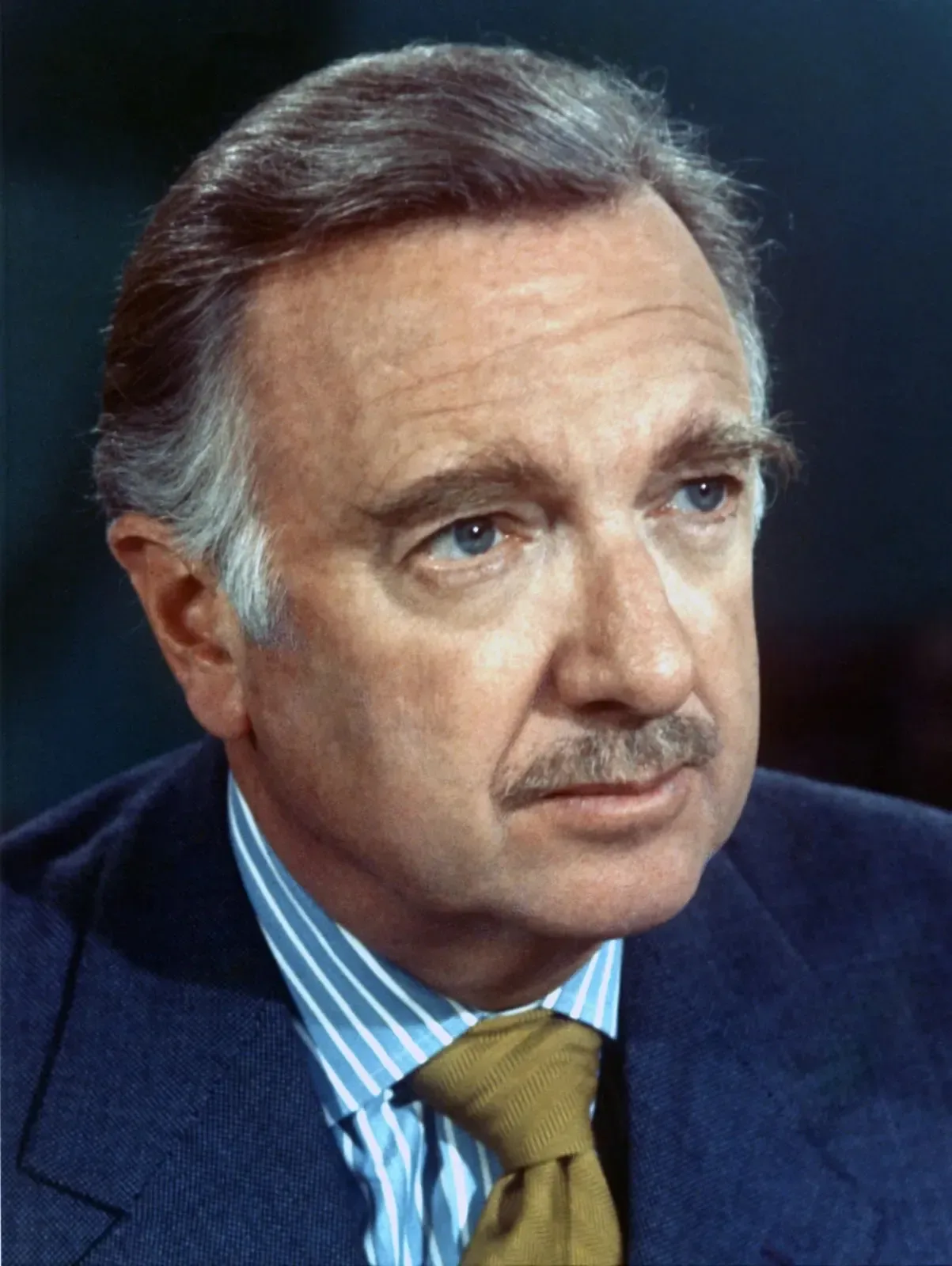
Walter E. Williams built a remarkable career as a pioneering free-market economist, syndicated columnist, and long-serving professor whose estimated net worth at the time of his passing in December 2020 reflected decades of academic achievement, media contributions, and bestselling publications. While exact private wealth figures were never publicly disclosed, his estate was supported by his distinguished professorship at George Mason University, lucrative book sales, and widespread syndicated commentary. More enduring than his financial standing, however, is his fierce intellectual defense of classical liberalism, free markets, and individual liberty.
Understanding Walter E. Williams requires looking beyond personal finance to examine a life that bridged deep systemic poverty in Philadelphia to the pinnacle of American economic thought. His career challenged orthodox policy assumptions, shaped generations of students, and established him as one of the most prominent Black conservative voices in modern American history.
From West Philadelphia to the Dismal Science: Early Life and Education
Walter Edward Williams was born on March 31, 1936, in Philadelphia, Pennsylvania. Raised primarily by his mother in a low-income North Philadelphia neighborhood during the Jim Crow era and its northern urban equivalents, Williams experienced firsthand the economic struggles of working-class families. His early life was characterized by adversity, yet he exhibited an independent streak and a voracious appetite for reading that would eventually define his intellectual trajectory.
After graduating from Benjamin Franklin High School, Williams held various odd jobs, including driving a taxi in Philadelphia, before moving to California. It was during his time in California that his academic journey truly began. He enrolled at Los Angeles City College before transferring to California State University, Los Angeles, where he earned a Bachelor of Arts in Economics in 1965.
His education did not stop at the undergraduate level. Williams pursued graduate studies at the University of California, Los Angeles (UCLA), an institution renowned at the time for free-market economic theory. Studying under prominent figures like Armen Alchian and interacting with intellectual giants like Milton Friedman, Williams immersed himself in price theory and market dynamics. He earned his Master of Arts in 1967 and his Doctor of Philosophy (Ph.D.) in Economics in 1972, completing a dissertation that focused on the economic impacts of minimum wage laws on minority youth—a theme that would become a cornerstone of his scholarly research.
Academic Career and George Mason University
Williams began his formal teaching career in the late 1960s and early 1970s, holding positions at City College of New York and Temple University. However, his academic home for the vast majority of his professional life was George Mason University (GMU) in Fairfax, Virginia. He joined the GMU faculty in 1980 and served there for four decades, eventually attaining the title of John M. Olin Distinguished Professor of Economics.
At George Mason, Williams earned a reputation as a rigorous, uncompromising educator who demanded critical thinking from his students. He believed that economics was not merely a collection of abstract mathematical models, but a vital lens through which to understand human behavior, scarcity, and freedom. Beyond the classroom, he served as the department chairman of economics at GMU from 1985 to 1989, helping shape the institution into a premier center for free-market and public-choice economic thought.
Key Milestones in Williams' Academic and Professional Journey
| Year / Period | Milestone / Position | Significance |
|---|---|---|
| 1965 | B.A. in Economics, California State University, Los Angeles | Marked the formal beginning of his academic transition into the discipline of economics. |
| 1972 | Ph.D. in Economics, UCLA | Solidified his grounding in price theory under the influence of the UCLA economics tradition. |
| 1980 | Joined George Mason University | Established a permanent academic base where he spent 40 years teaching and researching. |
| 1982 | Publication of The State Against Blacks | Brought his empirical critiques of government intervention and licensing laws to a wider public audience. |
| 1985–1989 | Chairman of the GMU Economics Department | Guided departmental expansion during a formative period for the university's economic program. |
Scholarly Contributions and Public Policy Research
Williams’ academic research focused intensely on empirical examinations of government regulation, racial discrimination, and labor markets. Unlike many contemporary social scientists who attributed racial income disparities primarily to market discrimination, Williams argued that state-mandated interventions—such as minimum wage laws, occupational licensing, and restrictive labor union practices—disproportionately harmed low-skilled and minority workers by pricing them out of entry-level employment.
His 1982 book, The State Against Blacks (later adapted into a PBS documentary titled Good Intentions), brought these controversial and rigorously defended arguments to the general public. He demonstrated how well-intentioned government regulations often created insurmountable barriers to entry for aspiring entrepreneurs and workers, shielding established businesses from competition at the expense of marginalized communities.
Subsequent books expanded on these themes, including South Africa's War Against Capitalism (1989), All It Takes Is Guts (1987), Do the Thing You Fear (2008), and his autobiography, Up from the Projects: An Autobiography (2010). Through these works, Williams consistently championed property rights, freedom of contract, and strict adherence to the United States Constitution as the ultimate bulwarks against tyranny and economic stagnation.
Media Career: Syndicated Columnist and Public Intellectual
While Williams maintained a prolific academic output, his cultural impact was vastly amplified by his media presence. For decades, he was a nationally syndicated columnist whose weekly essays appeared in hundreds of newspapers across the United States. His writing style was distinct: direct, uncompromising, laced with dry wit, and devoid of academic jargon. He addressed topics ranging from federal spending and monetary policy to political correctness and parental rights in education.
In addition to his print columns, Williams was a frequent guest host on The Rush Limbaugh Show and appeared regularly on national television and radio programs. He also served on the advisory boards of numerous public policy organizations, including the Cato Institute and the Hoover Institution, helping translate complex economic principles into accessible arguments for policymakers and the general public.
Estimating Walter E. Williams' Net Worth and Financial Legacy
Because Walter E. Williams was a private individual regarding his personal finances, no official, audited public accounting of his net worth exists. Financial estimates published online vary widely and often rely on speculation rather than verifiable records. However, a realistic assessment of his financial estate can be pieced together from his professional positions and long-term career output:
- Academic Compensation: As a senior, endowed chair professor (John M. Olin Distinguished Professor) at a major public university, Williams commanded a substantial salary for decades, supplemented by honoraria for speaking engagements and academic consultations.
- Literary Earnings: His numerous books, particularly The State Against Blacks and his various essay collections, generated steady royalties over a span of nearly forty years.
- Syndicated Journalism: His weekly newspaper column, distributed nationally by Creators Syndicate, provided a consistent, long-term stream of professional writing income.
Rather than massive corporate wealth or speculative investments, Williams' financial legacy was rooted in professional stability, prudent stewardship, and decades of intellectual labor. Upon his passing on December 2, 2020—ironically, just hours after teaching his final class at George Mason University—his estate passed according to his private personal arrangements, leaving behind a profound intellectual property and scholarship legacy rather than a commercial business empire.
Core Economic Tenets and Philosophical Legacy
To understand Walter E. Williams is to understand his unwavering commitment to classical liberalism. He viewed government expansion not as a solution to social problems, but as the primary engine of coercion and economic inefficiency. His economic philosophy rested on several foundational pillars:
- Skepticism of State Power: Williams maintained that governments possess no inherent resources of their own; every dollar spent by the state must first be extracted from a productive citizen through taxation or inflation.
- The Harm of Minimum Wage: He consistently argued that minimum wage laws do not help the poor; rather, they render low-skilled workers unemployable by making their labor illegal at a price below the statutory minimum.
- Constitutional Originalism: He viewed the U.S. Constitution as a document designed to limit federal power, frequently expressing frustration at how far the federal government had drifted from its enumerated powers.
- Individual Responsibility: Williams placed supreme value on personal accountability, education, and moral character, rejecting narratives that portrayed individuals merely as passive victims of systemic forces.
Frequently Asked Questions About Walter E. Williams
What was Walter E. Williams' estimated net worth?
There is no official or verified public record of Walter E. Williams' net worth. Online estimates are speculative. His income derived from his long-term professorship at George Mason University, book royalties, and national newspaper syndication, reflecting a secure academic career rather than corporate entrepreneurship.
What are Walter E. Williams' most famous books?
His most notable book is The State Against Blacks (1982), which examined how government regulations and labor laws harm minority populations. Other prominent works include All It Takes Is Guts (1987), South Africa's War Against Capitalism (1989), and his autobiography, Up from the Projects (2010).
What was Williams' primary academic argument regarding minimum wage?
Williams argued that minimum wage laws act as a barrier to entry for inexperienced or low-skilled workers. By forcing employers to pay a wage above the market-clearing value of that labor, the law prices marginalized workers out of jobs and deprives them of valuable on-the-job training.
How long did Walter E. Williams teach at George Mason University?
Walter E. Williams taught in the Department of Economics at George Mason University for 40 years, joining the faculty in 1980 and continuing to teach until his passing in December 2020.
What is Walter E. Williams' enduring economic legacy?
His legacy lies in his fierce defense of free markets, his empirical challenges to state intervention, and his influence on generations of students and readers who embraced classical liberal principles and economic common sense.
Conclusion and Next Actions
Walter E. Williams left an indelible mark on American economic thought, public policy commentary, and academic education. For readers seeking to better understand his principles, the most productive next action is to read his primary texts directly—starting with The State Against Blacks or his autobiography, Up from the Projects—to engage with his rigorous, data-driven arguments on liberty, markets, and the role of government.