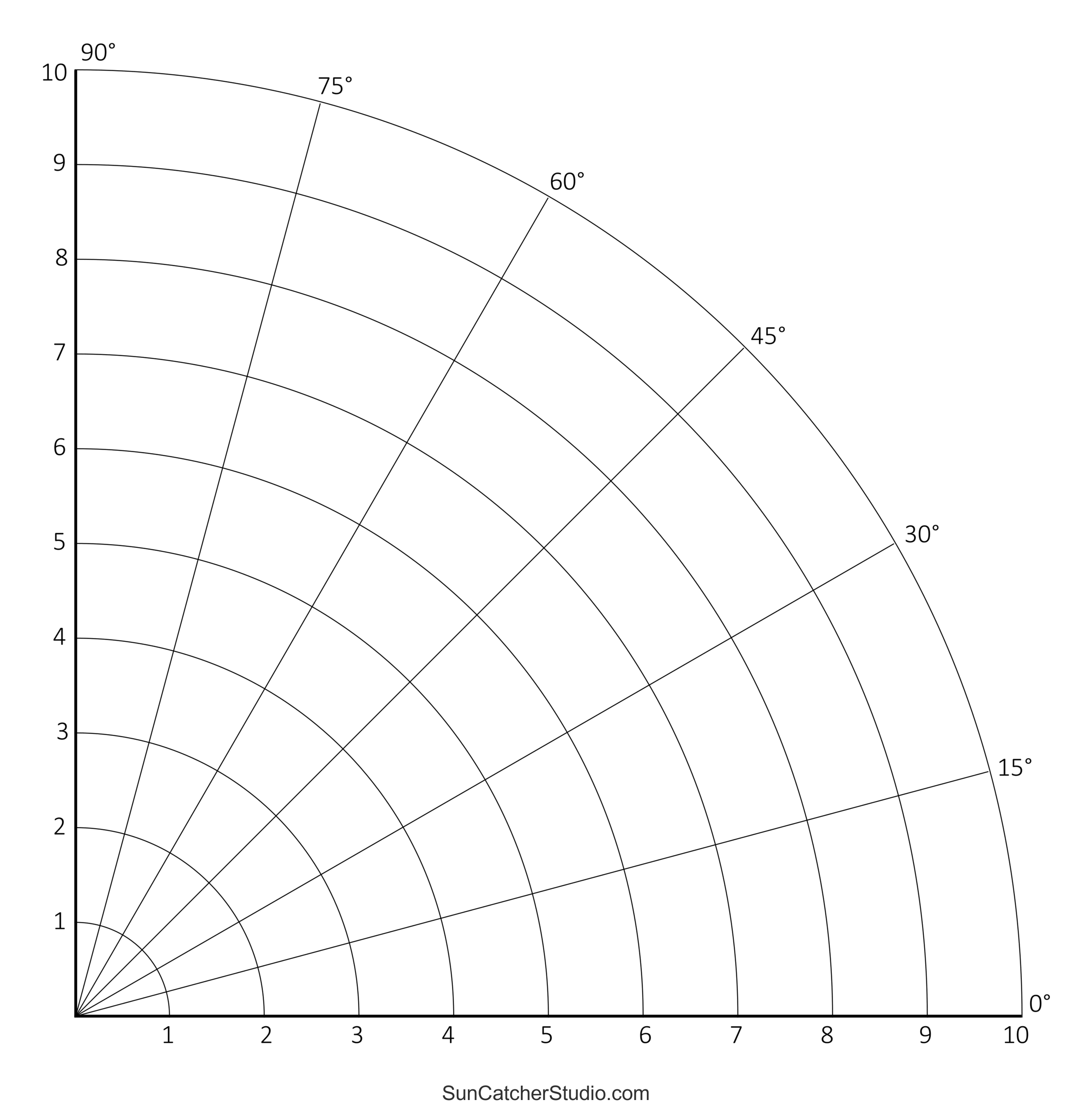
An angle of 15 degrees plays a foundational role across multiple technical domains, serving as an optimal pitch in roofing and solar panel installation, a critical alignment setting in automotive wheel geometry, and a precise unit of measurement in geography, astronomy, and machining.
The Fundamental Geometry and Mathematics of 15 Degrees
To understand the practical applications of 15 degrees, it is necessary to examine its mathematical properties. A full circle contains 360 degrees, making 15 degrees precisely one-twenty-fourth ($1/24$) of a full rotation. This exact fraction is not a coincidence; it forms the mathematical basis for humanity's system of timekeeping and geographical navigation.
In trigonometry, the trigonometric functions for a 15-degree angle can be derived using half-angle formulas or subtraction formulas (such as $45^\circ - 30^\circ$). The exact values are frequently utilized in engineering and geometric drafting:
- Sine: $\sin(15^\circ) = \frac{\sqrt{6} - \sqrt{2}}{4} \approx 0.2588$
- Cosine: $\cos(15^\circ) = \frac{\sqrt{6} + \sqrt{2}}{4} \approx 0.9659$
- Tangent: $\tan(15^\circ) = 2 - \sqrt{3} \approx 0.2679$
These constants allow precision machinists, software developers rendering 3D graphics, and structural engineers to calculate loads, vectors, and coordinates without relying solely on approximation tools.
15 Degrees in Astronomy and Earth Sciences
The rotation of planet Earth provides the most prominent macro-scale application of the 15-degree increment. Because Earth completes a full $360^\circ$ rotation relative to the sun in approximately 24 hours, it covers:
$$\frac{360^\circ}{24 \text{ hours}} = 15^\circ \text{ per hour}$$
This constant rotation rate establishes the foundation of the global time zone system. Each standard time zone corresponds roughly to a $15^\circ$ longitudinal wedge of the globe.
Furthermore, in observational astronomy, amateur and professional astronomers use degrees to measure angular separation between celestial bodies. A 15-degree field of view in binoculars or wide-field telescopes captures large constellations, asterisms, and star clusters, making it a standard benchmark for optical design and stargazing charts.
Architectural and Construction Applications: Roof Pitches and Drainage
In civil engineering and residential construction, 15 degrees is a critical threshold for roof design, waterproofing, and surface drainage. Measured relative to the horizontal plane, a 15-degree pitch translates to a rise of approximately 3.2 inches per horizontal foot (or a slope of roughly 27%):
- Water Shedding: While traditional shingle roofs often require steeper pitches (typically $18.4^\circ$ or a 4-in-12 pitch) to shed heavy rain rapidly, a 15-degree angle represents a safe lower limit for specific modern standing-seam metal roofs and specialized low-slope membrane applications.
- Snow and Wind Loads: Steeper roofs shed snow effectively, but a 15-degree slope creates enough gravitational pull for moderate snow sliding while maintaining structural wind resistance, reducing the uplift forces common in flat or low-pitch roofs.
Solar Panel Optimization and Tilt Angles
When designing photovoltaic (PV) solar arrays, maximizing energy generation requires angling panels toward the sun. While the general rule of thumb sets the optimal tilt angle roughly equal to the installation site's latitude, many regional optimization models point to a fixed 15-degree tilt as a high-performing sweet spot for specific installations:
- Low-Latitude Deployments: In regions located closer to the Earth's equator (between $0^\circ$ and $15^\circ$ latitude), a 15-degree tilt angle provides near-optimal year-round exposure while preventing rainwater pooling and dust accumulation.
- Commercial Flat Roof Ballasted Systems: Many commercial building codes restrict roof penetrations. Ballasted racking systems frequently mount solar panels at a fixed 15-degree tilt to balance wind ballast requirements with optimal solar irradiance capture, minimizing aerodynamic drag.
Automotive Engineering: Wheel Alignment and Ergonomics
Vehicle dynamics rely heavily on precise angular adjustments to ensure safe handling, tire longevity, and driver comfort.
Steering and Caster Angles
While wheel alignment angles like camber and toe are typically measured in fractions of a degree (minutes and seconds), steering geometry systems often analyze steering rack rotation limits and kingpin inclinations that approach or utilize 15-degree reference points for turning radiuses and steering feedback.
Ergonomics and Human Factors
In interior automotive design and workspace ergonomics, a 15-degree tilt is widely recognized as optimal for reducing physical strain:
- Steering Wheel and Dashboard Design: Instrument clusters and touchscreens are frequently angled toward the driver at a 15-degree offset to reduce glare and optimize line-of-sight scanning.
- Ergonomic Seating: Tilting a task chair or vehicle seat backward by 10 to 15 degrees reduces lumbar disk pressure compared to a strict 90-degree upright posture.
Comparative Analysis of 15-Degree Applications Across Industries
To fully appreciate the versatility of this measurement, the following table outlines how a 15-degree angle is utilized, regulated, or interpreted across major technical disciplines.
| Field / Discipline | Specific Application | Primary Function or Benefit | Standard / Reference Value |
|---|---|---|---|
| Astronomy & Time | Longitudinal Time Zones | Standardizes global timekeeping based on Earth's rotation | $15^\circ = 1 \text{ hour of time}$ |
| Construction | Metal Roofing Pitch | Balances water runoff with structural wind resistance | $\approx 3.2 \text{ inches per foot rise}$ |
| Renewable Energy | Commercial Solar Racks | Optimizes irradiance capture and minimizes wind drag on flat roofs | Fixed $15^\circ$ tilt angle |
| Ergonomics | Task Seating & Consoles | Reduces musculoskeletal fatigue and eliminates glare | $10^\circ \text{ to } 15^\circ$ rearward tilt |
| Machining & CAD | Chamfer and Bevel Cuts | Prepares metal plates for structural welding penetration | Standard $15^\circ$ bevel edge |
Common Misconceptions and Technical Errors
Working with 15-degree specifications requires precision, as minor deviations can result in systemic failures.
- Confusing Degrees with Percentage Slope: A common mistake in construction is treating a 15-degree angle as a 15% slope. A 15-degree angle equals a $\sim$26.8% grade ($\tan(15^\circ) \times 100$), which is significantly steeper than a 15% incline. Conflating these two metrics leads to severe drainage miscalculations.
- Solar Efficiency Overgeneralization: While a 15-degree tilt works well in tropical and subtropical latitudes or for specific commercial ballasted setups, applying a flat 15-degree tilt in high-latitude regions (e.g., above $45^\circ \text{N}$) severely compromises winter energy harvest because snow sliding and solar altitude angles require much steeper inclinations.
Frequently Asked Questions
What is the mathematical tangent of 15 degrees?
The exact tangent of a 15-degree angle is $2 - \sqrt{3}$, which decimalizes to approximately $0.2679$. This ratio means that for every 100 units of horizontal run, a 15-degree angle rises or drops by approximately 26.79 units.
Why is 15 degrees important for global time zones?
Earth completes one full rotation of 360 degrees relative to the sun in 24 hours. Dividing 360 by 24 yields 15 degrees per hour, which established the geographical boundaries for standard hourly time zones across the globe.
Is a 15-degree roof pitch considered steep?
No, a 15-degree roof pitch is considered a low-slope application. It is much shallower than standard residential shingle roofs, which typically range from 18 to 45 degrees, though it is steep enough for specialized metal panels and waterproof membranes.
How does a 15-degree tilt affect solar panel output?
A 15-degree tilt optimizes solar panel performance in low-latitude regions near the equator and facilitates self-cleaning from rainfall. However, in higher latitudes, it reduces winter energy capture because the panels cannot shed snow efficiently or face the lower winter sun at an optimal angle.
Practical Next Steps for Engineering and Design Projects
When incorporating a 15-degree angle into structural, astronomical, or mechanical projects, always verify local regulatory standards and mathematical models. For construction and solar installations, consult local building codes regarding wind and snow load tolerances before finalizing bracket designs or low-slope membrane specifications. In machining and CAD modeling, utilize exact trigonometric constants ($\sin, \cos, \tan$) rather than rounded approximations to ensure tight geometric tolerances.