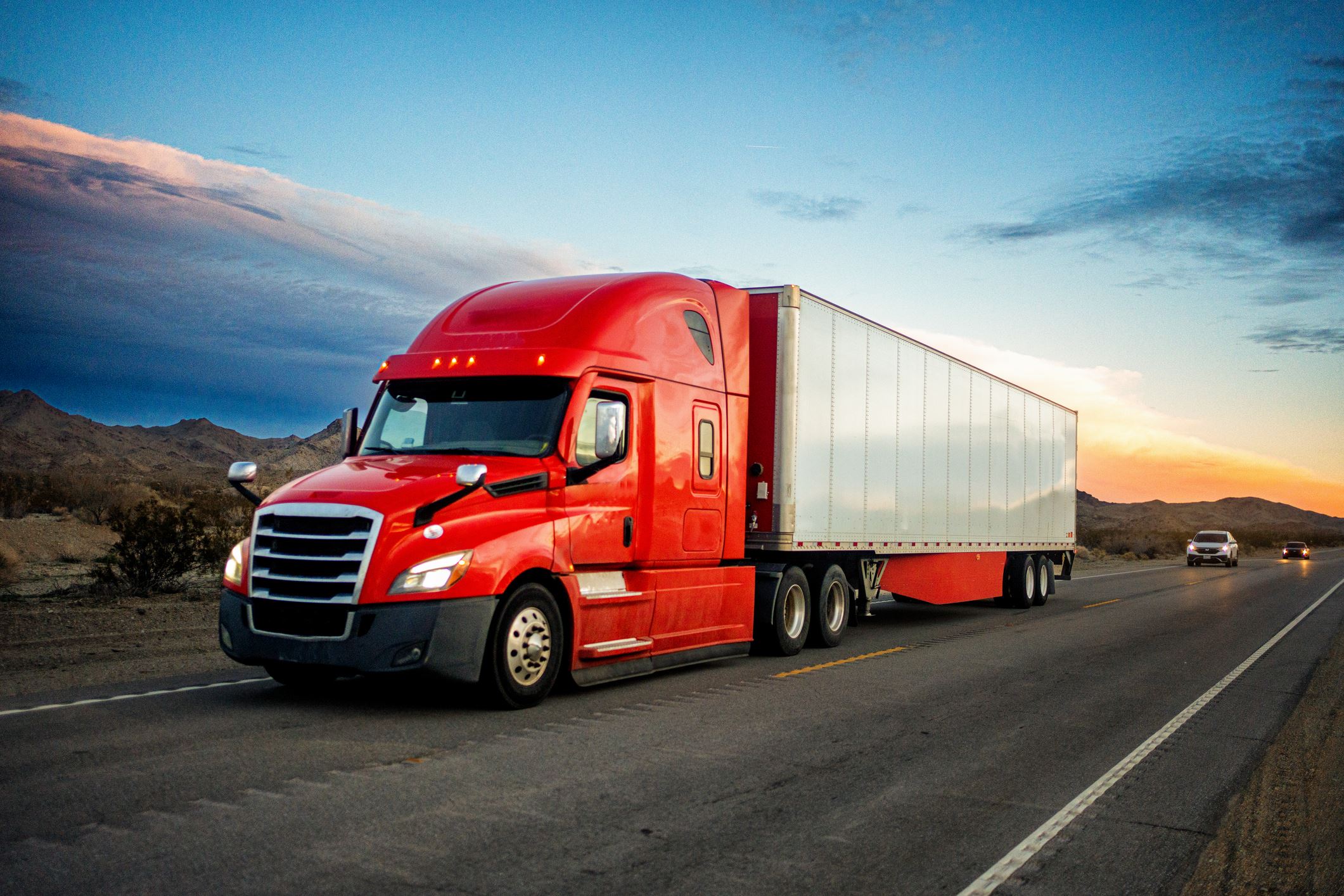
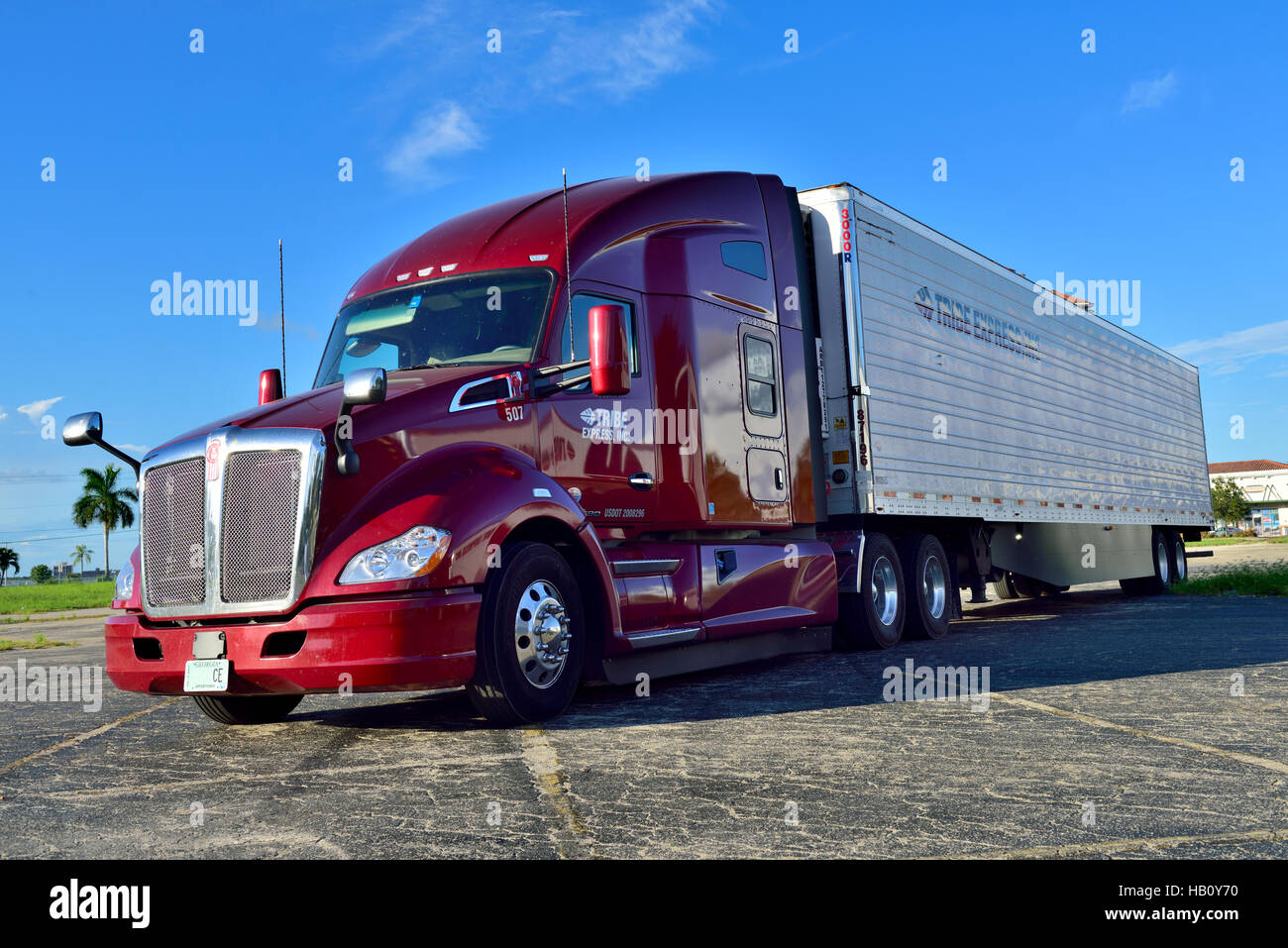
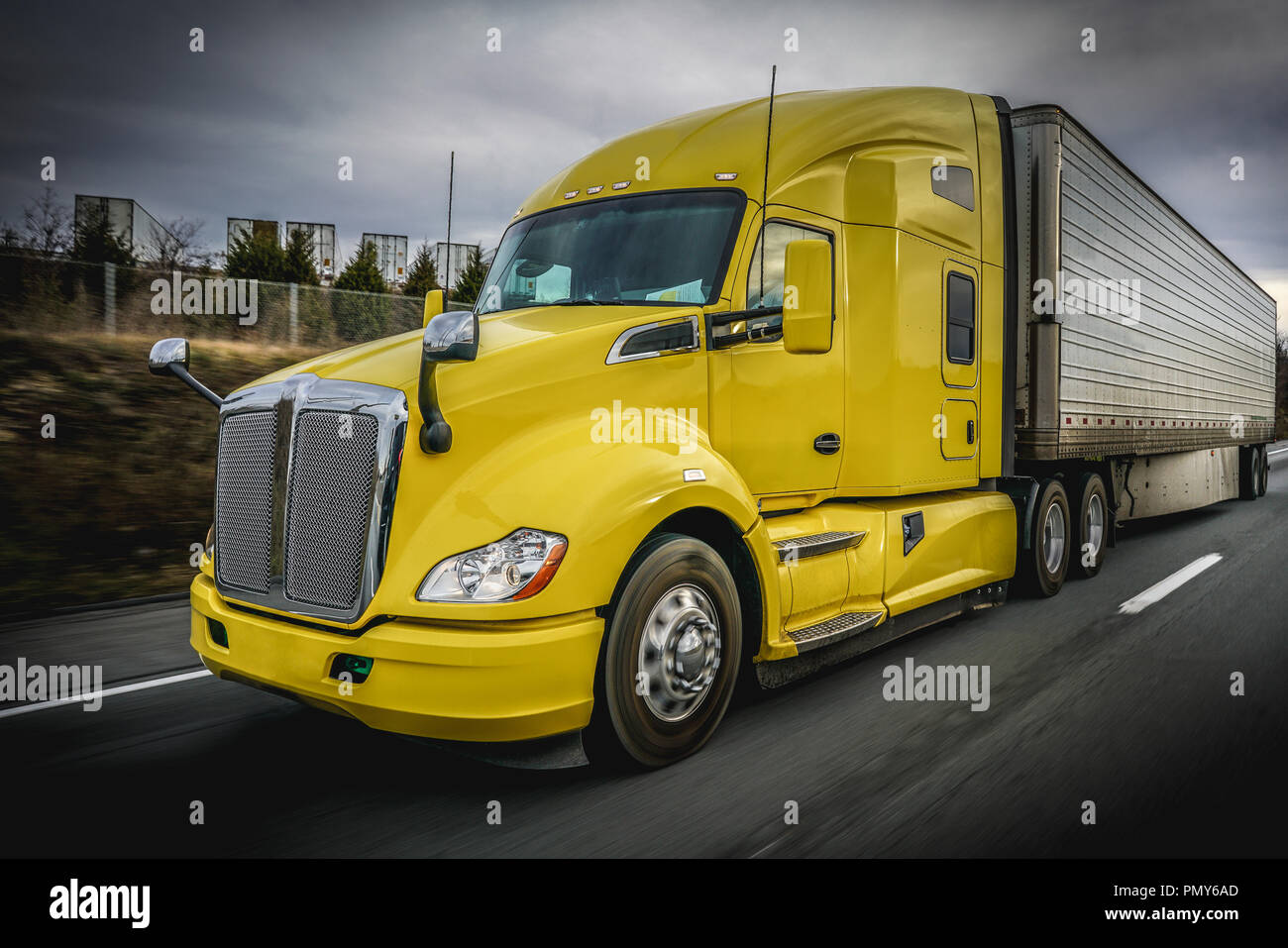
An 18-wheeler is a heavy-duty commercial vehicle combination consisting of a motorized tractor unit and a semi-trailer, totaling five or more axles and 18 individual tires. These vehicles are primarily utilized for long-haul freight transportation, serving as the backbone of global logistics by moving essential goods across vast distances on highway infrastructure.
Anatomy of an 18-Wheeler
The term "18-wheeler" is a colloquialism for a tractor-trailer combination. To understand how these machines function, it is necessary to separate the unit into its two core components: the tractor and the trailer.
The tractor unit—often referred to as a semi-truck or cab—contains the engine, the transmission, and the living quarters (in sleeper-cab models). The tractor's chassis is supported by three axles. The front axle (steer axle) typically has two wheels, while the rear tandem drive axles are equipped with four wheels each, totaling ten wheels on the tractor alone.
The semi-trailer is designed to carry the payload. A standard trailer is supported by a tandem axle group at the rear, which utilizes eight tires (four on each side). When the trailer is attached to the tractor via a fifth-wheel coupling, the resulting configuration reaches the iconic 18-tire count. This configuration is engineered for weight distribution, allowing the vehicle to transport heavy loads—often up to 80,000 pounds gross vehicle weight (GVW) in the United States—without exceeding individual axle weight limits enforced by the Department of Transportation (DOT).
Operational Mechanics and Physics
Operating an 18-wheeler requires a departure from standard passenger vehicle driving dynamics. Because of the sheer mass and length of the vehicle, the laws of physics exert significant influence on maneuverability and stopping distances.
Braking Systems
Unlike passenger cars that use hydraulic braking, 18-wheelers rely on air brake systems. These systems utilize compressed air to apply force to the brake shoes against the drum or disc. A critical safety feature of these systems is that the brakes are "spring-applied." If air pressure is lost, the spring forces the brakes to engage automatically, which serves as a fail-safe to stop the vehicle in an emergency. However, this also means drivers must manage "brake fade," a condition where the brakes overheat during prolonged use—such as on steep downgrades—leading to a significant loss of stopping power.
Off-Tracking and Turning
A defining characteristic of these vehicles is "off-tracking." Because the trailer wheels do not follow the exact path of the tractor’s wheels during a turn, the trailer will swing inward toward the center of the turn. Experienced operators must perform wide turns to ensure the trailer wheels do not strike curbs, signage, or other vehicles. This requires constant vigilance regarding the vehicle's "swing path," especially in urban environments where lane width is constrained.
Regulatory Requirements and Licensing
Operating an 18-wheeler is a highly regulated profession. In the United States, drivers are required to hold a Commercial Driver’s License (CDL), specifically a Class A license.
To obtain a Class A CDL, applicants must pass rigorous written examinations and a hands-on skills test conducted by a state agency. This process covers:
- Pre-trip Inspections: A mandatory check of the entire vehicle's mechanical integrity before every departure.
- Air Brake Endorsement: Specific knowledge of how to operate, maintain, and troubleshoot pneumatic braking systems.
- Hours of Service (HOS) Regulations: Established by the Federal Motor Carrier Safety Administration (FMCSA), these rules strictly limit the number of consecutive hours a driver can remain behind the wheel to prevent fatigue-related accidents. Drivers are generally limited to 11 hours of driving after 10 consecutive hours off-duty.
Technical Specifications and Comparison
The efficiency of an 18-wheeler is measured by its ability to maximize payload capacity while maintaining fuel economy and safety.
| Feature | Tractor Unit | Semi-Trailer |
|---|---|---|
| Primary Function | Propulsion and control | Cargo containment |
| Axle Count | 3 (1 steer, 2 drive) | 2 (tandem) |
| Tire Count | 10 | 8 |
| Coupling Point | Fifth wheel | Kingpin |
| Regulatory Focus | Engine emissions, axle load | Cargo securement, height |
Safety and Infrastructure Impact
The interaction between 18-wheelers and passenger vehicles on public roads is a frequent topic of highway safety discussions. The blind spots of a semi-truck—often called "No-Zones"—are significant. These zones exist directly behind the trailer, in front of the tractor, and along the right side of the vehicle where the driver’s visibility is lowest.
Infrastructure also bears the brunt of heavy freight traffic. The damage caused to pavement is directly proportional to the "fourth power" of the axle load. This means that a single axle carrying a heavy load causes exponentially more wear and tear on concrete and asphalt than a standard passenger car. Consequently, 18-wheelers are often restricted from specific lanes on multi-lane highways and are subject to mandatory weigh-in-motion stations to ensure compliance with bridge and road weight limits.
Common Challenges in Freight Transport
Beyond driving, the logistics of 18-wheeler operations involve constant troubleshooting of mechanical and environmental variables.
- Cargo Shift: If a load is not secured correctly, sudden maneuvers can cause the center of gravity to shift, potentially leading to a rollover accident.
- Environmental Hazards: High-profile trailers are susceptible to crosswinds, which can make steering difficult during storms or on high-elevation bridges.
- Mechanical Reliability: Diesel engines and pneumatic systems require frequent maintenance. Issues such as "dry rot" on tires, air leaks, or transmission malfunctions are common challenges that drivers must identify and report to fleet maintenance managers immediately.
Frequently Asked Questions (FAQ)
What is the maximum weight an 18-wheeler can carry? In the United States, the federal limit for a standard 18-wheeler is 80,000 pounds gross vehicle weight (GVW). This includes the weight of the truck, the trailer, and the cargo itself. Certain permits allow for "oversize" or "overweight" loads, but these require specific routing and lead/follow vehicles.
Why do 18-wheelers have so many gears? Unlike passenger cars with automatic transmissions, heavy-duty trucks often use manual or automated manual transmissions with 10 to 18 speeds. These gear ratios are necessary to keep the diesel engine within its "power band"—the range of RPMs where the engine provides optimal torque—while moving a heavy load from a complete stop up to highway speeds.
What is a "jackknife" and how does it happen? A jackknife occurs when the trailer swings around to the side of the tractor unit, forming an angle resembling a closed pocketknife. This typically happens during emergency braking on slippery roads, where the trailer wheels lock up and lose traction, causing the rear of the trailer to slide forward or outward uncontrollably.
How often does an 18-wheeler need to be inspected? Drivers are required to perform a pre-trip inspection before every departure. Furthermore, the FMCSA requires annual inspections to ensure the vehicle remains roadworthy. These checks include lights, brakes, steering, tires, and the coupling device (fifth wheel).
Can an 18-wheeler drive in all lanes on a highway? Not always. In many jurisdictions, trucks are restricted to the two right-most lanes on highways with three or more lanes. These restrictions are designed to keep the flow of faster-moving passenger traffic in the left lanes, minimizing the risk of lane-change accidents and traffic congestion.
Recommendations for Interaction
For those sharing the road with 18-wheelers, the most effective safety practice is to maintain a predictable presence. Avoid "lingering" in the blind spots located along the sides and behind the trailer. When passing, do so efficiently and ensure there is ample room before merging back into the lane in front of the truck. If you are operating a fleet or considering entering the trucking industry, prioritize comprehensive defensive driving training and invest in modern collision-mitigation technologies, such as advanced emergency braking (AEB) systems, which have become increasingly reliable in current models.