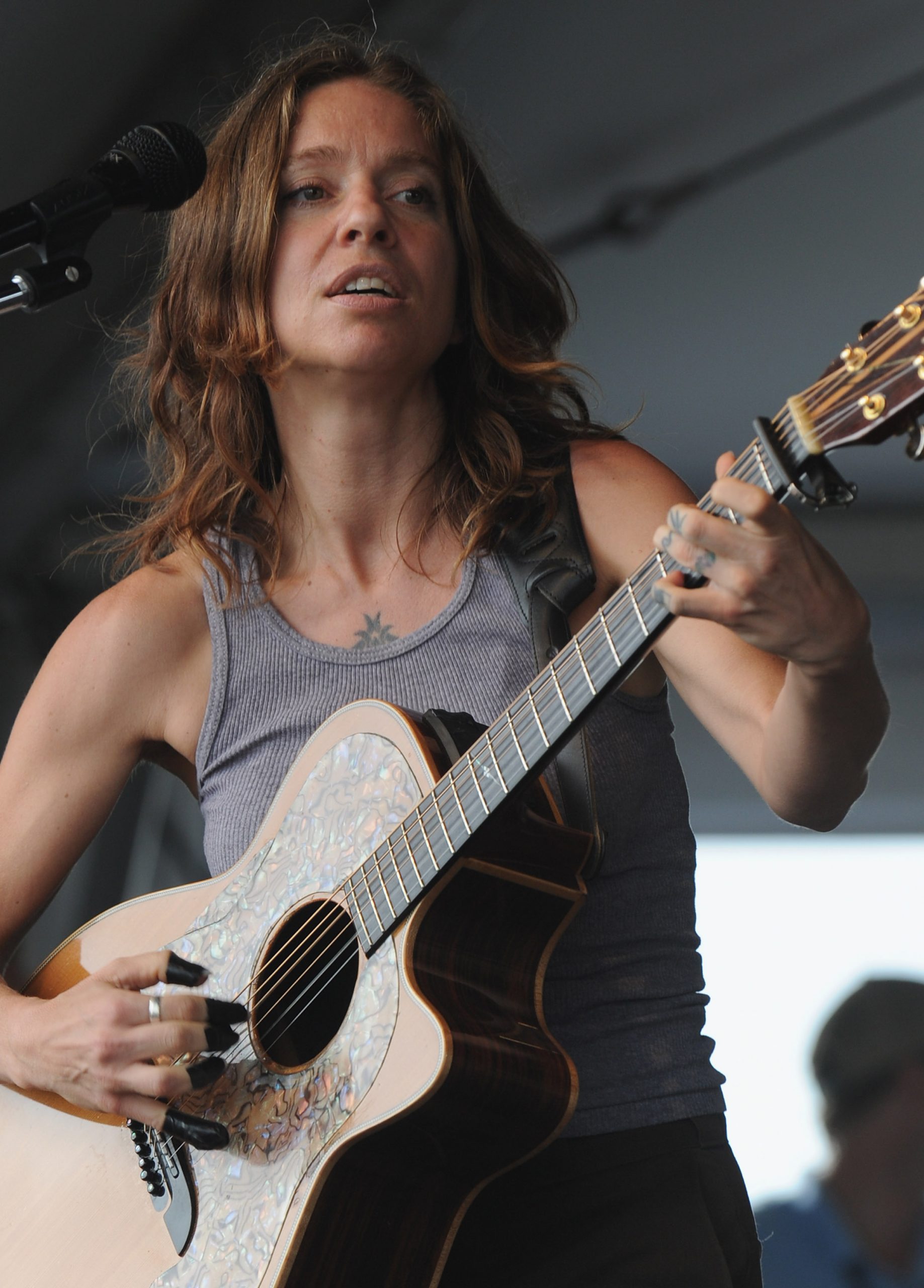
Ani DiFranco is an iconic American singer-songwriter, multi-instrumentalist, and activist who emerged in the early 1990s as a pioneer of the independent music industry. Over a career spanning more than three decades, she has released over twenty studio albums, built a fiercely loyal grassroots following, and established her own pioneering independent record label, Righteous Babe Records, maintaining total artistic control and ownership of her master recordings.
Early Life and Musical Beginnings
Born Angela Maria DiFranco on September 23, 1970, in Buffalo, New York, Ani DiFranco grew up in a working-class household. Her early life was marked by both creative exploration and domestic independence. At just nine years old, she began playing the guitar, performing Beatles covers in local spaces, busking on street corners, and soaking in the folk and rock traditions of the era. By the age of fifteen, she was living independently in Buffalo, navigating the complexities of adolescence while honing her distinctive percussive acoustic guitar style.
DiFranco's musical style developed rapidly out of necessity. Performing frequently in noisy bars and coffeehouses without a backing band, she needed a way to cut through ambient crowd noise. She developed a rapid, highly rhythmic fingerpicking technique that combined basslines, lead melodies, and percussion on a standard acoustic guitar. Coupled with her emotive, urgent vocal delivery and fiercely candid lyricism, this unique sonic fingerprint quickly drew the attention of local music fans and set the stage for her professional career.
Career Breakthrough and Musical Evolution
In 1990, at the age of nineteen, Ani DiFranco moved to New York City briefly before returning to her roots to release her self-titled debut album, Ani DiFranco. Recorded on a modest budget, the album laid the groundwork for her uncompromising approach to the music business. Rather than seeking out a traditional major label contract—which she viewed as a compromise of her artistic freedom—she decided to handle production, distribution, and promotion herself.
Throughout the 1990s, DiFranco maintained a relentless touring schedule, performing hundreds of live shows a year across the United States and internationally. This grassroots approach cultivated an intensely dedicated community of fans who connected deeply with her candid explorations of feminism, politics, sexuality, social justice, and personal introspection.
Albums such as Not a Pretty Girl (1995) and Dilate (1996) brought her wider critical acclaim and commercial success without sacrificing her indie ethos. Dilate, in particular, is frequently cited by critics as a landmark confessional breakup album, blending raw vulnerability with sharp social commentary. As her audience expanded, DiFranco consistently refused corporate sponsorship and resisted traditional radio airplay formulas, proving that a commercially viable career could be sustained entirely outside the major label apparatus.
| Album Title | Release Year | Key Themes & Significance |
|---|---|---|
| Ani DiFranco | 1990 | Debut album establishing her acoustic, percussive style and independent ethos. |
| Not a Pretty Girl | 1995 | Explored feminist identity, gender politics, and personal independence. |
| Dilate | 1996 | Acclaimed confessional album dealing with heartbreak, betrayal, and emotional recovery. |
| Up Up Up Up Up Up | 1999 | Expanded her sonic palette with horns, percussion, and broader jazz-folk arrangements. |
Righteous Babe Records: The Independent Model
The cornerstone of Ani DiFranco's career autonomy is Righteous Babe Records, the independent record label she founded in Buffalo, New York, in 1990. Initially created simply as a vehicle to press and distribute her own cassette tapes and vinyl records, Righteous Babe evolved into a fully functioning, highly respected indie label that eventually signed and supported other independent artists, such as Utah Phillips, Andrew Bird, and Anais Mitchell.
By retaining 100% ownership of her master recordings and licensing her music rather than selling it to corporate entities, DiFranco redefined what an artist's business model could look like. Righteous Babe Records operated on principles of corporate accountability, fair labor practices, and community reinvestment. The label’s headquarters in Buffalo often functioned as a community hub, reflecting DiFranco's commitment to her hometown and local economic development.
This DIY (Do-It-Yourself) blueprint became a subject of study in music business courses worldwide. Long before the digital streaming era democratized music distribution, DiFranco demonstrated that artists could bypass gatekeepers, connect directly with audiences, and build sustainable, long-term careers through transparency and direct engagement.
Net Worth and Financial Portfolio
Ani DiFranco's estimated net worth is reported by various biographical and financial tracking sources to fall within the range of $5 million to $10 million. Unlike pop stars whose fortunes rely heavily on corporate endorsements, brand partnerships, or massive stadium tours backed by major promoters, DiFranco’s wealth is the direct result of decades of intelligent business decisions, continuous touring, book advances, and long-term ownership of her music catalog.
Sources of Income and Asset Valuation
- Master Recording Ownership: Because DiFranco never signed away her publishing or master rights to a major label, she collects the lion's share of royalties from streaming, physical sales, and sync licensing for film and television.
- Righteous Babe Records: Owning her own record label allows her to retain profits that would otherwise be funneled to corporate executives and middle-market distributors.
- Live Performances: Touring has always been a primary revenue stream. Her fiercely loyal fan base ensures consistent ticket sales across independent venues and theaters.
- Literary Ventures: DiFranco has expanded her creative footprint into writing, notably releasing her critically acclaimed memoir, No Walls and the Recurring Dream, published by Viking in 2019, which further diversified her income through book sales and speaking engagements.
Social Activism and Humanitarian Work
Beyond her musical output and business acumen, Ani DiFranco is widely recognized for her lifelong commitment to social and political activism. Her music frequently serves as a megaphone for marginalized communities, reproductive rights, environmental protection, anti-war movements, and racial equality.
She has collaborated extensively with grassroots organizations, donated proceeds from specific releases and tours to charitable causes, and participated in numerous benefit concerts. Notably, her spoken-word pieces and lyrical content often address systemic injustices, making her a vital voice in modern American protest music. Her activism is not a separate branding exercise but an extension of her core philosophy: that art and commerce can be guided by empathy, integrity, and social responsibility.
Frequently Asked Questions
Why is Ani DiFranco called the "Little Folksinger"?
Early in her career, audiences and media outlets occasionally used the moniker due to her petite physical stature and her primary reliance on an acoustic guitar. However, the label belied the immense sonic power, percussive intensity, and lyrical depth of her performances, which quickly earned her a reputation as a fierce and commanding stage presence.
Does Ani DiFranco own all of her music?
Yes. Unlike many artists of her era who signed standard major-label contracts that surrendered ownership of master recordings, DiFranco founded Righteous Babe Records specifically to maintain total ownership and control over her entire catalog from day one.
What is Ani DiFranco's guitar style?
DiFranco is known for her highly percussive fingerpicking technique. Because she frequently played in loud venues without a backing band, she developed a style that incorporates simultaneous basslines, rapid strumming, rhythmic slapping of the guitar body, and intricate lead melodies on a standard acoustic guitar.
Has Ani DiFranco written any books?
Yes. She released her debut memoir, titled No Walls and the Recurring Dream, in May 2019. The book details her unconventional childhood, her early days navigating the music industry, and the founding of Righteous Babe Records.
How did Righteous Babe Records influence the music industry?
Righteous Babe Records proved that an artist could maintain absolute creative control, bypass major label distribution networks, and achieve commercial viability while prioritizing fair business practices and community engagement. It served as a foundational blueprint for the modern independent music movement.
Conclusion and Next Actions
Ani DiFranco's enduring legacy rests on her refusal to compromise artistic vision for commercial convenience. From her pioneering days busking in Buffalo to running a globally respected independent record label and penning acclaimed literature, she has consistently charted her own course. For music enthusiasts, aspiring creators, and students of the entertainment industry, exploring her extensive discography—starting with foundational albums like Not a Pretty Girl and Dilate—or reading her memoir provides an invaluable masterclass in creative independence and artistic integrity.