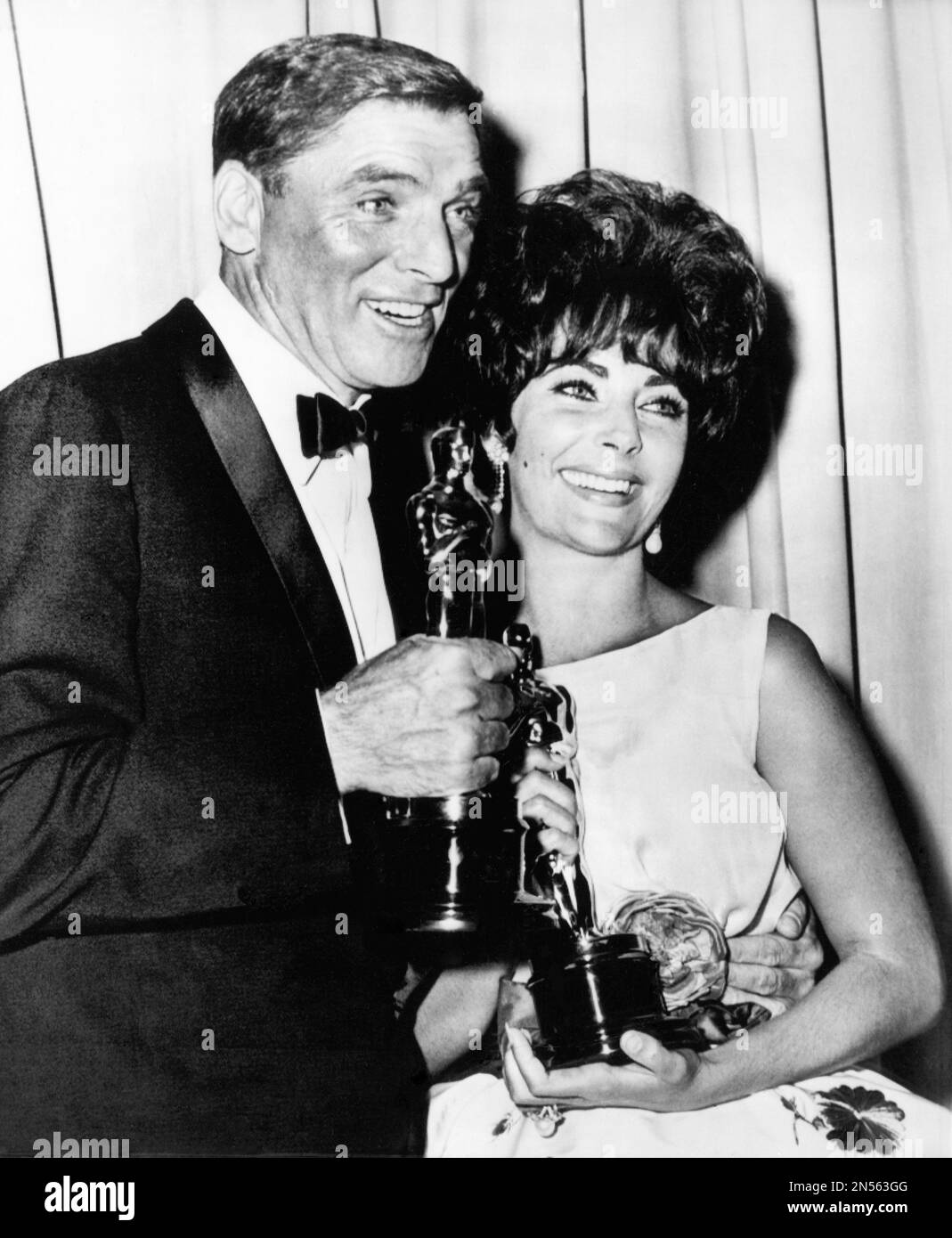
The 34th Academy Awards, held on April 9, 1962, celebrated the cinematic achievements of 1961. The ceremony is defined by the historic dominance of the musical West Side Story, which won 10 Oscars, and Sophia Loren’s groundbreaking Best Actress win—the first ever for a non-English language performance.
The 1962 Oscars represent a pivotal moment in Hollywood history, marking the transition from the traditional studio system’s spectacles to a new era of international recognition and gritty, realistic storytelling. While the night was a sweep for a high-budget musical, the underlying nominations reflected a growing appetite for social commentary and complex character studies. As of 2026, many of the films honored during this ceremony remain cornerstones of film school curricula and are widely available through high-definition restorations and digital archives.
The Cultural Landscape of the 1961-1962 Cinema Season
To understand the 1962 Oscars, one must look at the state of the film industry in 1961. The "Golden Age of Hollywood" was evolving. The rise of television had forced movie studios to produce larger-than-life spectacles that could not be replicated on a small screen. This resulted in a year of massive productions like The Guns of Navarone, El Cid, and the eventual Best Picture winner, West Side Story.
However, 1961 was also a year of intense drama. The Cold War was at its height, and the film industry was beginning to grapple with the aftermath of World War II in more direct ways. Judgment at Nuremberg brought the horrors of the Holocaust and the complexities of legal morality to the forefront of mainstream entertainment. Simultaneously, the "New Hollywood" sentiment was beginning to brew, evidenced by the cynical, dark atmosphere of The Hustler.
The Dominance of West Side Story
The 34th Academy Awards belonged to West Side Story. Directed by Robert Wise and Jerome Robbins, the film was a modern-day reimagining of Romeo and Juliet set against the backdrop of gang warfare in New York City. Its 10 wins (out of 11 nominations) set a record for a musical that still commands respect in 2026.
Revolutionary Direction and Choreography
One of the most notable aspects of the 1962 ceremony was the Best Director category. For the first time, the Academy awarded the prize to a directing duo: Robert Wise and Jerome Robbins. While Wise handled the traditional filmmaking aspects, Robbins was responsible for the revolutionary choreography that integrated dance into the narrative as a form of combat and emotional expression. This partnership, while professionally fraught, resulted in a visual language that changed the musical genre forever.
Supporting Performance Victories
The film’s strength was further solidified by the wins of George Chakiris and Rita Moreno in the supporting categories. Moreno’s win for her role as Anita was particularly significant, making her the first Hispanic woman to win an Academy Award. Her performance of "America" remains one of the most studied sequences in musical cinema for its blend of social critique and technical precision.
Sophia Loren’s Historic Achievement
If West Side Story was the evening's primary narrative, Sophia Loren provided its most historic breakthrough. Loren won the Best Actress Oscar for her role in Two Women (La Ciociara), directed by Vittorio De Sica. This was the first time an actor won a competitive Academy Award for a performance in a language other than English.
Loren’s portrayal of a mother trying to protect her daughter from the horrors of war in Italy resonated deeply with voters. Interestingly, Loren did not attend the ceremony in Santa Monica. Believing she had no chance of winning against the likes of Audrey Hepburn (Breakfast at Tiffany's) or Natalie Wood (Splendor in the Grass), she remained in Italy. When Greer Garson announced her name, it signaled a major shift in the Academy's willingness to look beyond the borders of the United States and the United Kingdom for artistic excellence.
Significant Winners and Categories of the 34th Academy Awards
The following table summarizes the primary winners from the 1962 ceremony, showcasing the variety of films that managed to secure trophies despite the West Side Story sweep.
| Category | Winner | Film |
|---|---|---|
| Best Picture | Robert Wise (Producer) | West Side Story |
| Best Director | Robert Wise and Jerome Robbins | West Side Story |
| Best Actor | Maximilian Schell | Judgment at Nuremberg |
| Best Actress | Sophia Loren | Two Women |
| Best Supporting Actor | George Chakiris | West Side Story |
| Best Supporting Actress | Rita Moreno | West Side Story |
| Best Adapted Screenplay | Abby Mann | Judgment at Nuremberg |
| Best Original Screenplay | William Inge | Splendor in the Grass |
| Best Cinematography (Color) | Daniel L. Fapp | West Side Story |
| Best Cinematography (B&W) | Eugen Schüfftan | The Hustler |
| Best Original Score | Saul Chaplin, et al. | West Side Story |
| Best Special Effects | Bill Warrington, Vivian C. Greenham | The Guns of Navarone |
The Acting Categories: A Deep Dive
The 1962 acting races were exceptionally competitive, featuring several performances that are now considered some of the best in history.
Maximilian Schell in Judgment at Nuremberg
Maximilian Schell’s win for Best Actor was a rare instance of an actor winning for a role they had previously performed in another medium. Schell had played the defense attorney Hans Rolfe in the 1959 Playhouse 90 television production of the same story. His intense, intellectual defense of Nazi judges forced the audience to confront uncomfortable questions about collective guilt and individual responsibility.
The Competition for Best Actor
Schell faced stiff competition from Paul Newman in The Hustler. Newman’s portrayal of "Fast" Eddie Felson is often cited as one of the definitive performances of the "loner" archetype in American cinema. While Newman did not win in 1962, the role remains one of his most iconic, eventually leading to a sequel and a win decades later.
Best Supporting Actress: A Year of Icons
While Rita Moreno took the trophy, the category featured other legendary performances, including Judy Garland in Judgment at Nuremberg. Garland’s brief but devastating role as a woman testifying about her past was seen as a major comeback for the star, even if she did not take home the statuette.
Technical Awards: The Split Between Color and Black & White
In 1962, the Academy still maintained separate categories for Cinematography, Art Direction, and Costume Design based on whether the film was shot in color or black and white. This distinction highlights the era's technical transition.
- The Hustler won for Black & White Cinematography, utilizing high-contrast lighting to create a smoky, claustrophobic atmosphere in the pool halls.
- West Side Story won for Color Cinematography, using a vibrant, almost primary-color palette to emphasize the theatrical nature of its street settings.
By 2026, these technical achievements are often studied via the American Society of Cinematographers archives, which detail the specific film stocks and lighting rigs used during this era of 70mm and Panavision expansion.
The Ceremony: Logistics and Highlights
The event took place at the Santa Monica Civic Auditorium and was hosted by the legendary Bob Hope. This was Hope’s eleventh time hosting (or co-hosting) the event. His monologue focused on the changing nature of the industry and the high costs of film production.
The "Oscar Crasher" Incident
The 1962 ceremony featured one of the first major "crashes" in Oscar history. A man named Stan Berman, a New York taxi driver known for gatecrashing high-profile events, managed to get onto the stage. He approached Bob Hope and attempted to present a homemade trophy to the comedian. While the incident was handled with professional grace by Hope, it led to a significant tightening of security for future Academy Awards.
The Presentation of the Irving G. Thalberg Memorial Award
The 34th Awards also honored Stanley Kramer with the Irving G. Thalberg Memorial Award. Kramer was a producer and director known for his "socially conscious" films, including Judgment at Nuremberg and Inherit the Wind. This award recognized his career-long commitment to using cinema as a tool for exploring difficult societal issues.
Legacy and Preservation of the 1962 Winners
In the current year of 2026, the films of the 1962 Oscars are more accessible than ever. Organizations like the Academy Film Archive have worked tirelessly to preserve the original negatives of these films.
The 4K restorations of West Side Story and The Hustler have allowed modern audiences to appreciate the meticulous craft of early 60s filmmaking. These restorations often reveal details—such as the texture of the costumes or the subtle nuances of the background actors—that were lost in older television broadcasts or DVD releases.
FAQs About the 1962 Oscars
Who won the most Oscars in 1962?
West Side Story was the dominant winner of the night, taking home 10 Academy Awards. These included Best Picture, Best Director, Best Supporting Actor, and Best Supporting Actress, along with several technical awards. It remains one of the most awarded films in the history of the Academy.
Why was Sophia Loren's win significant?
Sophia Loren's win for Two Women was the first time an actor or actress won an Oscar for a performance in a non-English language film. This broke a long-standing "language barrier" at the Academy and paved the way for future international winners like Roberto Benigni, Marion Cotillard, and the cast of Parasite.
Did Natalie Wood win an Oscar for West Side Story?
No. Despite being the lead actress in the Best Picture winner, Natalie Wood was nominated for Best Actress for her role in Splendor in the Grass that same year, rather than for West Side Story. She did not win; the award went to Sophia Loren.
Where was the 34th Academy Awards held?
The ceremony was held at the Santa Monica Civic Auditorium in Santa Monica, California. This venue hosted the Oscars from 1961 to 1967 before the ceremony moved to the Dorothy Chandler Pavilion.
Who hosted the 1962 Oscars?
The ceremony was hosted by Bob Hope. Hope is the most frequent host in Oscar history, having hosted or co-hosted the event 19 times. His 1962 appearance was noted for its sharp wit regarding the industry's financial challenges.
Final Recommendation for Film Enthusiasts
To fully appreciate the 1962 Oscars, modern viewers should watch West Side Story and The Hustler back-to-back. This pairing perfectly illustrates the dual nature of cinema in 1961: one representing the pinnacle of the colorful, choreographed Hollywood spectacle, and the other representing the shift toward the gritty, character-driven realism that would define the decades to come. For those interested in the technical history of film, the Academy of Motion Picture Arts and Sciences offers extensive digital galleries and oral histories that provide deeper context into how these classics were made and how they triumphed on that April night in 1962.