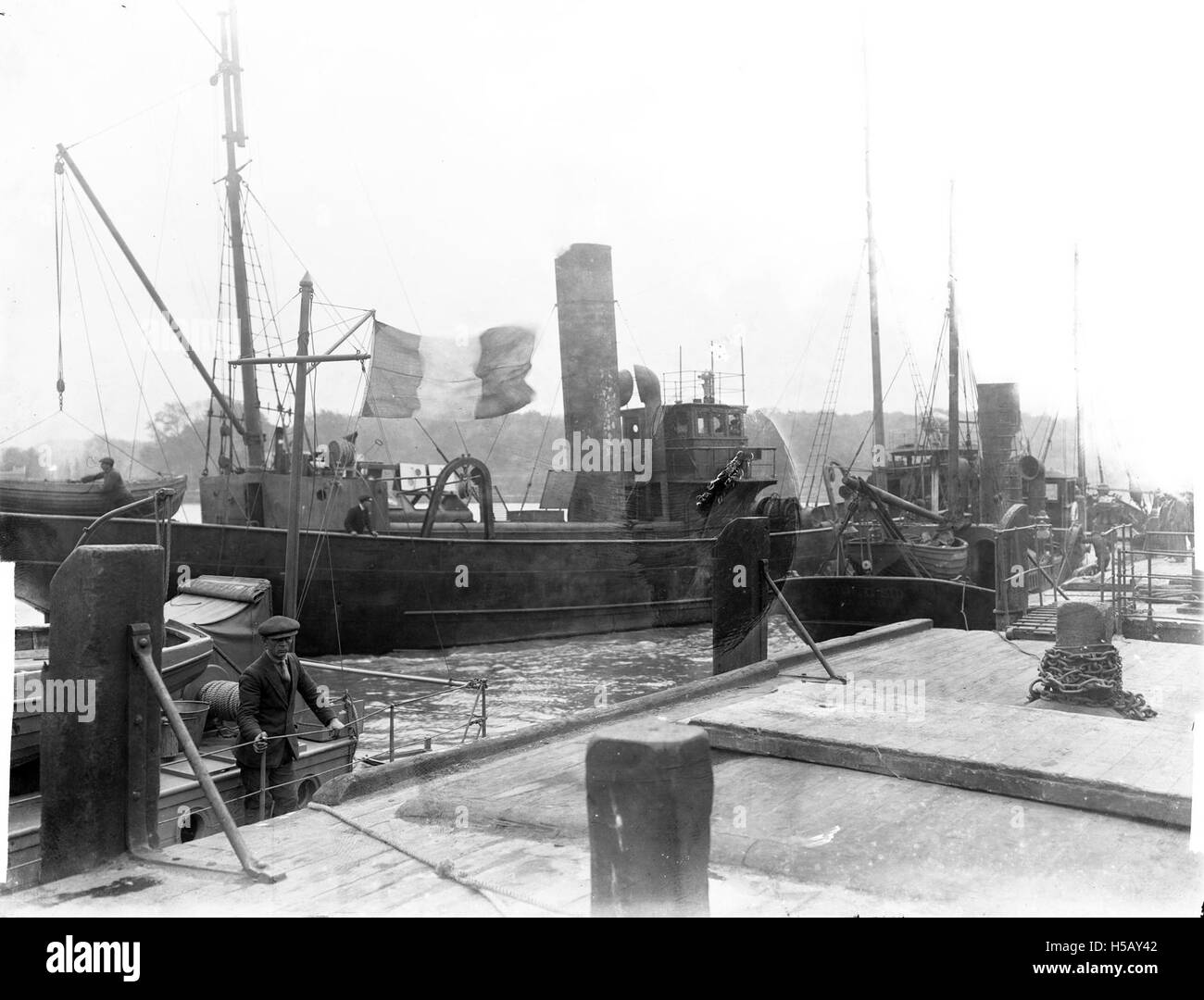
The year 1923 served as a critical pivot point in the twentieth century, marking a transition from the immediate, volatile aftermath of the First World War toward the complex geopolitical and economic shifts of the interwar period. It was characterized by the collapse of the German mark, the formal establishment of the Soviet Union, the birth of modern Turkey, and significant breakthroughs in science and culture that continue to influence the modern world.
The Economic Crisis and the Hyperinflation of the Weimar Republic
One of the most defining events of 1923 was the hyperinflation crisis in the Weimar Republic. Following the French and Belgian occupation of the Ruhr industrial region—triggered by Germany's default on World War I reparation payments—the German government initiated a policy of "passive resistance." To pay the striking workers, the government printed money on an unprecedented scale, leading to a total devaluation of the Papiermark.
By late 1923, the exchange rate against the U.S. dollar had reached astronomical figures. This period caused deep social trauma, wiped out the savings of the middle class, and fundamentally altered the German political landscape. The introduction of the Rentenmark in November 1923 eventually stabilized the currency, but the psychological scars remained, contributing to the radicalization of German politics in the following decade.
The Geopolitical Realignment: New Nations and Ideologies
While Germany struggled with economic collapse, other regions saw the birth of new political structures that would define the remainder of the century.
The Foundation of the Soviet Union
Though the Treaty on the Creation of the USSR was signed in late 1922, 1923 was the first full year of the Soviet Union’s existence. With Vladimir Lenin’s health failing, the state apparatus began the internal power struggle that would eventually lead to the rise of Joseph Stalin. The consolidation of Soviet power during this year established the framework for a socialist state that would influence international relations for nearly seventy years.
The Birth of the Republic of Turkey
Following the collapse of the Ottoman Empire and the conclusion of the Turkish War of Independence, the Republic of Turkey was officially proclaimed on October 29, 1923. Mustafa Kemal Atatürk was elected as the first president. His subsequent reforms, known as "Kemalism," focused on secularism, westernization, and nationalism, transforming the remnants of a traditional empire into a modern nation-state.
The Lausanne Treaty
Signed in July 1923, the Treaty of Lausanne effectively ended the conflict between the Allied powers and the Ankara government. It replaced the unratified Treaty of Sèvres and established the modern borders of Turkey, representing a rare instance where a defeated empire was able to renegotiate terms to secure its sovereignty through diplomatic and military resolve.
Cultural and Technological Milestones
The year 1923 was a period of rapid advancement in how humans communicated and perceived the world. It was a time when the "Roaring Twenties" began to find their stride, characterized by a rapid acceleration in mass media and scientific discovery.
Radio and Broadcasting
Radio broadcasting transitioned from an experimental hobby to a major social force in 1923. The availability of vacuum-tube receivers increased, and major cities across the United States and Europe saw a proliferation of radio stations. This changed how citizens received news, music, and government communications, effectively creating the first generation of true "mass culture."
Scientific Advancements
In the field of science, 1923 was marked by the work of Robert Millikan, who was awarded the Nobel Prize in Physics for his work on the elementary charge of electricity and the photoelectric effect. Furthermore, the field of chemistry saw the introduction of the Brønsted–Lowry acid-base theory, which provided a more robust framework for understanding chemical reactions—a theory that remains a cornerstone of chemistry education today.
Comparative Overview of 1923 Global Events
| Event/Region | Context | Primary Consequence |
|---|---|---|
| Germany | Hyperinflation | Total currency collapse and social instability. |
| Turkey | Treaty of Lausanne | Sovereignty achieved; Republic established. |
| USSR | Formal Consolidation | Centralization of Communist power under party rule. |
| USA | Technological Expansion | Rapid growth of commercial radio and mass media. |
Troubleshooting Historical Research: Common Misconceptions
When researching the history of 1923, students and scholars often encounter common pitfalls. Understanding these helps in building a more accurate historical narrative:
- Confusing 1923 with the 1929 Crash: While 1923 was an economic crisis for Germany, it was not the year of the global Great Depression. The 1923 crisis was an isolated, localized event caused by hyperinflationary monetary policy, whereas the 1929 crash was a structural failure of international stock markets.
- The "End of the War" Myth: Many assume that the First World War ended in 1918 and that peace was instant. The year 1923 proves that geopolitical "peace" was a process of several years, involving ongoing border disputes and territorial redefinitions that lasted well into the mid-1920s.
- Monolithic Perspectives: Researchers often treat 1923 as a uniform experience. However, the world was divided; while the U.S. enjoyed the early stages of a postwar boom, Central Europe was fighting to prevent famine and economic dissolution.
FAQ: Frequently Asked Questions About 1923
What caused the hyperinflation in 1923? The hyperinflation was caused by the German government printing excessive amounts of currency to pay striking workers in the Ruhr and to make reparations payments mandated by the Treaty of Versailles. This led to a collapse in the value of the mark as the supply of currency vastly outpaced the productive capacity of the economy.
Why is 1923 important to Turkish history? 1923 marks the transition from the Ottoman Empire to the Republic of Turkey. It saw the official recognition of the new state's borders through the Treaty of Lausanne and the commencement of the modernization reforms led by Mustafa Kemal Atatürk.
Did 1923 affect the rise of the Soviet Union? Yes. 1923 was the first year the Soviet Union functioned as a consolidated entity. It solidified the structure of the Communist Party’s control and set the stage for the power struggle between Stalin and Trotsky following Lenin’s death shortly thereafter.
What was the status of the United States in 1923? The United States was in the early years of an economic expansion known as the "Roaring Twenties." President Warren G. Harding died in office in August 1923, and Vice President Calvin Coolidge took over, presiding over a period of isolationist foreign policy and industrial growth.
How did radio change society in 1923? Radio transformed society by breaking down geographic barriers. It allowed for the simultaneous broadcasting of news and entertainment, creating a shared national identity and accelerating the pace at which popular culture traveled across the country.
Next Steps for Historical Inquiry
To deepen your understanding of 1923, it is recommended to move beyond general histories and consult primary documents from the period. The archives of the League of Nations provide excellent records of the diplomatic maneuvering surrounding the Treaty of Lausanne. For economic insights, the records of the Reichsbank from 1923 offer a stark look at the mechanics of hyperinflation. If you are conducting research for a project, prioritize accessing contemporary newspaper archives from 1923, which provide the most unfiltered perspective on how these global changes were perceived by the public at the time. By synthesizing these primary records with modern scholarly analysis, you can develop a comprehensive grasp of this transformative year.