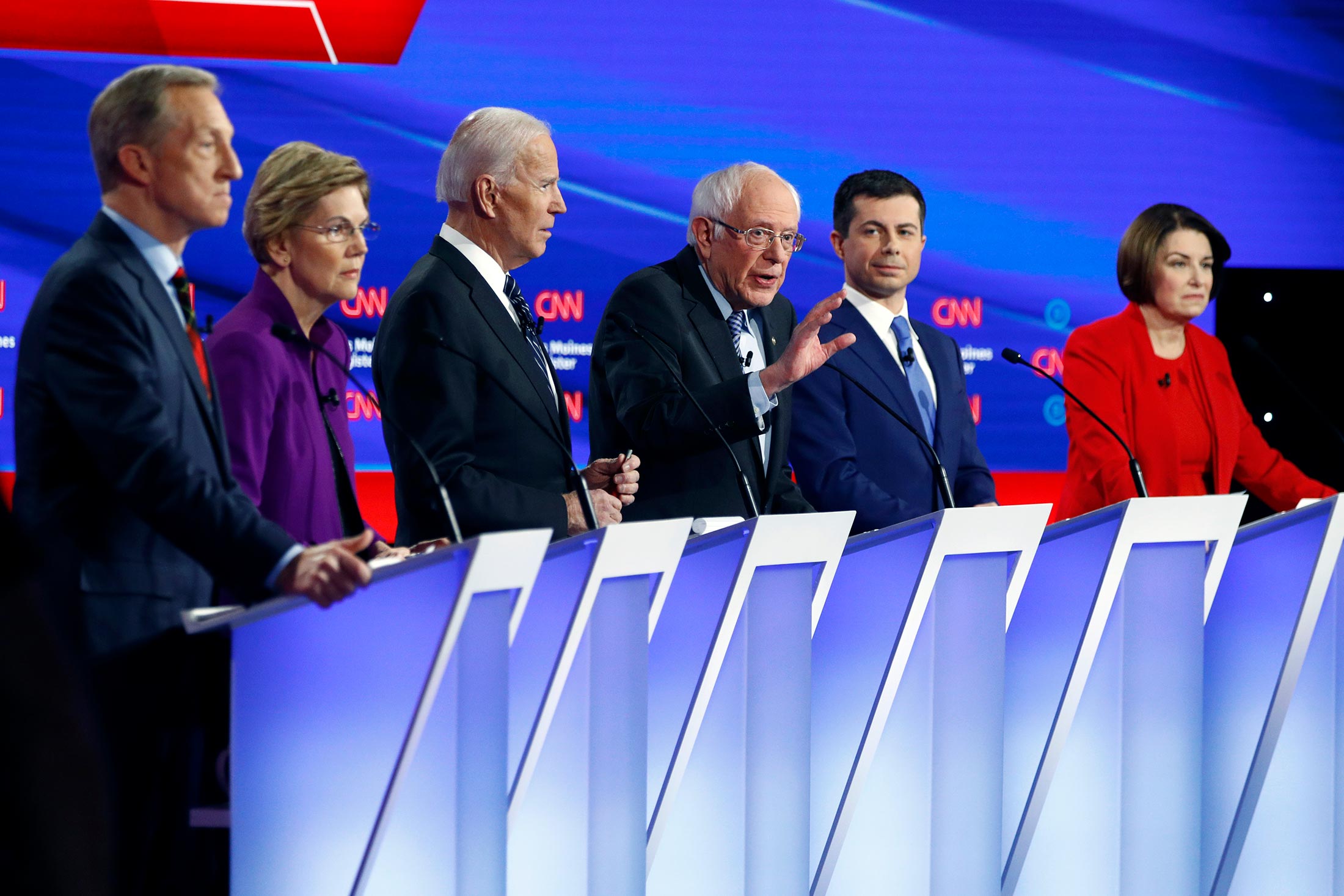
The 2020 Democratic presidential primary featured the largest and most diverse field of candidates in American history, with over 25 major individuals vying for the nomination. Ultimately, Joe Biden secured the nomination after a pivotal win in South Carolina, leading to a consolidated effort by the Democratic Party to challenge incumbent President Donald Trump in the general election.
The 2020 election cycle was a landmark event in U.S. politics, characterized by deep ideological debates within the Democratic Party and the unprecedented challenge of campaigning during the onset of the COVID-19 pandemic. From seasoned veterans of the Senate to a former mayor of a mid-sized city and a self-made billionaire, the spectrum of candidates offered a wide array of visions for the future of the United States. This article provides a detailed retrospective of the candidates, their platforms, the key milestones of the primary, and how the field eventually narrowed to the Biden-Harris ticket.
The Historic Scope of the 2020 Democratic Field
At its peak, the 2020 Democratic primary field was notable not just for its size, but for its demographic representation. It included a record number of women, several African American and Hispanic candidates, the first major openly LGBTQ+ candidate, and an Asian American entrepreneur. This diversity reflected the evolving base of the Democratic Party and a collective desire to present a candidate who could appeal to a broad coalition of voters.
The primary was largely a struggle between two ideological wings: the "Progressives," led by Senators Bernie Sanders and Elizabeth Warren, who advocated for systemic structural changes to the American economy and healthcare system, and the "Moderates" or "Pragmatists," led by Joe Biden, Pete Buttigieg, and Amy Klobuchar, who focused on building upon the Affordable Care Act and returning to traditional diplomatic norms.
Key Frontrunners and Their Platforms
To understand the 2020 primary, one must examine the core group of candidates who sustained momentum through the early voting states and the debate cycles.
Joe Biden: The Restoration Candidate
Former Vice President Joe Biden entered the race with high name recognition and a campaign built on the premise of "restoring the soul of the nation." His platform was centered on stability, experience, and the ability to win back the "Blue Wall" states in the Midwest. Biden’s policy proposals were often framed as expansions of the Obama-era legacy, particularly regarding the Affordable Care Act. Despite a slow start in Iowa and New Hampshire, his resounding victory in South Carolina, bolstered by the endorsement of Representative James Clyburn, proved to be the turning point of the entire primary.
Bernie Sanders: The Democratic Socialist
Senator Bernie Sanders of Vermont returned for his second presidential run with a robust grassroots organization. His platform of "Medicare for All," a $15 minimum wage, and aggressive climate action through the Green New Deal galvanized younger voters and the progressive base. Sanders won the popular vote in the first three contests—Iowa, New Hampshire, and Nevada—becoming the first candidate of any party to do so in the modern era. However, his momentum hit a ceiling when the moderate wing of the party consolidated behind Biden just before Super Tuesday.
Elizabeth Warren: "I Have a Plan for That"
Senator Elizabeth Warren of Massachusetts distinguished her campaign through detailed policy proposals. Her campaign slogan, "I have a plan for that," covered everything from a wealth tax on multi-millionaires to universal childcare and student debt cancellation. Warren attempted to bridge the gap between the progressive and moderate wings but struggled to maintain her "top-tier" status as the race polarized between Biden and Sanders.
Michael Bloomberg: The Late Entrant
Former New York City Mayor Michael Bloomberg entered the race late, skipping the first four voting states to focus on a massive self-funded advertising blitz on Super Tuesday. His campaign was built on the argument that his executive experience and vast resources were necessary to defeat Donald Trump. Despite spending over $500 million of his own money, Bloomberg failed to win a single state and dropped out shortly after Super Tuesday.
The Diverse Field: Breaking Barriers
The 2020 cycle saw several candidates who, while not securing the nomination, fundamentally changed the discourse of the party and the country.
- Pete Buttigieg: As the former mayor of South Bend, Indiana, Buttigieg rose from relative obscurity to win the Iowa caucuses. He was the first openly gay candidate to win a presidential primary contest, focusing his message on a "new generation of leadership" and national unity.
- Kamala Harris: The Senator from California and future Vice President initially gained significant attention for her prosecutorial style in Senate hearings and a strong first debate performance. Although her campaign struggled with internal management and messaging, leading to an early exit in December 2019, her presence as a top-tier candidate paved the way for her eventual selection as Biden's running mate.
- Andrew Yang: An entrepreneur who campaigned almost exclusively on the concept of Universal Basic Income (UBI), which he called the "Freedom Dividend." Yang's "MATH" (Make America Think Harder) movement brought attention to the risks of automation and the changing nature of work.
- Amy Klobuchar: The Senator from Minnesota positioned herself as a Midwestern pragmatist who could win "purple" states. Her strong debate performances helped her to a surprising third-place finish in New Hampshire.
2020 Democratic Candidate Comparison Table
The following table summarizes the key metrics and platforms of the most prominent candidates during the 2020 cycle.
| Candidate | Primary Ideology | Key Policy Focus | Withdrawal Date |
|---|---|---|---|
| Joe Biden | Moderate / Centrist | ACA Expansion, Middle-Class Growth | N/A (Nominee) |
| Bernie Sanders | Progressive / Socialist | Medicare for All, Green New Deal | April 8, 2020 |
| Elizabeth Warren | Progressive | Wealth Tax, Corporate Accountability | March 5, 2020 |
| Michael Bloomberg | Centrist | Climate Change, Gun Control | March 4, 2020 |
| Pete Buttigieg | Moderate | Public Option, National Service | March 1, 2020 |
| Amy Klobuchar | Moderate | Infrastructure, Healthcare Reform | March 2, 2020 |
| Kamala Harris | Moderate / Progressive | Criminal Justice, Middle Class Tax Cuts | Dec 3, 2019 |
| Andrew Yang | Non-Traditional | Universal Basic Income (UBI) | Feb 11, 2020 |
| Tulsi Gabbard | Anti-Interventionist | Foreign Policy Reform | March 19, 2020 |
| Tom Steyer | Progressive | Climate Change, Economic Justice | Feb 29, 2020 |
The Progression of the Race: From Iowa to the Convention
The 2020 primary was a race of two halves. The first half was characterized by a fragmented field where several candidates appeared viable. The second half was a rapid consolidation that occurred in the 72 hours between the South Carolina primary and Super Tuesday.
The Early States (February 2020)
The Iowa Caucuses were marred by technical difficulties with a reporting app, which delayed results for days. Eventually, Pete Buttigieg was declared the narrow winner of the delegate count, though Bernie Sanders won the popular vote. New Hampshire followed, with Sanders taking the top spot and Klobuchar surging to third. Nevada proved to be a high point for Sanders, where he won a decisive victory, showing strength among Latino voters.
The South Carolina Pivot
South Carolina served as Joe Biden’s "firewall." After three disappointing finishes, Biden needed a massive win to prove his viability among Black voters, a core constituency of the Democratic Party. He won the state by nearly 30 points. This victory triggered a cascade of events: Pete Buttigieg and Amy Klobuchar dropped out of the race and endorsed Biden on the eve of Super Tuesday.
Super Tuesday and COVID-19
On March 3, 2020 (Super Tuesday), Biden won 10 out of 14 states, effectively seizing control of the delegate lead. As the race narrowed to a two-man contest between Biden and Sanders, the COVID-19 pandemic began to sweep across the United States. In-person campaigning ground to a halt, and several states postponed their primaries. By early April, citing the impossibility of a path to victory and the need for party unity during a national health crisis, Bernie Sanders suspended his campaign.
The Impact of the DNC Debate Rules
The Democratic National Committee (DNC) implemented strict criteria for candidates to qualify for the televised debates. To participate, candidates had to meet specific polling thresholds and reach a minimum number of unique donors.
- Fundraising Requirements: Candidates needed hundreds of thousands of individual donors, which forced them to focus heavily on digital marketing and grassroots outreach.
- Polling Thresholds: Candidates had to hit 1% to 5% (increasing as the race progressed) in approved national or early-state polls.
- The "Bloomberg Rule": Late in the race, the DNC removed the donor requirement, which allowed Michael Bloomberg to appear on the debate stage despite his campaign being entirely self-funded. This move was controversial and led to a heated debate performance where Bloomberg was sharply criticized by Elizabeth Warren.
These rules were designed to narrow the field systematically, but they also faced criticism for potentially disadvantageous smaller-budget campaigns or those representing marginalized perspectives that took longer to gain traction in mainstream polling.
Frequently Asked Questions
Who were the last three candidates in the 2020 Democratic primary?
The final three major candidates actively campaigning were Joe Biden, Bernie Sanders, and Tulsi Gabbard. Sanders suspended his campaign on April 8, 2020, and Gabbard withdrew on March 19, 2020. Joe Biden became the presumptive nominee shortly thereafter.
Why did so many candidates drop out before Super Tuesday?
The consolidation was a strategic move by the moderate wing of the Democratic Party. After Joe Biden's decisive win in South Carolina, candidates like Pete Buttigieg and Amy Klobuchar realized they no longer had a viable path to the nomination. By withdrawing and endorsing Biden, they helped consolidate the moderate vote to prevent Bernie Sanders from gaining an insurmountable delegate lead.
What was the main policy difference between Biden and Sanders?
The most significant policy divide was healthcare. Bernie Sanders advocated for "Medicare for All," a single-payer system that would effectively eliminate private insurance. Joe Biden proposed a "Public Option," which would allow people to opt into a government-run plan while maintaining the existing private insurance market established by the Affordable Care Act.
How did the 2020 primary handle the COVID-19 pandemic?
The pandemic forced the cancellation of rallies and traditional "retail politics." Candidates transitioned to virtual town halls and digital campaigning. Several states transitioned to mail-in voting for their primaries, and the Democratic National Convention in Milwaukee was held almost entirely virtually to ensure public safety.
Was Kamala Harris the first choice for Vice President?
While Joe Biden considered several high-profile women for the role—including Susan Rice, Elizabeth Warren, and Gretchen Whitmer—Kamala Harris was seen as a balanced choice. She offered geographic balance, a younger perspective, and represented a historic milestone as the first Black and South Asian woman on a major party ticket.
Final Perspective and Historical Legacy
Looking back from 2026, the 2020 Democratic candidates are remembered for their collective effort to navigate a period of intense polarization and a global health crisis. The primary did more than just select a nominee; it served as a national laboratory for ideas that have since become central to political discourse, such as student loan forgiveness, climate justice, and the viability of universal basic income.
For those researching this period, the primary serves as a case study in how political parties manage internal ideological diversity. The eventual victory of Joe Biden in the general election validated the "Big Tent" strategy of the Democratic Party, while the lasting influence of the Sanders and Warren platforms continues to shape legislative priorities in the halls of Congress.
Next Action: To further understand the transition from the primary to the general election, readers should examine the Federal Election Commission (FEC) filings for 2020 to see how campaign finance and Super PAC spending influenced the final outcome of the race.