The 2020 United States presidential election was the 59th quadrennial election, held on November 3, 2020. Democratic nominee Joe Biden and his running mate Kamala Harris defeated incumbent Republican President Donald Trump and Vice President Mike Pence. The election saw the highest voter turnout in over a century, driven by significant shifts in voting methodology.
Historical Context and the Global Pandemic
The 2020 election occurred during a period of unprecedented national and global upheaval. The primary driver of this environment was the COVID-19 pandemic, which reached the United States in early 2020. By the time the general election arrived, the virus had profoundly altered the American lifestyle, economy, and the very mechanics of the democratic process.
Before the pandemic, the election was expected to be a referendum on President Trump’s economic policies and his "America First" agenda. However, the public health crisis shifted the focus toward crisis management, healthcare infrastructure, and the federal government's role in emergency response. The pandemic also triggered a sharp economic downturn, ending a long period of growth and complicating the incumbent's platform of economic prosperity.
Beyond the pandemic, the summer of 2020 was marked by widespread civil unrest following the death of George Floyd. This brought issues of racial justice, policing reform, and systemic inequality to the forefront of the national conversation. Both major parties were forced to address these social dynamics, with the Democrats emphasizing reform and the Republicans focusing on "law and order." As we look back from 2026, these dual crises—public health and social justice—are viewed as the defining pillars that shaped voter sentiment during the 2020 cycle.
Candidates and Major Party Platforms
The 2020 election featured two candidates with diametrically opposed visions for the country. The primary season had been a rigorous testing ground, particularly for the Democratic Party, which saw a crowded field of over 20 candidates before coalescing around former Vice President Joe Biden.
The Democratic Ticket: Biden and Harris
Joe Biden campaigned on a platform of "Restoring the Soul of the Nation." His strategy focused on building a broad coalition that included moderate Republicans, independent voters, and the progressive wing of the Democratic Party. Key policy proposals included:
- The Build Back Better Plan: A massive investment in infrastructure, clean energy, and the "care economy."
- Healthcare Expansion: Strengthening the Affordable Care Act (ACA) and introducing a public option.
- Climate Change: Rejoining the Paris Agreement and setting a goal for net-zero emissions by 2050.
- COVID-19 Response: A science-led federal strategy involving mask mandates on federal property and expanded testing.
Kamala Harris’s selection as Vice President was historic, as she became the first woman, the first African American, and the first South Asian American to hold the office.
The Republican Ticket: Trump and Pence
President Donald Trump ran on a platform of continuity and "Promises Kept." Interestingly, the Republican National Committee (RNC) opted not to write a new platform in 2020, instead passing a resolution stating the party would continue to support the President’s agenda. His key focuses included:
- Economic Deregulation: Continuing the trend of reducing federal oversight to stimulate business.
- Judicial Appointments: Highlighting the appointment of three Supreme Court justices and hundreds of federal judges.
- Trade: Renegotiating trade deals like the USMCA (United States-Mexico-Canada Agreement).
- Immigration: Building the wall on the southern border and maintaining "Remain in Mexico" policies.
Voting Methodology and the Expansion of Mail-in Ballots
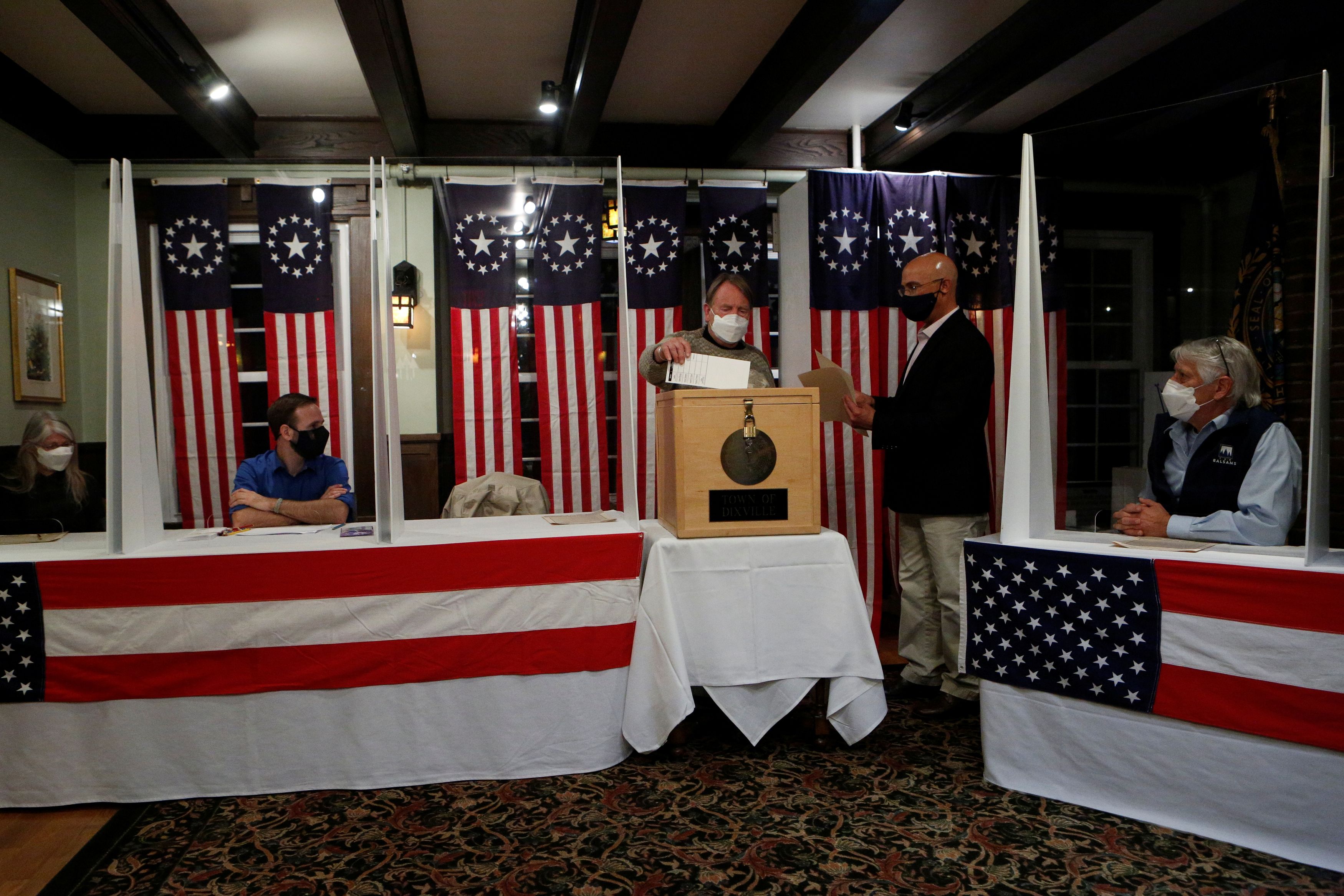
One of the most significant technical shifts in 2020 was the massive expansion of mail-in and early voting. To mitigate the risk of COVID-19 transmission at crowded polling stations, many states relaxed their "no-excuse" absentee ballot laws or proactively mailed ballot applications to all registered voters.
This shift created a bifurcated voting pattern. Democratic voters were statistically more likely to use mail-in ballots, while Republican voters showed a stronger preference for in-person voting on Election Day. This discrepancy led to the "red mirage" and "blue shift" phenomena. On election night, early returns from in-person voting showed Trump leading in several key states. However, as the millions of mail-in ballots were processed and counted in the following days, the totals shifted toward Biden.
According to data from the U.S. Election Assistance Commission, more than 69% of voters cast their ballots non-traditionally (either by mail or early in-person), a massive increase from approximately 40% in 2016. This shift required election offices to upgrade their processing equipment and hire additional staff to handle the high volume of envelopes and signature verifications.
Analysis of Key Battleground States
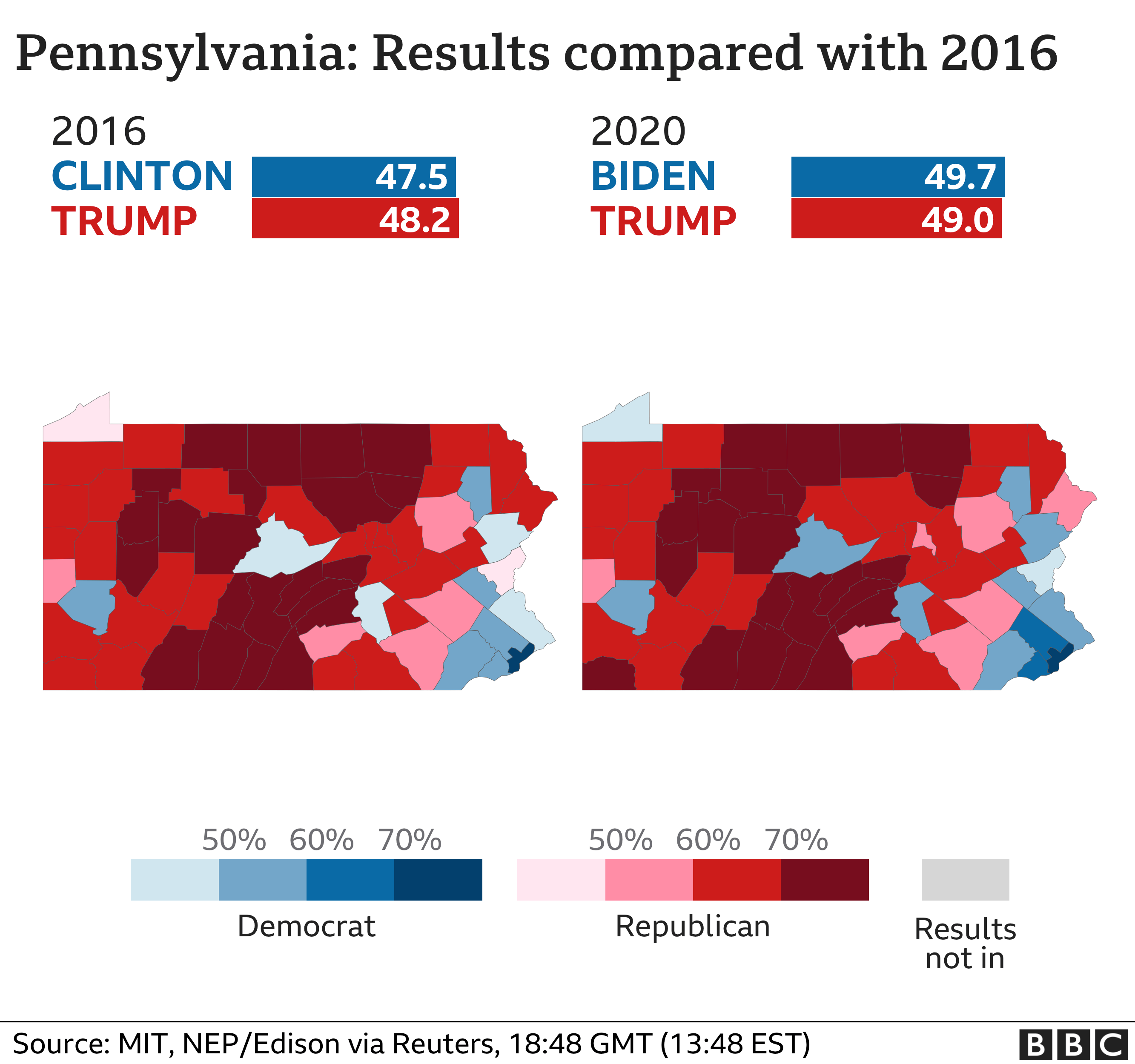
The election was ultimately decided in a handful of "swing states" in the Midwest and the Sun Belt. Biden successfully rebuilt the "Blue Wall"—Pennsylvania, Michigan, and Wisconsin—which Trump had flipped in 2016. Furthermore, Biden achieved historic wins in Georgia and Arizona, states that had not voted for a Democratic presidential candidate in decades.
The following table outlines the results in the most critical battleground states that determined the outcome of the Electoral College:
| State | Biden Votes | Trump Votes | Margin (%) | Electoral Votes | Result Change vs. 2016 |
|---|---|---|---|---|---|
| Pennsylvania | 3,458,229 | 3,377,674 | +1.17% | 20 | Republican to Democratic |
| Michigan | 2,804,040 | 2,649,852 | +2.78% | 16 | Republican to Democratic |
| Wisconsin | 1,630,866 | 1,610,184 | +0.63% | 10 | Republican to Democratic |
| Georgia | 2,473,633 | 2,461,854 | +0.24% | 16 | Republican to Democratic |
| Arizona | 1,672,143 | 1,661,684 | +0.31% | 11 | Republican to Democratic |
| Florida | 5,297,045 | 5,668,731 | -3.36% | 29 | Held by Republican |
| North Carolina | 2,684,292 | 2,758,775 | -1.35% | 15 | Held by Republican |
The results in Georgia were particularly notable, leading to two runoff elections on January 5, 2021, which eventually gave Democrats control of the U.S. Senate. This provided President-elect Biden with a unified government for the first two years of his term.
Post-Election Challenges and Security Verification
The aftermath of the 2020 election was marked by an unprecedented series of legal and political challenges to the results. President Trump and his legal team filed over 60 lawsuits in state and federal courts, alleging widespread voter fraud and procedural irregularities.
However, these claims failed to gain traction in the judicial system. Judges appointed by both Democratic and Republican presidents—including the Supreme Court—found no evidence of fraud sufficient to change the outcome of the election. The Cybersecurity and Infrastructure Security Agency (CISA) released a joint statement with the Election Infrastructure Government Coordinating Council (GCC) Executive Committee, famously declaring the November 3rd election "the most secure in American history."
The certification process culminated on January 6, 2021. While the joint session of Congress was interrupted by a riot at the U.S. Capitol, the constitutional process was completed early the next morning. Vice President Mike Pence officially declared Joe Biden the winner with 306 electoral votes to Donald Trump's 232. The popular vote totals were equally decisive, with Biden receiving over 81 million votes, the most in U.S. history, to Trump’s 74 million.
Turnout and Demographic Shifts
The 2020 election saw a massive surge in civic participation. Approximately 158.4 million people voted, representing roughly 66.7% of the voting-eligible population. This was the highest percentage since 1900.
Several factors contributed to this turnout:
- Voter Enthusiasm: High levels of polarization led voters on both sides to view the election as an existential turning point.
- Accessibility: The expansion of mail-in and early voting lowered the barrier to entry for many who traditionally struggled to visit polling places on a Tuesday.
- Youth Participation: Voters aged 18–29 showed significant increases in participation compared to 2016, largely favoring the Democratic ticket.
Demographically, Biden maintained strong support among urban voters, women, and voters of color, while also making inroads with suburban voters who had previously leaned Republican. Trump expanded his support among rural voters and saw surprising gains among Hispanic voters in specific regions, such as South Florida and the Rio Grande Valley in Texas. These shifts have been studied extensively in the years since, shaping the campaign strategies for the subsequent 2024 election.
The Legacy of 2020 in 2026
From our vantage point in 2026, the 2020 election stands as a watershed moment in American political history. It fundamentally changed how elections are administered and how the public perceives the integrity of the vote.
Legislative Changes
In the years following 2020, dozens of states passed new legislation regarding election administration. Some states, such as Georgia and Florida, enacted laws to tighten mail-in ballot requirements and limit the use of drop boxes. Conversely, other states like California and Vermont moved to make universal mail-in voting permanent. This "patchwork" of voting laws remains a central topic of debate in the current 2026 legislative sessions.
The Role of Technology
The 2020 cycle highlighted the dual-edged nature of technology in democracy. While digital tools allowed for better voter education and streamlined registration, social media platforms became battlegrounds for disinformation. The struggle to balance free speech with the prevention of foreign interference and domestic misinformation continues to be a primary concern for the Federal Election Commission (FEC).
Polarization and Trust
Perhaps the most lasting legacy is the impact on public trust. While institutional audits and hand recounts (particularly in Georgia and Arizona) repeatedly affirmed the 2020 results, a significant segment of the population remains skeptical of electronic voting systems and mail-in processes. This has led to a permanent increase in the number of poll watchers and a heightened focus on "chain of custody" for ballots in every election held since.
Frequently Asked Questions
What was the final Electoral College count for the 2020 election?
Joe Biden received 306 electoral votes, while Donald Trump received 232. A candidate needs 270 electoral votes to win the presidency. This was the exact same margin, in reverse, as the 2016 election when Donald Trump defeated Hillary Clinton.
How many people voted in 2020?
A record-breaking 158.4 million Americans cast ballots in the 2020 election. This represented roughly 66.7% of the voting-eligible population, the highest turnout rate for a U.S. presidential election in over 120 years. According to the U.S. Census Bureau, the increase was seen across nearly all age groups and racial and ethnic backgrounds.
Was the 2020 election officially audited?
Yes, multiple states conducted various forms of audits and recounts. Georgia, for example, performed a full hand-count of all 5 million ballots cast, which reaffirmed Joe Biden's victory. Additionally, forensic audits and procedural reviews in states like Arizona and Pennsylvania found no evidence of systemic fraud or errors that would have altered the outcome.
Who were the third-party candidates in 2020?
The most prominent third-party candidates were Jo Jorgensen of the Libertarian Party and Howie Hawkins of the Green Party. Jorgensen received approximately 1.2% of the popular vote (1.8 million votes), while Hawkins received about 0.2% (400,000 votes). While they did not win any electoral votes, their presence on the ballot in tight swing states remained a point of analysis for political scientists.
What was the "Red Mirage" effect?
The "Red Mirage" (or "Blue Shift") refers to the phenomenon where early reported results on election night appeared to favor Republicans because in-person votes—which leaned Republican—were counted first. As the more time-consuming mail-in ballots—which leaned Democratic—were processed over the following days, the results shifted in favor of Joe Biden.
Next Actions for Interested Readers
For those looking to understand the mechanics of the 2020 election or prepare for upcoming cycles, the following steps are recommended:
- Review Official Reports: Visit the National Archives to view the certified Certificates of Ascertainment from all 50 states.
- Verify Your Registration: Use official government portals to ensure your voter registration is current for the next election cycle.
- Study Local Election Laws: Since election rules are set at the state level, familiarize yourself with the specific statutes in your jurisdiction regarding mail-in deadlines and ID requirements.