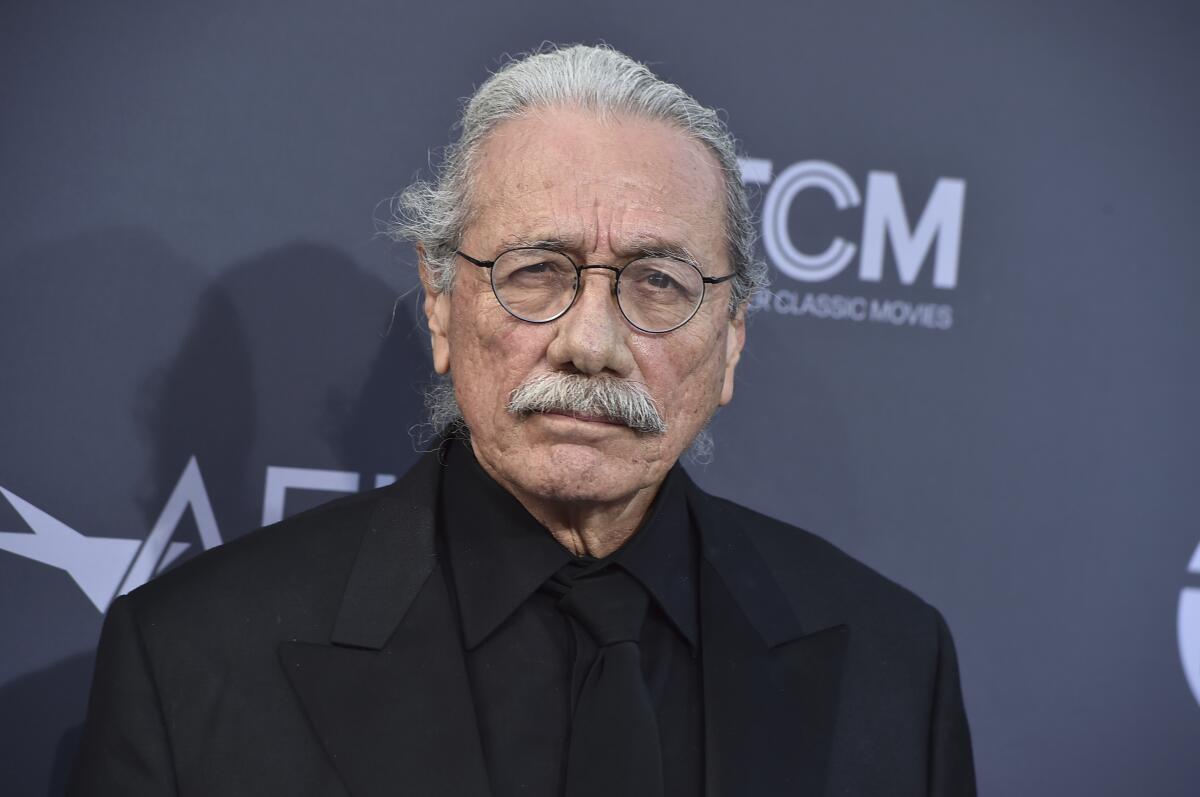
Edward James Olmos is a towering figure in American cinema and television, celebrated not only for his powerful performances in iconic roles like Stand and Deliver, Blade Runner, and Battlestar Galactica, but also for his relentless activism, cultural preservation, and commitment to humanitarian causes. His career spans more than five decades, during which he has broken barriers for Latino actors in Hollywood and left an indelible mark on storytelling.
Examining the life and career of Edward James Olmos reveals a multifaceted individual whose off-screen dedication to education, community building, and artistic integrity matches his on-screen intensity. From his unexpected beginnings as a Golden Gloves boxer to his historic Academy Award nomination and his work as a UNICEF Goodwill Ambassador, Olmos has consistently challenged expectations. This deep dive explores ten fascinating, verified facts about his life, career, and enduring legacy in the entertainment industry.
1. He Began His Career as a Golden Gloves Boxer and Musician
Before Edward James Olmos found his calling in acting and directing, he pursued paths in both sports and music. Born in East Los Angeles on February 24, 1947, he grew up in a working-class neighborhood where discipline and physical endurance were vital skills. In his youth, Olmos dedicated himself to boxing, eventually becoming a Golden Gloves bantamweight champion in California at the age of 13. While the boxing ring taught him focus and resilience, music ultimately captured his creative ambitions during his teenage years.
In the mid-1960s, Olmos fronted a rock-and-roll band called Pacific Ocean. The group played local venues around Los Angeles, developing a modest following and recording music that captured the psychedelic and garage rock sounds of the era. Although the band never achieved mainstream commercial success, this early immersion in performance art and stage presence laid the groundwork for his transition into theater and film. Olmos eventually realized that his passion for storytelling through acting offered a more profound outlet for his creative energy, steering him away from the music industry and toward the dramatic arts.
2. He Spent a Decade Paying His Dues in Theater and Small Television Roles
The path to stardom for Olmos was neither immediate nor easy. After shifting his focus to acting in the late 1960s and early 1970s, he spent more than ten years taking whatever work he could find. He studied acting extensively, performing in small, independent theater productions across Los Angeles and taking on bit parts in television series such as Hawaii Five-O, Kojak, and Hill Street Blues.
During this prolonged period of struggling for recognition, Olmos supported himself and his family by working a variety of odd jobs, including driving delivery trucks and selling furniture. This decade of theatrical grinding honed his craft, forcing him to master the nuances of character development on shoestring budgets and tiny stages. His breakthrough on the stage came with his starring role in Luis Valdez’s critically acclaimed play Zoot Suit, which transitioned from a regional production to a run on Broadway in 1979. This theatrical triumph served as the springboard that finally caught the attention of major film casting directors.
3. He Improvised His Most Iconic Line in Blade Runner
One of the most famous roles in Olmos’s career is that of Gaff in Ridley Scott’s 1982 cyberpunk masterpiece, Blade Runner. As the enigmatic, trench-coat-wearing detective who communicates in Cityspeak—a hodgepodge of Spanish, Japanese, German, and other languages—Olmos made a massive impact despite having relatively little screen time. His meticulous approach to character building was evident in every frame, from his distinct hat to his origami creations.
The most enduring legacy of his performance in Blade Runner, however, involves a famous piece of improvisation. During the sequence where Deckard (Harrison Ford) is walking with Gaff, Olmos decided to invent a line of dialogue on the spot. Speaking in Cityspeak, he uttered the phrase: "Monsieur, azon. Sé a todo. Listo?" This translated loosely from a mix of languages to mean, "It's time to move, pal. Are you ready?" Director Ridley Scott kept the improvised moment in the final cut, cementing it as a signature element of the film's futuristic, multicultural aesthetic.
4. He Transformed His Physical Appearance and Received an Oscar Nomination for Stand and Deliver
In 1988, Olmos delivered what many critics consider the definitive performance of his career in the biographical drama Stand and Deliver. He portrayed Jaime Escalante, a real-life high school math teacher in East Los Angeles who successfully inspired his inner-city students to master advanced calculus against overwhelming socioeconomic odds. To capture Escalante's distinct appearance and physical mannerisms authentically, Olmos underwent a grueling transformation.
Olmos shaved his head to a high hairline, gained weight, wore heavy prosthetic dental work, and adopted Escalante's signature mannerisms and speech patterns. His dedication paid off profoundly. For his powerful performance, Olmos received an Academy Award nomination for Best Actor, making history as the first U.S.-born Hispanic actor to be nominated in that category. Although the Oscar that year went to Dustin Hoffman for Rain Man, the nomination solidified Olmos's status as a heavyweight dramatic actor capable of carrying a major feature film.
5. He Insisted on Authenticity in Miami Vice
Following his critical success in theater and independent film, Olmos achieved widespread mainstream recognition when he joined the cast of the hit television series Miami Vice in 1984. Playing Lieutenant Martin Castillo, the stoic, taciturn, and unyielding supervisor to detectives Crockett and Tubbs, Olmos brought a gravitas to the role that earned him both an Emmy Award and a Golden Globe Award.
True to his reputation as a meticulous actor, Olmos approached the role of Lieutenant Castillo with strict demands for authenticity. Because Castillo was established as a former Drug Enforcement Administration (DEA) agent who had spent years working undercover in Southeast Asia, Olmos insisted that the character's backstory be reflected in his physical actions and wardrobe. He wore authentic military decorations on his uniform, refused to smile unless it served the narrative, and utilized real martial arts techniques in action sequences. His uncompromising commitment helped elevate Miami Vice from a standard stylish cop show into a critically acclaimed cultural touchstone of the 1980s.
6. He Brought Complex Moral Authority to Battlestar Galactica
Science fiction fans around the world know Olmos best for his portrayal of Admiral William Adama in the critically acclaimed reimagined television series Battlestar Galactica, which ran from 2004 to 2009. As the military leader of a ragtag fleet of human survivors fleeing from genocidal robotic Cylons, Adama served as the moral anchor of the series. Olmos infused the character with world-weary wisdom, fierce loyalty, and profound internal conflict.
Olmos initially hesitated to take on a television role in a sci-fi reboot, but the scripts' sharp political allegories and deep philosophical questions convinced him to sign on. Throughout the series' four seasons, Adama faced devastating personal and professional crises, all of which Olmos portrayed with remarkable subtlety. His performance earned him a Saturn Award and cemented his status as a beloved icon within the global science fiction community, proving his immense range across entirely different genres.
7. He Is a Tireless Activist and UNICEF Goodwill Ambassador
Beyond his work in front of the camera, Olmos has dedicated a significant portion of his adult life to social activism, community organizing, and humanitarian advocacy. He has focused heavily on youth empowerment, education, and gang prevention, working closely with organizations in East Los Angeles and across the United States to provide alternatives to street violence for at-risk teenagers.
In recognition of his widespread humanitarian efforts, Olmos was appointed a UNICEF Goodwill Ambassador in 1999. In this role, he has traveled extensively to Latin America and the Caribbean to raise awareness about child poverty, education access, and health crises. He frequently visits schools, community centers, and juvenile detention facilities to speak directly with young people, using his personal story of overcoming obstacles to inspire the next generation to pursue education and positive social change.
8. He Founded Latino Public Broadcasting to Champion Underrepresented Stories
Recognizing a systemic lack of authentic representation for Latino narratives in mainstream American media, Olmos took matters into his own hands by co-founding Latino Public Broadcasting (LPB) in 1998. As chairman of the board, Olmos helped establish an organization dedicated to funding, producing, and distributing culturally diverse documentary and dramatic programming by and about Latino Americans for public television.
Under his guidance, LPB has financed hundreds of independent films and television projects that explore the complex history, culture, and contemporary experiences of Hispanic communities in the United States. By providing a national platform for independent filmmakers who might otherwise struggle to find funding or distribution, Olmos has played a pivotal role in diversifying public broadcasting and ensuring that marginalized voices find an audience on national television.
9. He Directs Feature Films and Documentaries
While Olmos is primarily celebrated for his acting, he has also stepped behind the camera as a director on multiple occasions, shaping stories through his own unique visual and narrative lens. His feature directorial debut came with the 1992 gritty drama American Me, in which he also starred as Montoya Santana, a fictional gang leader navigating the brutal realities of the California prison system. The film was praised for its unflinching, realistic portrayal of systemic violence and the roots of prison gangs.
In addition to American Me, Olmos directed the critically acclaimed HBO television film The Burning Season (1994), which chronicled the life of Brazilian environmental activist Chico Mendes. His directorial work reflects his broader artistic mission: to tell difficult, socially relevant stories that demand empathy and critical thinking from the audience, refusing to shy away from uncomfortable truths about history and modern society.
10. He Has Received Numerous Lifetime Achievement and Cultural Honors
Over a career spanning more than fifty years, Edward James Olmos has received widespread recognition from academic institutions, cultural organizations, and industry guilds. His contributions to the arts have earned him numerous honorary degrees from universities across the United States, acknowledging his dual impact as a master craftsman of dramatic performance and a dedicated civic leader.
In addition to his Emmy, Golden Globe, and Oscar nominations, Olmos has received the prestigious John Steinbeck Award, which honors artists whose work embodies the social conscience of the iconic author. He has also been inducted into the Paseo de las Luminarias in Mexico City and received lifetime achievement honors from major Latino film festivals around the world. These accolades reflect an enduring legacy that extends far beyond box office numbers, securing his place as a cultural treasure.
Summary Comparison of Career Milestones
The following table highlights key milestones across different phases of Edward James Olmos’s remarkable career, illustrating his versatility across media and genres.
| Project / Milestone | Year | Role / Contribution | Key Accolades & Impact |
|---|---|---|---|
| Zoot Suit (Broadway) | 1979 | Actor (El Pachuco) | Theatre World Award; transition to national prominence. |
| Blade Runner | 1982 | Actor (Gaff) | Iconic supporting role; improvised dialogue that defined the character. |
| Miami Vice | 1984–1989 | Actor (Lt. Martin Castillo) | Primetime Emmy Award and Golden Globe Award winner. |
| Stand and Deliver | 1988 | Actor (Jaime Escalante) | Academy Award nomination for Best Actor; historic cultural milestone. |
| American Me | 1992 | Director & Actor | Gritty exploration of prison gangs and systemic violence. |
| Latino Public Broadcasting | 1998 | Co-Founder & Chairman | Created a national platform for underrepresented independent filmmakers. |
| Battlestar Galactica | 2004–2009 | Actor (Admiral William Adama) | Saturn Award; cemented legacy in modern science fiction television. |
Frequently Asked Questions
What is Edward James Olmos best known for?
Edward James Olmos is best known for his powerful performances in film and television, most notably as Jaime Escalante in Stand and Deliver (which earned him an Oscar nomination), Lieutenant Martin Castillo in Miami Vice, Gaff in Blade Runner, and Admiral William Adama in Battlestar Galactica. Beyond acting, he is widely recognized for his tireless community activism and educational advocacy.
Was Edward James Olmos really a boxer?
Yes. Before starting his acting career, Olmos was an accomplished amateur boxer during his youth in East Los Angeles. He won the Golden Gloves bantamweight championship in California at the age of 13 before eventually shifting his focus entirely to music and theatrical performance.
Did Edward James Olmos improvise his lines in Blade Runner?
Yes, Olmos improvised a famous piece of dialogue during his scenes as Gaff in Blade Runner. He invented a line spoken in "Cityspeak"—a hybrid language blending Spanish, Japanese, and German—which director Ridley Scott decided to keep in the final cut of the film.
Is Edward James Olmos involved in charity work?
Olmos is deeply committed to humanitarian and educational causes. He serves as a UNICEF Goodwill Ambassador, advocates for youth empowerment and gang prevention programs in urban communities, and co-founded Latino Public Broadcasting to support independent filmmakers from underrepresented backgrounds.
What historic milestone did Edward James Olmos achieve with Stand and Deliver?
For his critically acclaimed performance as math teacher Jaime Escalante in the 1988 film Stand and Deliver, Olmos received an Academy Award nomination for Best Actor, making history as the first U.S.-born Hispanic actor to be nominated in that specific category.
Final Recommendation
For those looking to fully appreciate the scope of Edward James Olmos's talent and influence, the best starting point is to watch his transcendent performance in Stand and Deliver alongside his nuanced work in science fiction via Battlestar Galactica. Following these viewings with a look into his documentary work and his advocacy through Latino Public Broadcasting provides a comprehensive understanding of an artist who uses his platform to drive genuine cultural progress.