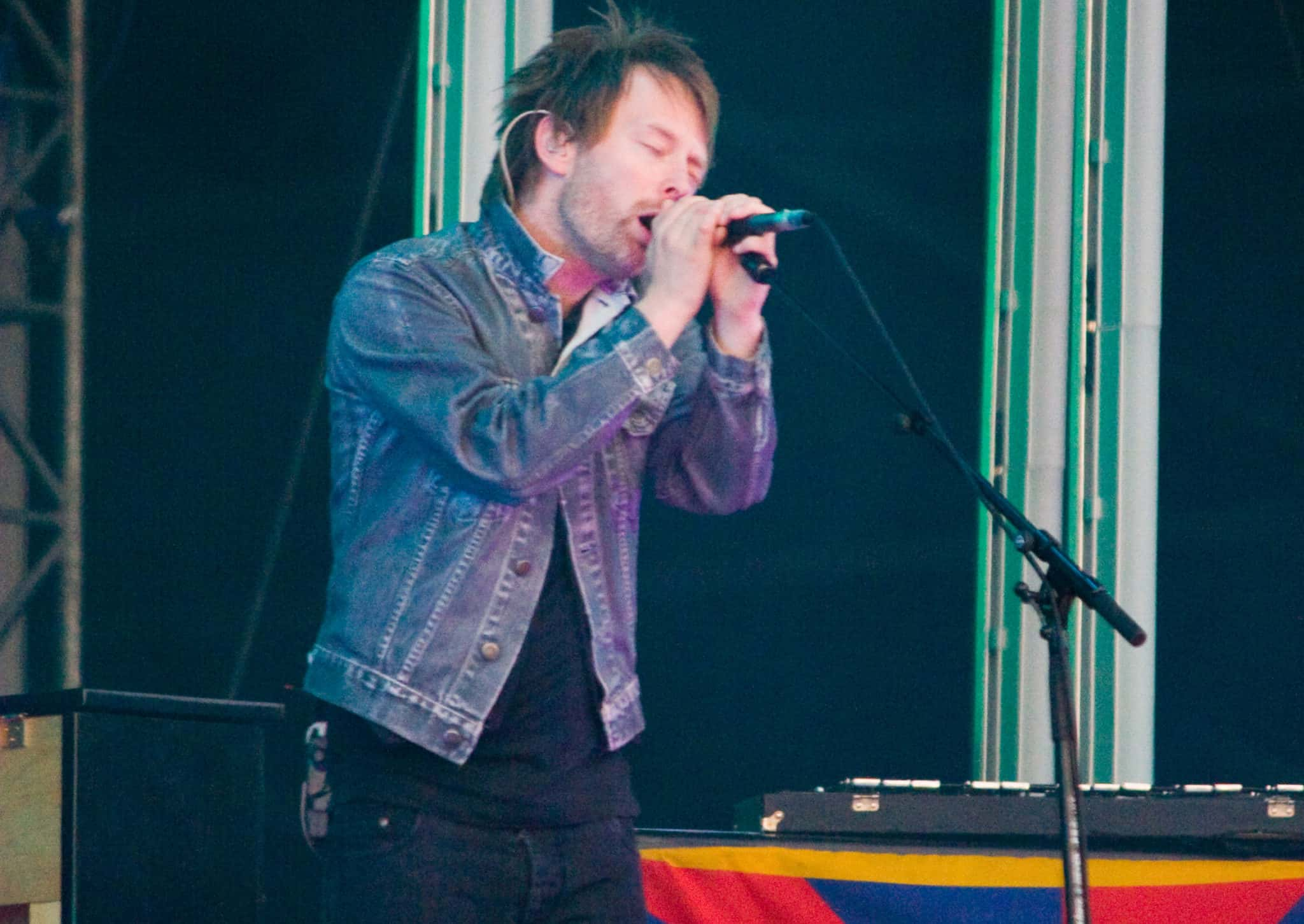
Radiohead remains one of the most enigmatic, critically revered, and formally inventive rock bands of the modern era, hiding a surprising history of near-misses, technical stunts, and bizarre trivia behind their austere public facade. While millions of listeners recognize the sweeping orchestral swells of "Paranoid Android" or the glitchy electronic minimalism of "Kid A," the band's internal journey features numerous bizarre twists that even longtime collectors frequently overlook.
Radiohead originated as an alternative rock outfit named On a Friday in Abingdon, Oxfordshire, before evolving into a pioneering force that continually dismantled industry norms. From unexpected chart anomalies and classical composition crossovers to early musical theater projects and high-stakes legal battles, the group's trajectory is defined by a persistent resistance to conventional stardom. Examining these lesser-known milestones reveals how Thom Yorke, Jonny Greenwood, Ed O'Brien, Colin Greenwood, and Philip Selway navigated the turbulent waters of the late-20th and early-21st-century music industries.
1. The Original Name Was "On a Friday" and Rehearsals Happened in a School Room
Before signing with Parlophone Records and adopting the moniker Radiohead—inspired by the 1986 Talking Heads song "Radio Head" from the album True Stories—the five members played under the name On a Friday. This choice directly referenced the specific day of the week when the teenagers were permitted to use the rehearsal room at Abingdon School.
During these formative years in the mid-to-late 1980s, the lineup solidified with Thom Yorke on lead vocals and rhythm guitar, Jonny Greenwood on lead guitar and keyboards, Ed O'Brien on guitar, Colin Greenwood on bass, and Philip Selway on drums. The school's music department provided a vital sanctuary where the young musicians could experiment with disparate influences, ranging from post-punk acts like Joy Division and R.E.M. to classic art-rock staples. Although they recorded several demo tapes under this initial name—most notably the Manic Hedgehog demo in 1991—industry scouts insisted on a rebrand before major-label distribution could proceed, leading to a fateful meeting where they selected a title from their favorite New Wave pioneers.
2. "Creep" Was Almost Abandoned Because It Was Considered Too Similar to The Hollies
Released as their debut single in 1992, "Creep" eventually became a worldwide phenomenon and Radiohead's defining early anthem, yet the band initially despised the track and nearly discarded it during the recording sessions at Chipping Norton Studio. Thom Yorke wrote the song while studying at the University of Exeter, channeling a sense of alienation and unrequited infatuation, but the rest of the group viewed its chord progression as painfully simplistic.
During the recording of their debut album Pablo Honey, producer Sean Slade and Paul Q. Kolderie urged Yorke to play the song again. According to studio accounts, Jonny Greenwood allegedly injected the iconic aggressive guitar noise bursts—the crunching chugs right before the chorus—out of sheer frustration with the track's gentle structure, attempting to ruin it. Furthermore, the song later sparked a high-profile songwriting dispute because its melodic structure and chord progression bore a striking resemblance to The Hollies' 1974 ballad "The Air That I Breathe." Ultimately, Albert Hammond and Mike Hazlewood were granted co-writing credits and a percentage of royalties, cementing a curious historical link between 1970s soft-rock and 1990s alternative angst.
3. Jonny Greenwood Uses a Custom-Modified Guitar Because of Repetitive Strain Injury
Jonny Greenwood's frantic, unpredictable guitar playing style is central to Radiohead's dynamic sound, but physical limitations forced him to adopt a specialized piece of equipment early in his career. Due to intensive playing habits and rigorous touring schedules during the Pablo Honey and The Bends eras, Greenwood developed severe repetitive strain injury (RSI) in his right arm, necessitating the regular use of a bright red arm brace.
To mitigate further physical damage and accommodate his aggressive technique—which frequently involves violent strumming and frantic string manipulation—Greenwood adopted the Fender Telecaster Plus (specifically the Generation 4 model). Crucially, this instrument was outfitted with Lace Sensor pickups and a special kill-switch configuration that allowed him to produce staccato sonic textures without exhausting his wrist. His technical setup also relies heavily on vintage effects pedals, such as the Marshall Shredmaster, which generates the signature wall of distortion heard on tracks like "Creep" and "Just."
4. "OK Computer" Was Recorded in a Spooky Stately Home Where Jane Austen Stayed
To capture the expansive, paranoid atmosphere of their landmark 1997 album OK Computer, Radiohead abandoned traditional urban recording studios in favor of St Catherine's Court, a historic 16th-century Elizabethan mansion located near Bath, Somerset. The estate, previously owned by actress Jane Seymour, offered an isolated environment where the band could work without corporate pressure or time constraints.
The location carried deep literary and historical resonance; renowned novelist Jane Austen had famously visited the property in the late 18th century, finding inspiration in its gothic architecture and sweeping gardens. However, the band members reported that the sprawling manor possessed a uniquely eerie, claustrophobic ambiance that seeped into the music. Working largely at night with co-producer Nigel Godrich, they utilized various eccentric acoustics within the house, recording vocals in stone stairwells and capturing natural room reverberations that gave songs like "Airbag" and "Let Down" their distinctive, cavernous depth.
5. Thom Yorke Collaborated with Electronic Pioneers Before "Kid A" Sparked the Synth Revolution
While mainstream music critics expressed shock at Radiohead's sudden pivot from guitar rock to abstract electronica on 2000's Kid A, Thom Yorke had been quietly immersing himself in the underground electronic music scene for years. Long before the band entered the studio to dismantle their traditional setup, Yorke was collaborating with prominent experimental producers and vocalists.
Most notably, Yorke teamed up with Icelandic pop icon Björk for the 1996 track "I've Seen It All," featured on the soundtrack album Selmasongs from the Lars von Trier film Dancer in the Dark. His fragile, emotive counter-melody blended seamlessly with Björk's avant-garde arrangements, signaling his growing interest in ambient soundscapes, glitch aesthetics, and digital beat-matching. This subterranean exploration directly informed the composition of Kid A and Amnesiac, where traditional guitars were frequently replaced by modular synthesizers, Ondes Martenot, and drum machines.
6. The "In Rainbows" Pay-What-You-Want Release Shook the Global Music Industry
In October 2007, Radiohead bypassed traditional record labels entirely by releasing their seventh studio album, In Rainbows, directly through their official website as a digital download where customers could name their own price, including zero. This bold economic experiment sent shockwaves through the major-label establishment, sparking fierce debates among music executives, economists, and artists regarding digital ownership, copyright devaluation, and direct-to-consumer distribution models.
Critics within the industry initially predicted financial ruin, arguing that giving music away for free would destroy the band's profitability. However, detailed economic analyses later revealed that the strategy was a masterclass in modern marketing. While a significant portion of downloaders paid nothing, millions of fans paid standard album prices, and the physical box-set pre-orders generated millions in revenue before the physical CDs even hit retail shelves. When In Rainbows subsequently received a traditional physical release via XL Recordings, it debuted at number one on both the UK Albums Chart and the US Billboard 200, proving that alternative distribution could coexist with commercial dominance.
7. The Band Was Sued by The Hollies, But Thom Yorke Once Covered a Classic Pop Song in Secret
The aforementioned songwriting dispute over "Creep" stands as a rare legal blemish in Radiohead's history, but the band members have historically maintained a deep appreciation for pop music's complex mechanics. Despite their reputation as high-brow avant-garde intellectuals who reference classical composers like Krzysztof Penderecki and Olivier Messiaen, the members grew up consuming diverse radio hits.
Throughout their extensive touring history, Radiohead has occasionally surprised audiences by dropping unexpected cover songs into their live setlists, ranging from electronic cuts by New Order to classic rock staples by Neil Young and The Smiths. Thom Yorke's eclectic musical palate extends to obscure 1960s pop and contemporary folk, though the band carefully guards their private listening habits. These eclectic influences manifest subtly in their chord choices, where complex jazz-derived intervals are hidden beneath accessible vocal melodies.
8. Jonny Greenwood Is an Acclaimed Classical Film Composer and Orchestral Arranger
While Jonny Greenwood is universally celebrated for his explosive guitar work in Radiohead, he has cultivated an equally prestigious secondary career as a contemporary classical composer and premier film score architect. His partnership with director Paul Thomas Anderson produced some of the most striking cinematic soundtracks of the 21st century, beginning with the sweeping, dissonant orchestral arrangements for There Will Be Blood in 2007.
Greenwood's score for There Will Be Blood was infamously disqualified from Academy Award consideration due to its inclusion of pre-existing concert pieces, but it established him as a heavyweight in modern classical composition. He subsequently earned Academy Award nominations for his work on Anderson's Phantom Thread (2017) and Jane Campion's psychological western The Power of the Dog (2021). His compositional style often utilizes microtonal tuning, avant-garde string clusters, and mechanical textures that echo the sonic experiments found on Radiohead records like Kid A and The King of Limbs.
9. Radiohead Secretly Wrote a Theme Song for a James Bond Film That Was Rejected
In 2015, Radiohead was approached to write the theme song for the upcoming James Bond installment Spectre, continuing a long tradition of recruiting major British rock acts for the iconic spy franchise. The band eagerly accepted the challenge, crafting a haunting, atmospheric ballad titled "Spectre" that featured Thom Yorke's falsetto floating over delicate orchestral arrangements and understated piano chords.
Ultimately, the film's producers rejected the track, deeming it too melancholy and subtle for the bombastic action sequences opening the movie, and instead hired Sam Smith to record "Writing's on the Wall," which went on to win the Academy Award for Best Original Song. Unfazed by the rejection, Radiohead released their version of "Spectre" as a surprise digital freebie for fans on Christmas Day in 2015, drawing widespread critical acclaim from listeners who frequently argued that the rejected track vastly superior to the official cinematic theme.
10. The Band Once Created a Custom Interactive Mobile App to Release Music
Never content with conventional release mechanisms, Radiohead partnered with digital artist Stanley Donwood and software developers in 2019 to create Not the News, a specialized interactive mobile application and digital archive designed to accompany the reissue of their 1997–2000 sessions, titled OK Computer OKNOTOK 1997 2017.
The application allowed users to explore a surreal, dystopian digital landscape filled with fragmented text, glitch art, and previously unreleased audio clips, effectively turning the acquisition of B-sides and archival material into a gamified virtual reality experience. This initiative highlighted the band's long-standing fascination with technological anxiety, data surveillance, and the evolving relationship between human creativity and digital systems—themes that Thom Yorke has explored in his lyrics since the late 20th century.
| Era / Album | Primary Release Year | Defining Technical or Artistic Milestone |
|---|---|---|
| Pablo Honey | 1992 | Introduction of "Creep" and initial alternative rock foundation |
| OK Computer | 1997 | Recorded in Jane Austen's historic Somerset mansion |
| Kid A | 2000 | Radical pivot to electronic textures and modular synthesizers |
| In Rainbows | 2007 | Pioneered the pay-what-you-want digital download model |
| Spectre (Single) | 2015 | Secretly composed and rejected for the James Bond film franchise |
Frequently Asked Questions About Radiohead's History
Why did Radiohead originally change their name from On a Friday?
The band changed their name to Radiohead upon signing a recording contract with Parlophone Records in 1991. Record label executives felt that "On a Friday" lacked commercial appeal and requested a title change, prompting the group to select "Radio Head" from the Talking Heads track of the same name.
Did Radiohead actually invent the "pay-what-you-want" release model?
While independent artists had experimented with direct-to-fan digital donations previously, Radiohead's 2007 release of In Rainbows marked the first time a globally prominent, arena-level rock band bypassed major distribution networks to utilize a completely voluntary pricing structure on a massive scale.
How does Jonny Greenwood create his signature guitar sounds?
Jonny Greenwood achieves his abrasive, staccato guitar textures by combining Fender Telecaster Plus guitars with vintage overdrive pedals like the Marshall Shredmaster, alongside physical manipulation of the strings and the strategic use of audio kill-switches.
What connection does Radiohead have to film scoring?
Lead guitarist Jonny Greenwood is a respected contemporary classical composer who has scored multiple major motion pictures, receiving Academy Award nominations for his work on Paul Thomas Anderson's Phantom Thread and Jane Campion's The Power of the Dog.
What happened to the James Bond theme song Radiohead recorded?
Radiohead recorded an original track titled "Spectre" for the 2015 James Bond film of the same name, but producers rejected it for being too subdued, opting instead for Sam Smith's "Writing's on the Wall" before Radiohead self-released their track online.
Final Recommendations for Fans and Music Historians
For listeners looking to dive deeper into Radiohead's expansive legacy beyond the standard radio singles, start by exploring the B-sides collected on My Iron Lung and Collector's Edition reissues, which showcase their relentless appetite for sonic experimentation. To understand their technical evolution, listen chronologically from The Bends to Kid A, tracing how traditional rock arrangements slowly dissolved into avant-garde electronic soundscapes.