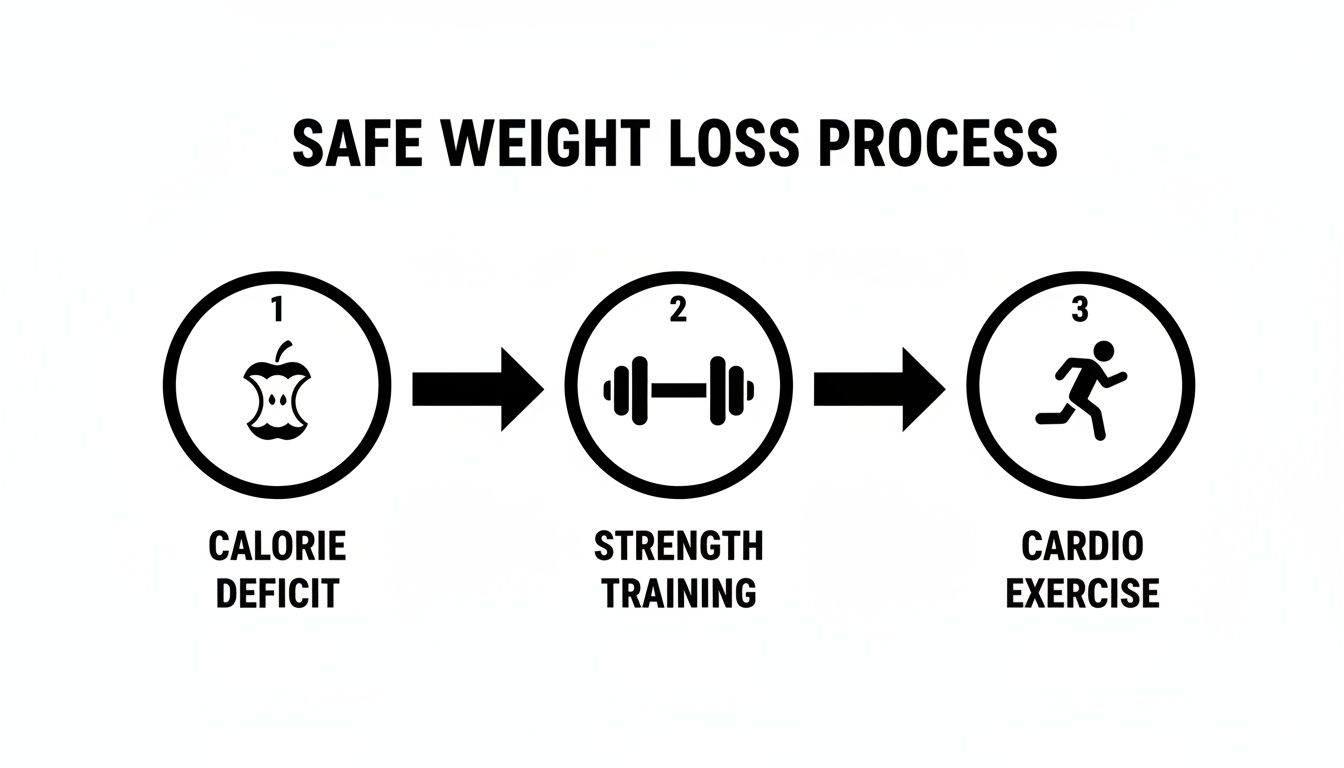
Achieving rapid weight loss and maintaining it long-term requires shifting away from restrictive crash diets toward sustainable physiological and behavioral adjustments. By combining aggressive yet safe metabolic strategies—such as optimizing protein leverage, resistance training, and consistent NEAT tracking—you can drop pounds quickly without wrecking your metabolism, ensuring the results stick.
Understanding the Science of Rapid Yet Sustainable Weight Loss
The pursuit of weight loss often forces a false dichotomy: people believe they must choose between losing weight quickly through extreme caloric restriction or losing weight slowly through moderate lifestyle changes. However, modern clinical weight management research demonstrates that rapid initial weight loss can actually act as a powerful psychological and physiological catalyst. When individuals see meaningful progress on the scale within the first two to three weeks, adherence rates to the underlying protocols often improve significantly.
The primary biological challenge of losing weight fast is defending lean muscle mass and preventing metabolic adaptation—the phenomenon where your basal metabolic rate (BMR) drops disproportionately to compensate for lower energy intake. To bypass this, successful strategies focus on manipulating macronutrient partitioning, preserving hormonal signaling (particularly leptin, ghrelin, and thyroid hormones), and maintaining high daily energy expenditure. Before diving into specific tactics, it is important to recognize that individual variance in insulin sensitivity, baseline gut microbiomes, and historical diet cycling will dictate the exact velocity of your transformation.
1. Maximize Protein Leverage to Control Hunger and Preserve Muscle
Protein is the single most important macronutrient when your goal is to lose weight fast and keep it off. According to nutritional research, protein exerts a powerful satiating effect mediated by the release of satiety hormones like peptide YY (PYY) and glucagon-like peptide-1 (GLP-1), while simultaneously suppressing ghrelin, the primary hunger hormone.
Furthermore, protein possesses a significantly higher thermic effect of food (TEF) compared to carbohydrates and fats. Your body expends approximately 20% to 30% of the calories consumed from protein merely digesting, metabolizing, and processing it, compared to only 5% to 15% for carbs and 0% to 3% for fats.
- Target Intake: Aim for a minimum of 1.2 to 2.2 grams of protein per kilogram of total body weight daily, leaning toward the higher end if you are engaging in resistance training.
- Source Selection: Prioritize lean animal proteins (chicken breast, egg whites, white fish, lean beef) or bioavailable plant sources (tempeh, seitan, pea protein isolates).
- Distribution: Spread your protein intake evenly across three to four meals to maximize muscle protein synthesis throughout the day.
2. Implement Strategic Carbohydrate Cycling
Eliminating carbohydrates entirely can trigger rapid water loss initially, but it often leads to profound fatigue, reduced workout performance, and a rebound binge-eating episode. Instead of chronic low-carb deprivation, strategic carbohydrate cycling matches your carbohydrate intake to your physical activity levels.
On days when you perform high-intensity or resistance training, consume moderate-to-high amounts of complex, high-fiber carbohydrates to replenish glycogen stores and support performance. On rest days or low-activity days, drop your carbohydrate intake significantly, replacing those calories with healthy fats and lean proteins. This approach blunts insulin spikes, encourages fat oxidation during sedentary periods, and maintains metabolic flexibility.
3. Prioritize High-Intensity Resistance Training Over Steady-State Cardio
While spending hours on a treadmill burns calories in the moment, it does nothing to preserve the metabolically active muscle tissue that dictates your long-term energy expenditure. When you cut calories without lifting weights, up to 25% to 35% of the weight lost can come from lean muscle mass.
Resistance training signals the body that muscle tissue is essential for survival, forcing the deficit to draw almost exclusively from adipose (fat) tissue. Compound movements—such as squats, deadlifts, overhead presses, and rows—recruit large muscle masses, stimulating a profound hormonal response that elevates post-exercise oxygen consumption (EPOC), commonly known as the afterburn effect.
4. Master Non-Exercise Activity Thermogenesis (NEAT)
Exercise accounts for only a small fraction of your total daily energy expenditure (TDEE) unless you are a professional athlete. The vast majority of calories burned outside of structured workouts fall under NEAT: walking, fidgeting, standing, cleaning, and general daily movement.
During a caloric deficit, the human body unconsciously downregulates NEAT, causing you to sit more, move slower, and feel lethargic. Combat this biological downregulation by setting a strict daily step goal—such as 8,000 to 10,000 steps—and intentionally designing movement into your day. Take phone calls while walking, use a standing desk for portions of the workday, and take the stairs whenever possible.
5. Harness the Power of Strategic Time-Restricted Eating
Time-restricted eating (TRE), a popular form of intermittent fasting, does not magically alter the laws of thermodynamics, but it acts as a powerful behavioral tool for natural caloric restriction. By compressing your eating window into an 8-hour block (such as 10:00 AM to 6:00 PM) and fasting for the remaining 16 hours, you naturally limit the hours available for mindless snacking.
| Eating Window (8 Hours) | Fasting Window (16 Hours) |
|---|---|
| - High-protein meals | - Water, black coffee, plain tea allowed |
| - Complex carbohydrates | - Enhanced cellular autophagy |
| - Post-workout nutrition | - Stabilized insulin levels |
Clinical studies indicate that TRE can also improve insulin sensitivity and reduce evening caloric consumption, which is critical since late-night eating is frequently associated with poor food choices and disrupted circadian rhythms.
6. Audit and Eliminate Liquid Calories
Liquid calories are the silent saboteurs of rapid weight loss. Because beverages like sodas, sweetened coffees, alcoholic drinks, and even commercial fruit juices do not trigger the same mechanical and hormonal satiety signals as solid foods, they allow hundreds of hidden calories to bypass your brain's appetite control centers.
- The Soda Trap: A single 20-ounce regular soda contains roughly 65 grams of sugar and 240 empty calories. Replacing this with water, sparkling water, or unsweetened green tea instantly alters your weekly caloric balance.
- Alcohol Consumption: Alcohol not only packs dense calories (7 calories per gram) but also temporarily pauses lipid oxidation as your liver prioritizes metabolizing the alcohol toxin, making fat loss impossible during that window.
7. Optimize Sleep Architecture to Regulate Appetite Hormones
Chronic sleep deprivation is utterly destructive to weight loss efforts. When you sleep less than seven hours per night, two critical appetite-regulating hormones are thrown into disarray: ghrelin (which stimulates appetite) spikes, while leptin (which signals fullness) plummets.
Furthermore, sleep deprivation impairs prefrontal cortex function, reducing your impulse control and dramatically increasing cravings for hyper-palatable, sugar- and fat-dense comfort foods. Prioritize 7 to 9 hours of quality, uninterrupted sleep by keeping your bedroom cool, dark, and free of blue-light-emitting screens for at least one hour before bed.
8. Hydrate Aggressively to Support Lipolysis and Satiety
Water is the medium through which nearly all metabolic processes—including lipolysis (the breakdown of stored fat)—occur. Dehydration is frequently misinterpreted by the brain as hunger, leading to unnecessary snacking when your body actually requires fluid.
- Pre-Meal Hydration: Drinking 500 milliliters of water approximately 30 minutes before a meal has been clinically shown to reduce subsequent caloric intake naturally.
- Cellular Efficiency: Even mild dehydration reduces metabolic efficiency, causing fatigue that sabotages your NEAT and workout performance.
9. Track Food Intake Objectively with Precision and Flexibility
You cannot manage what you do not measure. While long-term intuitive eating is the ultimate goal, achieving rapid weight loss requires a period of strict caloric awareness. People routinely underestimate their caloric intake by 30% to 50% when relying on guesswork.
Utilize a digital food scale to weigh your food in grams rather than relying on volume measurements like cups or tablespoons, which vary wildly based on packing density. Incorporate flexible dieting principles (often called "if it fits your macros"), ensuring that 80% to 90% of your intake comes from nutrient-dense, whole foods, leaving room for small psychological treats that prevent diet fatigue.
10. Establish a Structured Transition Phase to Prevent Weight Regain
The most dangerous phase of weight loss is not the deficit itself, but the moment you reach your goal weight. Reverting immediately to your old eating habits guarantees weight regain, often accompanied by excess fat storage due to temporarily suppressed metabolic rates.
To keep the weight off permanently, you must implement a "reverse dieting" protocol. Gradually increase your caloric intake by 50 to 100 calories per week, primarily through carbohydrates and fats, while closely monitoring your scale weight. This methodical approach upregulates thyroid hormones (specifically T3) and leptin, restoring your metabolic rate to a higher baseline and cementing your new weight as your body's new physiological set point.
Comparison of Rapid Weight Loss Strategies
| Strategy | Primary Mechanism | Impact on Muscle Mass | Ease of Implementation |
|---|---|---|---|
| Protein Leverage | Satiety hormone modulation & high TEF | Highly Protective | Moderate |
| Carb Cycling | Insulin control & glycogen management | Protective | Advanced |
| Resistance Training | EPOC & muscle retention signaling | Maximum Protection | Moderate |
| NEAT Expansion | Daily non-exercise energy burn | Neutral | Easy |
| Time-Restricted Eating | Natural caloric restriction window | Neutral | Easy |
Frequently Asked Questions
How fast can I safely lose weight without losing muscle?
For most individuals, a safe and sustainable rate of rapid weight loss is between 1 to 2 pounds per week (or roughly 1% of total body weight). Losing weight faster than this typically results in accelerated muscle loss, nutritional deficiencies, and a more severe drop in your basal metabolic rate, increasing the likelihood of rapid weight regain later.
Do I need to cut out entire food groups to see results?
No. Eliminating entire food groups—such as carbohydrates or fats—is entirely unnecessary for rapid fat loss. While temporary elimination protocols can simplify food choices, fat loss is ultimately governed by an energy deficit combined with adequate protein intake. You can lose weight successfully while consuming any food, provided it fits within your calculated caloric and macronutrient targets.
Why is my weight fluctuating daily on the scale?
Daily scale fluctuations of 2 to 5 pounds are completely normal and rarely reflect actual fat loss or gain. These shifts are primarily driven by changes in water retention, sodium intake, carbohydrate storage (glycogen holds approximately three to four grams of water per gram), digestive tract contents, and hormonal fluctuations. Always evaluate your progress using weekly averages and visual progress photos rather than single daily weigh-ins.
How can I stop evening cravings and binge eating?
Evening cravings are usually the result of under-eating earlier in the day, excessive caloric restriction, or emotional fatigue. To combat this, front-load your day with high-protein meals, ensure you consume adequate dietary fiber, and save a portion of your daily carbohydrates or fats for an evening meal or structured snack. Additionally, establishing a firm kitchen-closure time can break the psychological habit of mindless late-night grazing.
What should I do when my weight loss inevitably stalls?
A weight loss plateau is a normal physiological response to prolonged caloric restriction as your body adapts to a lower mass. When a plateau persists for more than two consecutive weeks, first audit your food tracking for accuracy and ensure your NEAT hasn't silently dropped. If adherence is confirmed, decrease your daily caloric intake by 100 to 150 calories or add an extra 2,000 steps to your daily routine to restart fat oxidation.