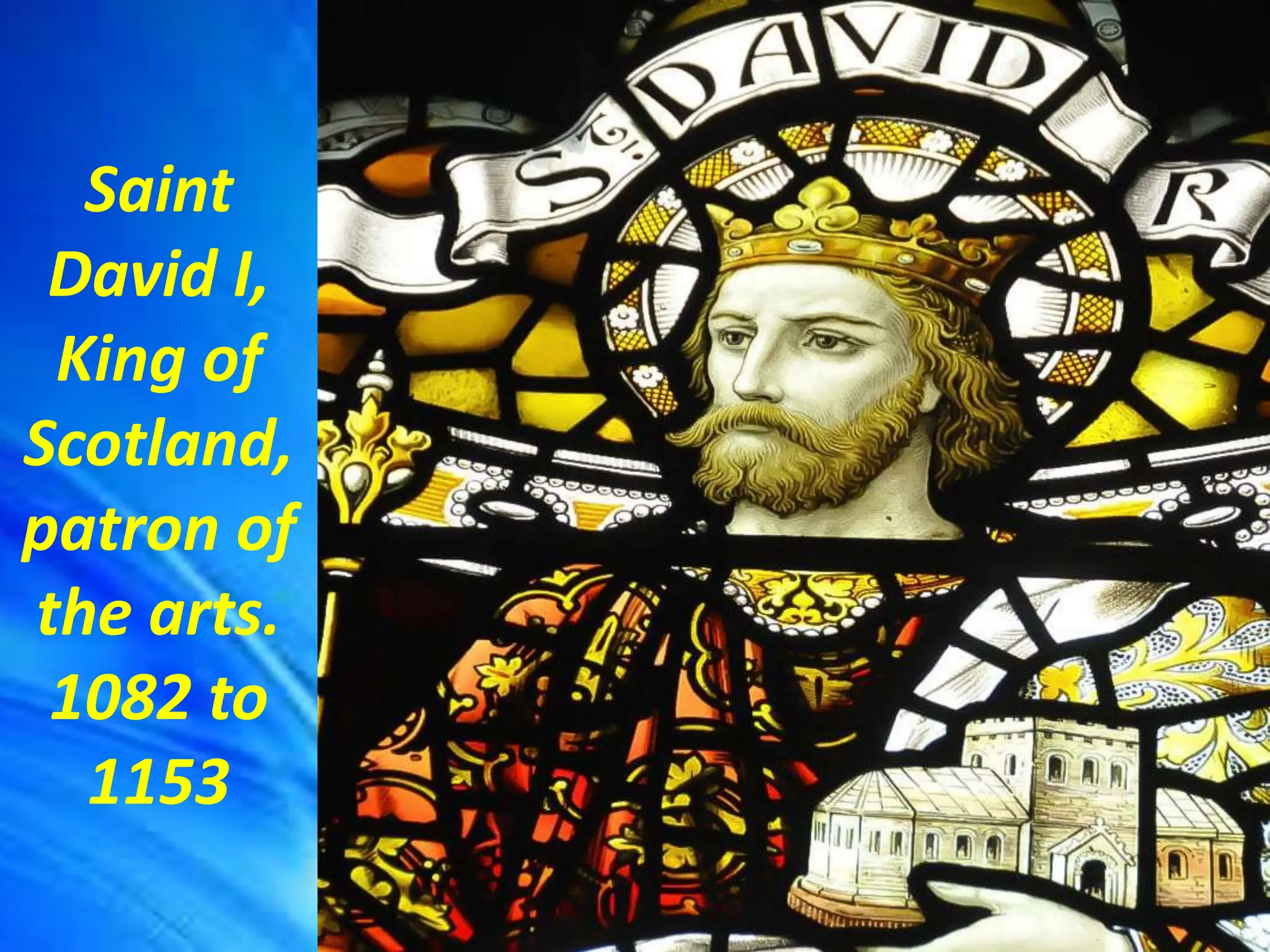
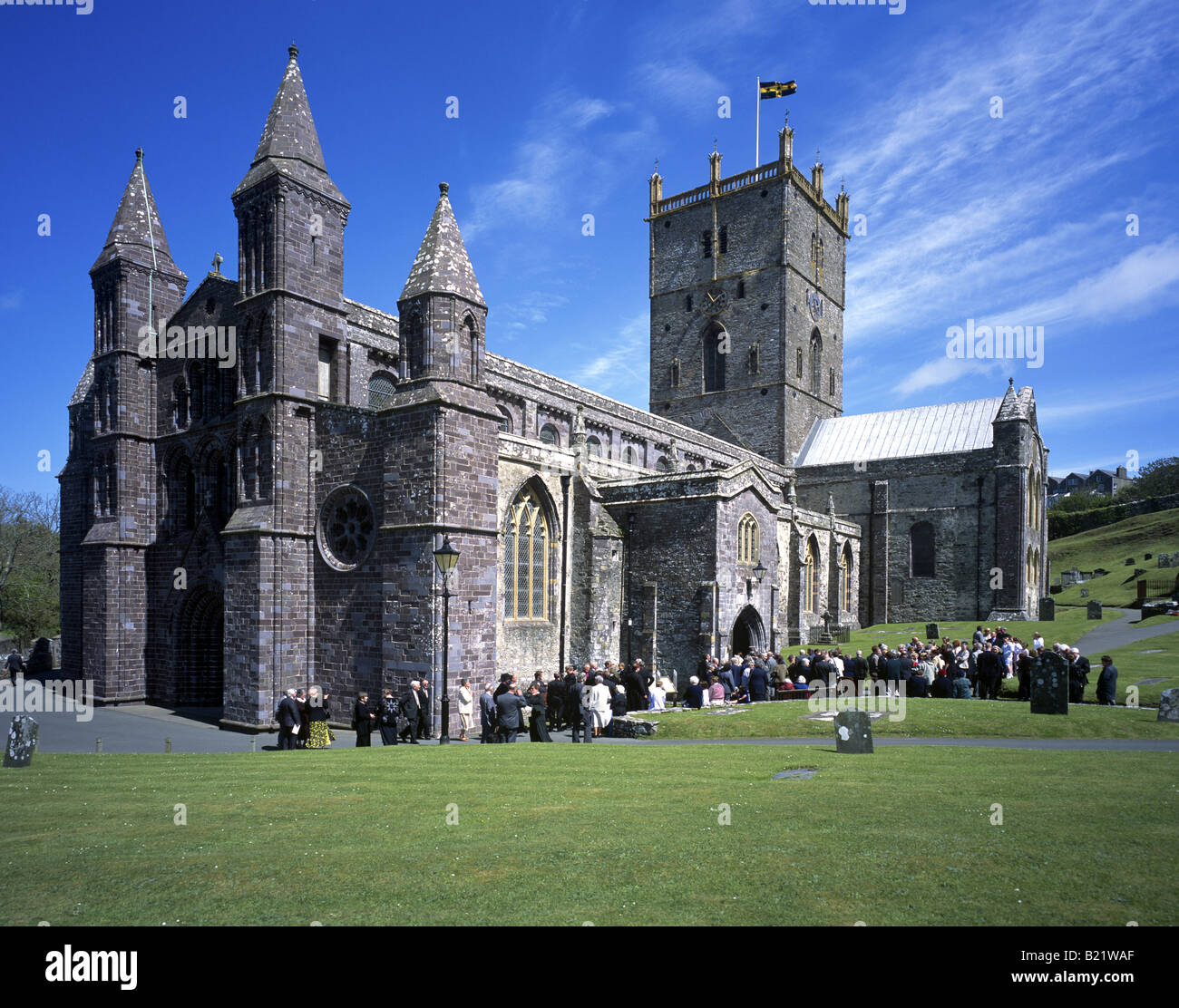
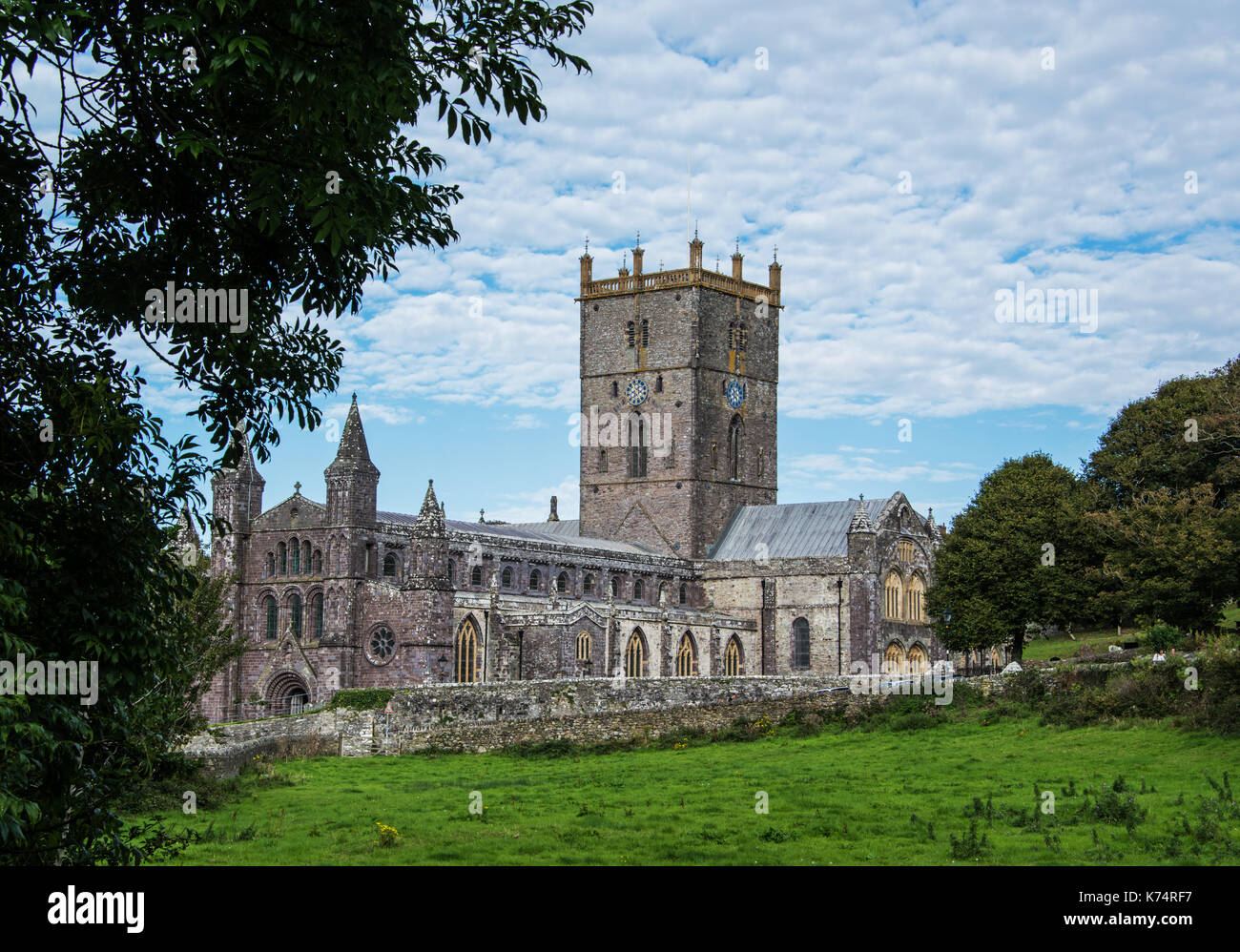
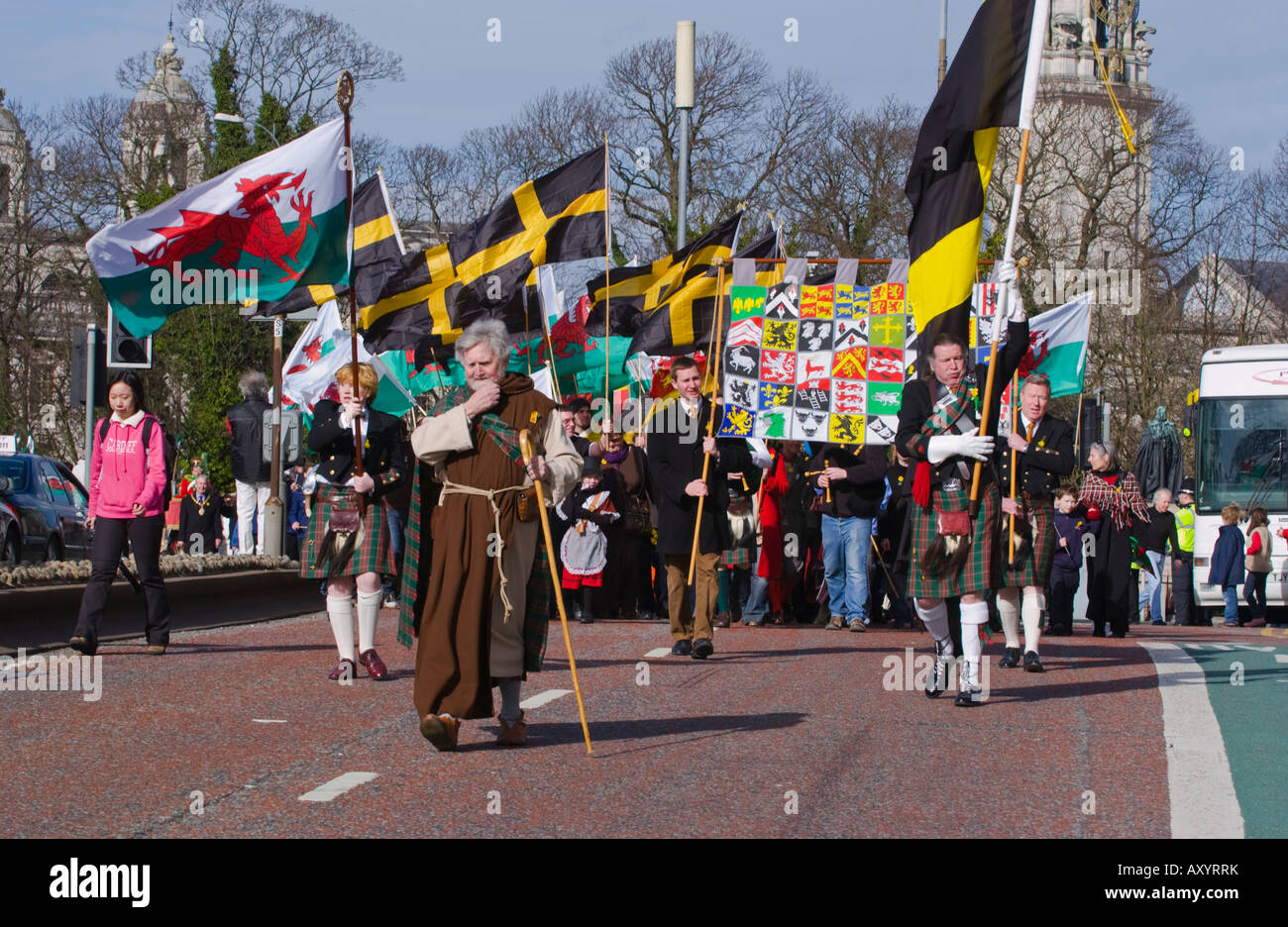
The figure of Saint David, primarily known as the patron saint of Wales, occupies a distinct and historically significant place within the ecclesiastical and cultural landscape of medieval Scotland. While often associated with the Welsh St. David (Dewi Sant), the veneration of David in Scotland is intrinsically linked to the reign of King David I, who transformed the Scottish Church and consolidated the nation’s territorial integrity during the 12th century.
Saint David, the Welsh monk and bishop, was a seminal figure in 6th-century Christianity, credited with founding monasteries and spreading the faith across Brittonic territories. In Scotland, however, the name "Saint David" frequently serves as a dual signifier. It refers both to the hagiographical traditions imported from the south—rooted in the cult of the Welsh saint—and, more prominently in a domestic historical context, to the secular and religious legacy of King David I (r. 1124–1153). Understanding the intersection of these two figures is essential for deciphering the religious topography and royal iconography of medieval Scotland.
The Welsh Saint David in a Scottish Context
The cult of the Welsh Saint David, Dewi Sant, reached Scotland through the complex web of ecclesiastical expansion and the movement of monks and clergy across the Irish Sea and the Solway Firth. Historical evidence suggests that the influence of the Welsh Church was particularly strong in the southwestern regions of Scotland, specifically Galloway and the areas surrounding the Firth of Clyde.
In these regions, several parish churches and chapels were historically dedicated to David, reflecting the migration of patterns of worship from Dyfed. Unlike the high-profile shrines in Wales, these Scottish sites often served as centers of local pilgrimage and community spiritual life. During the medieval period, the dedication of a church to a specific saint was a statement of spiritual allegiance and often indicated the patronage of local noble families or the influence of specific monastic orders.
King David I: The "Saint" of the Scottish Throne
To speak of "Saint David" in the context of Scotland is to engage with the legacy of the most influential monarch of the House of Dunkeld. Though never formally canonized by the Roman Catholic Church, David I was widely regarded as a saintly figure by his contemporaries and later chroniclers. His "saintliness" was attributed to his extensive program of religious reform, which involved the foundation of numerous monasteries and the establishment of the modern diocesan structure of the Church in Scotland.
King David I transformed the Scottish Church from an informal system into a robust, Roman-oriented institution. By founding abbeys such as Holyrood, Melrose, and Jedburgh, he integrated Scotland into the wider European cultural and religious framework. The title "Saint" applied to David I is an informal expression of the deep reverence the Scottish people held for the stability and structure he brought to the nation. His life is characterized by the tension between his duties as a warrior king and his personal austerity, often noted by medieval writers who described his devotion to justice and his regular attendance at daily prayers.
Comparing Traditions: Welsh Saint vs. Scottish King
Disambiguating these figures requires an analysis of their distinct contributions to Scottish history. The Welsh saint represents the early, formative period of Celtic Christianity, characterized by asceticism and monastic isolation. King David I represents the High Middle Ages, characterized by the centralization of power, the introduction of Norman administrative practices, and the firm alignment of the Scottish state with continental European norms.
| Aspect | Welsh Saint David (Dewi Sant) | King David I of Scotland |
|---|---|---|
| Era | 6th Century | 12th Century (1084–1153) |
| Primary Role | Bishop and Monk | King of Scots |
| Scottish Legacy | Dedication of local churches | Establishment of Dioceses/Abbeys |
| Source of Cult | Hagiography and tradition | Political and religious reform |
| Status | Canonized (Pre-Congregation) | Cult of personality/Royal Saint |
The Geographic Footprint of Dedications
Tracing the presence of Saint David in Scotland requires looking at the geography of place names and ecclesiastical dedications. In the southwest, the influence of Welsh religious traditions is reflected in the nomenclature of ancient parish sites. These dedications were not merely honorary; they acted as markers of identity in a frontier region that shifted between Gaelic, Norse, and Anglo-Norman cultural spheres.
In contrast, the influence of King David I is etched into the very stones of Scotland’s most famous abbeys. For instance, the founding of Holyrood Abbey in 1128 is a direct result of his personal piety and political strategy. Visiting these sites today provides a clear view of the architectural shift he fostered: from modest early medieval churches to the grand, limestone-rich Romanesque and later Gothic structures that defined the medieval Scottish landscape.
Religious Reform and the Norman Influence
The reign of King David I marked the definitive end of the "Celtic" model of the Church, which relied on hereditary abbacies and less rigid structures. By implementing the "Davidian Revolution," he introduced the Roman liturgy and the administrative order of dioceses. This was a critical juncture for Scotland, as it standardized ecclesiastical practices and aligned them with those of England and France.
The term "Saint David" in historical discourse often highlights this transition. Scholars note that David I’s promotion of saintly cults—not just his own, but those of others like Saint Margaret, his mother—was a deliberate tool of statecraft. By fostering a "sacred geography," he validated his rule as divinely ordained. This alignment helped unify a diverse kingdom by creating a shared religious identity that transcended tribal or regional differences.
The Role of Modern Archaeology and Historiography
As of 2026, research into the medieval landscape of Scotland continues to refine our understanding of these figures. Archaeological investigations at sites like Melrose and Holyrood reveal the immense material wealth that the Church accumulated under the patronage of the Davidian monarchs. These findings demonstrate that the "Saint David" influence—whether the Welsh saint or the King—was a primary driver for investment in craftsmanship, literacy, and land management.
Historiography has shifted away from the hagiographical myths of the early modern period. Modern historians now treat the "sainthood" of King David as a social and political phenomenon. By investigating the charters and administrative documents issued during his reign, researchers have mapped how the influence of his name helped secure the permanence of the Scottish borders and the legal independence of the Scottish Church from the English Archbishoprics of York and Canterbury.
Navigating Local Sites and Historical Interpretation
For those interested in the physical legacy of Saint David in Scotland, a trip through the Scottish Borders and the Southwest is essential. Here, the overlay of Welsh missionary influence meets the massive stone architecture of the Davidian era.
- Galloway: Look for early church sites that bear the name of the Welsh saint. These are often situated on promontories or near river crossings, consistent with the monastic movement of the 6th century.
- The Borders: Focus on the abbeys of the Tweed Valley. These are the "living" legacy of King David I, and their construction methods reveal the integration of continental European masonry techniques.
- Edinburgh: The Royal Mile and the ruins of Holyrood Abbey serve as the best examples of the political and religious center established by King David I.
Visitors should note that many of these sites are managed by Historic Environment Scotland, which provides extensive documentation on the medieval origins of these buildings. When exploring, it is helpful to distinguish between the site’s foundation period and subsequent medieval expansions to accurately identify the "Davidian" layer of construction.
Common Misconceptions
A frequent source of confusion is the assumption that any reference to "Saint David" in Scotland must pertain to the Welsh saint. It is vital to consult the context of the reference. If the source material discusses the administration of land, the foundation of towns (burghs), or the creation of the Scottish parliament, it almost certainly refers to King David I. If the context is regional, anecdotal, or related to early monastic traditions in the southwest, it likely refers to the Welsh cleric.
Another misconception is that the cult of Saint David in Scotland had the same mass-market appeal as the cult of Saint Andrew. While Saint Andrew was adopted as the patron saint of the Scottish nation, the veneration of David remained more localized or tied to royal lineage.
Frequently Asked Questions
Is King David I actually considered a saint by the church? No, King David I was never canonized by the Roman Catholic Church. While some medieval chroniclers referred to him as "Saint David" due to his piety and church-building initiatives, he remains a secular monarch in the official record.
Why are there so many churches in Scotland named after David? These dedications are split between the influence of the Welsh Saint David, whose name was brought to the southwest during early Christian missions, and the later cultural impact of King David I, who served as a figurehead for religious institutional growth.
What is the "Davidian Revolution" in Scotland? The Davidian Revolution refers to the systematic changes introduced by King David I between 1124 and 1153. This included the introduction of the feudal system, the establishment of the burgh system, and the reorganization of the Scottish Church into a diocesan structure based on continental models.
How can I identify if a church site is from the 6th or 12th century? 6th-century sites are typically early, small, and identified through archeological strata or historical records of early monastic cells. 12th-century sites (Davidian) are characterized by Romanesque architectural elements, such as rounded arches and stone masonry, intended to be grander to reflect royal power.
Where is the best place to learn about King David I’s legacy? The best locations are the sites of his major foundations, particularly Holyrood Abbey in Edinburgh, Melrose Abbey in the Borders, and the royal castle sites associated with the consolidation of his power across the Lowlands.
Recommendation for Further Research
To fully appreciate the historical landscape of Scotland, it is recommended to consult the People of Medieval Scotland database, a primary source resource for understanding the charters and administrative records from the time of King David I. For those visiting sites, checking the official registers of historic monuments will ensure an accurate understanding of the physical remains of these eras. The distinction between the saint of faith and the king of state remains one of the most intriguing aspects of Scottish historical study, offering a lens through which to view the birth of a medieval nation.