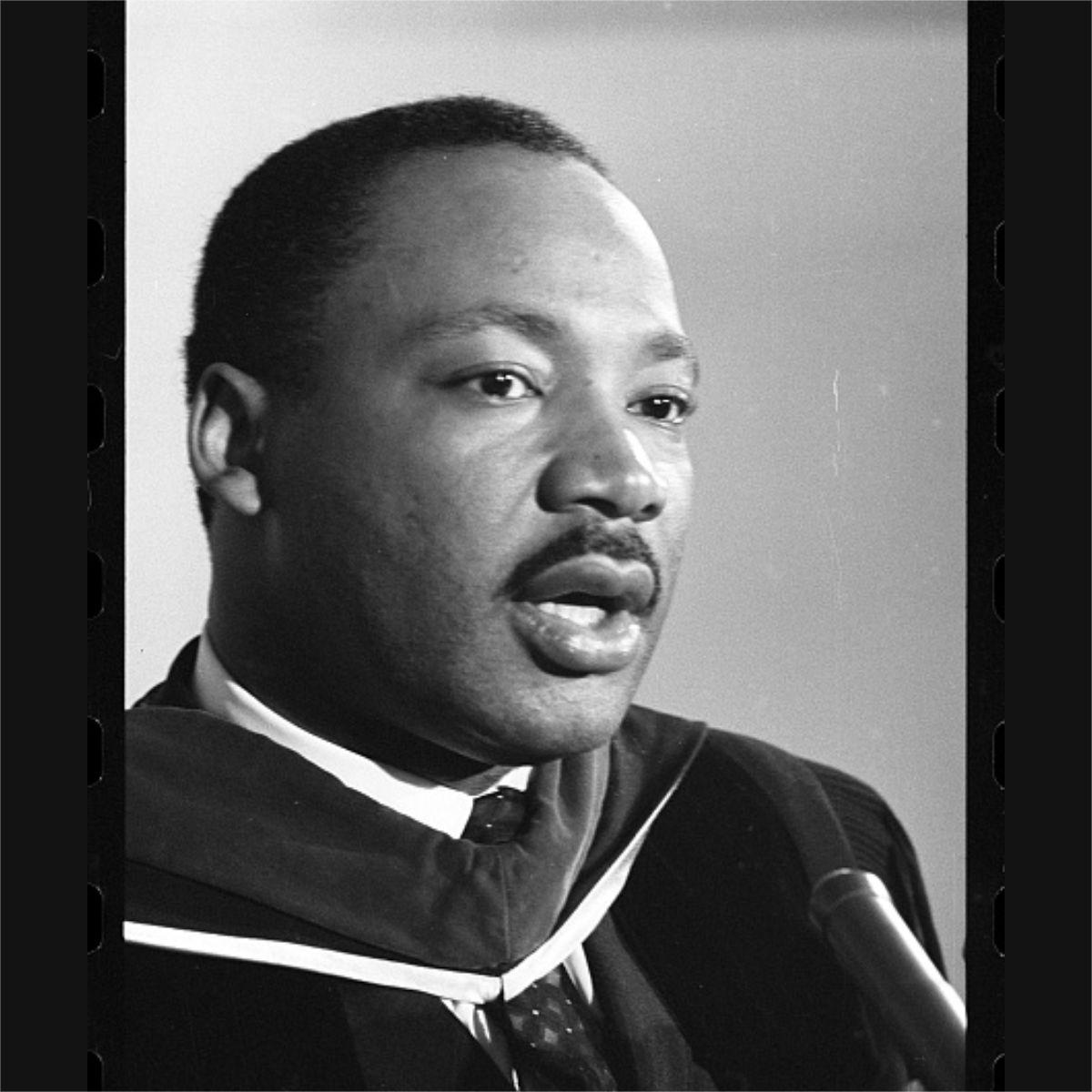
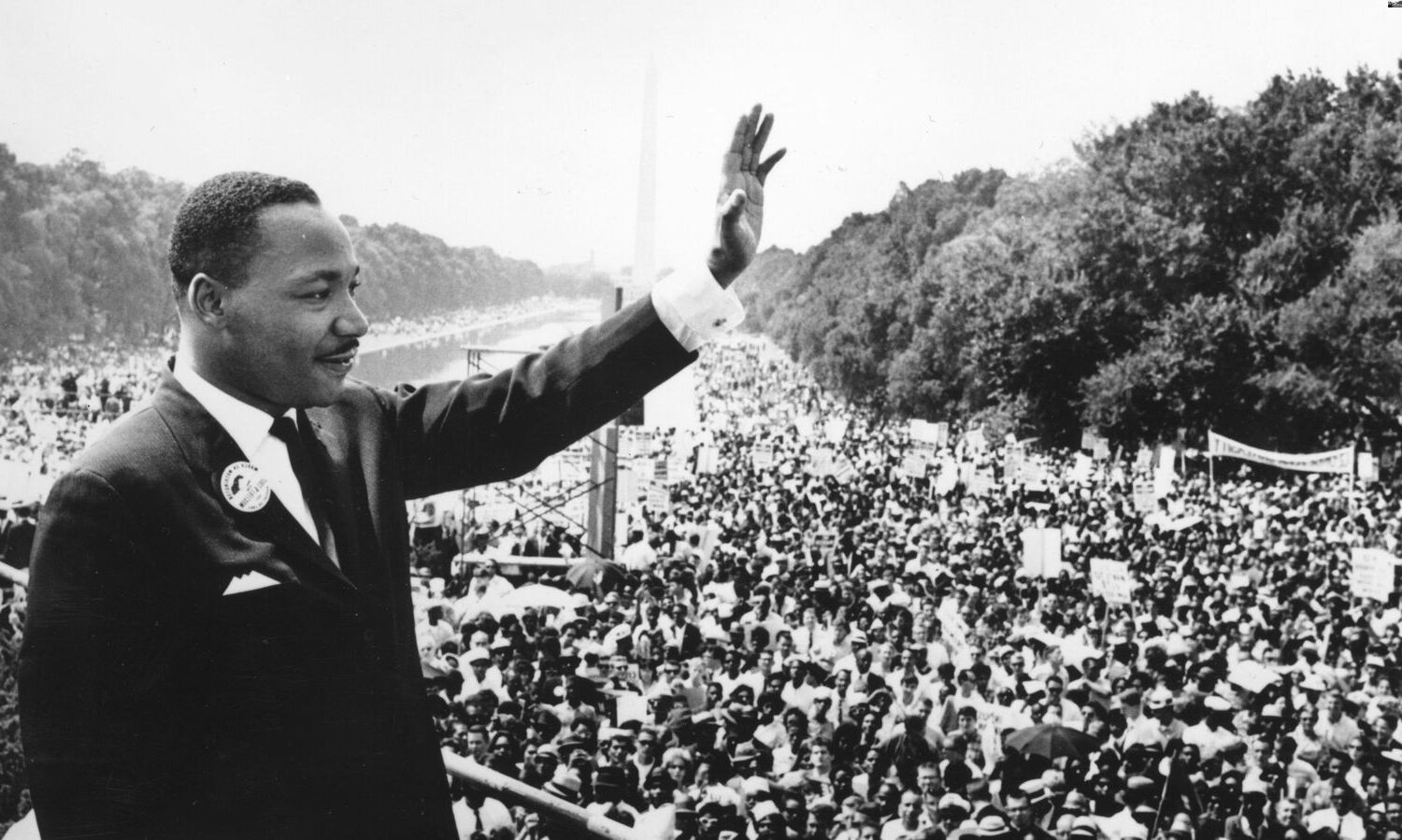
Martin Luther King Jr. remains one of the most towering figures in American history, celebrated worldwide for his leadership of the Civil Rights Movement and his unwavering commitment to nonviolent social change. While most people are familiar with his iconic "I Have a Dream" speech and his tragic assassination in 1968, his life encompasses a wealth of lesser-known milestones, intellectual achievements, and personal details that reveal the depth of his character. Understanding these lesser-known aspects of his legacy provides a richer, more nuanced view of the man behind the historical monument, illustrating how his early education, intellectual influences, and daily struggles shaped the American civil rights landscape.
1. Entering College at an Exceptionally Early Age
Long before he stood at the helm of the Civil Rights Movement, Martin Luther King Jr. was recognized as an academic prodigy. Born Michael King Jr. in Atlanta, Georgia, on January 15, 1929, he possessed an intellectual aptitude that allowed him to bypass several traditional educational milestones.
King skipped both the ninth and twelfth grades at Booker T. Washington High School. Because of his advanced academic performance, Morehouse College—a historically Black men's college in Atlanta—admitted him in 1944 at the remarkably young age of 15. Entering college as an adolescent required him to navigate an environment filled with much older students, many of whom were World War II veterans returning to finish their education. Yet, Morehouse proved to be a transformative intellectual crucible. Under the mentorship of influential educators like Morehouse President Benjamin Mays, King began to seriously explore how religion and theology could be used as tools for profound social justice and institutional reform.
2. A Name Rooted in a European Pilgrimage
The name most associated with the civil rights leader was not the one given to him at birth. His father, born Michael King, was a prominent Atlanta pastor at Ebenezer Baptist Church. In 1934, the elder King traveled to Europe on a historic church-sponsored tour that included a visit to Germany, where he attended the Baptist World Alliance congress in Berlin.
This journey deeply impressed the elder King, particularly because of the legacy of Martin Luther, the 16th-century leader of the Protestant Reformation. Inspired by Luther’s theological courage and defiance of established religious hierarchies, the father returned to the United States and legally changed both his own name and his five-year-old son's name from Michael to Martin Luther. Despite this legal change, family and close friends continued to call him "M.L." well into his adulthood.
3. Holding a Doctorate in Systematic Theology
While King is universally remembered as a brilliant orator and activist, his academic credentials extended far beyond his undergraduate degree from Morehouse College. After graduating from Morehouse in 1948 with a Bachelor of Arts in sociology, he pursued theological training at Crozer Theological Seminary in Pennsylvania, where he graduated as valedictorian of his class in 1951.
He then undertook doctoral studies at Boston University, completing his Ph.D. in systematic theology in 1955. His doctoral dissertation, titled A Comparison of the Concept of God in the Thinking of Paul Tillich and Henry Nelson Wieman, reflected his sophisticated understanding of complex philosophical and theological frameworks. King's deep academic grounding in Christian theology and personalism directly informed his philosophical stance on nonviolent resistance, drawing heavily on the teachings of Jesus Christ, Mahatma Gandhi, and Henry David Thoreau.
4. The Direct Influence of Mahatma Gandhi’s Philosophy
Nonviolent direct action was the philosophical cornerstone of King's leadership, but this strategy was not an immediate instinct; it was cultivated through years of rigorous intellectual study. During his time at Crozer Theological Seminary, King attended a lecture by Dr. Mordecai Johnson, president of Howard University, who had recently traveled to India. Johnson spoke extensively about the life, philosophy, and methods of Mahatma Gandhi.
Captivated by Gandhi’s success in utilizing satyagraha (truth force or nonviolent resistance) to dismantle British colonial rule in India, King began deeply studying Gandhi's writings. In 1959, with the financial assistance of the American Friends Service Committee, King and his wife, Coretta Scott King, undertook a month-long pilgrimage to India. This journey allowed him to meet with Gandhi’s family, followers, and prime minister Jawaharlal Nehru. King later remarked that the trip solidified his conviction that nonviolent resistance was the most potent weapon available to oppressed people in their struggle for freedom.
5. Surviving an Assassination Attempt a Decade Early
While Martin Luther King Jr.’s life was cut tragically short on April 4, 1968, in Memphis, Tennessee, he survived a near-fatal assassination attempt over a decade earlier. On September 20, 1958, King was in Harlem, New York City, signing copies of his newly published first book, Stride Toward Freedom: The Montgomery Story, at Blumstein’s department store.
A mentally unstable woman named Izola Curry approached him, asked if he was Martin Luther King Jr., and when he replied in the affirmative, she drove a seven-inch letter opener deep into his chest, resting dangerously close to his aorta. King underwent emergency surgery at Harlem Hospital, where thoracic surgeons informed him that if he had so much as sneezed, the blade would have punctured his aorta, causing instant death. From his hospital bed, King issued a statement of forgiveness toward his attacker and reiterated his commitment to the philosophy of nonviolence.
6. The Only Non-President Honored with a National Holiday
Dr. Martin Luther King Jr. occupies a unique and exalted space in American civic history. He is the only private citizen—and the only African American—to be honored with a federal holiday dedicated to his name.
The campaign to establish Martin Luther King Jr. Day began almost immediately after his assassination in 1968. Trade unions, civil rights organizations, and musicians like Stevie Wonder—whose 1980 song "Happy Birthday" galvanized public support—lobbied Congress relentlessly. In 1983, President Ronald Reagan signed the legislation creating the federal holiday. Although the bill was enacted in 1983, it took until 2000 for all fifty U.S. states to officially recognize and observe the holiday. Today, the third Monday of January is designated as a national day of service, encouraging Americans to engage in volunteerism within their communities.
7. Author of Five Significant Books
Beyond his speeches, sermons, and essays, King was a prolific author who documented the philosophy, trials, and triumphs of the Civil Rights Movement through published volumes. His literary output provides a firsthand historical chronicle of the struggles fought during the 1950s and 1960s.
His published works include:
- Stride Toward Freedom: The Montgomery Story (1958): A detailed account of the 1955–1956 Montgomery bus boycott.
- The Measure of a Man (1959): A philosophical exploration of human worth and the nature of God.
- Strength to Love (1963): A collection of his most influential sermons focusing on love, justice, and faith.
- Why We Can’t Wait (1964): An analysis of the 1963 Birmingham campaign and the escalating urgency of the civil rights struggle.
- Where Do We Go from Here: Chaos or Community? (1967): A visionary evaluation of the future of the movement, economic justice, and poverty.
8. Imprisoned Nearly Thirty Times for Civil Disobedience
King viewed peaceful civil disobedience not as a disregard for the law, but as a moral obligation to challenge unjust laws. Consequently, local, state, and federal law enforcement agencies arrested him twenty-nine times throughout his activist career.
These arrests ranged from minor traffic infractions used to intimidate civil rights workers in the South to major charges of parading without a permit during protests in Birmingham, Alabama, and Selma, Alabama. It was during his imprisonment in the Birmingham jail in April 1963 that he penned his famous "Letter from Birmingham Jail," responding to local white clergymen who urged him to halt street demonstrations and pursue change exclusively through the courts. Written on scraps of newspaper, toilet paper, and a legal pad, this document remains one of the definitive texts on civil disobedience and moral responsibility.
9. Winner of the Nobel Peace Prize at Age 35
In October 1964, the Norwegian Nobel Committee awarded the Nobel Peace Prize to Martin Luther King Jr. for his tireless leadership of nonviolent resistance to racial inequality. At the time of the award, King was thirty-five years old, making him the youngest person ever to receive the honor (a record later surpassed by Malala Yousafzai in 2014).
During his acceptance speech in Oslo, Norway, King declared: "I accept the Nobel Prize for Peace at a moment when 22 million Negroes of the United States of America are engaged in a creative battle to end the long night of racial injustice." True to his philanthropic spirit, King did not keep the prize money, which amounted to $54,600. Instead, he donated the entire sum to various civil rights organizations, including the Southern Christian Leadership Conference (SCLC) and the NAACP Legal Defense and Educational Fund.
10. A Shared Birthday with Benjamin Franklin
Historical coincidences often highlight intriguing connections between prominent figures. Martin Luther King Jr. shared his birth date—January 15—with one of the most prominent Founding Fathers of the United States, Benjamin Franklin.
Born nearly two centuries apart (Franklin in 1706 and King in 1929), both men left indelible marks on the social, political, and philosophical fabric of the United States. While Franklin contributed foundational diplomatic, scientific, and constitutional frameworks during the birth of the American republic, King dedicated his life to expanding the promises of liberty, equality, and justice enshrined in those documents to all citizens, regardless of race.
Comparative Overview of Milestones
| Milestone Category | Historical Detail | Significance / Impact |
|---|---|---|
| Early Education | Admitted to Morehouse College at age 15 in 1944. | Accelerated intellectual development and introduction to social theology. |
| Higher Education | Ph.D. in Systematic Theology from Boston University (1955). | Provided a rigorous intellectual framework for nonviolent resistance. |
| Literary Works | Authored five major books between 1958 and 1967. | Documented civil rights strategies, theology, and the economics of justice. |
| Global Recognition | Awarded the Nobel Peace Prize in October 1964 at age 35. | Validated the global significance of nonviolent civil rights activism. |
| Civic Legacy | Only private citizen honored with a U.S. federal holiday. | Institutionalized the national commitment to public service and equality. |
Frequently Asked Questions
Why was Martin Luther King Jr.’s birth name changed?
His father changed both of their names from Michael to Martin Luther in 1934 after visiting Germany and becoming deeply inspired by the 16th-century Protestant reformer Martin Luther. While the name change was legal, family and close friends continued to refer to him by his childhood initials, M.L., throughout his life.
How many times was Martin Luther King Jr. arrested?
Law enforcement arrested King twenty-nine times throughout his life. These arrests typically occurred during peaceful protests, marches, and boycotts organized to challenge segregation laws across the American South, most notably in Montgomery, Birmingham, and Selma.
What was the subject of Martin Luther King Jr.’s doctoral dissertation?
His dissertation at Boston University, completed in 1955, was titled A Comparison of the Concept of God in the Thinking of Paul Tillich and Henry Nelson Wieman. It explored complex themes in systematic theology, examining how different philosophers conceptualized the nature of God and divine power.
Did Martin Luther King Jr. meet Mahatma Gandhi?
No, King never met Mahatma Gandhi in person. Gandhi was assassinated in January 1948, several years before King began his theological doctoral studies and leadership in the Civil Rights Movement. However, King studied Gandhi's writings extensively and traveled to India in 1959 to meet with Gandhi’s family, associates, and followers.
What did Martin Luther King Jr. do with his Nobel Peace Prize money?
King donated the entirety of his Nobel Peace Prize monetary award—totaling $54,600—to civil rights organizations. The funds were distributed among the Southern Christian Leadership Conference (SCLC), the NAACP Legal Defense and Educational Fund, the Congress of Racial Equality (CORE), and the Student Nonviolent Coordinating Committee (SNCC).
Conclusion and Recommended Next Actions
Exploring the lesser-known history of Martin Luther King Jr. reveals an intellectual scholar and strategist whose dedication to justice was fortified by rigorous academic study, global philosophical exploration, and personal sacrifice. To deepen your understanding of his life and ongoing legacy, consider reading his primary texts—such as Strength to Love or Why We Can’t Wait—or visiting historical archives managed by The King Center in Atlanta to examine his original papers, speeches, and correspondence.