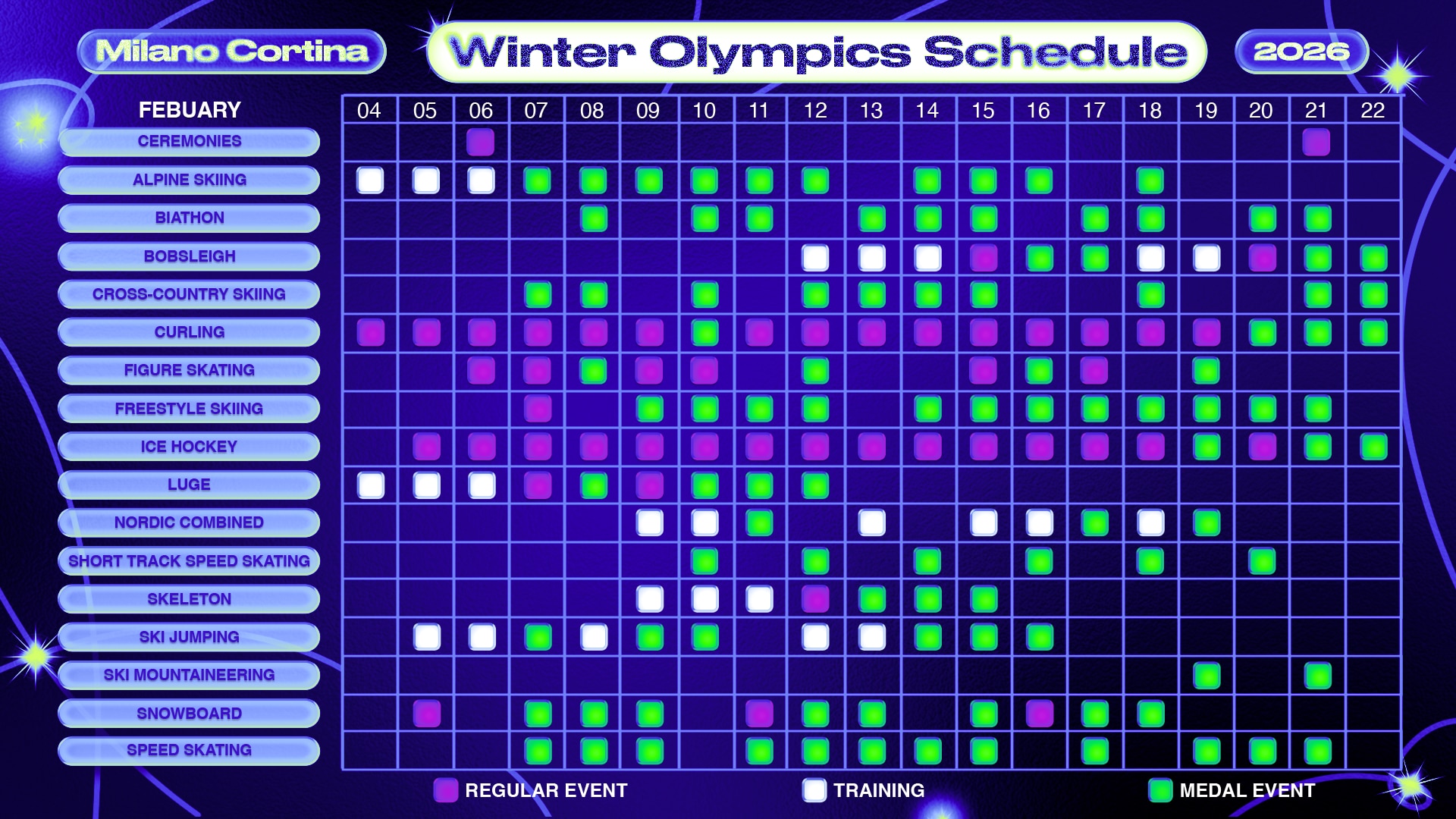
The 2018 Winter Olympics, officially known as the XXIII Olympic Winter Games and commonly referred to as PyeongChang 2018, took place from February 9 to February 25, 2018, in South Korea. The Games featured 102 events across 15 disciplines, with Norway leading the final medal tally with 39 total medals.
Historical Context and Venue Overview
The 2018 Winter Olympics marked the second time South Korea hosted the Olympic Games, following the 1988 Summer Olympics in Seoul, and its first time hosting the Winter edition. The Games were centered in PyeongChang, a mountainous region in the Gangwon Province, but events were split between two primary clusters: the Alpensia Mountain Cluster and the Gangneung Coastal Cluster.
The Alpensia Mountain Cluster served as the hub for outdoor snow sports, including alpine skiing, biathlon, cross-country skiing, and sliding sports (luge, bobsleigh, and skeleton). The PyeongChang Olympic Stadium, a temporary pentagonal structure, hosted the opening and closing ceremonies. Conversely, the Gangneung Coastal Cluster utilized several new and repurposed indoor arenas for ice-based sports such as figure skating, hockey, curling, and speed skating.
A significant geopolitical highlight of the 2018 Games was the participation of North Korean athletes, who marched alongside South Korean athletes under a Unified Korea flag during the opening ceremony. The two nations also fielded a unified women's ice hockey team, which stood as a landmark moment in Olympic history.
The Complete 2018 Winter Olympic Schedule: Key Milestones
The competition schedule for PyeongChang 2018 was designed to accommodate global broadcast audiences while managing the extreme cold temperatures of the Korean winter. While the official opening ceremony was on February 9, preliminary competitions in curling and ski jumping began on February 8.
Week One Highlights (February 8–16)
The first week was characterized by the dominance of the Netherlands in speed skating and the emergence of young stars in snowboarding.
- February 8-9: Preliminary rounds for Mixed Doubles Curling and Men's Normal Hill Individual Ski Jumping.
- February 10: The first gold medal of the Games was awarded to Charlotte Kalla of Sweden in the Women's 15km Skiathlon.
- February 11: USA's Redmond "Red" Gerard won gold in Men's Slopestyle snowboarding, representing the first gold for the United States.
- February 12: Chloe Kim (USA) began her dominance in the Women's Halfpipe, securing gold with a near-perfect score.
- February 15: Following several weather delays in Alpine Skiing, Mikaela Shiffrin won the Giant Slalom gold, while Norway's Aksel Lund Svindal took the Men's Downhill gold.
Week Two Highlights (February 17–25)
The second week focused on the high-stakes finals of team sports and the technical brilliance of figure skating.
- February 17: Yuzuru Hanyu of Japan defended his Olympic title in Men's Single Figure Skating, becoming the first man to win back-to-back golds in the event since 1952.
- February 21: The USA Women's Ice Hockey team defeated Canada in a dramatic shootout to win their first gold since 1998.
- February 22: Short Track Speed Skating concluded with spectacular finishes in the Men's 500m and 5,000m relay.
- February 24: The "Miracurl" occurred when the USA Men's Curling team, led by John Shuster, defeated Sweden to win a historic first gold medal for the U.S. in the sport.
- February 25: The Games concluded with the Men's Hockey final, where the Olympic Athletes from Russia (OAR) defeated Germany in overtime.
Final Medal Table: National Performances
The 2018 Winter Olympics saw Norway break the record for the most medals won at a single Winter Games, surpassing the previous record held by the United States from the 2010 Vancouver Games. Germany followed closely in gold medal count, driven largely by their excellence in sliding sports and biathlon.
| Rank | Nation | Gold | Silver | Bronze | Total |
|---|---|---|---|---|---|
| 1 | Norway | 14 | 14 | 11 | 39 |
| 2 | Germany | 14 | 10 | 7 | 31 |
| 3 | Canada | 11 | 8 | 10 | 29 |
| 4 | United States | 9 | 8 | 6 | 23 |
| 5 | Netherlands | 8 | 6 | 6 | 20 |
| 6 | South Korea | 5 | 8 | 4 | 17 |
| 7 | Switzerland | 5 | 6 | 4 | 15 |
| 8 | France | 5 | 4 | 6 | 15 |
| 9 | Austria | 5 | 3 | 6 | 14 |
| 10 | Japan | 4 | 5 | 4 | 13 |
Source: Official International Olympic Committee Historical Records.
Discipline Breakdown and Notable Results
Alpine Skiing
The 2018 alpine program was heavily impacted by high winds, leading to several postponements. However, once the events began, the competition was fierce. Marcel Hirscher (Austria) solidified his legacy by winning two gold medals (Combined and Giant Slalom). Ester Ledecká (Czech Republic) created one of the greatest upsets in Olympic history by winning the Women's Super-G on borrowed skis, just days before winning a second gold in Snowboarding (Parallel Giant Slalom).
Figure Skating
Figure skating at PyeongChang was a showcase of technical evolution, particularly the proliferation of quadruple jumps. Beyond Yuzuru Hanyu’s historic repeat, the Ice Dance competition saw a legendary battle between Tessa Virtue/Scott Moir (Canada) and Gabriella Papadakis/Guillaume Cizeron (France), with the Canadians ultimately taking gold and setting a new world record score.
Speed Skating and Short Track
The Netherlands continued their tradition of speed skating excellence, winning 16 medals in total on the long track. Sven Kramer secured his third consecutive gold in the 5,000m. In Short Track, host nation South Korea excelled, with Choi Min-jeong winning two gold medals, much to the delight of the local spectators in Gangneung.
Sliding Sports (Bobsleigh, Luge, Skeleton)
Germany dominated the sliding track at Alpensia, winning gold in every Luge event and both the Two-man and Four-man Bobsleigh. A rare occurrence happened in the Two-man Bobsleigh, where Canada and Germany finished with the exact same time to the hundredth of a second, resulting in a shared gold medal.
New Events Introduced in 2018
The International Olympic Committee (IOC) added four new events to the PyeongChang program to increase the Games' appeal to younger audiences and promote gender equality.
- Big Air Snowboarding: This event focuses on a single massive jump where riders perform complex spins and flips. Anna Gasser (Austria) and Sebastien Toutant (Canada) were the inaugural gold medalists.
- Mass Start Speed Skating: Unlike traditional pairs, the mass start involves all skaters on the track simultaneously, emphasizing strategy and drafting. Nana Takagi (Japan) and Lee Seung-hoon (South Korea) won the first golds.
- Mixed Doubles Curling: This faster-paced version of curling features teams of one man and one woman. Switzerland and Canada faced off in the final, with Canada taking the inaugural gold.
- Mixed Team Alpine Skiing: A knockout-style parallel slalom event where teams of men and women compete for their nation. Switzerland won the first-ever gold in this format.
Technological and Environmental Impact
The 2018 Games were marketed as the "ICT (Information and Communications Technology) Olympics." This was the first major global event to demonstrate 5G technology, which was used to provide 360-degree virtual reality streams and ultra-high-definition broadcasts. Intel showcased a record-breaking drone light show during the opening ceremony, using 1,218 Shooting Star drones to form the Olympic rings.
Environmentally, the PyeongChang Organizing Committee (POCOG) aimed for a "Green Games." However, the construction of the Gariwangsan Alpine Centre faced criticism for the clearing of ancient forests. In 2026, the legacy of these venues remains a topic of regional discussion, as South Korea continues to balance the maintenance of world-class sporting infrastructure with environmental restoration efforts.
Managing the "Olympic Athletes from Russia" (OAR) Status
A major administrative challenge during the 2018 Winter Olympics was the formal suspension of the Russian Olympic Committee due to systemic doping violations. Clean Russian athletes were permitted to compete under the "Olympic Athletes from Russia" (OAR) designation. They competed under the Olympic flag, and the Olympic anthem was played during medal ceremonies instead of the Russian national anthem. Despite these restrictions, the OAR team won 17 medals, including two golds in Figure Skating (Alina Zagitova) and Men's Ice Hockey.
Frequently Asked Questions
Who won the most gold medals at the 2018 Winter Olympics?
Norway and Germany tied for the most gold medals, each earning 14. However, Norway was the overall winner of the Games because they secured a higher total medal count of 39 compared to Germany's 31. This set a new record for the most total medals won by a single nation at a Winter Olympic Games.
What were the dates for the 2018 Winter Olympics?
The Games officially ran from February 9 to February 25, 2018. Some preliminary competitions, specifically in curling and ski jumping, began on February 8, one day before the Opening Ceremony.
How many sports were in the 2018 Winter Olympics?
There were 15 sports disciplines: Alpine Skiing, Biathlon, Bobsleigh, Cross-Country Skiing, Curling, Figure Skating, Freestyle Skiing, Ice Hockey, Luge, Nordic Combined, Short Track Speed Skating, Skeleton, Ski Jumping, Snowboarding, and Speed Skating. These disciplines comprised 102 individual medal events.
Where can I find the full official results for specific 2018 events?
The complete, event-by-event results are archived by the International Olympic Committee (IOC). These records include heat times, preliminary rounds, and final placements for all 102 events.
Which athlete won the most medals in PyeongChang?
Marit Bjørgen of Norway was the most decorated athlete of the 2018 Games. She won five medals: two gold, one silver, and two bronze in cross-country skiing. Her performance in PyeongChang made her the most decorated Winter Olympian of all time, with a career total of 15 medals.
Final Recommendation for Researchers
For those seeking the most granular data regarding the 2018 Winter Olympics, the Official Report of the XXIII Olympic Winter Games, published by the PyeongChang Organizing Committee, remains the primary source of truth. This multi-volume document provides technical specifications for every venue, comprehensive weather data for every competition hour, and verified judge scoring for subjective events like figure skating and freestyle skiing. As of 2026, these archives are maintained digitally by the Olympic Studies Centre and are essential for any academic or professional sports analysis regarding the PyeongChang Games.