The 2018 Winter Olympics, officially known as the XXIII Olympic Winter Games, took place from February 9 to February 25, 2018, in PyeongChang, South Korea. The event featured 102 sets of medals across 15 sports, marked by significant geopolitical milestones, record-breaking athletic performances, and the debut of several new sporting disciplines.
The Road to PyeongChang: Bidding and Vision
PyeongChang’s journey to hosting the Winter Olympics was a testament to persistence. The South Korean city had previously bid for the 2010 and 2014 Games, losing narrowly to Vancouver and Sochi, respectively. For the 2018 cycle, PyeongChang secured a decisive victory in the first round of voting at the 123rd IOC Session in Durban, South Africa, defeating Munich, Germany, and Annecy, France.
The vision for the 2018 Games was encapsulated in the slogan "New Horizons." This aimed to expand the reach of winter sports into the Asian market and establish South Korea as a premier hub for winter tourism. The investment in infrastructure was substantial, including a high-speed KTX rail line connecting Seoul to the mountain regions, ensuring that the Games were accessible to both domestic and international fans.
The Geopolitical Context: The "Peace Games"
One of the most enduring legacies of the 2018 Winter Olympics was its role in international diplomacy. In the months leading up to the Games, tensions on the Korean Peninsula were high. However, the event served as a catalyst for a temporary diplomatic thaw.
The Unified Korean Team
In a historic move, North and South Korean athletes marched together under the Korean Unification Flag during the Opening Ceremony. Furthermore, a joint North-South women's ice hockey team was formed. While the team did not win a game, their participation was viewed as a powerful symbol of reconciliation. This spirit of cooperation led many to refer to PyeongChang 2018 as the "Peace Games."
The "Olympic Athletes from Russia" (OAR)
The 2018 Games also faced significant controversy regarding the Russian state-sponsored doping scandal that had emerged following the 2014 Sochi Games. As a result, the International Olympic Committee (IOC) suspended the Russian Olympic Committee. However, 168 Russian athletes who proved they were clean were invited to compete under the neutral "Olympic Athlete from Russia" (OAR) designation, using the Olympic flag and anthem.
Venues and Infrastructure: Mountain vs. Coastal Clusters
The Games were organized into two distinct geographical clusters, a design choice that maximized efficiency and utilized the region's natural topography.
The PyeongChang Mountain Cluster
Most snow events and sliding sports were held in the PyeongChang mountain region, specifically within the Alpensia Resort.
- Alpensia Biathlon Centre: Hosted the biathlon events.
- Alpensia Ski Jumping Centre: Notable for its iconic wind-shielding towers.
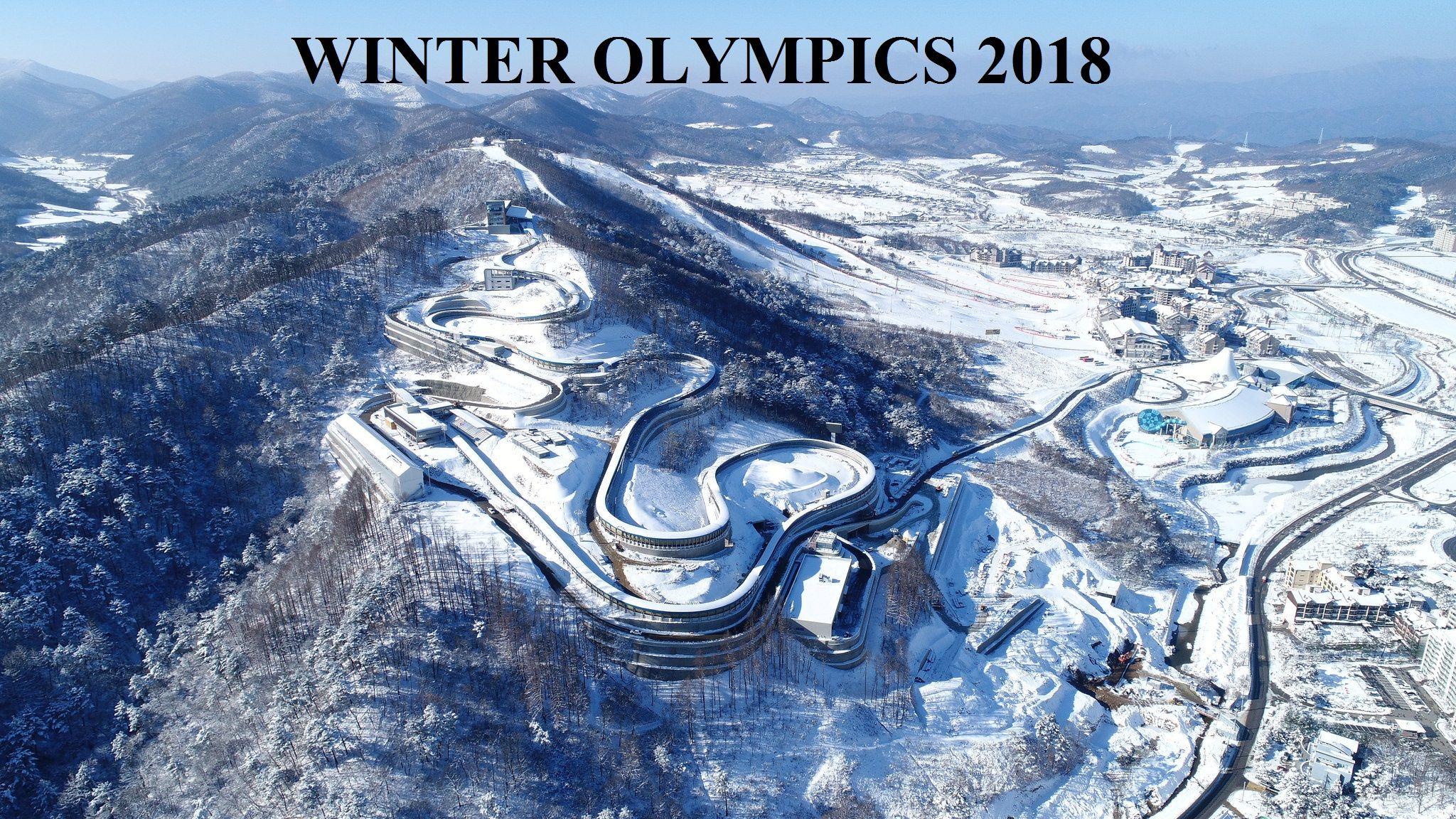
- Olympic Sliding Centre: A state-of-the-art track for bobsleigh, luge, and skeleton.
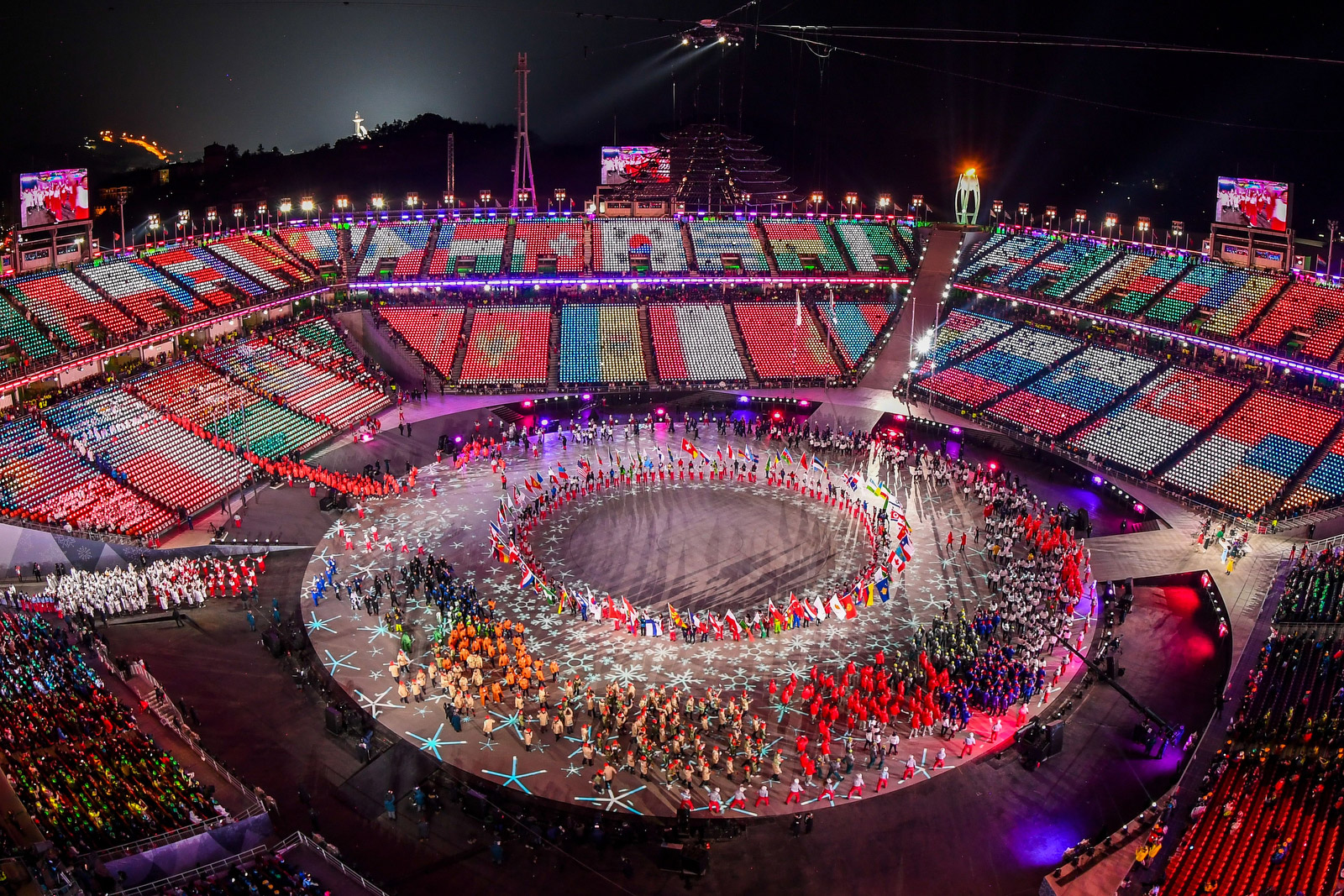
- PyeongChang Olympic Stadium: A temporary pentagonal structure used specifically for the Opening and Closing Ceremonies. As of 2026, the site has been largely converted into a memorial park and museum, highlighting the sustainability challenges of temporary Olympic infrastructure.
The Gangneung Coastal Cluster
Gangneung, a nearby coastal city, hosted all ice-based events.
- Gangneung Hockey Centre: The primary venue for ice hockey.
- Gangneung Ice Arena: Hosted figure skating and short track speed skating, often considered the most popular tickets of the Games.
- Gangneung Oval: A dedicated facility for long-track speed skating.
Iconic Sporting Highlights and New Disciplines
The PyeongChang Games introduced four new events to the Olympic program: Big Air snowboarding, mass start speed skating, mixed doubles curling, and mixed team alpine skiing. These additions were designed to appeal to younger audiences and promote gender equality.
Ester Ledecká’s Historic Double
The single most remarkable individual performance came from Czech athlete Ester Ledecká. She became the first woman to win gold medals in two different sports at the same Winter Olympics. Ledecká won the Super-G in Alpine skiing using borrowed skis, and just days later, she dominated the Parallel Giant Slalom in snowboarding. Her achievement remains a gold standard for multi-disciplinary athleticism in the modern era.
The Dominance of Chloe Kim
In the women's halfpipe, 17-year-old American sensation Chloe Kim lived up to the immense hype. She secured the gold medal with a nearly perfect score, performing back-to-back 1080s. Her performance, coupled with her relatable social media presence during the event, made her one of the faces of the Games.
Figure Skating Excellence
The Gangneung Ice Arena witnessed historical greatness as Yuzuru Hanyu of Japan defended his Olympic title in men's singles. He became the first male skater to win back-to-back golds since Dick Button in 1952. In the Ice Dance category, Canada’s Tessa Virtue and Scott Moir capped off their legendary careers with a gold medal, becoming the most decorated Olympic figure skaters in history.
The Rise of the "Garlic Girls"
South Korea’s women’s curling team, nicknamed the "Garlic Girls" (due to their hometown’s reputation for garlic production), became unexpected national heroes. Their strategic prowess and the charismatic leadership of skip Kim Eun-jung led them to a silver medal, sparking a massive interest in curling across the country that persists in 2026.
Statistical Overview: Final Medal Tally
The 2018 Winter Olympics saw Norway emerge as the dominant force, setting a new record for the most medals won at a single Winter Games.
| Rank | Nation | Gold | Silver | Bronze | Total |
|---|---|---|---|---|---|
| 1 | Norway | 14 | 14 | 11 | 39 |
| 2 | Germany | 14 | 10 | 7 | 31 |
| 3 | Canada | 11 | 8 | 10 | 29 |
| 4 | United States | 9 | 8 | 6 | 23 |
| 5 | Netherlands | 8 | 6 | 6 | 20 |
| 6 | South Korea | 5 | 8 | 4 | 17 |
| 7 | Switzerland | 5 | 6 | 4 | 15 |
| 8 | France | 5 | 4 | 6 | 15 |
| 9 | Austria | 5 | 3 | 6 | 14 |
| 10 | Japan | 4 | 5 | 4 | 13 |
Source: Official IOC Records (Verified 2026)
Technological Innovations and Digital Impact
PyeongChang 2018 was frequently cited as the first "high-tech" Olympics. South Korea used the platform to showcase its domestic technological prowess.
- 5G Connectivity: Working with partners like KT, the Games were used as a real-world testing ground for 5G wireless technology, providing ultra-fast speeds for broadcasting and spectator services.
- Robotics: Over 80 robots were deployed throughout the venues to assist with language translation, deliver refreshments, and provide schedule information.
- Virtual Reality (VR): The Games offered extensive VR broadcasting, allowing viewers at home to experience events from the perspective of the athletes or the front row of the stands.
- Drone Technology: The Opening Ceremony featured a record-breaking drone display by Intel, where 1,218 drones formed the shape of the Olympic rings over the stadium.
Challenges: Weather and Attendance
Despite the logistical success, the 2018 Games were not without challenges. PyeongChang is known for being one of the coldest regions in South Korea, and the 2018 Games were among the coldest on record.
- Extreme Wind: Several Alpine skiing events and the women's snowboard slopestyle were delayed or disrupted by high-velocity winds. The conditions in the slopestyle final were particularly controversial, as many athletes struggled to complete their runs safely.
- Norovirus Outbreak: In the early days of the Games, a norovirus outbreak affected several hundred security personnel and staff members, leading to the mobilization of military personnel to maintain security operations until the situation was contained.
- Ticket Sales: Early ticket sales were sluggish, leading to concerns about "ghost venues." However, a late surge in domestic interest, particularly following South Korean successes in short track and skeleton, resulted in most events being well-attended.
The Legacy of PyeongChang in 2026
As of 2026, the legacy of the PyeongChang 2018 Winter Olympics is characterized by both success and cautionary tales. The Gangneung coastal venues have been successfully repurposed for community use and international competitions. For instance, the Gangneung Ice Arena remains a primary training facility for the next generation of Korean skaters.
The region's profile as a winter sports destination was permanently elevated, culminating in South Korea hosting the 2024 Winter Youth Olympics (Gangwon 2024). Many of the 2018 venues were utilized for this event, proving the long-term utility of the Gangneung cluster. However, the PyeongChang Olympic Stadium and certain specialized mountain facilities have faced higher maintenance costs and lower utilization rates, a common theme in Olympic history regarding "white elephant" venues.
The diplomatic "thaw" of 2018 was ultimately short-lived in the broader geopolitical sense, but it proved that the Olympic movement still possesses the unique power to bring adversarial nations together, even if only for a few weeks.
Frequently Asked Questions
Which country won the most medals in the 2018 Winter Olympics?
Norway won the most medals at the 2018 Winter Olympics, finishing with a total of 39 (14 gold, 14 silver, and 11 bronze). This total set a new record for the highest number of medals won by a single nation at any Winter Olympic Games, surpassing the previous record held by the United States.
Who was the most successful athlete at PyeongChang 2018?
While several athletes won multiple medals, Marit Bjørgen of Norway became the most decorated Winter Olympian of all time during these Games. She won five medals in PyeongChang (two gold, one silver, and two bronze) in cross-country skiing, bringing her career total to 15 medals.
Why did Russia compete as "OAR" in 2018?
Russia competed as the "Olympic Athletes from Russia" (OAR) because the Russian Olympic Committee was suspended by the IOC due to a state-sponsored doping program. Only Russian athletes who could prove they were clean and met strict criteria were allowed to compete. They wore neutral uniforms and did not use the Russian flag or national anthem.
What were the new sports added in 2018?
The IOC added four new events to the PyeongChang program to modernize the Games: Big Air snowboarding (men's and women's), mass start speed skating (men's and women's), mixed doubles curling, and the mixed team event in alpine skiing.
Where can I find the official records of the 2018 Games today?
The most comprehensive and verified records are maintained by the International Olympic Committee (IOC). These records include full athlete biographies, event results, and official reports on sustainability and legacy.
Summary of Next Actions
For those researching the 2018 Winter Olympics for academic or professional purposes, the following steps are recommended:
- Consult the Official Report: The IOC publishes a multi-volume official report for every Games, detailing everything from budget expenditures to technical officiating.
- Review the Gangwon 2024 Outcomes: To understand the long-term legacy, examine how the venues were used during the 2024 Winter Youth Olympics.
- Analyze Doping Jurisprudence: For those interested in sports law, the CAS (Court of Arbitration for Sport) rulings regarding the OAR athletes provide significant insight into modern Olympic governance.